Moving to Key Biscayne: South Florida's Most Private Island Community
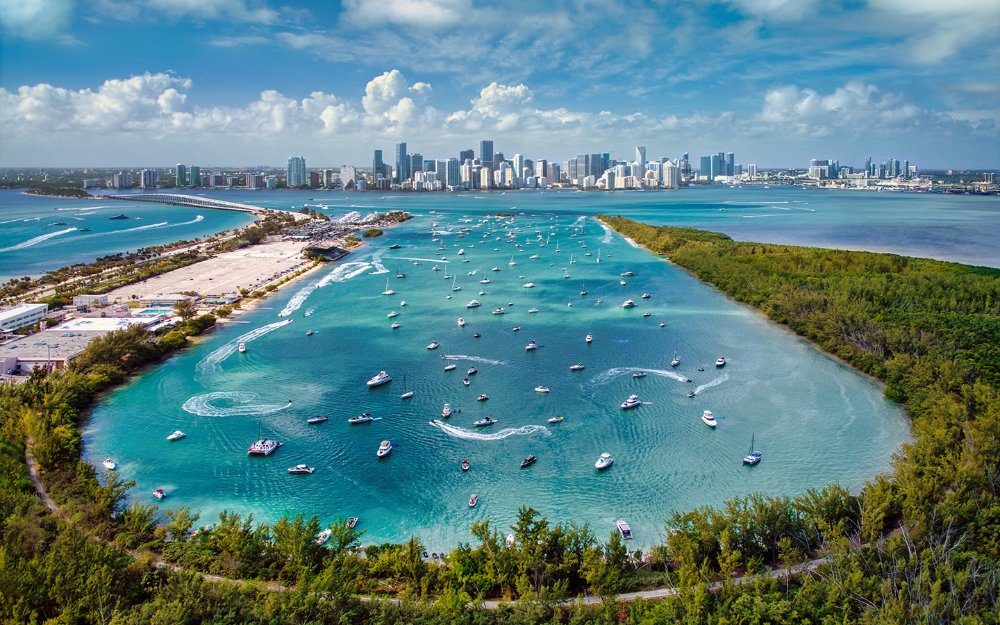
Moving to Key Biscayne: South Florida’s Most Private Island Community
Moving to Key Biscayne means accepting a trade-off most South Florida buyers never have to think about: you get one road on and off the island, a population under 15,000, and a level of quiet that does not exist anywhere else in Miami-Dade, in exchange for paying a real premium and living with real logistics. That is the honest starting point. Key Biscayne is not just an expensive zip code. It is a barrier island with a single causeway connecting it to the mainland, and everything about living there, the price, the schools, the insurance, the commute, flows from that geography.
This guide covers what actually matters if you are considering the move: the real numbers, the neighborhoods, the causeway logistics, the schools, the storm risk, and who the island fits and who it does not. If you want the full data-driven breakdown of pricing across the island, we cover that separately in Key Biscayne, Florida: The Complete Guide for Buyers Considering the Island. This piece is about the decision to move, not just the market.
Why People Move to Key Biscayne
Key Biscayne is a village, incorporated in 1991, sitting on a barrier island south of Miami Beach and connected to the mainland by the Rickenbacker Causeway. It is home to roughly 13,000 to 14,000 year-round residents, Crandon Park, Bill Baggs Cape Florida State Park, and a downtown strip along Crandon Boulevard with restaurants, a Winn-Dixie, banks, and small professional offices. There is no highway noise, no strip mall sprawl, and no cut-through traffic, because there is nowhere to cut through to. The island dead-ends at Cape Florida.
That geography is the entire appeal. Families move here for the K-8 school, the beach access, and the sense that their kids can ride bikes to school and to the park without crossing a six-lane road. Retirees and second-home buyers move here for the privacy and the low crime rate. Executives move here because it is 15 to 20 minutes from Brickell and downtown Miami, close enough to commute, far enough to disconnect. The island’s population swells in winter with seasonal residents, then goes quiet again by May.
Moving to Key Biscayne South Florida’s Most Private Island Community: What Makes It Different
Most South Florida relocation guides talk about school ratings and commute times. On Key Biscayne, you need to add three things most buyers from outside Miami-Dade have never had to consider.
The One Road In and Out
The Rickenbacker Causeway is the only vehicle access point to Key Biscayne. It is a toll road, currently around $2.30 for a two-axle vehicle each way with SunPass, and it passes through Virginia Key before reaching the island. This matters for three reasons. First, evacuation during a hurricane happens on one road, and the Village enforces mandatory evacuation orders more aggressively than most Miami-Dade municipalities because of it. Second, any accident, construction closure, or major event on the causeway (it is also a popular cycling and running route, closed to cars on some mornings) can add real time to your commute. Third, it means there is no “back way” if you forget something at home. Everyone who lives on Key Biscayne has internalized this. If you are moving from a mainland suburb where you had three or four route options to anywhere, this is a genuine adjustment.
The Insurance and Storm Reality
Key Biscayne took a direct hit from Hurricane Andrew in 1992 and Hurricane Irma in 2017 caused significant flooding. Every home and condo purchase here comes with flood insurance as a practical necessity, not an option, and windstorm coverage on top of standard homeowners. Buyers should budget insurance costs meaningfully higher than a comparable inland Miami-Dade property, often several thousand dollars more per year for single-family homes, and HOA insurance line items in condo buildings have risen sharply island-wide since 2022 following Florida’s condo safety law changes (Senate Bill 4-D) that require structural reserve studies and full funding of reserves for buildings three stories and higher. Ask for the condo association’s most recent reserve study and milestone inspection report before you make an offer. This is not optional due diligence on the island, it is the difference between a stable HOA fee and a special assessment.
The Privacy Premium
Key Biscayne has no through-traffic, no billboard advertising, limited short-term rental activity in most residential zones, and a Village government that actively limits commercial development. That is why celebrities, athletes, and executives who want to be left alone buy here over Miami Beach. It is also why prices per square foot run high relative to inland Miami-Dade even though the island lacks the nightlife of South Beach or the retail density of Coral Gables. You are paying for scarcity and quiet, not amenities.
What It Actually Costs to Move to Key Biscayne in 2026
Condos
Key Biscayne’s condo stock runs from 1970s and 80s mid-rises along Crandon Boulevard to newer luxury towers closer to the Village center and oceanfront. Dated one and two-bedroom units in older buildings like those along Crandon or Ocean Lane start around $650,000 to $900,000. Renovated units and buildings with better amenities run $1.2 million to $2.5 million. Oceanfront and newer construction towers push $3 million to $8 million and higher for larger units. HOA fees are a real line item, commonly $1,000 to $2,500 a month in older buildings and higher in full-service luxury towers, and buyers should expect those fees to keep climbing as SB 4-D reserve requirements phase in. For a full walk-through of what the entry-level condo market actually looks like right now, see First-Time Buyer on Key Biscayne: What the Entry Level Actually Looks Like.
Single-Family Homes
Single-family inventory is limited and concentrated in a few pockets: the Mashta Island and Point View area, the streets around Fernwood and Glenridge, and the Ocean Ridge and Sunrise/Sunset area closer to the Village center. Entry-level single-family homes, meaning older, non-waterfront homes needing updating, mostly start in the low $3 millions. Updated homes on standard lots run $4 million to $7 million. Waterfront and bay-front homes with dock access regularly clear $8 million and go well past $20 million for the largest estates. There is very little true starter inventory for families on this island, which is the honest answer for buyers hoping to find a way in under $2 million with a house and yard. That segment largely does not exist here anymore.
What You’re Really Comparing It To
If Key Biscayne pricing gives you sticker shock, the comparison points most South Florida relocation buyers use are Coral Gables, Pinecrest, and parts of Coconut Grove on the mainland, all of which offer more house for less money but none of which offer the island’s separation from traffic and density. That trade-off, price versus privacy, is the core decision every Key Biscayne buyer makes, and we break down the luxury end of that trade-off specifically in Key Biscayne Luxury Real Estate: What the Premium Market Looks Like.
Where to Live: Picking a Pocket of the Island
Key Biscayne is small, about 1.4 square miles of developable land, but it has distinct pockets worth understanding before you commit.
North End Near the Causeway
The area closest to the Rickenbacker Causeway landing includes Crandon Park, the Ritz-Carlton Key Biscayne, and a stretch of oceanfront condo towers. This is the most resort-feeling part of the island, popular with seasonal buyers and investors, and it puts you closest to the causeway for commuting.
Village Center
The commercial core along Crandon Boulevard, with shops, restaurants, the K-8 school, and the Community Center, surrounded by condo buildings and some single-family streets. This is the most walkable part of the island and the natural fit for buyers who want to leave the car at home for daily errands.
Mashta Island and Point View
The most established single-family enclave, with larger lots, bay frontage in places, and some of the island’s oldest and most valuable homes. This is the pocket to look at if the goal is a house with a yard and boat access.
South End Near Cape Florida
Quieter, closer to Bill Baggs Cape Florida State Park, with a mix of condos and single-family homes and the least commercial density on the island. Good fit for buyers prioritizing quiet over walkability to restaurants.
For a full neighborhood-by-neighborhood breakdown with specific streets and product types, read Where to Live on Key Biscayne: Condos, Single-Family, and Bayfront.
Schools: The One Real Limitation for Families
Key Biscayne Community School, a K-8 public school run by Miami-Dade County Public Schools, is the anchor for families moving to the island and is consistently one of the highest-rated public schools in the county. Most families who move here for the schools are moving specifically for this K-8 experience, walkable for many island residents, small by comparison to mainland public schools, and tightly tied to the Village’s civic life.
The honest limitation: there is no public high school on Key Biscayne. Families continue on to MAST Academy at Rickenbacker Marine Science Technical Academy, located just off the causeway on Virginia Key, which draws heavily from Key Biscayne families and is a magnet school requiring application, or they zone to Coral Gables Senior High on the mainland, or they choose a private option such as Ransom Everglades in Coconut Grove, Gulliver Prep, or Carrollton School of the Sacred Heart. Every family moving to the island with a child approaching ninth grade needs a plan for this transition well before it happens. We go deeper on the full K-12 picture, including the actual application windows for MAST and the private school landscape, in Key Biscayne Schools: What Families on the Island Need to Know.
New Construction: A Limited but Real Option
Key Biscayne is not a new construction market in the way Doral or Cutler Bay are. There is essentially no raw land left, and the Village has kept development tightly controlled since incorporation. What exists is teardown-and-rebuild activity on single-family lots, where buyers purchase an older home specifically to demolish and build new, and a small number of new luxury condo developments that have come to market in recent cycles as older buildings are redeveloped. If new construction matters to your decision, understand this segment is about custom home building on an existing lot far more often than it is about buying into a new community, and budgets need to include island-specific construction costs (barrier-island wind and flood codes push construction costs meaningfully above mainland Miami-Dade). Full detail on what is actually available is in New Construction on Key Biscayne: What Actually Exists.
Life on the Island: What Daily Living Actually Feels Like
The Rhythm
Key Biscayne runs on a slower clock than the rest of Miami-Dade. Crandon Park’s three miles of beach and the Crandon Park Tennis Center, longtime home of the Miami Open before the tournament relocated to Hard Rock Stadium, still anchor the island’s sports culture. Tennis is not a hobby here, it is a community identity, and the tennis center remains a serious public facility. Bill Baggs Cape Florida State Park at the island’s southern tip offers the lighthouse, more beach, and kayak and paddleboard rentals. Cycling culture is strong, with the causeway itself a weekend training route for serious riders.
The Commercial Reality
Crandon Boulevard has restaurants, a grocery store, a hardware store, banks, and professional offices, but it is not a retail or nightlife destination. Residents drive the causeway to Brickell, Coconut Grove, or Coral Gables for shopping, larger grocery runs, and most nightlife. This is by design. The Village has consistently resisted the kind of commercial density that defines Miami Beach, and residents who move here specifically for the quiet generally see this as a feature, not a limitation.
Who the Island Fits
Key Biscayne fits families prioritizing the K-8 school and beach access over commercial convenience, professionals commuting to Brickell or downtown who want separation from the city at night, retirees and seasonal residents wanting security and privacy, and buyers who have already priced out Miami Beach or Coral Gables and want something quieter for a similar or higher budget. It does not fit buyers who want walkable nightlife, buyers on a tight starter-home budget, or buyers who cannot tolerate single-point-of-access commuting during hurricane season or causeway construction.
We cover the full day-to-day lifestyle picture, including the tennis center, the farmers market, and Village events, in Life on Key Biscayne: Tennis, Crandon Park, Village Life, and the Island Experience.
Investment Considerations
Key Biscayne’s scarcity, no new land, a Village government that limits density, and consistent demand from buyers priced out of Miami Beach, has historically supported strong price appreciation and low inventory turnover. Rental demand exists but is more limited than in Miami Beach or Brickell because the Village restricts short-term rentals in most residential zones, so investors here are generally underwriting long-term holds and traditional annual leasing rather than short-term rental income. If investment return is your primary driver for buying here, understand the model before you buy: this is a long-term appreciation and scarcity play, not a short-term rental cash flow market. Full numbers and cap rate context are in Key Biscayne Investment Property: The Scarcity Premium and Returns.
Current Market Conditions
Inventory on Key Biscayne stays tight relative to demand, condos and single-family homes alike, and pricing has continued to firm even as parts of Miami-Dade’s broader condo market softened under the weight of SB 4-D reserve requirements and rising insurance costs. Buyers should expect to compete for well-priced, updated listings and to have real leverage on dated inventory that needs work, particularly older condos facing upcoming reserve funding and special assessment risk. For the current numbers on both sides of that market, see Key Biscayne Real Estate Market: Prices and Conditions in 2026.
The Honest Bottom Line
Moving to Key Biscayne means paying a real premium, living with a single road on and off the island, budgeting seriously for insurance, and accepting that your teenager will commute to the mainland for high school. In exchange, you get a K-8 school among the best in the county, beach and tennis access most of South Florida cannot match, a Village government that has protected the island’s quiet for over three decades, and a level of privacy that Miami Beach and Fort Lauderdale simply cannot offer at any price point.
If that trade makes sense for your family and your budget, Key Biscayne delivers on it consistently. If you are looking for a starter home under $2 million with a yard, or a market with more commercial energy and nightlife within walking distance, this is not your island, and that is worth knowing before you spend months looking at a market that was never going to fit.
Have questions about a specific pocket of Key Biscayne, a specific building, or whether your budget makes sense for this island versus Coral Gables or Pinecrest? Reach out through South Florida Insider and I will give you the honest read before you spend a weekend touring.
More articles you might like
Key Biscayne, Florida: The Complete Guide for Buyers Considering the Island
13 min readFirst-Time Buyer on Key Biscayne: What the Entry Level Actually Looks Like
18 min readKey Biscayne Luxury Real Estate: What the Premium Market Looks Like
13 min readNew Construction on Key Biscayne: What Actually Exists in 2026
19 min readKey Biscayne Schools: What Families on the Island Need to Know
19 min read