First-Time Buyer on Key Biscayne: What the Entry Level Actually Looks Like
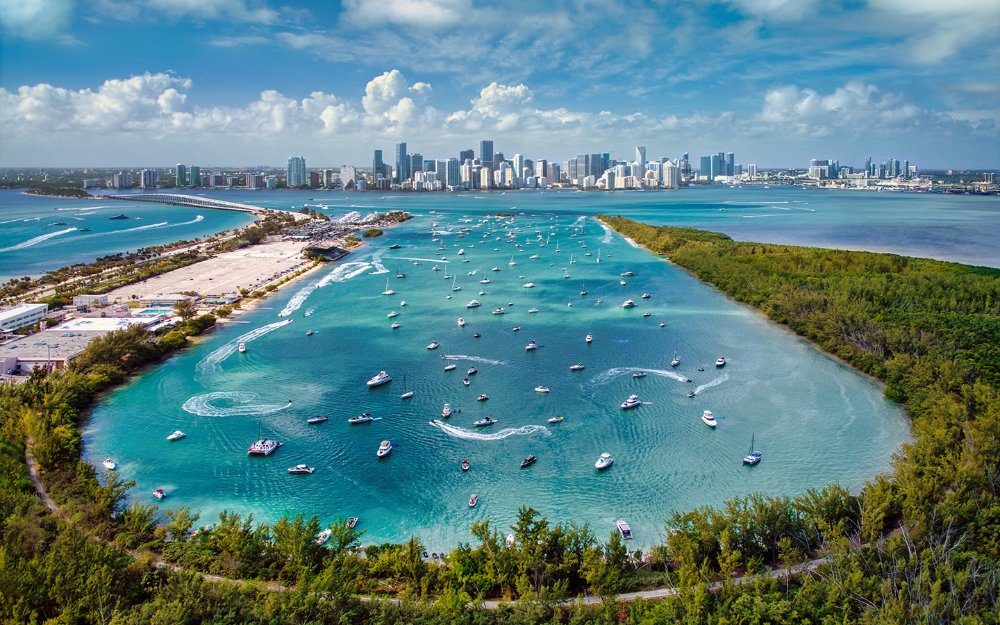
The Rickenbacker Causeway toll booth isn’t just an inconvenience, it’s a filter. Every unit of buildable land on Key Biscayne has to cross that bridge, and there’s almost none left. That scarcity is the whole story behind why “entry level” here means something completely different than it does five miles west in Kendall.
If you’re asking whether a first-time buyer can actually own something on Key Biscayne, the honest answer is yes, but “entry level” here doesn’t mean what it means in Kendall or Pembroke Pines. On Key Biscayne, entry level is a studio or one-bedroom condo in a 1960s-to-1980s building, priced somewhere between $400,000 and $600,000, with an HOA payment that can rival a second mortgage. This guide walks through what that actually looks like: the buildings, the real all-in costs, the financing hurdles, and whether the math makes sense for someone buying their first home instead of their fifth.
Key Biscayne is a barrier island connected to Miami by a single road, the Rickenbacker Causeway, with a toll booth that reminds you every time that you’re leaving the mainland behind. That geography is exactly why entry-level inventory here looks so different from anywhere else in Miami-Dade. There’s almost no land left to build on, the Village has kept zoning tight for decades, and the existing condo stock is old. Old buildings plus a hurricane-exposed barrier island plus Florida’s post-Surfside condo laws add up to a specific, complicated version of “affordable” that first-time buyers need to understand before they fall in love with a listing photo.
First-Time Buyer on Key Biscayne: What the Entry Level Actually Looks Like
Let’s put real numbers on it. As of 2026, the lowest-priced condos on Key Biscayne, the true entry point, are studios and one-bedroom units in older buildings along Crandon Boulevard and Harbor Drive. You’ll see studios listed from the high $300,000s to low $400,000s in a handful of buildings, with one-bedrooms more commonly landing between $450,000 and $600,000. Two-bedroom units, which is what most people picture when they think “starter condo,” jump quickly into the $650,000 to $950,000 range depending on the building, floor, and whether it’s been renovated.
That’s the sticker price. It’s not the real number. The real number includes HOA dues that on Key Biscayne routinely run $700 to $1,800 a month depending on the building’s age, amenities, and reserve funding status, plus property taxes, plus (increasingly) a special assessment tied to structural recertification. A buyer comparing a $500,000 Key Biscayne one-bedroom to a $500,000 condo in Doral or Aventura needs to understand these are not the same monthly commitment. We go deeper on the building-by-building breakdown in our neighborhoods guide, but the short version for a first-time buyer is this: price the HOA and the reserve status before you price the unit.
To make this concrete, think about what “starter home” money buys elsewhere in Miami-Dade versus here. In Doral, $500,000 gets you a two-bedroom townhome with a garage and a yard-adjacent patio. In Kendall, it gets you a three-bedroom single-family house that needs cosmetic updates. On Key Biscayne, $500,000 gets you roughly 750 to 850 square feet, original 1970s finishes, no dedicated parking guarantee in some buildings, and an HOA bill that can run $1,000 or more a month. The square footage and finishes are objectively less. What you’re buying instead is the island, the beach access, the school zone, and a location that puts you fifteen minutes from Brickell without the density. Whether that trade makes sense depends entirely on what you actually value, and that’s a conversation worth having honestly with yourself before you start touring units.
The Buildings Where First-Time Buyers Actually Buy
Key Biscayne’s condo stock breaks into a few clear tiers, and knowing which tier you’re shopping in matters more here than almost anywhere else in South Florida.
The older, smaller buildings (the true entry point)
Buildings like Commodore Club, Courtside, Galen Court, and some of the smaller Harbor Drive properties were built in the 1970s and 1980s. These are the buildings where a first-time buyer actually has a shot. Units tend to be smaller (600 to 900 square feet for a one-bedroom), finishes are often original or lightly updated, and buildings are lower-rise without the elevator banks and resort amenities you’ll find closer to the water. What you’re paying for is the island itself, not the building.
Within this tier there’s still a meaningful spread. A unit with original 1970s terrazzo floors, a galley kitchen, and window units instead of central air is going to price lower than a unit two floors up in the same building that’s had a full gut renovation. Don’t assume every listing in these buildings is the same product just because the building name and HOA fee are identical. Ask how recently the unit itself was updated (plumbing and electrical matter more than granite countertops), and ask whether the building has done any recent common-area work like lobby renovations or pool resurfacing, since that history tells you how the board manages money.
The mid-tier bayfront and oceanfront buildings
Buildings like the Landings of Key Biscayne, Marina Cove, and Tequesta sit closer to the water and carry higher HOA fees to match their amenities, docks, and larger floor plans. A first-time buyer can sometimes find a small one-bedroom here, but two-bedroom units in this tier are already pushing toward $900,000 to $1.2 million, which puts them out of true “starter” territory for most first-time buyers. These buildings tend to have deeper amenity packages (marina access, tennis courts, larger pool decks), and that shows up directly in the HOA line item, often $1,200 to $2,000 a month depending on unit size and whether the building includes a dock slip or boat access as part of ownership.
The luxury tier
Grand Bay, Ocean Club, and the newer oceanfront towers are simply not entry-level product. Units start north of $1.5 million and go up from there. If you want the full picture of what that top end looks like, our luxury market breakdown covers it in detail, but it’s worth knowing this tier exists so you don’t confuse it with what’s actually attainable on a first purchase. It’s easy to get anchored by a beautiful oceanfront listing photo and lose track of what your actual budget can support. Keep the tiers separate in your head while you search.
Townhomes: King’s Creek Villas
For buyers who want more space and less vertical living, King’s Creek Villas is the one true townhome community on the island, built in the 1970s with two- and three-bedroom units. Prices typically run from the high $700,000s to just over $1 million. It’s not cheap, but for a family that needs three bedrooms and a small yard, it’s often a more realistic entry point than trying to squeeze into a two-bedroom condo tower. Townhome ownership here also comes with a different HOA structure than the condo towers, generally lower monthly fees since there’s no elevator, no lobby staff, and less shared mechanical infrastructure, though the tradeoff is that owners often carry more responsibility for their own unit’s exterior maintenance depending on the association’s governing documents.
The Real Cost: Why the Price Tag Is Only Half the Number
This is the part most first-time buyers underestimate, and it’s the part that actually determines whether Key Biscayne makes financial sense for someone buying their first home.
HOA fees are structurally high and going up
Because most of the island’s buildings are 40 to 60 years old, HOA boards are carrying real maintenance obligations: roofs, elevators, seawalls, plumbing systems, and concrete that’s been sitting in salt air for half a century. Add in amenities like pools, gyms, and 24-hour front desks, and monthly fees of $900 to $1,500 for a one-bedroom are common, with some buildings running higher. That’s before you factor in a special assessment.
Run the math on what that actually means for a monthly budget. A $500,000 one-bedroom with 20% down and a 7% rate puts principal and interest around $2,660 a month. Add an HOA of $1,100, and you’re at $3,760 before taxes and insurance, which on Key Biscayne can easily add another $700 to $900 a month combined given the flood and windstorm exposure. That’s a real housing payment north of $4,500 a month for a 750-square-foot one-bedroom, and it’s the number a lot of first-time buyers don’t run until they’re already three showings deep and emotionally attached.
Special assessments are the real risk
Since the Surfside condo collapse in 2021, Florida passed SB 4-D, which requires condo buildings three stories or taller to complete milestone structural inspections at 30 years (25 years if within three miles of the coast, which describes essentially every building on Key Biscayne) and to fully fund reserve accounts rather than waiving or underfunding them the way many associations did for decades. For older Key Biscayne buildings, this has meant real, sometimes five- and six-figure, special assessments per unit as boards catch up on deferred reserve funding and complete required inspections and repairs.
For a first-time buyer, this is not a footnote. Before you write an offer on any Key Biscayne condo, you need the building’s most recent milestone inspection report, the reserve study, and the board minutes from the last 12 to 18 months. If the building hasn’t completed its structural inspection yet, or if reserves are underfunded, budget for an assessment even if one hasn’t been announced yet. Buildings that have already completed their recertification and fully funded reserves are, ironically, often a smarter buy even at a slightly higher price, because the uncertainty is off the table.
Here’s a practical way to think about it. A $550,000 unit in a building that already completed recertification and fully funds reserves, with a $1,200 monthly HOA, is a known cost. A $480,000 unit in a building that hasn’t yet done its milestone inspection, with a $900 monthly HOA, might look cheaper on paper, but if that building comes back with a $35,000 special assessment per unit next year, you’ve actually paid more, and you’ve paid it on a compressed timeline that a lender or insurer may not have priced in when you closed. Ask your agent to pull the building’s SIRS (Structural Integrity Reserve Study) status specifically. It’s now a required disclosure item and it will tell you more about real cost than the listing price ever will.
Property taxes and insurance
Property taxes on Key Biscayne run in line with Miami-Dade’s general millage, but insurance is where barrier-island geography shows up on your monthly statement. Windstorm and flood coverage on an island like this costs more than equivalent coverage a few miles inland, and that cost gets passed through both in your individual condo insurance (HO-6 policy) and in the building’s master policy, which is part of what’s driving HOA increases across the island. First-time buyers coming from inland markets, or from out of state, are often genuinely surprised the first time they see a quote for HO-6 coverage on a Key Biscayne unit next to a quote for a comparable unit in, say, Weston. Get an actual insurance quote before you’re under contract, not after, because it changes the real monthly number enough to shift what you can qualify for.
Financing an Older Key Biscayne Condo
This is where a lot of first-time buyers hit a wall they didn’t see coming. Lenders now scrutinize condo buildings much more closely than they did before Surfside, and Fannie Mae and Freddie Mac maintain “unavailable” and “ineligible” project lists for buildings that don’t meet current structural and reserve-funding standards.
Practically, that means:
- Your lender will require a full condo questionnaire from the HOA before final approval, not just a quick look.
- Buildings with known deferred maintenance, incomplete milestone inspections, or reserve studies showing underfunding can get flagged as non-warrantable, which limits you to portfolio or non-QM loans with higher rates and larger down payments.
- Cash buyers and buyers using local portfolio lenders who know these specific buildings often have an easier path than someone trying to get a standard 30-year conventional loan through a national online lender who doesn’t understand Key Biscayne’s building stock.
If you’re a first-time buyer, get pre-qualified with a lender who has actually closed loans on Key Biscayne recently, not just Miami-Dade generally. The building matters as much as your credit score here.
It’s also worth understanding what non-warrantable actually costs you in practice. A conventional 30-year loan on a warrantable building might get you a down payment as low as 10 to 15% with a competitive rate. A non-warrantable condo loan through a portfolio lender often requires 25 to 30% down, carries a rate a point or more higher, and may come with a shorter fixed period before it adjusts. That difference can add hundreds of dollars to a monthly payment and tens of thousands to the cash needed at closing. Before you fall for a unit, ask your agent or the listing agent whether the building currently sits on any lender’s ineligible list, and get that answer in writing if you can, because it changes your financing plan entirely.
Single-Family and Townhome Alternatives
Single-family homes on Key Biscayne start around $2.5 million to $3 million for the smallest, oldest houses, and that’s simply not a first-time buyer number for the overwhelming majority of people. If a house on the island is the goal, most first-time buyers are realistically looking at a multi-step plan: buy a condo now, build equity, and move up later, rather than starting with a single-family home on Key Biscayne. King’s Creek Villas, mentioned above, is the practical middle ground between condo living and a house, but it’s still a stretch purchase for someone without significant savings or a strong dual income.
For buyers who want to understand the full range of what’s out there, from entry-level condos to bayfront estates, our complete guide to Key Biscayne lays out the whole spectrum in one place.
Who Actually Makes This Work
In practice, the first-time buyers who successfully buy on Key Biscayne tend to fall into a few categories:
Dual-income professional couples without kids yet, buying a one-bedroom or small two-bedroom as a long-term hold, often working in Brickell or Downtown Miami and willing to trade square footage for the commute and lifestyle. For this buyer, the math usually works because two incomes can absorb the HOA and insurance load without stretching the household budget past a comfortable threshold, and they’re often planning to hold the unit five to ten years, which gives them time to ride out a market cycle or a special assessment if one comes.
Buyers with family help on the down payment, which is more common on Key Biscayne than in most Miami-Dade submarkets given the price floor even at the “cheap” end. A gift or loan from parents that covers 20 to 30% of the purchase price is often the difference between qualifying for a warrantable conventional loan versus getting pushed into a non-QM product with worse terms.
Empty nesters downsizing from a larger island home into a smaller condo, technically not first-time buyers, but competing for the same entry-level inventory, which affects supply for actual first-timers. This group often pays cash or puts down 50% or more, which makes them more competitive in multiple-offer situations and squeezes out buyers who need to finance closer to the max.
Investors buying to rent, which we cover in more depth in our investment property guide, and who compete directly with owner-occupant first-time buyers for the same small pool of entry-level units. Some buildings restrict rentals or require a minimum lease term, which actually works in a first-time buyer’s favor by keeping some investor competition out, so it’s worth asking about a building’s rental policy even if you have no plans to rent your own unit out.
If you’re a genuine first-time buyer without family assistance or a high dual income, Key Biscayne is a stretch. That’s not a knock on the island, it’s just the reality of a supply-constrained barrier island fifteen minutes from Brickell.
The One Road In: What You’re Actually Buying
Part of understanding entry-level Key Biscayne is understanding what you’re paying for beyond square footage. You’re paying for the Rickenbacker Causeway acting as a natural buffer against outside traffic and development. You’re paying for a walkable village center, top-rated Key Biscayne K-8 Center and the MAST Academy magnet program nearby (more detail in our schools guide), Crandon Park, and a small-town feel inside Miami-Dade County that doesn’t exist anywhere else this close to Downtown. Our lifestyle guide covers the day-to-day experience in detail, but the short version for a first-time buyer is that you’re buying access to an environment, not just a unit.
The tradeoff is real too: one road in and out means causeway traffic during rush hour and hurricane evacuations, grocery and retail options are limited compared to the mainland, and you’re paying a premium for scarcity that won’t show up as more square footage.
There’s also a practical day-to-day reality worth naming plainly. If you work outside Brickell or Downtown, your commute gets longer and more exposed to a single point of failure. A causeway accident or a hurricane evacuation order affects everyone on the island at once, and there’s no alternate route. First-time buyers coming from suburban markets with multiple road options sometimes underestimate how different that feels in practice until they’ve lived through a Monday morning backup on the causeway or a mandatory evacuation call during storm season.
Is the Math Worth It? An Honest Verdict
Here’s the direct answer. If you can comfortably afford a $500,000 to $600,000 purchase with $1,000 to $1,500 a month in HOA fees on top of your mortgage, and you can stomach the possibility of a special assessment in a building that hasn’t finished its structural recertification, Key Biscayne entry-level ownership is achievable and, for the right buyer, a genuinely smart long-term hold given how limited new supply is. If you’re stretching to make a $450,000 studio work and don’t have a cushion for an assessment or a jump in insurance, you’re better served looking at entry-level inventory in a mainland submarket first and treating Key Biscayne as a move-up goal rather than a first purchase.
A simple gut check before you make an offer: could you absorb a $15,000 to $30,000 special assessment within a year or two of closing without derailing your finances. If the answer is no, either target a building that’s already completed its milestone inspection and fully funded its reserves, or wait and keep saving. There’s no shame in treating Key Biscayne as year three or four of your buying plan instead of year one.
Before you make an offer on anything here, get the building’s milestone inspection status, reserve study, and recent board minutes, and run those numbers with your lender and agent before you fall for the view. For a deeper look at where prices stand across the island heading into the rest of 2026, see our market update, and if you’re relocating from out of state and Key Biscayne is on your shortlist, our moving guide walks through the logistics most people don’t think about until they’re already under contract.
Key Biscayne isn’t an easy first purchase. It’s a possible one, if you go in with real numbers instead of the listing photo.
More articles you might like
Key Biscayne, Florida: The Complete Guide for Buyers Considering the Island
13 min readKey Biscayne Luxury Real Estate: What the Premium Market Looks Like
13 min readNew Construction on Key Biscayne: What Actually Exists in 2026
19 min readKey Biscayne Schools: What Families on the Island Need to Know
19 min readKey Biscayne Investment Property: The Scarcity Premium and Returns
20 min read