Key Biscayne Luxury Real Estate: What the Premium Market Looks Like
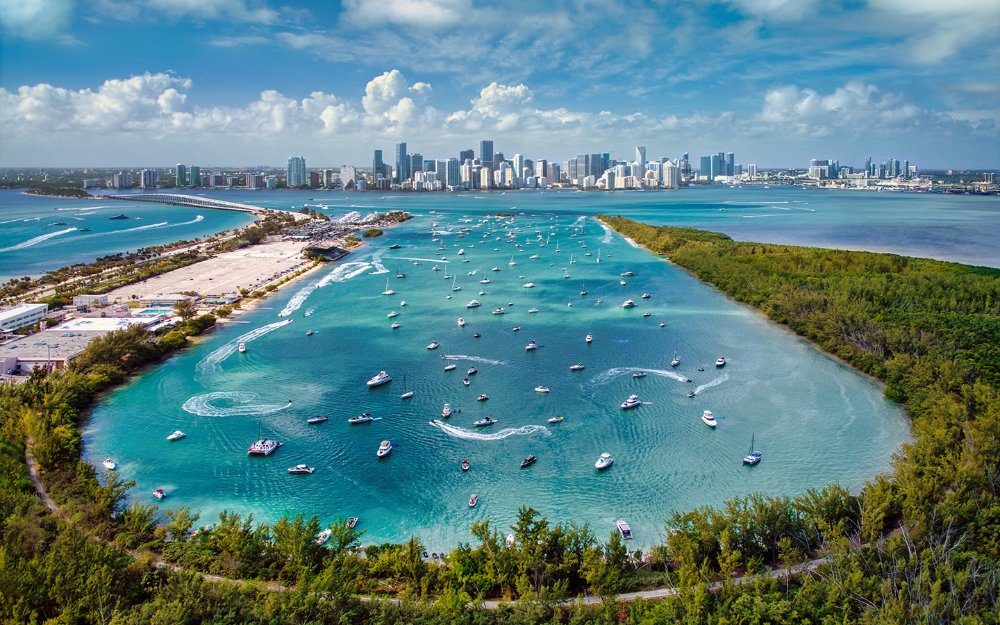
If you’re asking what “luxury” actually means on Key Biscayne in dollars and square feet, here’s the answer-first version: the premium market on this island runs from roughly $3 million at the low end to $15 million and beyond at the top, and what separates those tiers isn’t just size, it’s land. Key Biscayne is 1.2 square miles of finite, hurricane-code, single-road-in-and-out real estate, and every price point above $3M is really a price on scarcity first and square footage second. This guide walks through what that money actually buys, building by building and street by street, and why the math works the way it does.
I’ve written separately about the complete guide to Key Biscayne for buyers who are still deciding if the island is right for them, and about the entry-level market for people priced out of what’s below. This piece is for buyers who are already past that question and want to understand the top tier specifically.
Key Biscayne Luxury Real Estate: What the Premium Market Looks Like
The premium market on Key Biscayne breaks into two distinct products: bayfront and oceanfront single-family estates, and luxury condo towers along Crandon Boulevard and Ocean Drive. They don’t compete with each other. A buyer looking at a $9M estate on Mashta Island is rarely cross-shopping a $9M unit at Oceana. The estate buyer wants land, privacy, and a boat dock. The condo buyer wants a full-service building, amenities, and zero maintenance. Understanding which one you actually want is the first decision, before you look at a single listing.
What both products share is the same underlying scarcity. Key Biscayne has no room to sprawl. The Village of Key Biscayne incorporated in 1991 specifically to control its own zoning and building codes after watching what overdevelopment did to other barrier islands, and it has held the line since. That’s the reason $3M is the floor for “luxury” here when the same dollar figure buys a genuinely large new-construction home in parts of Weston or Parkland. On Key Biscayne, you’re not paying for square footage. You’re paying for the fact that there is no more land being made.
The Island’s Price Tiers, From $3M to $15M+
Breaking the premium market into rough bands makes it easier to shop with realistic expectations:
$3M to $5M puts you into a renovated two- or three-bedroom unit in a well-regarded oceanfront building, or a dated single-family home on a standard interior lot in Key Colony or the Village core that needs work. This is the entry point to “luxury,” but it’s the least luxurious end of it. You’re buying location and the Key Biscayne address, not a finished trophy property.
$5M to $8M is where the market gets genuinely competitive. This band covers higher-floor units with real ocean views in buildings like Oceana Key Biscayne, updated single-family homes on Sunrise Harbour or in the Ocean Club community, and smaller estate lots that haven’t been rebuilt yet.
$8M to $12M is the serious estate tier. Mashta Island homes with dock access, larger rebuilt or new-construction single-family homes on premium lots, and top-floor or larger-format units in the island’s best-positioned condo buildings live here.
$12M to $15M+ is direct oceanfront or bayfront with unobstructed water on both a lot and a view basis, the largest penthouse and sub-penthouse units in buildings like Grand Bay Residences, and estate homes on the widest, most private lots on Mashta Island or along Fernwood Road. Above $20M, you’re talking about a handful of true trophy properties that trade infrequently and rarely sit on the open market long before word-of-mouth moves them.
For a broader read on where prices sit across the entire island, not just the top tier, see the current Key Biscayne market update.
Bayfront and Oceanfront Estates: Mashta Island and the Estate Streets
Mashta Island is the name that comes up first in any serious conversation about Key Biscayne’s top tier. It’s a small, guard-accessible peninsula of Biscayne Bay-facing homes connected to the rest of the island by a single bridge, with wide lots, private docks, and some of the only true waterfront estate living left in Miami-Dade that isn’t Fisher Island or Star Island. Homes here run from renovated 1970s and ’80s construction on original lots to full teardown-rebuilds that deliver 6,000 to 10,000+ square foot homes with deep-water dockage capable of handling a real yacht, not just a center console.
Outside Mashta, the estate-lot inventory on Key Biscayne concentrates around Fernwood Road, Glenridge Drive, and the streets bordering Crandon Park and the Village’s northern edge. These aren’t waterfront, but they’re wide, quiet, and walkable to the beach, and they’re where a lot of the island’s teardown-rebuild activity happens because the original 1950s-60s housing stock is smaller than what buyers at this level want today.
Sunrise Harbour, a gated enclave near the north end of the island, is the other bayfront pocket worth knowing. It’s smaller in scale than Mashta but offers a similar dock-and-water package at a somewhat more accessible entry point, generally in the mid-to-upper single-digit millions depending on lot size and water depth.
The honest caveat on all of this: true ground-up new construction is rare here because there’s almost no vacant land left. Nearly everything at the estate level is a rebuild of an existing structure, which means buyers need to budget for demolition, permitting through the Village (which has its own strict post-Hurricane Andrew wind and flood codes), and construction timelines that routinely run 18 to 24 months. If you want to understand what “new” actually means on this island before you commit to that path, read what new construction on Key Biscayne actually exists.
Luxury Condo Towers: Oceana, Grand Bay, and the Ocean Drive Corridor
For buyers who want the address without the estate-maintenance burden, the condo corridor along Ocean Drive and Crandon Boulevard is where the real luxury inventory lives. A few names come up repeatedly:
Oceana Key Biscayne sits directly oceanfront and is one of the newer full-amenity towers on the island, with units ranging from smaller lower-floor layouts into the multi-million range for larger, higher-floor residences with direct ocean views. Buildings like this compete on finish quality, private elevator access, and resort-style amenities (pools, fitness, beach service) rather than on square footage alone.
Grand Bay Residences and the handful of newer boutique towers near the Ritz-Carlton Key Biscayne resort sit at the top of the condo tier, with pricing that reflects both newer construction and the resort-adjacent lifestyle (access to spa, dining, and hotel services as an owner amenity in some cases). This is where you’ll find the island’s highest per-square-foot condo pricing.
Key Colony, on the island’s south end, is an older but well-maintained cluster of buildings (Marbella, Costa Bella, Sands Pointe, Galen among them) that offers a lower entry point into oceanfront or near-oceanfront living. Not every unit here clears the luxury threshold, but larger, renovated, higher-floor units in this cluster absolutely do, often at a meaningful discount to the newest towers for a similar view.
The single biggest thing to understand about condo pricing on Key Biscayne: HOA fees and building age matter as much as the sale price. A newer building charges more per month but usually has fewer looming special assessments. An older building can look like a bargain on price per square foot until a concrete restoration or roof replacement assessment lands. Ask for the last three years of HOA board minutes and reserve study status before you make an offer, not after.
For a full breakdown of how condos, single-family, and bayfront product compare across the whole island (not just the luxury slice), see where to live on Key Biscayne.
HOA Fees, Taxes, and the Real Cost of Ownership
This is the part buyers moving from other markets consistently underestimate. Luxury condo HOA fees on Key Biscayne commonly run from roughly $1,500 to well over $6,000 a month depending on unit size, building age, and amenity level, and that’s before property taxes, which on a $6M to $12M assessed value will themselves run into six figures annually without homestead exemption (and homestead only applies if it’s your primary residence). On single-family homes, there’s no HOA in most of the estate areas, but insurance is the line item that surprises people. Wind and flood coverage on a large waterfront home in a coastal Miami-Dade flood zone is a real number, often tens of thousands of dollars a year, and it has moved meaningfully in recent years across South Florida generally.
None of this means the market isn’t worth it. It means the sticker price on the listing is the start of the budgeting conversation, not the end of it. Buyers who skip this step and only budget the purchase price are the ones who end up surprised at closing.
Why Key Biscayne Stays Expensive: Scarcity, the Village, and the Causeway
Three structural facts hold this market up, and none of them are going away.
There’s no more land. Key Biscayne is fully built out. Every luxury sale on this island, at any tier, is a resale or a rebuild, never virgin land development at scale. That caps supply permanently in a way that most of Broward and inland Miami-Dade simply doesn’t experience.
The Village controls its own destiny. Since incorporating, Key Biscayne has kept building heights and density well below what you see in Brickell or Sunny Isles. That keeps the island’s low-rise, residential character intact, which is exactly what draws buyers here in the first place, but it also means supply can never expand to meet demand the way a high-rise corridor can.
The causeway is a real, if minor, filter. The Rickenbacker Causeway is the only road on and off the island, with a toll each way. It’s a small daily cost, but it also means Key Biscayne functions almost like its own small town rather than a neighborhood of Miami. That isolation is the entire appeal for buyers seeking privacy, and it’s also part of why the island commands a premium over comparable-distance mainland real estate. You’re not just buying a house. You’re buying out of the city.
Who Actually Buys at This Level
The buyer pool at the top of the Key Biscayne market splits into a few consistent groups. There are relocating executives and business owners, often from the Northeast or from Latin America, who want a primary residence close to Miami’s business core but away from its density and noise. There are second-home buyers who treat the island as a seasonal or part-time base, drawn by the combination of beach, tennis (the Crandon Park Tennis Center hosts a WTA/ATP event and has real pedigree), and the low-key, family-first culture that Key Biscayne has protected better than most South Florida beach towns. And there’s a smaller group of long-term local families trading up within the island, moving from a starter condo into an estate as their needs and budgets grow.
What almost none of these buyers are doing is flipping. Key Biscayne’s luxury market moves slowly and holds value well specifically because turnover is low. Inventory at the top tier is thin most of the year, and serious buyers often hear about the best properties before they’re widely marketed. If you’re shopping at this level, being plugged into a broker who has relationships on the island matters more here than in almost any other South Florida submarket, because a real share of the best deals never make it to a full public listing.
For the numbers behind that scarcity, and what it means for anyone considering the island purely as an investment, see Key Biscayne investment property and the scarcity premium.
Schools, Lifestyle, and the Trade-Off at the Top of the Market
Buyers at this price point are frequently families, and the island’s school situation is part of the decision even at $10M. Key Biscayne K-8 Center is the community’s own highly regarded public school, and it’s a genuine draw for families who could easily afford private school elsewhere but want their kids at the neighborhood school with their friends from the beach and the tennis center. For high school, most families feed into MAST Academy, a magnet school on nearby Virginia Key focused on maritime and science curriculum, or choose private options on the mainland. I’ve laid out the full picture, including how competitive K-8 enrollment can get for non-residents, in Key Biscayne schools: what families on the island need to know.
Beyond schools, the lifestyle case for paying up is straightforward: Crandon Park’s two miles of beach and golf course, the tennis center, a walkable village core with restaurants and a farmers market, and a level of everyday safety and quiet that’s genuinely hard to find this close to a major metro. That lifestyle case is what ultimately justifies the premium for most buyers, more than any spreadsheet about appreciation. For the fuller texture of daily life here, see life on Key Biscayne.
How to Approach the Premium Market If You’re Serious
A few practical notes for anyone actually shopping this tier right now. First, get pre-underwritten, not just pre-approved, especially on jumbo financing for estate purchases, because lenders treat Key Biscayne’s flood and wind exposure carefully and you want that conversation finished before you’re competing for a property. Second, budget the true carrying cost (HOA or insurance, taxes, and for estates, likely renovation) before you set your search price ceiling, not after you fall in love with a listing. Third, if you’re considering a rebuild on an estate lot, talk to a contractor who has actually pulled permits through the Village of Key Biscayne before you buy the lot. Their permitting and inspection process is thorough, which protects the housing stock’s quality but also extends timelines, and that needs to be priced into your plan from day one.
Finally, if you’re still weighing whether Key Biscayne is the right island for you versus somewhere else in South Florida, start with the broader picture in moving to Key Biscayne before you narrow in on the luxury tier specifically. The premium market only makes sense once the island itself makes sense for how you actually want to live.
The Bottom Line
Key Biscayne’s premium market is small, slow-moving, and expensive for a reason that isn’t going to change: there’s a fixed amount of land on a 1.2-square-mile island with a Village government committed to keeping it that way. That’s what you’re paying for at every tier from $3M to $15M and up, whether it shows up as a dock on Mashta Island or an ocean view forty floors up at Oceana. Buy for the scarcity and the lifestyle, budget honestly for the real carrying costs, and work with someone who knows the island’s inventory before it hits the open market.
More articles you might like
Life on Key Biscayne: Tennis, Crandon Park, Village Life, and the Island Experience
13 min readFirst-Time Buyer on Key Biscayne: What the Entry Level Actually Looks Like
18 min readKey Biscayne, Florida: The Complete Guide for Buyers Considering the Island
13 min readNew Construction on Key Biscayne: What Actually Exists in 2026
19 min readKey Biscayne Schools: What Families on the Island Need to Know
19 min read