Where to Live on Key Biscayne: Condos, Single-Family, and Bayfront
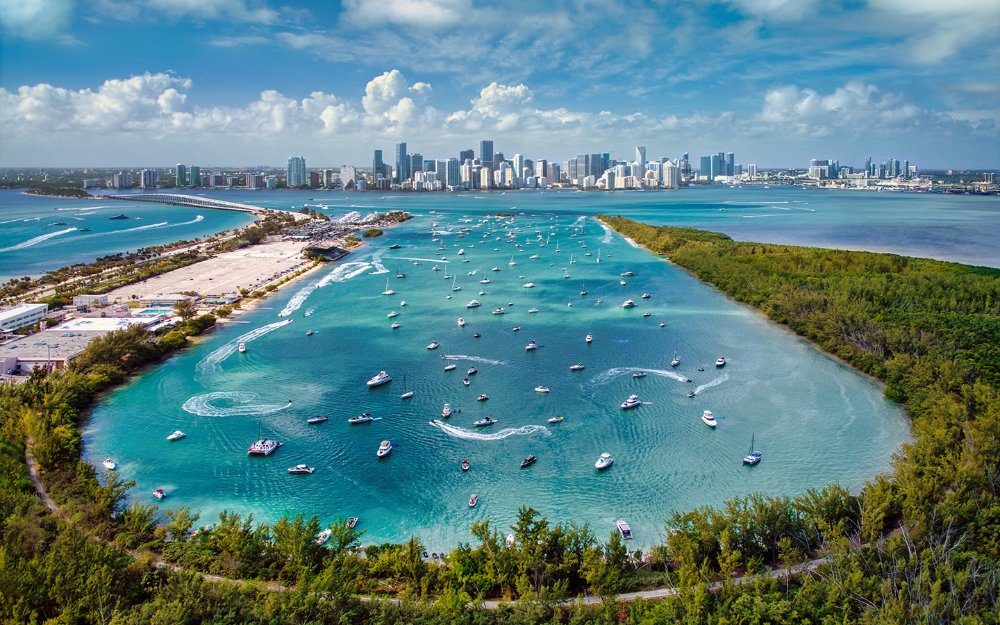
Where to live on Key Biscayne, condos, single-family, and bayfront, are really three different lifestyles wearing the same zip code. This is a two-mile-long barrier island connected to the mainland by a single causeway, and every property on it falls into one of three buckets: a condo on or near the ocean, a single-family home on an interior or bayfront street, or a unit inside the gated Key Colony community on the island’s north end. The type you pick determines your monthly cost, your maintenance load, and honestly, your view.
I’ve walked buyers through all three, and the mistake I see most often is picking a location before understanding what it actually delivers. Someone wants “oceanfront” and doesn’t realize almost none of that inventory is single-family, it’s high-rise condos. Someone wants a dock and doesn’t realize that rules out most of the east side of the island entirely. Someone else assumes Key Colony is just another condo building and skips it, then finds out later it’s the only product on the island that gives them a private, gated community feel with grounds and security separate from the general village. This guide breaks down exactly what exists, where it sits, and what it costs, so you can make an informed decision instead of guessing from a map.
The Island’s Basic Geography: Ocean, Bay, and the Village Center
Key Biscayne runs roughly north to south, with the Atlantic Ocean on the east side and Biscayne Bay on the west side. Crandon Boulevard is the spine that runs the length of the island, and almost everything you’d consider buying sits east or west of that road.
East of Crandon Boulevard (ocean side): This is condo territory. Ocean Drive and Ocean Lane Drive run along the beach, and the buildings here are almost entirely mid-rise and high-rise condominiums, not single-family homes. Zoning and the beach setback line make oceanfront single-family lots essentially nonexistent on this stretch.
West of Crandon Boulevard (bay side): This is where single-family homes with docks live. Streets like West Mashta Drive, Harbor Drive, and Point Drive back directly onto Biscayne Bay, and many lots here have private dockage with a clear line of sight to the downtown Miami skyline.
The village center, roughly between Fernwood, Glenridge, and Crandon Boulevard: This is the walkable core, close to the K-8 Center, the library, restaurants, and the Winn-Dixie plaza. It’s a mix of interior single-family streets and smaller condo and townhome buildings, and it’s usually the best value per square foot on the island because you’re not paying an ocean or bay premium.
Understanding which side of Crandon Boulevard a listing sits on tells you almost everything about what you’re actually buying before you even look at photos. It also tells you something about daily life that most out-of-town buyers underestimate: the ocean side and the bay side feel like different climates. The ocean side gets the breeze and the noise of Crandon Park traffic on weekends, the bay side is quieter and calmer, especially in the evening. If you’re the kind of buyer who wants to walk to the beach every morning, that matters more than the price per square foot. If you want a quiet dinner on your own dock watching the Brickell skyline light up, the ocean side won’t give you that no matter what you pay.
For the fuller picture of the island beyond housing stock, the Key Biscayne complete guide covers the schools, causeway commute, and village character in more depth.
Condo Living on Key Biscayne
Condos are the majority of the transaction volume on Key Biscayne, and they range further in price than most buyers expect. It’s not just luxury towers. There’s real tiering here based on building age, amenities, and proximity to the beach, and understanding that tiering is the difference between overpaying for a building you’ll outgrow and finding the right fit on the first try.
Entry-Level and Mid-Tier Buildings
Older buildings set back from the water or on the bay side, like Tuscany, Galen at Key Biscayne, and similar mid-rise properties near the village center, are where you’ll find one and two bedroom units starting in the $500K to $900K range. These buildings were mostly built in the 1970s and 1980s, so HOA dues run higher relative to unit value, often $800 to $1,500 a month, because reserves have to cover aging roofs, plumbing, and increasingly, Florida’s post-Surfside structural reserve requirements. Ask for the most recent milestone inspection and reserve study before you write an offer on anything built before 1990. That paperwork will tell you whether the association is actually funding its reserves or whether a large special assessment is coming, and on a barrier island building, that assessment can run into the tens of thousands of dollars per unit if a building has deferred concrete restoration or roof replacement.
I tell buyers looking in this tier to run two numbers side by side before they fall in love with a unit: the sale price and the trailing twelve months of HOA increases. A building that raised dues 15 to 20 percent in the last budget cycle is telling you something about its reserve position, and it’s worth asking the listing agent directly rather than assuming the current dues will hold. This is exactly the segment covered in our first-time buyer breakdown, which walks through what “entry level” actually buys on the island.
Oceanfront Towers
Buildings directly on Ocean Drive and Ocean Lane Drive, including the Ocean Club complex (which spans several towers with shared tennis and beach club amenities), Cristina Condo, and Villa Regina, put you steps from the sand. Two and three bedroom units in this tier generally run $1.5M to $4M depending on floor and renovation status. HOA fees climb here too, often $1,800 to $3,000+ a month once you account for beach maintenance, staffing, and insurance.
Floor and line matter more in this tier than almost any other decision you’ll make. A unit on a low floor facing the parking structure at Ocean Club can sell for 30 to 40 percent less than an identical layout on a high floor with a direct ocean line, even in the same building. If ocean view is the reason you’re buying oceanfront, don’t compromise on the line just to save on price per square foot, because that’s the entire value proposition of buying this tier in the first place. Renovation status matters just as much. A 1990s original kitchen and bath in one of these buildings can mean $150K to $250K in renovation costs once you’re in, so factor that into your offer, not just the sticker price.
New Construction and Ultra-Luxury Towers
Oceana Key Biscayne, completed in the late 2010s, and the Ritz-Carlton Residences reset the ceiling for what condo pricing looks like on the island. Units in these buildings start well above $3M and climb past $20M for penthouse product, with HOA dues in the $3,500 to $6,000+ a month range given the full-service staffing, spa, and concierge model. Grand Bay Residences, on the bay side near the Crandon golf course, offers a similar luxury tier with skyline views instead of ocean views, which is worth considering if you want the same finish level without the ocean premium.
Buyers at this level are usually not asking “can I afford the mortgage,” they’re asking “does the service model actually match what I’m paying every month.” That’s a fair question. A $5,000 a month HOA at Oceana buys 24-hour valet, a private beach club, a fitness center that rivals a standalone gym, and a staff that knows your name. Compare that to a self-managed building charging $2,000 a month with a part-time front desk, and you start to see why the dues gap exists. It’s not padding, it’s a different operating model. If new-build product specifically is what you’re after, what actually exists in new construction on Key Biscayne lays out the short list, because there simply isn’t much undeveloped land left to build on.
The through-line on condos: the closer to the sand, the higher both the purchase price and the monthly carrying cost. Buyers who want ocean access without the top-tier HOA often do better a block or two inland, still walkable to the beach, in an older but well-maintained building.
Single-Family Neighborhoods
Single-family inventory on Key Biscayne is limited by geography. This is a small island with almost no land left to subdivide, so single-family homes sit almost entirely on the bay side and in the interior streets around the village center. There is no meaningful oceanfront single-family stock.
Mashta Island and the Bayfront Streets
West Mashta Drive and East Mashta Drive form one of the most established residential pockets on the island, close to the village center but fronting the bay. Homes here range from older 1960s and 1970s ranch-style houses on their original lots (candidates for renovation or teardown) to fully rebuilt modern homes. Interior lots without direct water access typically start around $2M to $3.5M. Waterfront lots on Mashta with dock potential move into the $5M to $12M range depending on lot size and water depth.
The renovation-versus-teardown decision on Mashta comes up on almost every older lot I’ve shown. A 1965 ranch on a 10,000 square foot lot might have good bones and a workable footprint, but it was built to a flood elevation standard that’s decades out of date. Rebuilding to current FEMA base flood elevation and Miami-Dade’s High Velocity Hurricane Zone wind code often runs $500 to $700 per square foot for a full custom rebuild. On a lot where the land itself is worth $3M or more, a lot of buyers do the math and decide the land is what they’re actually paying for, and they plan to build new from day one rather than sink money into a renovation of a structure they’ll eventually replace anyway.
Interior Village Streets
Streets like Fernwood, Glenridge, Woodcrest, Hampton Lane, East and West Enid Drive, and East and West Heather Drive sit between Crandon Boulevard and the water without direct waterfront exposure. These are the most walkable single-family streets on the island, close to the K-8 Center and the village shops, and they tend to be the best value entry point into single-family ownership, generally $1.8M to $3M for a standard three or four bedroom home on a standard lot. Families prioritizing the school walk and village life over water access usually land here.
This is also the pocket where I see the most families move from a condo into a first single-family purchase. The jump makes sense on these streets specifically because the lot sizes are manageable, most are 7,500 to 9,000 square feet, so the maintenance load is real but not overwhelming, and you’re a five to ten minute walk from the K-8 Center drop-off line instead of a car ride. Compare that to Mashta or Harbor Drive, where lot sizes and landscaping budgets scale up fast, and the interior streets start to look like the more livable choice for a family that isn’t trying to entertain fifty people on a dock every weekend. Our Key Biscayne schools guide is worth reading alongside this if proximity to the K-8 Center is driving your street selection.
Harbor Drive and Point Drive
These bay-side streets on the island’s south and west edges offer some of the most consistent dock access and skyline views on Key Biscayne. Expect $4M and up for waterfront, with larger point lots and wider water frontage pushing past $15M to $20M. This is also where you’ll find some of the newer construction and full gut renovations, since older homes here are frequently torn down and rebuilt to modern flood and wind codes.
Point Drive in particular commands a premium over standard Harbor Drive lots because of water frontage width. A standard waterfront lot might give you 75 to 100 feet of seawall, while a true point lot can offer frontage on two sides of the property, which means a wider dock, better protected mooring, and in most cases, an unobstructed 180-degree skyline view instead of a view that’s partially blocked by the neighboring dock and vessel. If skyline photography or entertaining on the water is the actual goal, that frontage width is worth paying for.
Bayfront Real Estate: Docks, Skyline Views, and Real Costs
Bayfront is its own category worth separating out because the value proposition is specific: a private dock, calmer water than the ocean side, and a direct sightline to the downtown Miami and Brickell skyline. If boating is the reason you’re moving to Key Biscayne, bayfront single-family is almost always the answer, not a condo with a marina slip, because deeded dockage on your own lot gives you control over vessel size and access that a shared marina can’t match.
A few things to budget for beyond the purchase price on bayfront property:
- Flood insurance. Nearly all of Key Biscayne sits in a high-risk flood zone, and bayfront lots carry some of the highest premiums on the island. Get a quote before you’re under contract, not after. On a $5M-plus bayfront home, it’s not unusual to see combined flood and wind premiums run $30,000 to $60,000 a year, and that number needs to be in your carrying cost math from day one, not discovered at closing.
- Seawall condition. Many older bayfront lots have seawalls original to the 1960s-70s construction. A seawall replacement can run into six figures, so have it inspected as part of due diligence. Ask specifically whether the seawall has a cap and whether it’s been raised to current elevation standards, because older seawalls were built to a lower bay level than what Miami-Dade sees today during king tide season.
- Dock permitting. If you’re planning to build or extend a dock, Miami-Dade and the Village of Key Biscayne both have permitting requirements, and it’s not always fast. Factor that timeline in if a dock is a dealbreaker. A straightforward dock repair permit can move in a matter of weeks, but a new dock or a significant extension into the bay can take several months once environmental review is involved.
Bayfront pricing has held up well because the supply is fixed. There is no more bay-side land coming to market on this island, which is part of why the luxury segment on Key Biscayne is disproportionately weighted toward bayfront estates rather than oceanfront condos. Compare that to Fisher Island or parts of Miami Beach, where new bayfront product occasionally comes to market through redevelopment. On Key Biscayne, what exists today on the bay side is close to what will exist in ten years. That scarcity is the whole argument for buying here rather than waiting for something better to come along.
Key Colony: The Island’s Private Gated Community
Key Colony sits on the north end of Key Biscayne and functions as a distinct, gated enclave within the island, with its own homeowners association and, historically, its own layer of private security and management separate from the rest of the village. It mixes low-rise garden villas and townhomes with a high-rise tower, giving buyers a middle option between a standalone condo building and a single-family street.
Pricing for villas and townhomes inside Key Colony typically runs $1.5M to $3.5M, while tower units range more broadly depending on floor and view, often $1M to $4M+. HOA structures here are layered (a master association plus sub-association fees for some product types), so get a clear breakdown of exactly what you’re paying for and what it covers before you write an offer. Key Colony tends to appeal to buyers who want resort-style grounds and a gated feel without committing to either a full high-rise or a standalone house.
The buyer profile I see most often for Key Colony is someone coming from a large single-family home elsewhere who wants to keep a similar sense of privacy and green space on Key Biscayne, without taking on a private pool, a private dock, and full landscaping upkeep themselves. The villas give you a townhome-style footprint with your own small outdoor space, while the grounds and amenities are managed collectively. It’s a product type that doesn’t exist anywhere else on the island, which is exactly why it deserves its own line item in your search rather than getting lumped in with “condos” generically.
Property Taxes, Insurance, and the Real Cost of Ownership
Whatever category you land in, the sticker price on Key Biscayne is never the full monthly picture, and this is where I see out-of-state buyers get caught off guard most often. Miami-Dade County property tax rates run close to 2 percent of assessed value annually before any exemptions, and Key Biscayne’s own Village millage adds to that on top of the county, school board, and other special district rates. A $3M purchase can carry a property tax bill in the neighborhood of $50,000 to $60,000 a year before homestead exemption, and non-homestead buyers (which includes most second-home and investment purchasers) don’t get the same protection against assessment increases that a primary Florida resident does.
Add insurance on top of that. Florida’s property insurance market has tightened significantly over the last several years, and barrier island property, whether it’s a condo, a single-family home, or a Key Colony villa, sits at the higher end of that pricing regardless of product type. Wind coverage, flood coverage, and in the case of condos, the master policy plus your own HO-6 walls-in policy, all stack. Before you get emotionally attached to a listing, get real insurance quotes. I’d rather a buyer walk away from a home they love because the carrying cost doesn’t work than close on it and feel trapped by the monthly number six months later.
Matching Buyer Type to Location
Here’s the practical framework I use with buyers once they understand the three property types:
First-time buyer or downsizer wanting low maintenance: Look at mid-tier condo buildings near the village center, not directly oceanfront. You get walkability to restaurants and the beach without the top-tier HOA. Start with the first-time buyer guide to calibrate expectations on price.
Family prioritizing the school and walkability: Interior single-family streets like Fernwood, Glenridge, or the Enid/Heather corridor. Short walk to the K-8 Center, quieter than the beach corridor, and generally the best value per square foot in the single-family category.
Boater or someone who wants a private dock: Bayfront streets only, Mashta, Harbor Drive, Point Drive. Don’t compromise on this one with a condo and a marina slip if daily, unrestricted boat access matters to you.
Buyer who wants full-service amenities and doesn’t mind paying for them: Oceana, Ritz-Carlton, or Grand Bay. Understand the HOA structure going in, because these dues are real monthly commitments, not a rounding error.
Retiree or empty-nester who wants privacy without full home upkeep: Key Colony is the one most buyers don’t think to consider until they’ve toured it. Gated grounds, a managed feel, and a footprint between a condo and a house.
Remote worker or hybrid commuter into Brickell or downtown Miami: Weight your decision toward the bay side or the village center. The Rickenbacker Causeway commute is short in distance but can back up during peak hours, and a bayfront or village center home puts you closer to the causeway on-ramp than an oceanfront unit does.
Investor looking at rental yield or long-term appreciation: The scarcity of land on this island is the entire investment thesis. Our investment property breakdown goes deeper on which product types perform best for rental income versus pure appreciation.
Final Take
Where to live on Key Biscayne, condos, single-family, and bayfront, comes down to answering three questions honestly: how much maintenance are you willing to take on, do you need direct water access for a boat, and how close to the beach do you actually need to be versus want to be. Condos solve for low maintenance and beach proximity at a real HOA cost. Single-family interior streets solve for space and school walkability at the best relative value. Bayfront solves for boating and skyline views, at the highest entry price on the island. Key Colony solves for privacy and grounds without the full weight of a standalone home.
None of these are wrong choices, they’re different trade-offs on a very small piece of land where supply isn’t increasing. If you’re still weighing whether the island fits your life at all before narrowing down a street, what daily life on Key Biscayne actually looks like and what it takes to actually move here are both worth reading before you start touring specific buildings and blocks.
Want the honest read on a specific building or street before you write an offer? I can walk you through recent closed comps, HOA financials, and what’s actually available right now. DM me “KEY BISCAYNE” and I’ll send you the current inventory broken down by the categories above.
More articles you might like
First-Time Buyer on Key Biscayne: What the Entry Level Actually Looks Like
18 min readKey Biscayne, Florida: The Complete Guide for Buyers Considering the Island
13 min readKey Biscayne Luxury Real Estate: What the Premium Market Looks Like
13 min readNew Construction on Key Biscayne: What Actually Exists in 2026
19 min readKey Biscayne Schools: What Families on the Island Need to Know
19 min read