Key Biscayne Schools: What Families on the Island Need to Know
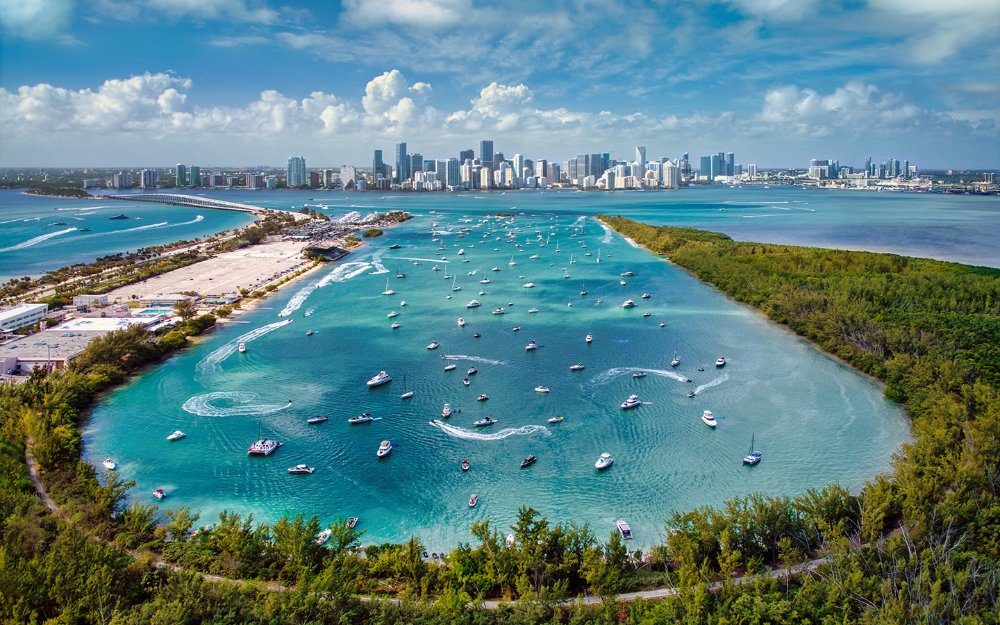
If you are weighing a move to Key Biscayne and you have kids, here is the honest answer up front: Key Biscayne schools work well through eighth grade, and then the island hands your family off. Key Biscayne K-8 Center is the backbone of education on the island, and it is a strong one. But there is no public high school on Key Biscayne itself, which means every family eventually makes a choice, whether that is a competitive magnet application, a zoned assignment across the bay, or a private school across the Rickenbacker Causeway. Understanding that hand-off, and what it costs in time, money, and logistics, is the part most relocation guides skip. This is the piece that actually walks through it.
Key Biscayne Schools: What Families on the Island Need to Know
Key Biscayne sits inside Miami-Dade County Public Schools, but functionally it operates almost like its own small district because there is exactly one public school building on the island. Everything else, public or private, requires crossing the causeway. That single fact shapes almost every school decision a Key Biscayne family makes, and it shapes real estate decisions too. Families who plan to stay through high school often buy differently than families who know they will private-school their kids from day one, or who are comfortable with a daily commute once their child ages out of K-8.
Three things determine whether Key Biscayne’s school setup works for your family: how you feel about the K-8 to high school transition, how much daily commuting you are willing to do, and whether private school tuition is part of your budget from the start. Get honest with yourself on those three questions before you fall in love with a specific condo or house, because the answers change which part of the island, or which nearby suburb, actually fits.
It also helps to know how Key Biscayne compares to the two suburbs relocating families cross-shop it against most: Coral Gables and Pinecrest. Both of those towns offer a full K-12 public pathway without a causeway crossing. Key Biscayne does not, and it never will, because there is no land left on the island to build a comprehensive high school on. That is not a knock on Key Biscayne. It is a tradeoff for the lifestyle, the security, and the small-island feel that draws people there in the first place. You are trading a K-12 public pipeline for eight years of an unusually strong, unusually connected public school, followed by a decision point. Go in knowing that is the deal.
The Public Anchor: Key Biscayne K-8 Center
Key Biscayne K-8 Center is the reason most island families with young kids can stay put through middle school. It is a public Miami-Dade County school located on the island itself, serving kindergarten through eighth grade, and it consistently draws strong state ratings and a loyal parent base. Because it is the only public school on Key Biscayne, virtually every island family with kids in that age range either attends it or actively chose not to and picked a private alternative instead. There is no other zoned public option to shop against locally.
What makes it work is scale and community, not size. It is a relatively small, tight-knit school where kids from the same few condo buildings and streets grow up together from kindergarten on. Parents on Key Biscayne describe a level of familiarity, teacher access, and community involvement that is harder to find in larger mainland zoned schools. Class sizes, extracurriculars, and the overall culture benefit from the fact that the Village of Key Biscayne is small, wealthy, and deeply invested in the school as a community institution, not just a public service.
Think about what that actually looks like day to day. Drop-off and pickup are a social event, not just a logistics chore, because you know most of the other parents by name within a year or two. Kids who start in kindergarten together often stay together through eighth grade, which builds a level of continuity you rarely see in a nine-year public school run anywhere else in Miami-Dade. For a relocating family, especially one coming from out of state where a school move every few years is normal, that continuity is a real selling point, not a soft one.
The honest caveat: ratings and specific program offerings shift year to year, so verify the current state school grade and any magnet or gifted program details directly with Miami-Dade County Public Schools or the school itself before you buy. Do not rely on a number from an old listing sheet, and do not rely on this article for a current grade either. School performance data changes annually, boundary lines occasionally get revisited, and the only source that matters on closing day is the district itself.
After Eighth Grade: MAST Academy, Coral Gables High, and the Causeway Commute
This is the part that surprises relocating families the most: Key Biscayne has no comprehensive public high school on the island. When your child finishes eighth grade at Key Biscayne K-8 Center, you are choosing between two main public paths, plus private options covered in the next section.
The first path is MAST Academy, short for Maritime and Science Technology Academy, a Miami-Dade County magnet high school located near the Rickenbacker Causeway on Virginia Key, just off the island. MAST is one of the more academically regarded magnet programs in the county, with a marine science and technology focus, and it is popular with Key Biscayne families precisely because of the short commute and the school’s reputation. Admission is competitive and application-based rather than automatic, so you cannot assume a spot. If MAST is part of your plan, you need to understand Miami-Dade’s magnet application timeline and apply on schedule, typically the year before your child would enroll.
Here is what that actually means in practice: the application window for Miami-Dade magnet programs generally opens in the fall of the year before enrollment, which for a family aiming at ninth grade means the application gets submitted during eighth grade, not summer before ninth grade when it feels more natural to start thinking about high school. Miss that window, and you are looking at the zoned option by default, or a mid-year scramble that rarely ends well. This is exactly the kind of detail that gets lost when a family is focused on packing boxes and closing dates instead of school calendars, which is why it needs to be on your radar the moment your child starts K-8 Center, not the year they finish it.
The second path is the zoned public high school assignment, which for most Key Biscayne addresses runs to Coral Gables Senior High School on the mainland. That means a real daily commute back across the causeway and through Coral Gables traffic, which is a very different experience than the walk-or-golf-cart routine families get used to during the K-8 years. Coral Gables Senior High is a large, well-established public school with a broad course catalog and a long track record, so it is not a fallback in the sense of being a weak option. It is simply a bigger school, further away, without the walkability that defines the K-8 years on the island.
Families who want to stay in the public system through twelfth grade need to think through this transition early, ideally before you buy, not after your child is already enrolled at K-8 Center and the deadline for a magnet application sneaks up on you. A useful exercise: sit down the summer before seventh grade, not eighth, and map out which path you are leaning toward. That gives you a full year of runway to research MAST’s current admission criteria, talk to other K-8 Center parents who have been through the transition, and decide whether the Coral Gables High zone is genuinely acceptable to your family or just the default you will fall into if you do not plan.
Private School Options On the Island and Across the Causeway
If you would rather not gamble on a magnet lottery or commit to the Coral Gables High zone, private school is the other real path, and Key Biscayne families use it heavily, both on the island and just across the water.
St. Agnes Academy is the one private school physically located on Key Biscayne. It is a Catholic school covering kindergarten through eighth grade, and it is the direct alternative to Key Biscayne K-8 Center for families who want a faith-based, smaller-scale option without leaving the island for drop-off. For families who want a private education but still want the on-island convenience that defines the Key Biscayne lifestyle, St. Agnes is effectively the only way to get both at once.
For private high school, and in some cases private education starting much earlier, most Key Biscayne families look across the Rickenbacker Causeway into Coconut Grove and greater Miami:
- Ransom Everglades School, a well-known prekindergarten through twelfth grade independent school in Coconut Grove, is one of the most sought-after private options for Key Biscayne families continuing past K-8.
- Gulliver Preparatory School operates multiple campuses across Miami-Dade and is another common choice, covering early education through high school.
- Carrollton School of the Sacred Heart, an all-girls Catholic school in Coconut Grove serving prekindergarten through twelfth grade, is a fit for families wanting a single-sex, faith-based option through graduation.
- Immaculata-La Salle, a Catholic school in Coconut Grove serving sixth through twelfth grade, is another option families weigh alongside the above.
The tradeoff with every one of these is the same: strong academics and continuity through twelfth grade, in exchange for private tuition and a daily commute that, while short in miles, can be slow depending on causeway and Coconut Grove traffic patterns. Families choosing between these options usually end up weighing three things against each other: single-sex versus co-ed, faith-based versus secular, and whether they want their child on one continuous K-12 campus versus switching schools at the high school transition anyway, in which case some families decide the zoned or magnet public route makes more sense financially since a school change is happening either way.
If private school is part of your plan from the start, it is worth reading our breakdown of Key Biscayne luxury real estate, since private tuition and premium home prices tend to travel together in a household budget on the island. A family budgeting for two kids at Ransom Everglades or Gulliver on top of an island mortgage is running a very different monthly number than a family committed to the public K-8 Center and MAST Academy pathway, and that difference should show up in your house-hunting budget, not just your school research.
The Real Commute Math for School Drop-Off
The Rickenbacker Causeway is the only way on or off Key Biscayne, and it is tolled, which matters more than people expect once you are doing two school runs a day. For families with kids at Key Biscayne K-8 Center, drop-off is often a walk, bike ride, or short golf-cart trip, which is one of the genuine lifestyle perks of the island and part of what we cover in our look at life on Key Biscayne.
Once a child moves to MAST Academy, Coral Gables Senior High, or any of the Coconut Grove private schools, that changes. MAST is the shortest commute of the post-K-8 options since it sits just off the island near the causeway. Coconut Grove private schools add roughly ten to fifteen minutes each way under normal conditions, more during morning rush or event traffic around the Grove. Coral Gables Senior High adds more still, since it sits further into Coral Gables proper.
Multiply any of those numbers by two trips a day, five days a week, and you start to see the real cost. A fifteen-minute-each-way commute is two and a half hours a week just on school runs, before you factor in sports practices, activities, or a second child on a different schedule. Families with kids at different schools, say one still at K-8 Center and an older sibling at MAST or a Coconut Grove private school, sometimes end up running two separate causeway trips in the same morning. That is manageable, plenty of Key Biscayne families do it, but it is worth picturing honestly before you assume the transition will feel the same as the K-8 years.
None of these commutes are unreasonable by South Florida standards, but they are a real daily cost that first-time island buyers sometimes underestimate. If you are cross-shopping Key Biscayne against a mainland suburb where the high school is a five-minute drive, factor the causeway toll and travel time into your actual day, not just your mortgage math. A family relocating from a smaller market where a ten-minute drive counts as a long commute should specifically drive the causeway route themselves, at actual drop-off and pickup times, before assuming it will be a non-issue.
How Schools Shape Where Families Buy on the Island
School logistics quietly shape a lot of buying decisions on Key Biscayne, even when buyers do not name it directly. Families with young kids gravitate toward homes and condos within easy reach of Key Biscayne K-8 Center, since a short walk or golf-cart ride to school is one of the most-cited reasons people choose the island over the mainland in the first place. That preference shows up in how neighborhoods get chosen, which our guide to where to live on Key Biscayne covers in more depth, comparing condo living, single-family streets, and bayfront pockets.
For families planning to stay through high school, the calculation gets more layered. Some intentionally buy larger single-family homes anticipating a long-term stay through the private school years, since the new construction on Key Biscayne reality is limited, and larger family-sized homes do not turn over often. Others treat the K-8 years on the island as a phase, with a plan to reassess once high school decisions arrive, whether that means committing to the MAST application, accepting the Coral Gables High zone, or shifting private school across the causeway.
There is a third pattern worth naming too, one I see with a number of relocating families: buying on Key Biscayne specifically for the K-8 years, with an open mind about whether they stay on the island or move to Coral Gables or Pinecrest once high school arrives. That is a completely legitimate strategy. It treats the island as an eight-year chapter rather than a forever home, and it means the buying decision should lean toward a property that holds value and resells well to the next family walking the same path, rather than a forever-home purchase. If that is your mindset, say so out loud when you are house hunting, because it changes which condo or house actually makes sense for you.
If you are just starting to look, our first-time buyer breakdown for Key Biscayne and our complete guide to the island are both useful starting points before you narrow in on a specific street or building with school access in mind.
What the Village Does to Support Its Schools
Key Biscayne is a small, affluent, tightly organized village, and that shows up in how the community supports its one public school. Parent involvement at Key Biscayne K-8 Center runs deep, and local fundraising and community foundations play a real role in supplementing what county and state funding cover, paying for enrichment programs, technology, and extras that a school this size would not otherwise have access to. This is common in small, high-income Florida municipalities where the tax base is strong but per-pupil state funding formulas do not fully capture local resources, and Key Biscayne leans into that gap actively rather than leaving it unaddressed.
The practical result for families is a public school that feels closer to a well-funded private school in terms of parent engagement, extracurricular access, and community involvement, while still being tuition-free. That is a real part of the island’s appeal, and it is worth asking current K-8 Center parents directly about the specifics of fundraising programs, class sizes, and enrichment offerings during your due diligence, since these details evolve year to year and are better confirmed firsthand than assumed from an old blog post.
This is also where it pays to actually talk to people before you buy, not just read about the school. Show up to a PTA meeting if you can, or ask your agent to connect you with a current K-8 Center parent willing to have a fifteen-minute conversation. You will learn more about class size, teacher turnover, and how the community foundation actually spends its money in that one conversation than in any amount of online research. Small islands run on word of mouth, and school reputation is no exception.
Questions to Ask Before You Buy for the Schools
Before you commit to a specific building or street on Key Biscayne with kids in mind, walk through these:
- What is the current Key Biscayne K-8 Center attendance boundary and enrollment status? Confirm directly with Miami-Dade County Public Schools that your intended address is zoned in, and ask about any capacity or waitlist issues, since popular island schools can fill up.
- Do you want to keep your child in public school through twelfth grade? If yes, understand the MAST Academy application timeline now, and have a real conversation about whether you are comfortable with the Coral Gables Senior High zone as a fallback.
- Is private school part of the plan, and at what age does it start? Deciding whether private school begins at kindergarten, at the K-8 to high school transition, or never, changes your household budget and should be modeled before you buy, not after.
- How much daily commute time are you willing to accept once your child moves past K-8 Center? Be honest about the causeway toll and travel time to MAST, Coral Gables, or the Coconut Grove private schools during real rush-hour conditions, not a Sunday afternoon test drive.
- How long do you actually plan to stay? A family planning five years on the island through elementary school has very different priorities than one planning to raise kids through high school graduation, and that should inform whether you buy a starter condo or a long-term single-family home.
- Does your timeline overlap with a magnet application deadline? If you are moving with a child already in sixth or seventh grade, map out exactly when the MAST Academy application window falls relative to your closing date, so you are not caught off guard mid-transition to the island.
- What is your realistic private school budget across multiple kids, for multiple years? Run the tuition math for every child in the family, not just the oldest, and multiply it out through graduation before you commit to a house payment that assumes tuition is a minor line item.
Frequently Asked Questions
Is there a public high school on Key Biscayne? No. Key Biscayne K-8 Center covers kindergarten through eighth grade on the island. For public high school, zoned students attend Coral Gables Senior High, and many apply to MAST Academy, a competitive Miami-Dade magnet located near the Rickenbacker Causeway.
What is the best private school option for Key Biscayne families? St. Agnes Academy is the only private school physically on the island, covering K-8. For private high school, most island families look to Ransom Everglades, Gulliver Preparatory, Carrollton School of the Sacred Heart, or Immaculata-La Salle, all a short drive across the causeway in Coconut Grove.
How much does the school situation affect Key Biscayne home prices? A meaningful amount. Homes within an easy walk or short golf-cart ride of Key Biscayne K-8 Center carry a premium, and families cross-shop the island against Coral Gables and Pinecrest specifically because of the K-8 to high school gap. It is a real factor in how buyers narrow neighborhoods.
How competitive is admission to MAST Academy? It is a magnet program with limited seats, so it is application-based rather than guaranteed, even for Key Biscayne residents who live nearby. Families need to apply during the official Miami-Dade County Public Schools magnet window, generally the year before enrollment, and should not treat a spot as automatic just because of proximity.
Should I buy on Key Biscayne if my kids are already in high school? It depends on your plan. If your kids are entering or already in high school, you are buying into the commute or private school reality from day one rather than easing into it after the K-8 years, so it is worth test-driving the actual commute to whichever school they would attend before you commit to the purchase.
The Bottom Line
Key Biscayne schools are a genuine strength of the island through eighth grade, and a real decision point after that. Key Biscayne K-8 Center gives families a strong, tight-knit public option with a level of community investment that is unusual for a public school its size. What the island does not offer is a public high school of its own, which means every family eventually chooses between MAST Academy, the Coral Gables Senior High zone, or a private school across the causeway. None of those choices are bad, but they are choices, and they come with real commute time and, in the private route, real tuition. If you are relocating to Key Biscayne with kids, get clear on your K-8 to high school plan before you buy, and read it alongside our guide to moving to Key Biscayne so the school decision and the real estate decision are made together, not one after the other.
Watch: learn more
Go deeper with my South Florida Insider videos.
Solterra: Everything You Need to Know Before You Visit
Solterra: Everything You Need to Know Before You Visit
More articles you might like
First-Time Buyer on Key Biscayne: What the Entry Level Actually Looks Like
18 min readKey Biscayne, Florida: The Complete Guide for Buyers Considering the Island
13 min readKey Biscayne Luxury Real Estate: What the Premium Market Looks Like
13 min readNew Construction on Key Biscayne: What Actually Exists in 2026
19 min readKey Biscayne Investment Property: The Scarcity Premium and Returns
20 min read