Key Biscayne, Florida: The Complete Guide for Buyers Considering the Island
Key Biscayne, Florida: The Complete Guide for Buyers Considering the Island
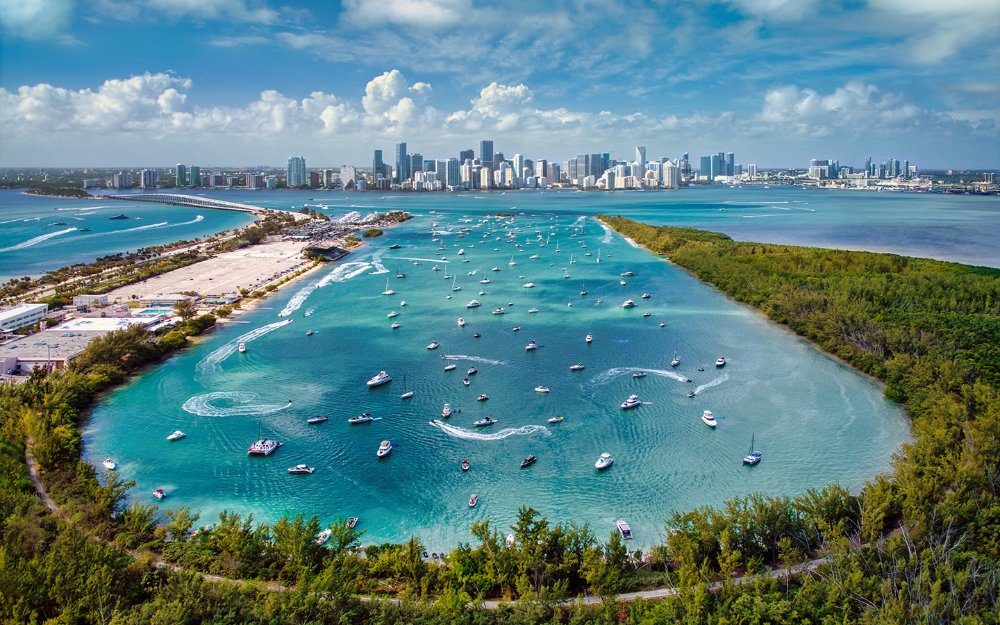
If you’re asking whether Key Biscayne is worth it, here’s the direct answer: it depends on whether you value privacy and quiet over convenience and price. Key Biscayne is a 1.4-square-mile barrier island south of Miami, reached by a single road, the Rickenbacker Causeway, with a toll booth on it. That one fact shapes everything else about living here. It’s the reason the island feels like its own small town instead of another Miami neighborhood, and it’s also the reason a basic 2-bedroom condo starts near $650,000 while a comparable unit on the mainland might run half that.
This guide covers what buyers actually need to know before they commit to Key Biscayne: real prices, real neighborhoods, real schools, and the honest tradeoffs. If you want the deep dive on any single piece, we’ve written focused guides on the entry-level market, the luxury segment, where to live, schools, the island lifestyle, and new construction. This piece is the map that ties it all together.
Where Key Biscayne Sits, and Why the Causeway Matters
Key Biscayne sits between Biscayne Bay and the Atlantic Ocean, just south of Virginia Key, connected to mainland Miami by the Rickenbacker Causeway. You pass through a toll (roughly $1.75 to $2 each way for a standard car, more for trucks and trailers) every time you come or go. That’s not a dealbreaker for most residents, but it’s a real cost and a real mental shift. There’s no back way in. No shortcut. If there’s an accident on the causeway, or a King Tide flooding event, the island can be effectively cut off for a stretch of time.
This is also why hurricane season matters more here than almost anywhere else in Miami-Dade. Key Biscayne is a mandatory evacuation zone in most storm scenarios, and being on a barrier island with one exit road means residents plan around it. Insurance reflects that reality too. Flood insurance, wind coverage, and condo master policies on the island run higher than mainland Miami-Dade, and buyers need to budget for it rather than get surprised at closing.
What you get in exchange is a level of separation from Miami’s traffic and density that almost nothing else in the county offers. Once you’re over the causeway, you’re on an island with a 35 mph speed limit, no billboards, tree-canopied streets, and a village government that has spent three decades protecting that feel on purpose.
What It Actually Costs to Buy on Key Biscayne
Let’s talk real numbers, because “Key Biscayne is expensive” doesn’t tell you anything useful.
Condos. The entry point on the island is a dated 2-bedroom, 2-bath unit in an older building like Commodore Club, Tower House, or one of the mid-rise buildings set back from the water, typically starting around $650,000 to $800,000. Move toward the ocean and into buildings like Ocean Club, Tequesta, Sonesta, or Key Colony, and you’re looking at $1.2 million to $2.5 million for a renovated unit with real views. New construction and top-of-market oceanfront, think Oceana Key Biscayne, runs from $3 million well into the $10 million-plus range for larger units.
Single-family homes. There is no true “starter” single-family home on Key Biscayne anymore. Older, unrenovated homes on the interior of the island (streets like Glenridge, Fernwood, or West Wood Drive) start around $2.5 million to $3.5 million, and most of those are candidates for a full renovation or teardown given their age. Move toward the bay or ocean and prices climb quickly, with waterfront estates running from $8 million into the $20 million-plus range. Because the island is fully built out, there’s essentially no vacant land left, so single-family “new construction” almost always means someone bought an older home and rebuilt on the lot.
HOA and condo fees. Don’t skip this line item. Oceanfront and amenity-heavy buildings on Key Biscayne routinely run $1,200 to $2,500-plus per month, and that’s before a special assessment for concrete restoration or hurricane-related repairs, which have become more common island-wide as older buildings age and Florida’s post-Surfside inspection requirements tighten. Always ask for the last two years of board minutes and the current reserve study before you write an offer.
For the full breakdown of what a realistic entry point looks like today, read First-Time Buyer on Key Biscayne: What the Entry Level Actually Looks Like. If you’re shopping the top of the market, Key Biscayne Luxury Real Estate: What the Premium Market Looks Like breaks down what buyers actually get for $5 million versus $15 million.
Where to Live on the Island
Key Biscayne is small, but it’s not one neighborhood. The differences matter more than they would in a sprawling suburb because everything here is within a 10-minute drive.
The Ocean side (east side of Crandon Boulevard) has the island’s premium condo towers and direct beach access. This is where you pay the most for the view and the sound of the surf, but you also give up some of the quiet, tree-lined residential feel.
The Bay side (west side, along Harbor Drive and the interior canals) has a mix of single-family homes and lower-rise buildings, generally more residential and quieter, with some homes offering private docks for boat access to Biscayne Bay.
The Village center, near Crandon Boulevard and the K-8 school, is the most walkable stretch, close to restaurants, the library, and Village Green Park, and it’s popular with families who want to walk or bike their kids to school.
Fisher Island, technically its own separate island reached by ferry (not the causeway), sometimes gets lumped into Key Biscayne conversations but is a different market entirely, with its own private access and price tier well above the main island.
For a full neighborhood-by-neighborhood breakdown, see Where to Live on Key Biscayne: Condos, Single-Family, and Bayfront.
Schools on the Island
This is where a lot of buyers make decisions, and it deserves a straight answer instead of marketing copy.
Key Biscayne’s public school, the K-8 Center for International Education, consistently ranks among the top-performing public schools in Miami-Dade County, and it’s a huge draw for families relocating to the island. It’s genuinely walkable from most of the residential streets on the west side and the Village center.
Where it gets more complicated is high school. Key Biscayne does not have a zoned high school on the island. Most public-school families are zoned to Coral Gables Senior High, which means a daily causeway commute. Some families opt for MAST Academy, a Miami-Dade magnet high school located nearby on Virginia Key, which requires an application and has limited seats. On the private side, families look at St. Agnes Academy (K-8, on the island) and then commute off-island for high school to schools like Ransom Everglades or Gulliver Prep in Coconut Grove.
If schools are the deciding factor in your move, read the full breakdown before you buy, not after: Key Biscayne Schools: What Families on the Island Need to Know.
The Island Lifestyle: What You’re Actually Buying
People don’t move to Key Biscayne for the commute. They move here for what happens after 5pm and on weekends, and this is genuinely the strongest argument for the price premium.
Crandon Park anchors the north end of the island: over 800 acres of beach, mangroves, and green space, with one of the most consistently rated beaches in the country and a golf course. Crandon Park Tennis Center is a legitimate draw for serious players, a former host site of the Miami Open with a stadium court still open to the public and residents. Tennis culture runs deep here in a way it doesn’t in most of South Florida.
Bill Baggs Cape Florida State Park, at the island’s southern tip, has the historic Cape Florida Lighthouse, another beach, and some of the best sunset and sunrise viewing in the county.
Village life itself is the other piece. Because the island caps at roughly 14,000 residents and there’s a hard boundary on growth (no more land to build on), it functions like a small town. People know their neighbors. Kids ride bikes to school. There’s a real Village Council that residents actually show up to and argue with about zoning and height limits, because those decisions directly protect (or threaten) the character everyone paid a premium for.
The tradeoff: restaurant and retail options are limited compared to the mainland. You’ll cross the causeway regularly for groceries beyond the basics, bigger shopping, and a wider range of dining. Residents accept that as the cost of the quiet.
Get the full picture of daily life on the island, including where the tennis, boating, and civic culture actually happen: Life on Key Biscayne: Tennis, Crandon Park, Village Life, and the Island Experience.
New Construction and Renovation Reality
Key Biscayne is functionally built out. There is no meaningful raw land left for new subdivisions, so “new construction” here doesn’t look like what you’d see in Doral or Parkland. It looks like:
- Teardown and rebuild on an existing single-family lot. Buyers purchase an older home, sometimes from the island’s original 1950s-60s development wave, and either gut-renovate or demolish and build new, subject to the Village’s zoning and height restrictions.
- Ground-up condo redevelopment, where an aging building is bought out and replaced, which is rare and slow given how tightly the Village controls approvals.
- Post-Surfside concrete restoration and major capital improvement projects in existing towers, which isn’t glamorous but is arguably the most important construction activity happening on the island right now, because it directly affects HOA fees and building safety across nearly every condo on Key Biscayne.
If new construction is part of your plan, read what’s realistically available before assuming you can just build: New Construction on Key Biscayne: What Actually Exists.
Investment and Rental Considerations
Key Biscayne is a scarcity market by definition. The island cannot expand, the Village has strong incentive to keep it that way, and demand from both domestic and international buyers has stayed consistent even through rate cycles that slowed other parts of Miami-Dade. That scarcity is the core argument for buying here as an investment, not just a lifestyle purchase.
That said, short-term rental rules on the island are more restrictive than in mainland Miami neighborhoods, and buyers considering Airbnb-style income need to confirm current Village ordinances and individual building rules before assuming they can rent short-term. Long-term rental demand, on the other hand, is strong and consistent, driven by the same families and executives who want island access without an eight-figure purchase.
For actual numbers on appreciation, rental yield, and what the scarcity premium has meant historically, see Key Biscayne Investment Property: The Scarcity Premium and Returns.
Who Key Biscayne Is Actually Right For
Here’s the honest filter, because Key Biscayne isn’t right for every buyer, even every buyer who can afford it.
It’s right for you if: you want a quiet, walkable, low-crime environment for raising kids and are comfortable paying a real premium for it. You want beach and bay access without leaving your neighborhood. You don’t mind a single road in and out, a toll every trip, and being farther from Miami’s urban core, airport, and broader restaurant and nightlife scene. You’re comfortable with condo living that comes with real HOA obligations, or you have the budget to renovate or rebuild a single-family home.
It’s probably not right for you if: you need to be close to Downtown Miami, Brickell, or the airport for work and want a short commute. You’re price-sensitive and need first-time-buyer inventory under $500,000, that doesn’t really exist here anymore. You want a lot of restaurant and retail variety within walking distance. Or you’re not comfortable with hurricane evacuation planning on a barrier island.
The Buying Process on Key Biscayne
A few things that catch buyers off guard if they’re used to mainland Miami-Dade transactions:
- Condo document review takes longer. Between reserve studies, milestone inspection status, and board minutes, budget more time for due diligence than you would on the mainland, especially for buildings over 30 years old.
- Village approvals move slowly and deliberately. If your purchase involves any renovation, addition, or rebuild, expect the Village’s permitting process to be more thorough (and slower) than a typical Miami-Dade municipality, because protecting the island’s character is a stated priority, not an afterthought.
- Financing on higher-HOA condos can be tighter. Some lenders scrutinize buildings with high monthly fees, ongoing assessments, or lower owner-occupancy ratios more closely. A good local lender who already knows Key Biscayne’s building-by-building reputation saves real time.
- Cash offers are common at the top of the market, particularly from international buyers, so if you’re financing, a clean pre-approval and a realistic timeline matter more here than in a lot of other South Florida markets.
For where prices and inventory actually stand right now, month to month, see Key Biscayne Real Estate Market: Prices and Conditions in 2026, and if you’re still deciding whether the island itself is the right move versus other South Florida relocation options, Moving to Key Biscayne: South Florida’s Most Private Island Community covers how it stacks up against alternatives.
The Bottom Line
Key Biscayne works for a specific type of buyer: someone who wants genuine island living, is willing to pay a real premium for scarcity and privacy, and has a plan for the tradeoffs, the causeway, the toll, the limited high school options, the higher insurance and HOA costs. For that buyer, almost nobody who moves here wants to leave. The island’s low turnover isn’t a sales line, it’s just what the data shows year after year.
If you’re seriously considering Key Biscayne, the smart move is to walk it in person before you fall in love with a listing photo. See what the causeway commute actually feels like at 8am on a Tuesday. Sit at Crandon Park for an hour. Talk to a few residents at the Village Green. Then reach out and I’ll walk you through the current inventory, the buildings worth looking at, and what your budget actually buys on the island right now.
More articles you might like
Moving to Key Biscayne: South Florida's Most Private Island Community
13 min readFirst-Time Buyer on Key Biscayne: What the Entry Level Actually Looks Like
18 min readKey Biscayne Luxury Real Estate: What the Premium Market Looks Like
13 min readNew Construction on Key Biscayne: What Actually Exists in 2026
19 min readKey Biscayne Schools: What Families on the Island Need to Know
19 min read