Key Biscayne Investment Property: The Scarcity Premium and Returns
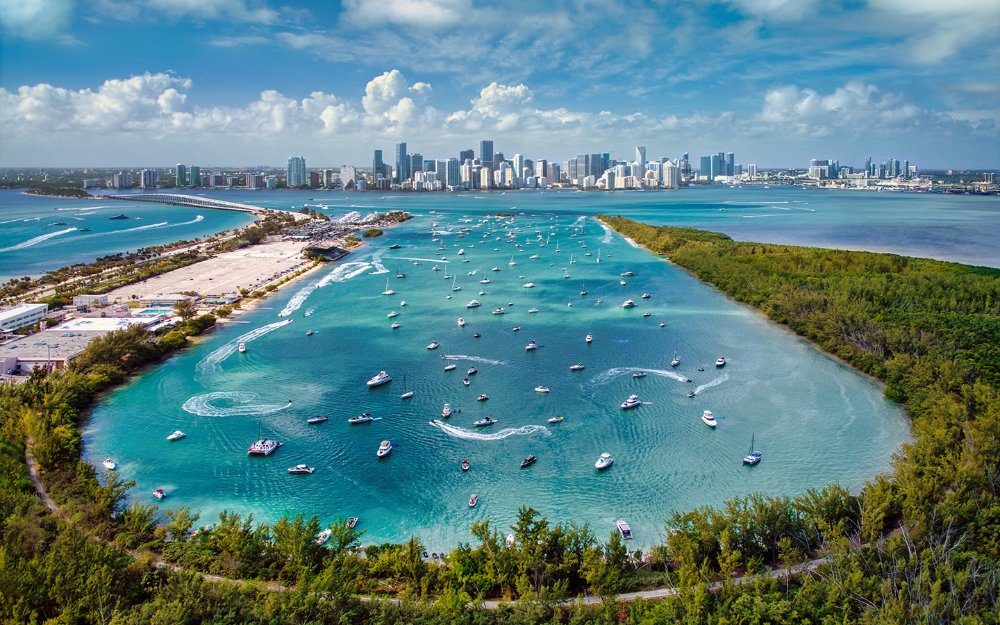
Key Biscayne investment property is one of the most misunderstood asset classes in South Florida real estate. Buyers hear “island,” “Miami,” and “limited supply” and assume the rental math must be extraordinary. It isn’t. The reality is that Key Biscayne investment property produces modest cap rates, usually in the 2% to 4% range, and the actual investment case has almost nothing to do with monthly cash flow. It has to do with scarcity. The island cannot add meaningful new supply, ever, and that fixed ceiling on inventory is the entire thesis.
This guide breaks down what actually drives returns on Key Biscayne, what the rental market really pays, what ownership actually costs, who this property type is genuinely built for, how financing and taxes work differently here than in a typical rental market, and what a realistic ten-year hold actually looks like. If you’re comparing Key Biscayne to a cash-flow rental in Hollywood or a new-build in Doral, you’re comparing two different asset classes. This is a wealth preservation and appreciation play, not a yield play, and understanding that distinction up front will save you from buying the wrong property for the wrong reason, or worse, walking away from the right property because the year-one numbers didn’t impress you on a spreadsheet.
Key Biscayne Investment Property: The Scarcity Premium and Returns Start With Geography
Key Biscayne is a barrier island connected to the mainland by a single road, the Rickenbacker Causeway, and there is no second point of entry. That alone caps how much traffic, density, and development the island can physically support. But the bigger constraint is land itself.
Roughly a third of the island’s total acreage is permanently protected parkland, split between Crandon Park on the north end and Bill Baggs Cape Florida State Park on the south end. Neither can ever be developed. What’s left is the Village of Key Biscayne, incorporated in 1991 specifically so residents could control their own zoning after years of feeling like an afterthought to Miami-Dade County. Since incorporation, the Village has kept building heights, density, and setbacks tight. There is no pipeline of new towers coming online the way there is in Edgewater or Brickell. For a full picture of what new development actually exists (and doesn’t), see New Construction on Key Biscayne: What Actually Exists.
That combination, protected parkland, single-causeway access, and a Village government with no appetite for upzoning, is why Key Biscayne inventory doesn’t grow. Demand for South Florida real estate keeps climbing. Supply on this seven-square-mile island does not. That mismatch is the scarcity premium, and it’s the real reason property here has historically held value through downturns better than most of Miami-Dade.
It helps to put this in context against the small handful of comparable South Florida markets that share the same structural setup. Fisher Island and Indian Creek both operate under similar fixed-supply conditions, but both are gated and effectively closed markets with none of the public parkland, public schools, or walkable Village center that Key Biscayne has. Key Biscayne is the rare version of a scarcity market that still functions as a real community, with a grocery store, a K-8 public school, tennis centers, and a Village Council that answers to residents. That’s part of why demand keeps showing up even when the yield math is unremarkable. Buyers aren’t just buying scarcity. They’re buying scarcity attached to a place people actually want to live day to day, not just park capital.
The Rental Market: What Key Biscayne Properties Actually Rent For
Key Biscayne’s rental demand comes from three distinct pools, and understanding which one you’re renting to changes your entire strategy.
Annual tenants are typically professionals working in Brickell or Downtown Miami who want the island lifestyle without owning. A two-bedroom condo in a mid-rise building on Crandon Boulevard commonly rents in the $3,500 to $5,500 per month range depending on building, view, and finish level. Larger three-bedroom units or bayfront buildings push higher. Single-family homes, which are scarcer and command a premium, can range widely from $8,000 a month for an older interior lot home to well north of $20,000 for a renovated bayfront property.
Seasonal and snowbird tenants arrive roughly November through April and will pay a significant premium over annual rates for a furnished unit, sometimes double the monthly equivalent for a three- to six-month term. This is where owners who actively manage the property (or pay a property manager to) can meaningfully improve their yield compared to a flat annual lease.
Corporate and short-term stays exist but are more limited than in Miami Beach or Brickell because Key Biscayne’s zoning and building rules restrict short-term rental activity in most condo buildings. Before you assume you can run an Airbnb-style operation here, check the specific building’s rental restrictions. Many Key Biscayne condo associations require minimum lease terms of six months to a year, which rules out the short-term rental arbitrage that works in other Miami-Dade submarkets.
To make this concrete, look at two owners with the same $900,000 two-bedroom condo who take different approaches. Owner A signs a standard annual lease at $4,600 a month, which is $55,200 a year, predictable and low-maintenance, with essentially zero turnover cost if the tenant renews. Owner B furnishes the unit, markets it for a six-month seasonal term at $8,000 a month during peak season (November through April), then either finds a shorter summer tenant at a reduced rate or leaves it available for personal use and light short stays where the building allows. Owner B can gross more, sometimes 15% to 25% higher than the annual number, but takes on furnishing costs, turnover between tenants, higher property management fees for a more hands-on arrangement, and real vacancy risk if the seasonal market softens in a given year. Neither approach is wrong. The point is that “what does Key Biscayne rent for” isn’t one number, it’s a decision you make based on how much active management you’re willing to do.
Cap Rates and the Honest Cash Flow Math
Here’s what most listing agents won’t walk you through in detail. Take a representative two-bedroom condo purchase around $850,000 to $1,000,000 (a realistic entry point per the ranges covered in First-Time Buyer on Key Biscayne: What the Entry Level Actually Looks Like) renting for $4,500 a month, or $54,000 a year gross.
Against that $54,000, you’re subtracting:
- HOA fees. Key Biscayne condo HOAs commonly run $1,000 to $2,000+ per month depending on building age, amenities, and how aggressively the association has funded reserves post-Surfside. That’s $12,000 to $24,000 a year gone before you touch taxes or insurance.
- Property taxes. Without homestead exemption (this is an investment property, not your primary residence), you’re paying full Miami-Dade millage on the assessed value, often $10,000 to $18,000+ annually on a property in this price range. Because there’s no homestead exemption, there’s also no 3% annual assessment cap. Non-homestead property is capped at a 10% annual increase instead, which matters if the property appreciates quickly in a strong cycle, your tax bill can climb faster than a comparable owner-occupied unit next door.
- Windstorm and flood insurance. This is the line item that has changed the math the most over the last several years. Barrier island properties carry some of the highest windstorm premiums in Miami-Dade, and flood insurance is mandatory in most cases. Budget several thousand dollars a year minimum, more for older buildings or homes closer to the water.
- Property management, if you use it. Typically 8% to 10% of collected rent for full-service management.
- Vacancy and turnover. Even a well-managed annual rental should budget for some vacancy between tenants, typically two to four weeks every one to two years, plus turnover costs like cleaning, minor repairs, and re-leasing fees if you use an agent to place the next tenant. It’s a small number relative to the other line items, but it’s real and it’s routinely left out of the “back of napkin” pitch.
Run those numbers and a lot of “$54,000 a year” properties net out to a cap rate in the low single digits, often 2% to 4% on the purchase price. That’s the honest math. It’s not a bad return relative to other passive assets when you factor in appreciation, but it will not compete with a cash-flowing property in inland Broward or the western suburbs on a pure yield basis. A comparable $900,000 purchase in a market like Hollywood or Coconut Creek, buying two or three smaller cash-flowing units instead of one Key Biscayne condo, can realistically net a 5% to 7% cap rate with far lower carrying costs per dollar invested. That’s not a knock on Key Biscayne. It’s the honest tradeoff between yield and scarcity, and you need to decide which one you’re actually buying before you write an offer.
Condo vs. Single-Family: Which Performs Better as an Investment
Condos are the more liquid, more manageable investment vehicle. Lower entry price, defined HOA responsibilities, easier to rent to the annual professional tenant pool. The tradeoff is the HOA fee drag on yield and, post-Surfside, the real risk of special assessments tied to 40-year recertification and milestone structural inspections. Before buying any Key Biscayne condo as an investment, get the building’s reserve study and recent board minutes. An underfunded reserve account today is a five- or six-figure special assessment bill tomorrow.
Single-family homes carry a scarcer supply premium of their own, there are simply far fewer of them, and they’re not subject to HOA special assessment risk in the same way. But entry price is materially higher, typically starting in the $2 million to $3 million range for anything on the interior of the island, and climbing sharply for bayfront or oceanfront lots. Maintenance is entirely the owner’s responsibility, and insurance costs on an older single-family home in a flood zone can be substantial. For a broader look at how these product types compare across the island, Where to Live on Key Biscayne: Condos, Single-Family, and Bayfront is a useful companion read.
There’s a middle path worth naming directly: townhomes and smaller multi-unit properties on the island. They’re rare, Key Biscayne’s zoning didn’t favor this product type historically, but when they come up they tend to combine some of the lower-maintenance appeal of a condo with the absence of a large master HOA and shared building risk. If you find one, don’t assume it’s overpriced just because it’s unfamiliar. Compare it against both the condo and single-family baselines above before you dismiss it.
The practical decision usually comes down to how hands-on you want to be and how much capital you’re deploying. A buyer with $900,000 to $1,200,000 to put into a single Key Biscayne asset is almost always better served by a well-run condo in a building with healthy reserves than by stretching into the bottom of the single-family market, where deferred maintenance risk on an older home can eat the scarcity premium alive. A buyer with $2.5 million or more to deploy, and the appetite to manage a standalone property, gets access to a genuinely scarcer product with no association risk, but should underwrite maintenance and insurance like a homeowner, not a landlord, because that’s functionally what you become.
Who Actually Buys Investment Property on Key Biscayne
This matters more than most buyers realize, because it explains why the cap rate math doesn’t scare off demand. The typical Key Biscayne investment buyer isn’t chasing yield. They’re one of a few profiles:
- Wealth preservation buyers. Often local or South American families who see Key Biscayne real estate as a hard asset in a stable jurisdiction, similar to how buyers historically treated Manhattan or London real estate. Cash flow is secondary to capital preservation and long-term appreciation.
- 1031 exchange buyers rolling gains out of another property and prioritizing a market with a strong track record of holding value, even if the immediate yield is modest.
- Future primary residence buyers. A meaningful share of “investment” purchases on Key Biscayne are really pre-retirement or pre-relocation buys, people who plan to live here in five or ten years and rent the property out in the meantime to offset carrying costs while the asset appreciates.
- Foreign national buyers, particularly from Latin America, drawn to the island’s safety, walkability, and proximity to both Brickell and Miami International Airport, who view Key Biscayne similarly to profile 1 above.
If you’re a domestic buyer looking purely for cash-on-cash return, you’re competing against buyers who don’t care about that number the way you do. That’s part of why prices hold firm even when the yield math looks unremarkable on paper.
I’ve walked this exact conversation with buyers who came in comparing Key Biscayne to a duplex in Pembroke Pines and left frustrated that the numbers “didn’t work.” They usually weren’t wrong about the math. They were solving the wrong problem. A buyer in profile 1 or 4 above isn’t trying to beat inflation with rental income, they’re trying to park capital somewhere that won’t evaporate, won’t get expropriated, and will likely be worth meaningfully more in fifteen years regardless of what any single year’s rent roll looks like. Once you understand which profile you actually are, the decision gets a lot easier to make honestly.
Financing an Investment Property on Key Biscayne
Financing works differently here than it does for a typical rental purchase, and it’s worth understanding before you get too far into a deal.
Down payment requirements are higher. Non-owner-occupied financing on a condo or single-family investment property typically requires 25% to 30% down at minimum, sometimes more depending on the lender and the loan amount. Jumbo loan territory starts quickly on Key Biscayne given the price points involved, and jumbo underwriting is more conservative across the board.
Rates run higher than owner-occupied. Expect an investment property rate premium, commonly 0.5 to 0.75 percentage points above what you’d get financing a primary residence, on top of whatever the broader rate environment is doing.
Condo financing has its own hurdles post-Surfside. Fannie Mae and Freddie Mac maintain lists of condo buildings that don’t meet current lending guidelines, often tied to reserve funding levels, deferred maintenance, or unresolved structural issues. A building that fails to meet these standards can become effectively unfinanceable through conventional channels, which shrinks your buyer pool dramatically if you ever go to sell, and can force a cash buyer discount. This is the financing version of the reserve study warning above, and it’s another reason to check a building’s status before you commit, not after.
DSCR loans are common for pure investment buys. Debt-service-coverage-ratio loans, which qualify the property based on projected rental income rather than the buyer’s personal income, are widely used for Key Biscayne investment purchases, especially by buyers holding the property through an LLC. Given the modest cap rates on the island, DSCR qualification can actually be harder here than in a higher-yield market, since the loan is sized against the rent the unit can realistically produce, and that’s worth modeling with your lender before you fall in love with a specific listing.
Tax Considerations for Investment Buyers
A few tax mechanics matter more on an investment purchase than they would on a primary residence.
No homestead exemption, and no 3% assessment cap. As noted above, investment property is taxed on full assessed value with only the 10% non-homestead cap limiting annual increases. Model your holding-period tax bill assuming it grows, not stays flat.
Depreciation is a real benefit. Like any residential investment property, you can depreciate the structure (not the land) over 27.5 years, which shelters a meaningful portion of rental income from tax even while the property appreciates. This is worth a real conversation with a CPA who understands real estate, not a generic assumption, because it changes the after-tax picture materially compared to the raw cap rate.
1031 exchanges work well into and out of Key Biscayne, given the strong long-term appreciation track record, but the identification and closing timelines are unforgiving (45 days to identify, 180 days to close), and Key Biscayne’s thin inventory means you should have a shortlist of buildings and price points ready before your exchange clock starts, not after.
FIRPTA applies to foreign sellers, which matters if you’re a foreign national buyer today thinking about your own eventual exit, or if you’re buying from one now. The Foreign Investment in Real Property Tax Act requires a withholding, typically 15% of the gross sales price, at closing when the seller is a foreign person, unless an exemption or reduced rate applies. This doesn’t affect a buyer’s purchase price, but it affects timeline and paperwork on the closing table, and it comes up more often on Key Biscayne than in most South Florida submarkets given how many owners here are foreign nationals.
The Long-Term Appreciation Case
Scarcity only works as an investment thesis if demand keeps showing up against fixed supply, and on Key Biscayne it has. The island benefits from being minutes from Brickell and Downtown Miami by causeway, while offering a level of privacy, low crime, and top-rated schools (see Key Biscayne Schools: What Families on the Island Need to Know) that mainland Miami-Dade generally can’t match at any price. That combination, urban proximity plus island seclusion, is genuinely rare in South Florida and has kept long-term demand strong across market cycles.
The luxury end of the market has been particularly resilient. Waterfront and bayfront properties in particular have seen sustained buyer interest because there is functionally no way to create more waterfront lots on an island that’s already built out. For a deeper look at that segment, see Key Biscayne Luxury Real Estate: What the Premium Market Looks Like.
Look at how the island performed through the two most recent stress tests. Through the 2008 to 2011 downturn, Key Biscayne prices corrected, nowhere in South Florida was immune, but the correction was shallower and the recovery faster than in overbuilt condo corridors like Brickell or Sunny Isles, where new supply kept coming online even as demand fell. Through the 2020 to 2022 run-up, Key Biscayne saw some of the same migration-driven demand spike that hit all of South Florida, but because there was no way to build additional inventory to meet it, the price response was sharper and has proven stickier on the way back down than in submarkets that simply added more units to absorb demand. That’s the scarcity thesis playing out in real market cycles, not just in theory.
None of this means prices only go up. Key Biscayne is not immune to broader Miami-Dade market cycles, and it’s a smaller, thinner market, which means fewer transactions can move comparable pricing more than in a high-volume submarket. But the structural scarcity argument, no new land, no new causeway, no meaningful upzoning, has held up across multiple real estate cycles, and there’s no policy or geographic change on the horizon that would alter it.
Risks You Need to Underwrite Honestly
Insurance cost trajectory. Windstorm and flood premiums on barrier island property have risen sharply over the last several years and show no clear sign of plateauing. Model your cap rate with insurance costs 20% to 30% higher than today’s quote, not lower.
Condo special assessments. Post-Surfside, Florida’s 40-year (and in some cases 25-year for coastal counties) recertification requirements and mandatory structural reserve funding under Senate Bill 4-D have exposed underfunded associations across Miami-Dade. Key Biscayne buildings are not exempt. A building with deferred maintenance and an underfunded reserve account can hit owners with a six-figure special assessment with little warning. This is the single biggest financial risk in Key Biscayne condo investing right now, and it’s entirely avoidable with due diligence before you buy.
Rental restriction rules. Confirm minimum lease term requirements with the specific condo association before assuming you can run the property flexibly. Rules vary building to building and are enforced.
Thin market liquidity. Key Biscayne trades far fewer units annually than mainland Miami-Dade submarkets. That cuts both ways, it supports price stability, but it also means you may hold a property longer than expected if you need to exit quickly. If your investment horizon is under five years, or if you may need to liquidate on short notice for reasons unrelated to the market, Key Biscayne’s thin trading volume should factor into that decision as heavily as price does.
Hurricane and storm-track exposure. As a barrier island, Key Biscayne carries evacuation and storm exposure that inland submarkets don’t. This is already priced into insurance costs, but it also affects rentability and short-term vacancy in active storm seasons, and it’s worth budgeting a contingency for lost rental income during a mandatory evacuation period in a bad year, not just property damage.
How This Fits Into a Broader Key Biscayne Purchase Decision
If you’re weighing an investment purchase against buying a primary residence on the island, it’s worth reading the full picture first. Key Biscayne, Florida: The Complete Guide for Buyers Considering the Island covers the fundamentals of the market, and Key Biscayne Real Estate Market: Prices and Conditions in 2026 breaks down where current pricing sits by segment. For buyers still deciding whether the island itself is the right fit before running investment numbers, Life on Key Biscayne: Tennis, Crandon Park, Village Life, and the Island Experience and Moving to Key Biscayne: South Florida’s Most Private Island Community are worth reading side by side with this one.
The Bottom Line
Key Biscayne investment property is not a spreadsheet play. If you’re underwriting purely on cap rate, you’ll find better numbers elsewhere in Miami-Dade or Broward, and you should buy there instead. What Key Biscayne offers is something harder to model: a fixed, shrinking-in-relative-terms supply of housing on a genuinely scarce barrier island, minutes from one of the fastest-growing urban cores in the country, with no realistic path for that supply to expand.
That scarcity is real, it’s durable, and it has held up across market cycles, including the two most recent stress tests South Florida real estate has been through. But go in with accurate expectations. Budget for real HOA and insurance costs, underwrite condo reserve health and financing eligibility before you buy, understand how depreciation and 1031 timing actually work for your situation, and accept that your return here is built on long-term appreciation and capital preservation, not monthly cash flow. Buyers who understand that going in tend to be happy owners a decade later. Buyers expecting Hollywood-style cap rates on an island this scarce usually aren’t, and no amount of good rent comps will change that math.
If you want the real numbers on a specific building or address before you commit, that’s a conversation worth having directly rather than working off average ranges. Send me the building or the listing and I’ll walk you through the actual HOA financials, reserve status, and realistic rent comps before you make an offer.
More articles you might like
First-Time Buyer on Key Biscayne: What the Entry Level Actually Looks Like
18 min readKey Biscayne, Florida: The Complete Guide for Buyers Considering the Island
13 min readKey Biscayne Luxury Real Estate: What the Premium Market Looks Like
13 min readNew Construction on Key Biscayne: What Actually Exists in 2026
19 min readKey Biscayne Schools: What Families on the Island Need to Know
19 min read