Moving to Coral Springs: The Family Suburb That Broward Does Best
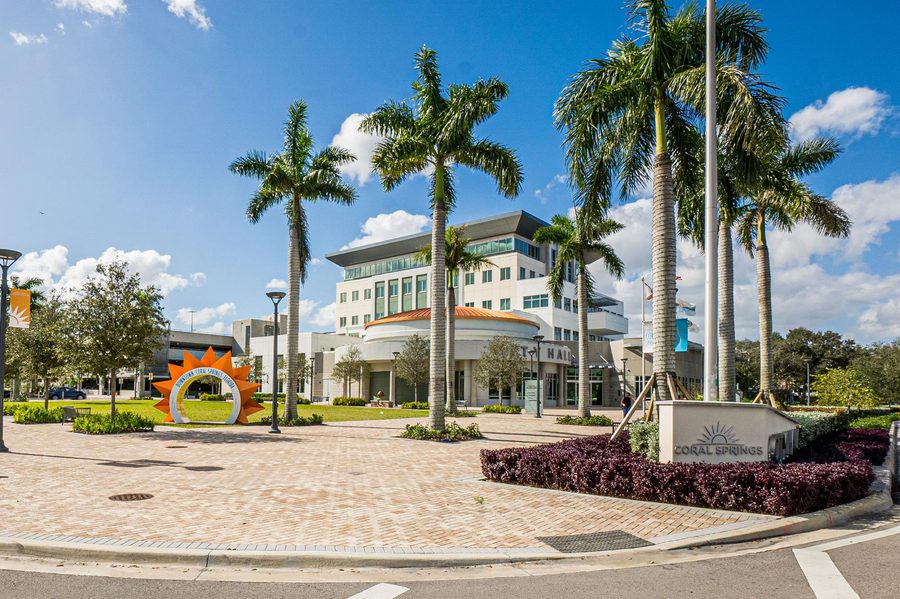
If you are moving to Coral Springs, the family suburb that Broward does best, here is the honest version most listing agents will not give you: this city earns its reputation the old-fashioned way, through decades of consistent school performance, low crime, and a layout that was actually planned for families before “master planned community” was a marketing term. It is not flashy. There is no new luxury builder putting up towers here. What Coral Springs offers instead is predictability, and for a lot of relocating families, that is worth more than a resort clubhouse.
This guide breaks down what it actually costs to live here in 2026, which neighborhoods fit which kind of family, how the schools really stack up, and where Coral Springs falls short so you go in with real expectations instead of a brochure version of the city.
Why Families Keep Choosing Coral Springs
Coral Springs was developed by Coral Ridge Properties starting in the 1960s as a planned city, not a subdivision bolted onto an existing town. That distinction matters. Streets were laid out with curved residential blocks feeding into collector roads, parks were built into the plan rather than added later, and the school sites were placed to be walkable from surrounding neighborhoods. Fifty-plus years later, that structure is still the backbone of why the city functions well for families.
The other piece is consistency. Coral Springs isn’t a boom-and-bust suburb chasing a new-construction wave. It’s a mature city of roughly 134,000 residents with an established tax base, a functioning downtown, and school zoning that hasn’t been rewritten every few years to chase growth. The city was incorporated in 1963 and has spent six decades filling out the same basic street grid, which means the traffic patterns, drainage systems, and utility infrastructure have had time to mature instead of getting stretched thin by a decade of rapid new-home permitting like you see in parts of western Broward and Palm Beach County right now.
For families relocating from out of state, that stability is often more valuable than square footage. You are not betting on a community that is still 40 percent construction traffic. You are buying into something that already works, with HOAs that have a track record instead of a sales brochure, and a city government that has been managing the same footprint long enough to know where the problems are.
For the fuller picture beyond this overview, the Coral Springs Complete Guide covers logistics like permitting, utilities, and city services that go beyond what we’ll get into here.
What Coral Springs Actually Costs in 2026
Here’s where a lot of Coral Springs content gets vague. Let’s be specific.
Single-Family Homes
Most single-family homes in Coral Springs fall between $450,000 and $750,000. Where you land in that range depends heavily on three things: age of the home, lot size, and whether it backs to water or golf frontage. A 1970s or 1980s three-bedroom in a non-gated section like Ramblewood or the older parts of Westchester will sit at the lower end. A renovated four- or five-bedroom in Eagle Trace or on a lake lot in Turtle Run pushes toward the top, and homes on the golf course in Country Club or Broken Woods can run higher still.
Buyers coming from out of state sometimes assume Coral Springs prices will mirror newer Parkland construction next door. It doesn’t. Coral Springs homes are older, which means lower price per square foot, but also means more properties needing updated kitchens, roofs, or A/C systems. Get a home inspection that specifically flags roof age and HVAC condition. A lot of Coral Springs housing stock is now 30 to 50 years old.
A practical example: a family relocating from the Midwest with a $600,000 budget can choose between a fully updated 1,900-square-foot home in Ramblewood with a newer roof, or a larger 2,600-square-foot home in Turtle Run that still has the original 1988 kitchen and a roof nearing the end of its insurable life. Same price point, completely different first two years of ownership. Neither choice is wrong, but you need to know which trade-off you’re making before you write the offer, not after the inspection report lands.
Townhomes and Villas
Townhome and villa product runs $325,000 to $475,000 depending on the community and whether it’s a one-story villa or a two-story townhome. These are common in sections near Coral Springs Drive and University Drive, and they’re often the entry point for young families or downsizing buyers who still want to be zoned for the same schools without taking on a full single-family maintenance load. Villas in particular tend to move fast when they hit the market because there simply isn’t much one-story attached product left in Broward at this price point, and empty nesters who grew up in Coral Springs and want to stay near grandkids are competing directly with young families for the same units.
HOA and Fees
Because Coral Springs was built out decades ago, you will not see the CDD (Community Development District) fees that show up in newer Parkland or western Broward communities. What you will see is HOA dues, and they vary widely by section, from under $100 a month in non-gated neighborhoods to $300-plus in gated communities like Eagle Trace or communities with private security and shared amenities. Always pull the HOA financials before you go under contract. A few of the older associations in Coral Springs are underfunded on reserves, which can mean a special assessment down the line for roof replacement or road resurfacing.
This is not a scare tactic, it’s just math. A community that was built in 1985 has road surfaces, drainage, and clubhouse roofs that are all aging on roughly the same timeline. If the reserve study shows the association has been underfunding maintenance for years to keep monthly dues artificially low, that bill eventually comes due, usually as a lump-sum special assessment. Ask for the last three years of HOA board meeting minutes, not just the current budget. The minutes tell you what the board has been arguing about, which is usually the truth.
Property Taxes and Insurance
Property taxes in Coral Springs follow standard Broward County millage rates, but the number that actually surprises relocating buyers is homeowners insurance, not taxes. Windstorm and flood premiums vary block to block depending on the home’s distance from canals, its elevation, and the age of the roof. A 1978 home with an original roof can carry a materially higher premium, or in some cases become difficult to insure at all, compared to a similar home two streets over with a roof replaced in the last ten years. Get an insurance quote during your inspection period, not after closing. It has changed offer strategies for more than one buyer once the real premium came back.
For a deeper breakdown of current pricing by neighborhood and how the market has moved through 2026, see the Coral Springs Real Estate Market update.
The School Question: Why Families Really Move Here
Let’s be direct about this, because it’s the single biggest reason people relocate to Coral Springs over other Broward suburbs. The city is zoned primarily for Broward County Public Schools, and the high school options, Marjory Stoneman Douglas High School, Coral Springs High School, Coral Glades High School, and J.P. Taravella High School, consistently perform above the Broward County average on state assessments and college readiness metrics.
Stoneman Douglas carries painful history from the 2018 shooting, and families relocating here should know that context rather than hear it secondhand from a neighbor. The school has since invested heavily in campus security and mental health resources, and it remains one of the highest-performing high schools in the district academically. It is a conversation worth having honestly with your kids before you move, not avoiding.
Below the high school level, Coral Springs also has strong elementary and middle school options, plus Coral Springs Charter School, which runs K through 12 and has a lottery-based admission process that fills up fast. If a charter school is part of your plan, get on the waitlist before you close on a house, not after.
What most relocation content skips is how granular the zoning actually gets. Two houses on the same street can occasionally feed into different elementary schools depending on which side of a zoning boundary they sit on, particularly near the edges of Ramblewood and Westchester where lines were drawn decades ago and never fully cleaned up. This is exactly why pulling the address-specific school zoning from the Broward County Public Schools locator, not the listing agent’s assumption, needs to happen before you tour a house you’re serious about. I have seen buyers fall for a home only to discover it feeds a different, lower-performing elementary school than the one three doors down.
Because school zoning drives so much of the buying decision here, we put together a dedicated breakdown of every zone and how they compare in the Coral Springs Schools Guide. Read that before you fall in love with a house, because a zoning line can run down the middle of a neighborhood you didn’t expect.
Coral Springs Neighborhoods: Where to Actually Look
Coral Springs is large enough that “moving to Coral Springs” means very different things depending on which section you land in. Here’s the realistic breakdown.
Eagle Trace
A guard-gated community on the city’s west side, Eagle Trace is one of the more established gated options, built around a golf course with larger lots than most of the city. Homes here trend toward the $600,000 to $900,000-plus range depending on golf frontage and renovation level. This is where a lot of relocating executives and move-up buyers land, particularly families coming from higher cost-of-living markets who want a gated, private feel without paying Parkland’s new-construction premium. The trade-off is that Eagle Trace homes are still 1980s and 1990s builds, so even at the top of the price range, you should expect to budget for updates rather than assume move-in-ready simply because the guard gate suggests luxury.
Turtle Run
Northwest Coral Springs, mostly built in the late 1980s and 1990s, with a mix of lake-front and interior lots. Turtle Run is popular with families who want a quieter, more suburban feel without paying Eagle Trace prices. Expect $475,000 to $650,000 for most single-family product here. It’s also one of the more walkable sections relative to elementary schools, which matters to families who want kids biking to class rather than being driven every morning.
The Country Club (Coral Springs Country Club Area)
Homes wrapped around the Country Club golf course, generally mid-size, three- to four-bedroom layouts from the 1970s and 1980s. Good value for buyers who want an established, tree-canopied neighborhood and don’t need a brand-new kitchen on day one. This area tends to attract buyers who grew up in South Florida and know exactly what they’re getting: mature landscaping, wider lots than newer construction typically offers, and a slower pace than the sections closer to University Drive.
Ramblewood and Westchester
Some of the more affordable, non-gated sections, closer to the Coral Springs/Margate line. These are solid starter and move-up neighborhoods, often the best entry point for first-time buyers who still want the Coral Springs school zoning without the gated-community price premium. This is also where you’ll find the widest range of renovation states in the same few blocks, from fully flipped homes ready to close in 30 days to original-condition properties that need a full mechanical update. Price per square foot moves fast here based on condition, so comparable sales from six months ago can be misleading if you don’t adjust for what’s actually been renovated.
Downtown / Coral Springs Drive Corridor
Closer to the walkable amenities: Mullins Park, the Coral Springs Center for the Arts, the Museum of Art, and the Sportsplex. This area mixes townhomes with older single-family stock and appeals to buyers who want to walk or bike to community events rather than drive everywhere. It’s also where you’ll see the most turnover in townhome and villa inventory, since this stretch draws both younger buyers priced out of single-family and older residents looking to downsize without leaving the city they’ve lived in for decades.
If you want the full neighborhood-by-neighborhood comparison with more granular pricing and lot characteristics, the Coral Springs Neighborhoods guide goes deeper than we can in this overview. And if you’re cross-shopping Coral Springs against its newer, pricier neighbor to the north, Coral Springs vs. Parkland lays out that comparison directly.
Daily Life: Commute, Parks, and What You’re Actually Signing Up For
Commute Reality
Coral Springs sits west of Fort Lauderdale, accessed primarily via the Sawgrass Expressway, University Drive, Coral Ridge Drive, Sample Road, and Wiles Road. If you’re commuting to downtown Fort Lauderdale or the Fort Lauderdale-Hollywood airport, expect 30 to 45 minutes depending on traffic and which corridor you’re on. Commuting east during the 7 to 9 a.m. window on University Drive or Sample Road is the main friction point residents mention. If your job is downtown Miami, that commute stretches closer to an hour-plus most mornings. Coral Springs works best for people whose jobs are in Broward itself, remote, or willing to trade commute time for school quality and yard space.
The Sawgrass Expressway is the release valve for most of this. Families who structure their commute around it, entering from Coral Springs Drive or Royal Palm Boulevard and connecting to I-95 or the Turnpike, generally report an easier daily drive than those relying solely on surface roads like University Drive during peak hours. If you’re house hunting and commute time is a real factor, drive the actual route at 7:45 a.m. on a weekday before you make an offer. The map estimate and the lived experience are not the same thing in this corridor.
Parks and Recreation
This is genuinely a strength. Coral Springs has more park acreage per resident than most comparable Broward cities, anchored by Mullins Park (home to youth sports leagues, a skate park, and the Sportsplex), Cypress Park, and the Tennis Center. The city also runs a robust parks and recreation department with youth programming that a lot of families cite as a top reason they stay long-term rather than trade up to a newer suburb. Between travel soccer, swim teams, and the Aquatic Complex, families relocating with school-age kids often find the extracurricular infrastructure here rivals or beats what they had in their previous city, without the private club fees.
Healthcare and Everyday Services
Broward Health Coral Springs anchors the city’s medical access, and the corridor along University Drive and Sample Road has filled in with the urgent care, pediatric, and specialist offices that a growing family actually uses week to week, not just the emergency scenario. This matters more than it sounds like it should when you’re relocating with young kids: having a pediatrician, an urgent care, and a dentist all within ten minutes changes the calculus on which section of the city you choose to live in.
The Trade-Off
What you don’t get in Coral Springs is beach proximity (you’re a 25 to 35 minute drive from the coast) or new construction finishes. What you do get is a genuinely walkable, planned suburb with decades of infrastructure already paid for and working. For a closer look at what a typical week actually looks like here, from dining to weekend activities, see Living in Coral Springs.
The New Construction Reality
Here’s something a lot of Coral Springs content glosses over: there is almost no new construction left to build. The city was largely built out by the late 1990s, and the handful of infill opportunities that remain are small-scale townhome or villa projects rather than the large master-planned single-family communities you’d find in Parkland, Coconut Creek, or western Palm Beach County.
The contrast next door makes the point clearly. In Parkland, Lennar is actively building at Parkland Royale, a guard-gated estate community on Loxahatchee Road with single-story floor plans from roughly 3,200 to 4,300 square feet priced from the $1.1 million to $1.4 million range, built around scenic lakes with a luxury resort clubhouse. Toll Brothers just launched Saltgrass at Heron Bay in Parkland as well, executive homes on oversized lots from the $1.3 million to $1.6 million-plus range, on land the builder paid $16 million to acquire. That is the kind of ground-up, builder-warrantied product that simply does not exist inside Coral Springs city limits anymore, because there is no raw land left to build it on.
If a brand-new home with a builder warranty is a priority, Coral Springs is not going to be your best option, and you should be honest with yourself about that before you fall for the school zoning and try to force a new-build search into a built-out city. We break down exactly what limited new product does exist, and where nearby cities pick up the slack, in New Construction in Coral Springs.
Who Coral Springs Actually Fits
Coral Springs makes sense if:
- School quality is your top non-negotiable. Few Broward suburbs match the consistency of Coral Springs zoning across elementary through high school.
- You want established infrastructure, not a construction zone. No CDD fees, no years of new-home traffic and dust, no waiting for amenities to open.
- You’re comfortable with an older home and are budgeting for updates. Roof, HVAC, and kitchen renovation costs should be part of your offer strategy, not an afterthought.
- A 30 to 45 minute commute to Fort Lauderdale or a Broward-based job is workable for your household.
Think of it this way: a family relocating for a job at a Broward-based company, with two school-age kids and a budget around $550,000 to $650,000, is close to the ideal Coral Springs buyer. They can land in Turtle Run or the Country Club area, get strong school zoning without a bidding war, and use the money they saved versus new construction to handle the eventual roof or kitchen update on their own timeline.
Coral Springs makes less sense if you need brand-new construction, want to be within 15 minutes of the beach, or need a gated new-build community with resort amenities baked into an HOA that’s still under builder control. In those cases, Parkland, Coconut Creek’s newer sections, or western Palm Beach County communities will serve you better. A buyer who wants the security of a builder warranty and a home nobody else has lived in should not talk themselves into Coral Springs just because the school ratings are good. That mismatch shows up two years later as regret over a decision made for the wrong reason.
Where to Start If You’re Serious
If you’re relocating and this is your first Broward home purchase, start with school zoning, not the listing photos. Pull the zoned elementary, middle, and high school for any address before you tour it, because zoning lines in Coral Springs can split what looks like one neighborhood into two very different school assignments. From there, get pre-approved with a lender who understands Broward’s insurance environment (windstorm and flood costs vary block to block here), and budget inspection contingencies specifically for roof age and HVAC systems given how much of the housing stock is 25-plus years old.
Once you’ve narrowed the search to a section of the city, spend time there outside of a showing. Drive it at drop-off time, again at 6 p.m. on a weeknight, and once on a Saturday morning. Neighborhoods that look identical in listing photos feel completely different depending on how close they sit to a collector road, a school, or the Sawgrass on-ramp. That is information no listing sheet gives you, and it’s the difference between a house you like and a neighborhood you actually want to live in for the next ten years.
If you’re a first-time buyer specifically, we put together a dedicated starting point at First-Time Buyer in Coral Springs that walks through financing realities and where the actual entry-level inventory sits right now.
Coral Springs earns the “family suburb Broward does best” label honestly. It’s not the newest, and it’s not the closest to the beach. What it offers is a school system, park system, and neighborhood structure that’s been tested over fifty years rather than promised in a rendering. For the right family, that’s exactly the trade-off worth making.
If you want to talk through which Coral Springs neighborhood actually fits your budget and school priorities, message me and I’ll walk you through current inventory street by street.

More articles you might like
Coral Springs Complete Guide: Everything You Need to Know Before Moving
13 min readCoral Springs vs. Parkland: Which Broward Suburb Is Right for Your Family?
13 min readCoral Springs Investment Property: Rental Demand, Returns, and Where to Look
13 min readFirst-Time Buyer in Coral Springs: What to Expect and Where to Start
14 min readLiving in Coral Springs: Parks, Dining, Activities, and What Day-to-Day Life Looks Like
17 min read