New Construction in Coral Springs: What Is Available and What It Will Cost You
New Construction in Coral Springs: What Is Available and What It Will Cost You, Honestly
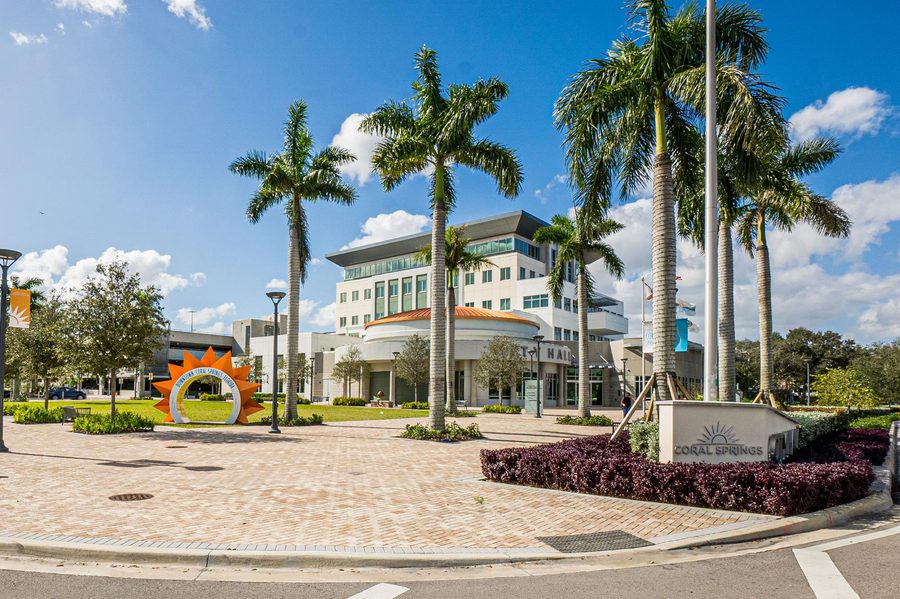
Here’s the direct answer: Coral Springs does not have big new subdivisions going up anymore. The city was built out mostly between the late 1960s and the early 2000s, and there is almost no raw, developable land left inside its borders. So when people ask about new construction in Coral Springs, what is actually available and what it will cost you breaks into three real categories: infill single-family rebuilds on existing lots, a small number of 55+ active adult patio home communities, and pockets of townhome or villa infill on leftover parcels. If you want the large-scale, builder-community experience with a clubhouse, model homes, and a design center, that activity has shifted next door to Parkland.
This guide covers exactly what exists, what it costs, and where to look if Coral Springs itself doesn’t have what you’re after.
Why Coral Springs Doesn’t Have New Subdivisions Anymore
Coral Springs was planned and developed as a master community starting in the 1960s, and by the 2000s the city was functionally built out. Neighborhoods like Eagle Trace, Turtle Run, Ramblewood, Coral Springs Country Club, Broken Woods, Kensington, and Cypress Run were all developed decades ago, and there simply isn’t a supply of vacant, entitled land sitting around for a builder to come in and drop 300 new homes.
That scarcity is actually part of why Coral Springs holds its value. Established tree canopy, mature landscaping, and neighborhoods that have had 20 to 40 years to settle in are worth something that a freshly graded subdivision can’t replicate on day one. If you want the full picture on how the city functions day to day, the Coral Springs Complete Guide covers the neighborhoods, schools, and lifestyle context that explains why demand here stays strong even without new inventory.
What “New Construction” Actually Means in Coral Springs Today
Infill Single-Family Rebuilds
The most common form of new construction inside Coral Springs right now is the infill rebuild: a builder or private buyer purchases an existing home on a desirable lot, usually in Eagle Trace, Coral Springs Country Club, Ramblewood, or one of the golf course adjacent streets, tears it down, and builds a new custom home in its place. These are one-off projects, not community developments, so there’s no sales office or model home to walk through. You’re either working with a builder who already owns the lot and is building on spec, or you’re buying a lot yourself and contracting the build.
Expect finished infill homes in Coral Springs to run anywhere from $700,000 to $1.5 million or more, depending on lot size, waterfront or golf course frontage, and finished square footage. Land alone on a good lot in Eagle Trace or near the Coral Springs Country Club can run $300,000 to $500,000 before a single block is laid, and construction costs in Broward County are commonly running $250 to $350 per square foot for a quality custom build as of 2026, more if you’re doing high-end finishes.
Townhome and Villa Infill
There are smaller pockets of townhome or attached villa infill happening on parcels that were previously commercial, underused, or held for future development, mostly along the Sample Road and University Drive corridors and on the western edge of the city closer to the Sawgrass Expressway. These developments are small (often under 100 units), sell out quickly, and don’t always get broad marketing attention. Pricing on new townhome product in this part of Broward is generally landing in the $450,000 to $600,000 range depending on square footage and whether the unit has a garage.
If you’re weighing a smaller attached new-build product against a resale detached home, it’s worth reading the First-Time Buyer in Coral Springs guide, since the calculus between new townhome and older single-family resale is one of the most common decisions first-time buyers in this market are making right now.
55+ New Construction Communities
The one category where Coral Springs actually has legitimate, ongoing new construction activity is the active adult, 55-plus segment. Builders have found room for low-maintenance, single-story patio home communities on smaller parcels that weren’t large enough for a full subdivision but work well for an age-restricted product. These communities typically feature modern single-story floor plans with high ceilings, impact glass, and private garages, built on low-maintenance lots that appeal to buyers who want a new home without yard work. Amenities commonly include a resort-style clubhouse, a heated swimming pool, lighted pickleball courts, and a full social calendar run by a dedicated activities director.
Pricing on these 55+ new-build communities generally runs $500,000 to $750,000 depending on floor plan and lot premium, with an HOA that covers exterior maintenance, landscaping, and the amenity package. If you or a family member are looking at downsizing into new construction without leaving Coral Springs, this is genuinely the strongest option the city has right now.
Where the Real New-Construction Volume Is: Parkland, Next Door
If what you actually want is the classic new-construction experience, a builder with a sales office, multiple floor plans, a design center, and a community amenity package still being built out, that inventory exists right next to Coral Springs in Parkland. The two cities share a border, and in several cases the same school zones, so it’s worth understanding what’s there even if your goal is a Coral Springs address.
Parkland Royale, built by Lennar, is a guard-gated luxury estate community on Loxahatchee Road with roughly 100 single-family lots. Homes are spread across Lennar’s Crown and Monarch collections, with large single-story floor plans generally ranging from about 3,200 to 4,300 square feet, built around expansive lakes. Pricing generally starts in the $1.1 million range and moves up into the $1.4 million range depending on lot and finishes. Residents get a luxury resort clubhouse, community pool, and wellness amenities, and buyers should budget for both HOA dues and CDD fees, which fund the infrastructure behind these newer master-planned communities.
Saltgrass at Heron Bay, from Toll Brothers, sits inside the established, master-planned Heron Bay community on land the builder acquired for over a million dollars an acre, which tells you what land costs in this corridor now. It’s a smaller offering, roughly 50 executive residences on oversized waterfront lots, with highly customized, open-concept estate floor plans generally ranging from about 2,600 to 4,700 square feet and 3- or 4-car garages. Pricing generally starts in the $1.3 million range and moves into the $1.6 million-plus range for larger or more customized homes. Residents get access to two renovated resort-style clubhouses, a waterpark, sand volleyball, and tennis facilities as part of the broader Heron Bay amenity package.
Both of these communities carry HOA dues and CDD assessments on top of the purchase price, which is standard for newer master-planned product in this part of Broward and something buyers coming from an older, no-CDD Coral Springs neighborhood need to actually budget for, not just glance past.
For a direct side-by-side on how these two cities compare for families weighing where to land, read Coral Springs vs. Parkland. The short version: Coral Springs gives you an established, walkable, amenity-rich city with no CDD on most older neighborhoods; Parkland gives you the newer construction and larger lots at a higher price point with CDD fees layered on top.
HOA, CDD, and Carrying Costs: What New Construction Buyers Need to Budget For
This is where a lot of buyers get surprised, especially if they’re coming from an older Coral Springs neighborhood where HOA dues might be $100 to $300 a month and there’s no CDD at all.
HOA dues on new construction and newer communities in this part of Broward commonly run $300 to $600 a month for single-family product with a full amenity package (clubhouse, pool, gated entry, landscaping of common areas), and can run higher in gated luxury communities like Parkland Royale or Saltgrass at Heron Bay.
CDD fees (Community Development District) are a separate line item that funds the roads, drainage, and infrastructure inside newer master-planned communities. These are typically paid as part of your property tax bill and can add another $2,000 to $5,000 or more per year depending on the community and how the district financed its infrastructure. CDD fees are not going away over time the way some buyers assume; they’re a long-term bond obligation tied to the home.
Property taxes in Broward County are also worth running the actual numbers on before you fall in love with a floor plan, since a new $1.2 million home is going to carry a materially different tax bill than an older resale at the same price point due to how homestead exemptions and assessed value caps work over time.
If you’re relocating from out of state and this is your first exposure to CDD fees, ask your builder’s sales rep for the exact CDD balance and annual assessment in writing before you sign anything, and have your lender confirm how it affects your DTI calculation.
Cost Comparison: New Construction vs. Resale in Coral Springs
Because Coral Springs itself has so little true new construction, the more useful comparison for most buyers is new construction (whether infill in Coral Springs or a community in Parkland) versus resale in an established Coral Springs neighborhood.
Resale single-family homes in Coral Springs neighborhoods like Ramblewood, Coral Springs Country Club, or Broken Woods are generally trading in the $450,000 to $750,000 range for standard 3 and 4-bedroom homes built in the 1980s and 1990s, with premium and waterfront or golf-course lots in Eagle Trace running higher. That’s meaningfully less than new construction of comparable size, but you’re buying a 30 to 40-year-old home, which means older roofs, older AC systems, and older electrical, all of which affect your insurance costs in Florida’s current property insurance market.
New construction, whether it’s an infill rebuild in Coral Springs or a community home in Parkland, costs more up front but comes with a builder warranty, current hurricane-rated impact windows and roofing, and lower near-term maintenance costs. For a lot of relocating buyers, especially those coming from markets where insurance wasn’t a major line item, the lower insurance premium on a new-construction home with a 2024 or newer roof and impact glass can offset a real chunk of the higher HOA and CDD costs over time.
For the fullest picture of what resale pricing and inventory actually look like in Coral Springs right now, see the Coral Springs Real Estate Market Update, which tracks pricing and inventory trends as they move through 2026.
Corridors, Commute, and School Zones to Know
Location inside Coral Springs still matters even without new subdivisions, because access to University Drive, Sample Road, Wiles Road, and Royal Palm Boulevard determines your actual commute, and proximity to the Sawgrass Expressway determines how easily you get to I-95, the Turnpike, or west toward Parkland and Coconut Creek.
Families choosing between an infill rebuild in Coral Springs and a new-build community in Parkland are often making that decision based on school zoning as much as price. Coral Springs is served by Coral Springs High School, J.P. Taravella High School, and Marjory Stoneman Douglas High School depending on the specific neighborhood, along with strong middle and elementary options and the well-regarded Coral Springs Charter School. If schools are the deciding factor in your search, the Coral Springs Schools Guide breaks down which zones feed which schools, which matters more when you’re choosing a specific infill lot than it does when you’re buying into a single builder community in Parkland with one assigned zone for the whole neighborhood.
Who New Construction in Coral Springs Actually Makes Sense For
Downsizers and 55+ buyers who want a new, low-maintenance home without yard work and without leaving the city they already know are the clearest fit for Coral Springs’ active adult new-construction product.
Buyers with a specific lot in mind, often someone who already knows Eagle Trace or Coral Springs Country Club and wants a rebuild rather than a renovation, are the right fit for the infill custom-build path, understanding that it’s a longer, more hands-on process than buying a home off a builder’s lot.
Buyers who want the classic new-construction experience, multiple floor plans, a design center, a builder warranty, and a full amenity package still under construction, are better served looking at Parkland, understanding that comes with a higher price point and CDD fees layered on top of HOA dues.
Buyers who are flexible on new versus resale and mainly want to be in Coral Springs for the schools, the parks, and the established community feel are usually better off in the resale market, where inventory is far deeper and pricing is more negotiable. If that’s you, the Coral Springs Neighborhoods Guide and the Living in Coral Springs lifestyle guide are the better starting points than chasing scarce new-build inventory.
Investors looking at new construction for rental purposes should run the numbers carefully, since HOA and CDD costs on newer product cut into cash flow more than they do on an older, paid-off-infrastructure resale home. The Coral Springs Investment Property guide walks through what rental returns actually look like across different product types in this market.
The Bottom Line on New Construction in Coral Springs
The reality is that Coral Springs isn’t a new-construction market anymore, and pretending otherwise doesn’t help anyone make a good decision. What’s actually available is infill rebuilds on existing lots, a real but limited supply of 55+ patio home communities, and small townhome infill projects, generally running from the high $400,000s for attached product up past $1.5 million for a custom infill single-family home. If what you want is a builder community still selling and building at scale, that’s happening in Parkland right now at Parkland Royale and Saltgrass at Heron Bay, not inside Coral Springs city limits.
Neither path is wrong. It depends on whether the Coral Springs address and its established neighborhoods matter more to you than getting a brand-new community with a full amenity package and a builder’s warranty from day one.
If you’re trying to figure out which of these paths actually fits your budget, your school priorities, and your timeline, text me “CORAL” and I’ll walk you through the current infill and 55+ inventory in Coral Springs alongside what’s actually available right now in Parkland, so you’re comparing real numbers instead of guessing.
More articles you might like
Coral Springs Complete Guide: Everything You Need to Know Before Moving
13 min readCoral Springs Investment Property: Rental Demand, Returns, and Where to Look
13 min readFirst-Time Buyer in Coral Springs: What to Expect and Where to Start
14 min readCoral Springs vs. Parkland: Which Broward Suburb Is Right for Your Family?
13 min readLiving in Coral Springs: Parks, Dining, Activities, and What Day-to-Day Life Looks Like
17 min read