Coral Springs Schools: Why Families Keep Choosing This City
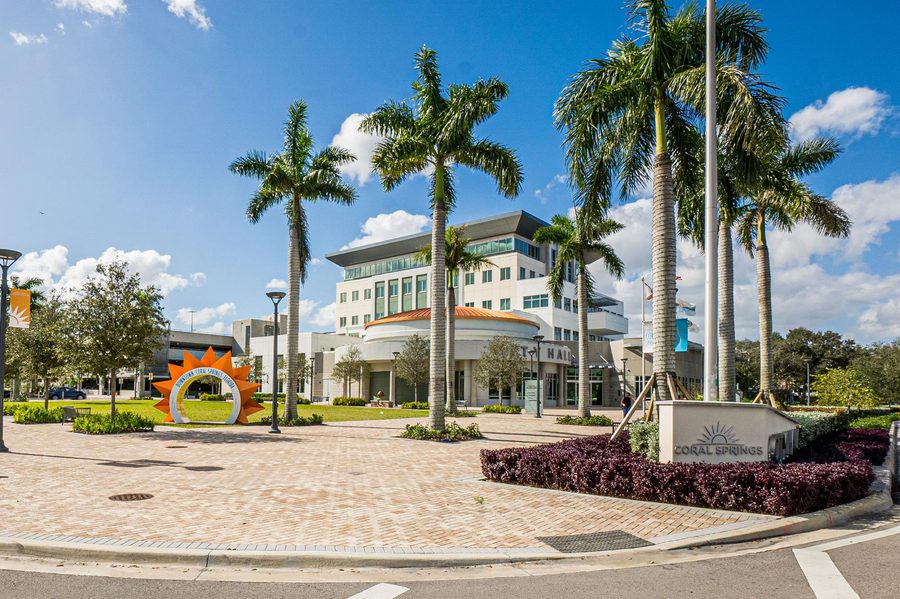
Coral Springs schools are the real reason families keep choosing this city over Parkland, Coral Gables, or the newer builder communities further west. Not the parks, not the HOA landscaping, not the strip malls on Sample Road. The schools. Coral Springs was master planned in the 1960s and 70s around the idea that a suburb should be built for kids first, and Broward County Public Schools filled that suburb with more above-average, A-rated campuses per square mile than almost anywhere else in the county. That track record is 40-plus years deep now, which is exactly why it still shows up as the top reason relocating parents give when they ask us where to buy.
This guide breaks down every layer: elementary, middle, high school, charter, and private, plus how zoning actually works here, because the honest answer is that “Coral Springs schools” is not one thing. It is a patchwork of a dozen-plus elementary zones and four different high school paths, and which one you land in depends entirely on the street your house sits on. We will also get into what these zones do to home prices, what to ask a listing agent before you write an offer, and how Coral Springs actually stacks up against the suburbs families cross-shop it with.
Coral Springs Schools: Why Families Keep Choosing This City
Ask ten families why they moved to Coral Springs instead of Tamarac, Sunrise, or Margate, and eight of them will say some version of “the schools.” That is not marketing. Broward County Public Schools is one of the largest districts in the country, and school quality inside it swings hard from campus to campus. Coral Springs is one of the few pockets where that swing barely happens. Drive from the Sawgrass Expressway on the west side to University Drive on the east, and you pass through elementary zone after elementary zone that mostly grades out A or B. That consistency is rare in Broward, and it means a Coral Springs family does not have to fight for a spot in one specific “good” school. Most of the city’s public options are solid, which lowers the stress of the whole home search.
The second piece is continuity. A lot of Broward’s newer growth corridors, out toward Parkland and Southwest Ranches, are still building schools to catch up with rooftops. Coral Springs already has its school infrastructure fully built out, with campuses that have been operating and refining programs for decades. Parents are not betting on a school that opens the same year their kid starts kindergarten, and they are not betting on a district that will need to redraw boundary lines in three years because a new subdivision just broke ground down the road. That matters more than it sounds like it should. A boundary redraw can move a family from a school they picked the house for into a completely different one, sometimes mid-elementary school, and it happens more often in fast-growing parts of the county than most buyers realize.
There is also a workforce angle that does not get talked about enough. Coral Springs sits close enough to major Broward employment centers, and is desirable enough as a place to live, that it tends to retain teachers longer than campuses in less established parts of the county. Long-tenured staff is not a soft, feel-good metric. It shows up in test scores, in how consistently a gifted program is run year over year, and in whether a school’s culture holds together instead of resetting with a new wave of first-year teachers every August. If you want the fuller picture of what makes the city work as a whole, our Coral Springs Complete Guide covers the layout, the corridors, and the numbers behind the suburb beyond just schools.
Elementary Schools: Where Coral Springs Starts Strong
Coral Springs is covered by more than a dozen elementary zones, which is unusual for a city its size (roughly 130,000 residents). Names you will hear repeatedly from families and agents include Ramblewood Elementary, Riverside Elementary, Westchester Elementary, Country Hills Elementary, Park Springs Elementary, Maplewood Elementary, Forest Hills Elementary, Coral Park Elementary, Heron Heights Elementary, Eagle Ridge Elementary, Silver Lakes Elementary, Coral Springs Elementary, and Tradewinds Elementary.
The pattern across nearly all of them is the same: solid Florida Department of Education grades, active PTA involvement, and long-tenured staff, which matters more than people think. High teacher turnover is a quiet problem in parts of Broward, and Coral Springs elementary campuses tend not to have that issue.
What actually varies school to school
The differences between these elementary schools are usually not academic quality, they are logistics: walkability from the neighborhood, before and after care availability, and whether a school has a strong gifted or exceptional student education (ESE) program if your child needs one. If you have a child already identified as gifted, ask specifically about which elementary schools host the gifted cluster classrooms, because not every campus runs one, and being zoned to a school without one can mean a transfer request down the road.
Car line logistics are also a bigger deal here than people expect before they move. Elementary schools built in the 1970s and 80s were not designed around today’s volume of parent pickup and drop off, and some of the older, more central campuses in Coral Springs run genuinely long car lines during peak times. Families who work from home or have flexible mornings shrug this off. Families commuting to Sawgrass Mills, the Sawgrass Corporate Park, or across the county line into Palm Beach for work should ask current parents in the neighborhood Facebook group how the car line actually runs before assuming a 10 minute drop off.
Bilingual and dual-language options are another differentiator worth a phone call. A handful of Coral Springs elementary campuses run Spanish dual-language strands, which matters if you are relocating from a market where a bilingual education track was already part of your plan, or if you simply want your kids building that skill early given how much of South Florida operates in both English and Spanish day to day.
Middle School Options and What Changes Around Age 11
Coral Springs middle schoolers generally feed into Coral Springs Middle School, Forest Glen Middle School, Ramblewood Middle School, or Sawgrass Springs Middle School, depending on the elementary zone. This is the age where families start paying closer attention to academic tracking, since sixth grade is typically when advanced and honors coursework starts branching kids onto different paths toward high school.
The middle school stretch is also where a lot of Coral Springs families reassess whether they are staying long term or moving again before high school. If you are buying with a toddler or a first grader today, it is worth mapping out the middle and high school feed pattern now rather than five years from now, because Broward zoning lines are not always obvious from a listing address. This is one of the most common blind spots we see with first-time buyers in Coral Springs, who fall in love with a house and only check the school zone after the fact.
Middle school is also when extracurricular reputation starts to matter to families in a way it did not in elementary. Sawgrass Springs Middle and Forest Glen Middle both run competitive band and orchestra programs that feed directly into the strong performing arts tracks at the high school level, which is part of why some families specifically target neighborhoods zoned to those two campuses. If band, chorus, or theater is part of your kid’s identity already, ask about the middle school program before you assume the high school program will simply pick up where elementary left off. The pipeline matters, and skipping a zone in the pipeline can mean starting over at a lower level.
Athletics recruiting at this age is informal but real. Middle school coaches in Coral Springs often have relationships with the high school coaching staff their campus feeds into, and kids who play travel or rec sports locally sometimes get noticed well before ninth grade. It is not something to build a home search around, but it is one more reason some families specifically choose a middle school zone rather than treating it as a formality between elementary and high school.
High Schools: Taravella, Coral Springs, Coral Glades, and the Parkland Question
This is the part of the city where school choice gets the most specific, because Coral Springs is split across four different zoned high schools depending on exactly where you live.
J.P. Taravella High School
Taravella sits centrally and is one of the most requested high schools in the city, known for a strong International Baccalaureate program alongside a full AP course catalog. It draws from a large chunk of central Coral Springs. Families chasing the IB diploma specifically, rather than a stack of AP credits, tend to target neighborhoods zoned here on purpose, since IB is a full program track rather than a handful of standalone courses and not every Broward high school offers it.
Coral Springs High School
The original namesake high school, located near the city center, offers honors and AP tracks along with a well-regarded performing arts program. It tends to draw from the eastern and southeastern parts of the city. Its performing arts reputation is not a footnote, it has produced graduates who went on to conservatory-level programs, and families who are already invested in a kid’s music, theater, or dance track weigh that heavily when they are comparing this zone against Taravella or Coral Glades.
Coral Glades High School
Coral Glades opened in 2007 to relieve overcrowding at the older campuses and serves the western and northwestern parts of Coral Springs. It runs AP coursework and has built a reputation for a strong band and athletics program in a shorter window than its older neighbors. Being the newest of the three core Coral Springs high schools also means its facilities are the most modern, which is a real consideration for families who care about things like updated science labs, turf fields, and current technology infrastructure rather than a building that has been renovated in pieces over four decades.
The Marjory Stoneman Douglas zone
The northeastern edge of Coral Springs, near the Parkland border, is zoned to Marjory Stoneman Douglas High School. Academically the school remains one of the stronger options in the district, with a full AP lineup, and the community around it has stayed close knit in the years since. If your search puts you in this corner of the city, it is worth understanding that this zone line runs close to the city boundary, which is also the core of why families cross-shop Coral Springs against Parkland in the first place. It is also the same high school zone that some newer Coral Springs townhome product, like Sunset Trails on the northwest side, was specifically built and marketed around, so if you are looking at newer inventory in that corner of the city, the MSD zoning is often already baked into the pitch. We break the Coral Springs versus Parkland comparison down street by street in Coral Springs vs. Parkland.
Private and Charter School Alternatives
Not every family wants the assigned public zone, and Coral Springs has real alternatives, not just token ones.
Coral Springs Charter School
This is the biggest non-traditional option in the city: a tuition-free charter serving grades 6 through 12, run independently of Broward County Public Schools but still held to state academic standards. Enrollment is lottery based, not zoned, so any Coral Springs resident (and often nearby residents) can apply regardless of address. It has built a strong reputation over two decades and is often the first alternative families look at before considering private school.
The tradeoff families need to go in understanding is that lottery based means exactly that, there is no guarantee of a seat even if you live two blocks away, and returning students are prioritized over new applicants in most years. Families who want this as a real option should apply during the open enrollment window the year before they need it, not the summer before school starts, because waitlists fill up and late applications rarely move.
Private school options
Families paying for private school in this part of Broward typically look at Coral Springs Christian Academy for a faith-based K-12 option inside the city itself, St. Andrew Catholic School for K-8 Catholic education, and North Broward Preparatory School just south in Coconut Creek for a college-prep, pre-K through 12 track. Some families also drive to Calvary Christian Academy or University School near Davie for specific programs. None of these are cheap, tuition runs into five figures annually at the college-prep tier, but they exist as a real pressure valve if a family’s assigned public zone does not fit.
One thing worth knowing before you assume private solves a zoning problem: private school does not require you to live in any particular area, which means some families use it specifically to buy a more affordable house in a less desirable public zone and put the difference toward tuition instead. It is a real strategy, not a workaround, and it is worth running the math on before you assume you have to pay a premium for the “right” address.
How to Actually Verify School Zoning Before You Buy
This is the step people skip, and it causes real problems. School zoning in Broward County is tied to the exact property address, not the ZIP code, not the neighborhood name, and not what a listing agent tells you verbally. Two houses on the same street, on opposite sides of a zone boundary, can be zoned to entirely different elementary or high schools.
Before you make an offer on any Coral Springs home:
- Pull the exact address into the Broward County Public Schools boundary locator, not a third-party estimate site.
- Confirm the zone is current for the school year you will actually be enrolling, since boundaries do shift as new schools open in Broward’s growth corridors.
- Ask directly whether the zoned elementary has a gifted cluster, ESE program, or dual-language option if your child needs one, since not every campus in a shared district runs the same specialty programs.
- If you are eyeing the northeastern edge of the city, confirm in writing whether the parcel zones to Coral Glades or Marjory Stoneman Douglas, because that line runs close enough to the Parkland border to catch people off guard.
- Ask about magnet and choice program deadlines separately from zoning. Some Broward magnet programs have application windows that close months before the school year starts, and missing the window means waiting a full year even if you are zoned correctly on paper.
Skipping this step is the single most common regret we hear from relocating families a year after closing. The house was right, the zone was wrong, and now they are either driving further than planned or applying for a school choice transfer that is not guaranteed to be approved. We have had clients who closed on a home believing they were zoned to Taravella, based on what the neighbor told them, only to find out at enrollment that the parcel actually fell into the Coral Springs High zone. It was still a good school. It was not the school they picked the house for, and by then they had already sold their previous home and had no easy way to undo the decision.
Coral Springs Schools vs. Parkland and Neighboring Suburbs
Parkland gets a lot of attention for its newer builder inventory and larger lots, and it shares some of the same high school zones as northeastern Coral Springs, including Marjory Stoneman Douglas. Newer Parkland product like Parkland Royale, a guard-gated Lennar community with single-family homes priced from roughly $1.1 million into the $1.4 million range, trades heavily on that same MSD zoning that a Coral Springs buyer can access for meaningfully less house payment. But Coral Springs wins on breadth: more elementary options, a mature charter school, and a lower buy-in price to access the same academic outcomes. Parkland’s premium is largely about lot size and newer construction, not meaningfully better schools, since the two cities overlap on zoning in places.
Compared to Tamarac, Sunrise, or Margate, Coral Springs simply has a longer, more consistent academic track record city-wide. Those suburbs have pockets of strong schools too, but not the same density of A and B rated campuses stacked one after another the way Coral Springs does. That consistency is what lets a family buy almost anywhere in the city and land in a solid zone, rather than needing to hit one specific census tract. Compared to Coral Gables on the Miami-Dade side, the comparison is really about tradeoffs rather than a clear winner. Coral Gables carries prestige and proximity to Miami, but Coral Springs offers a wider spread of strong zoned schools at a lower average price per square foot, which is why so many families cross-shop the two names despite them being roughly 40 minutes apart.
If you are still deciding between these suburbs, our side by side on Coral Springs vs. Parkland goes deeper on price, lot size, and commute in addition to schools.
What Good School Zoning Does to Home Prices Here
This part surprises relocating buyers more than almost anything else in the search. Two homes with nearly identical square footage, age, and finishes can carry a real price gap in Coral Springs purely because of which elementary or high school zone they sit in. It is not always the newest or biggest house that commands the premium, it is the address that lands inside the most requested zone, particularly anything feeding into Taravella or the MSD zone near the Parkland line.
This is not unique to Coral Springs, it happens across Broward, but it is more pronounced here because the zone quality is genuinely consistent rather than being a single standout school surrounded by weaker ones. Buyers who are not working with an agent who knows these boundaries block by block can easily overpay for a zone they did not specifically need, or underpay for a house that happens to sit in a stronger zone than they realized to ask about. Either way, it is worth pricing the zone, not just the house, before you write an offer.
What This Means If You’re Relocating to Coral Springs
If schools are the deciding factor in your move, and for most Coral Springs buyers they are, work backward instead of forward. Pick your target elementary or high school zone first, then search inventory inside that boundary, rather than falling for a house and hoping the zoning works out. Neighborhoods across the city carry different price points for similar square footage, and a chunk of that difference is the zone attached to the address. Our Coral Springs Neighborhoods breakdown maps out which areas fall into which general school zones, and Moving to Coral Springs covers the practical side of relocating a family here, from timing your move around the school calendar to what the first few months actually look like.
For families relocating from out of state, plan the move around the enrollment calendar, not just the closing date. Broward County Public Schools enrollment windows and the Coral Springs Charter School lottery both run on their own timelines, and closing on a house in July with an enrollment deadline you missed in April puts you scrambling for a school choice transfer instead of your first choice zone. If school is the priority, start the zoning research the same week you start the home search, not after you are under contract.
And once the zoning question is settled, the rest of the decision usually comes down to lifestyle fit, parks, commute to Sawgrass Expressway or I-95, HOA rules, and day to day life in the neighborhood. Our Living in Coral Springs guide covers that side in detail.
Frequently Asked Questions
Do I need to live inside city limits to attend Coral Springs Charter School? No. Coral Springs Charter School is not tied to a residential zone the way traditional public schools are. It runs on a lottery enrollment system open to students across a wider area, though Coral Springs residents make up the bulk of its enrollment simply by proximity.
Are Coral Springs schools overcrowded? Some campuses run near capacity, particularly at the elementary level in the more established central neighborhoods, but the city is not seeing the same rapid rezoning pressure that newer growth corridors in western Broward and Parkland are experiencing. Coral Glades High School was built specifically to relieve pressure from the older two high schools, and that relief has largely held.
Should I choose a house based on the elementary zone or the high school zone? Prioritize the zone your child will be in the longest before you would realistically move again. For families planning to stay put through graduation, the high school zone matters more for long term academic tracking (AP, IB, dual enrollment access). For families who expect to upsize again within five to seven years, the elementary zone matters more day to day.
How much does school zone actually add to a home’s price in Coral Springs? It varies block by block, but agents working this market regularly see comparable homes trade at different price points purely based on zone desirability, especially anything zoned to Taravella or Marjory Stoneman Douglas. It is worth having your agent pull zone-specific comps rather than relying on a general city average.
Can I request a school other than the one I am zoned for? Yes, through Broward’s school choice program, but transfers are not guaranteed and depend on space availability at the requested campus. Treat it as a backup option, not a plan, since popular schools like Taravella routinely fill their transfer capacity.
The bottom line: Coral Springs earned its reputation as a family-first suburb one graduating class at a time, and that reputation is still accurate in 2026. The schools are not perfect, no district is, but the consistency across zones is genuinely rare in Broward County. Get the zoning confirmed before you fall in love with a house, and Coral Springs will do exactly what it has done for decades, which is give your kids a stable run from kindergarten through senior year without you needing to gamble on the address.




More articles you might like
Coral Springs Complete Guide: Everything You Need to Know Before Moving
13 min readCoral Springs Investment Property: Rental Demand, Returns, and Where to Look
13 min readFirst-Time Buyer in Coral Springs: What to Expect and Where to Start
14 min readCoral Springs vs. Parkland: Which Broward Suburb Is Right for Your Family?
13 min readLiving in Coral Springs: Parks, Dining, Activities, and What Day-to-Day Life Looks Like
17 min read