Living in Coral Springs: Parks, Dining, Activities, and What Day-to-Day Life Looks Like
Living in Coral Springs, FL: What Day-to-Day Life Actually Looks Like
Living in Coral Springs means parks, dining, activities, and a day-to-day life that runs on routine more than reinvention. This is a city built for families who want their Saturday mornings at a rec league game, their Tuesday nights at a school board meeting or a dance class, and their weekends within a 15-minute drive of home. It is not a nightlife town, it is not a foodie destination, and it does not pretend to be. What it is, is one of the most consistently livable suburbs in Broward County, and the reason people move here rarely has anything to do with excitement. It has to do with reliability.
If you are trying to decide whether Coral Springs fits your life, skip the marketing language and look at the actual rhythm of the place. That is what this guide covers.
What Day-to-Day Life in Coral Springs Actually Looks Like
A typical Coral Springs weekday starts early. School start times in Broward County run on the earlier side, so households with kids are often out the door by 7:15 or 7:30 a.m. University Drive and Sample Road carry the bulk of the morning traffic, and both corridors slow down noticeably between 7:30 and 8:30 a.m. as parents drop kids at Coral Springs Elementary, Ramblewood Elementary, Coral Springs Middle, or one of the charter campuses before continuing on to work.
Coral Springs itself has very little in the way of large office employment. Most working residents commute out, toward Sunrise, Fort Lauderdale, Boca Raton, or Sawgrass International Corporate Park just across the Sawgrass Expressway in Sunrise. That commute shapes the whole day. People leave the city for work, come back for dinner, and the evening hours are when Coral Springs actually feels lived-in: soccer and baseball practice at Mullins Park, swim team at the Coral Springs Aquatic Complex, dance and gymnastics studios along Wiles Road and Coral Springs Drive, and dinner at home more often than out.
Weekends look different depending on the season. Fall and winter mean travel baseball, travel soccer, and Friday night football at Coral Springs High or Taravella High. Spring and summer shift toward the pools, the splash pads at the city parks, and the Saturday Farmers Market downtown. Very little of daily life in Coral Springs happens spontaneously. It happens on a schedule, built around kids’ activities, and most residents will tell you that is exactly what they wanted when they moved here.
That schedule-driven rhythm is worth sitting with before you buy here, because it is not for everyone. If your ideal week involves last-minute dinner reservations, walking to a bar on a Wednesday, or a spontaneous beach day that does not require getting in the car first, Coral Springs will feel restrictive. If your ideal week is knowing exactly where you will be at 6 p.m. on any given weeknight because it is on the team calendar, this city runs like clockwork in your favor. For the full picture of what moving here involves before you commit, the Coral Springs Complete Guide covers the logistics end to end.
The Parks System: Where Coral Springs Actually Lives
Coral Springs was designed around its park system from the beginning, and it shows. The city maintains more than 40 parks, and three of them do most of the heavy lifting for day-to-day life.
Mullins Park on Riverside Drive is the anchor. It holds the Coral Springs Aquatic Complex (home to competitive swim meets and open to residents for lap swim and recreational swimming), the Tennis Center, a full complex of baseball and softball fields used by the city’s Little League and travel programs, and a nine-hole executive golf course. On any given weeknight in the school year, Mullins Park is where a meaningful share of Coral Springs families actually are. Between 5:30 and 8 p.m. on a spring weeknight, you will find three or four fields running games at once, swim lanes full at the Aquatic Complex, and a parking lot that fills up fast enough that regulars know to arrive fifteen minutes early.
Cypress Park, off Riverside Drive near the Coral Springs Charter School campuses, centers on a lake with a paved walking and jogging trail that loops the water, plus a dog park that gets heavy daily use. It is the closest thing Coral Springs has to a quiet, unstructured green space, and it is popular for early morning and evening walks once the heat breaks. Residents who live within walking distance of Cypress Park treat it as their default decompression spot, the place you go after a long day rather than the place you plan a trip to.
North Community Park, on Coral Springs Drive, adds more sports fields, tennis and basketball courts, and playgrounds, and it tends to serve the northern neighborhoods the way Mullins Park serves the center of the city. Forest Hills Park and Betti Stradling Park round out the system with more localized playgrounds, picnic pavilions, and walking paths that give most residential pockets of the city a park within a short walk or bike ride.
The throughline across all of them: Coral Springs parks are functional, not scenic destinations. They exist to run youth sports leagues, host swim practice, and give dogs and kids somewhere to burn energy close to home. That is precisely their appeal. If you are coming from a city where the park system is an afterthought, this is one of the clearest, most immediate quality-of-life upgrades Coral Springs offers, and it is one buyers consistently underweight when they are comparing suburbs on paper.
Dining and Where People Actually Eat
Be honest with yourself about this one going in: Coral Springs is not a dining destination, and it does not try to be. There is no downtown restaurant row comparable to Las Olas in Fort Lauderdale or Atlantic Avenue in Delray Beach. What Coral Springs has instead is a dense scattering of everyday restaurants along its two main corridors, University Drive and Sample Road, plus smaller clusters on Wiles Road, Royal Palm Boulevard, and Coral Ridge Drive.
The pattern is consistent: strip-center and outparcel restaurants built for a family that wants dinner on a Tuesday without much fuss, plus a rotating set of local, family-owned spots that residents actually return to for years. Think reliable Italian and Cuban spots, a handful of sushi counters, and the standard rotation of pizza, wings, and casual American fare that any parent picking up dinner between practice and homework actually needs. It is not a scene, it is a supply chain, and for a household running three activities a week, that supply chain matters more than a tasting menu ever will.
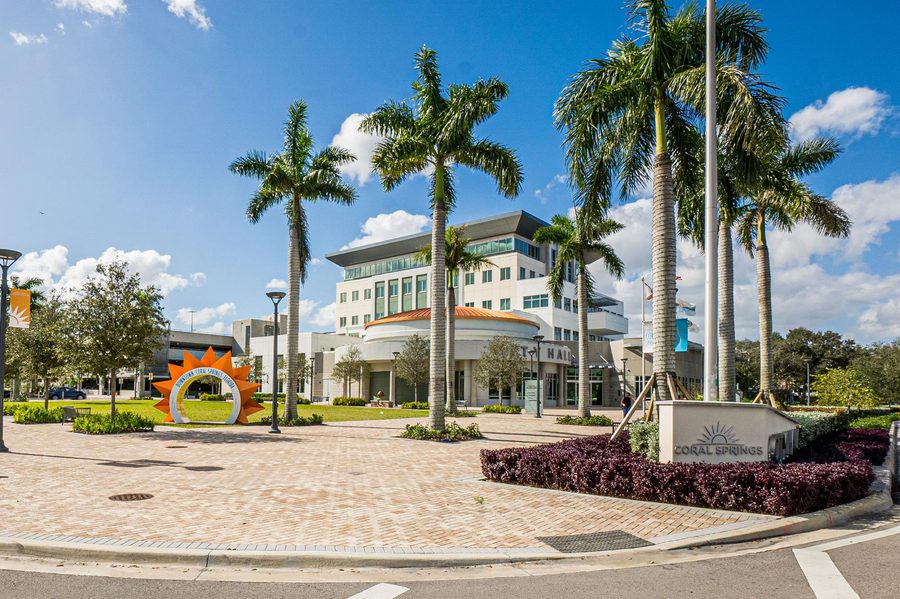
Downtown Coral Springs, around City Hall and the Center for the Arts, has a small, walkable pocket of sit-down restaurants that gets more use during events and evening performances than on an average weeknight. It is pleasant, but it is not built to anchor a nightlife scene the way a coastal downtown is, and residents treat it that way.
What Coral Springs residents actually do for a real dinner out is drive. Boca Raton (Mizner Park, Downtown Boca), Fort Lauderdale (Las Olas), and even Wynwood in Miami are all reachable in 25 to 45 minutes via the Sawgrass Expressway, I-95, or the Turnpike, and plenty of Coral Springs households treat those areas as their occasional-night-out option rather than expecting to find that experience at home. That drive is a real tradeoff, and it is worth naming directly rather than glossing over: a couple who wants a weekly date-night restaurant scene within walking distance should not buy in Coral Springs and expect to find it. If dining and nightlife are a top priority in your day-to-day life, be clear-eyed that Coral Springs is a place you live and commute out of for that, not a place that delivers it locally.
Arts, Culture, and Community Events
Coral Springs punches above its weight here for a city its size. The Coral Springs Center for the Arts is a genuine 1,296-seat performing arts venue that pulls in touring Broadway shows, concerts, comedy, and community theater, and it anchors downtown alongside City Hall. Next door, the Coral Springs Museum of Art runs rotating exhibitions and community art classes, and it is a real cultural asset for a suburb this size, not a vanity project.
The Coral Springs Farmers Market, held Saturday mornings at City Hall, is one of the more consistent community touchpoints in the city. It is smaller than the big Fort Lauderdale or Delray markets, but it is walkable for downtown-adjacent neighborhoods and it functions as much as a social gathering as a shopping trip. Families with young kids tend to make it a weekly habit rather than an occasional errand, in part because it is one of the few unstructured, walk-around social outings the city offers without getting in the car.
The Ice Den, a public ice rink that formerly served as a training facility for the Florida Panthers, gives Coral Springs a genuine hockey and figure skating culture that is unusual for a South Florida suburb. Youth hockey leagues, public skate sessions, and adult league play all run through the facility year-round, and it draws families from well outside Coral Springs city limits. It is a good example of how Coral Springs built infrastructure around specific niche interests decades before most Florida suburbs would have bothered, and it still pays off for residents today.
Add in the city’s annual events, holiday tree lighting downtown, Fourth of July celebrations at Mullins Park, and a full calendar of youth sports tournaments and school events, and the picture is clear: Coral Springs community life happens through institutions the city itself built and maintains, not through an organic bar-and-restaurant scene. If you want to actually meet your neighbors, you do it at a swim meet, a travel soccer sideline, or the Farmers Market, not at a corner bar.
Shopping and Everyday Errands
For day-to-day errands, Coral Springs is well covered. Coral Square Mall on University Drive anchors general retail with a traditional mall format and surrounding outparcels. Royal Palm Boulevard and the University Drive corridor carry the bulk of the city’s grocery stores, with multiple Publix locations spread across the city so that most neighborhoods are within a five to ten minute drive of one. Target, Costco (in neighboring Coconut Creek and Sunrise), and the standard big-box retailers are all reachable within 10 to 15 minutes from most Coral Springs addresses.
This is a city built for the errand run, not the shopping trip as entertainment. Most residents are in and out, and the appeal is exactly that: nothing about a Tuesday grocery run in Coral Springs requires planning around traffic or crowds the way it might closer to the coast. That matters more than it sounds like on paper. A parent running errands between school pickup and practice drop-off is optimizing for speed and predictability, not selection, and Coral Springs delivers on exactly that.
Schools and the Family Rhythm
Schools are the actual organizing principle of life in Coral Springs, more than parks or dining. The city runs its own Charter Schools of Coral Springs system for several elementary and middle school campuses, a structure that is unusual in Broward County and one of the specific reasons families target this city over comparable suburbs. Traditional Broward County public schools serving the city include Coral Springs High School and J.P. Taravella High School, and families just north of the city line often end up zoned into Marjory Stoneman Douglas High School in neighboring Parkland.
Because so much of the calendar (practice schedules, carpool lines, back-to-school events) runs through the school system, the school a family is zoned for effectively sets their whole week. It determines which parking lot you sit in for pickup, which parents you end up coordinating carpools with, and often which park and which restaurants become your regular rotation, simply because they sit between the school and home. This is why serious buyers verify zoning before they fall for a house, not after, and why two homes a half mile apart can carry meaningfully different resale demand depending on which elementary and high school they feed into. The Coral Springs Schools Guide breaks down which schools serve which neighborhoods and what the charter system actually means for a household moving in.
Commute, Corridors, and Getting Around
Coral Springs sits along the western edge of Broward County, bordered by the Sawgrass Expressway, which is the single most important road for anyone living here. It connects north to Parkland and south to Sunrise, Coconut Creek, and eventually I-75 and Sawgrass Mills. University Drive runs north-south through the heart of the city and is the primary local corridor for retail and restaurants. Sample Road runs east-west and connects Coral Springs to Coconut Creek and Pompano Beach toward the coast.
For commuting, expect roughly 25 to 35 minutes to downtown Fort Lauderdale via I-95 or University Drive during normal traffic, and 20 to 30 minutes to Boca Raton via the Sawgrass Expressway or Florida’s Turnpike. Fort Lauderdale-Hollywood International Airport is typically 35 to 40 minutes away. None of these commutes are short by South Florida standards, and that tradeoff, more space and better schools in exchange for a longer drive, is the central bargain of choosing Coral Springs over a coastal city like Fort Lauderdale or Pompano Beach.
Worth noting for anyone commuting daily on the Sawgrass Expressway: it is a toll road, and the toll adds up over a five-day work week in a way that first-time Coral Springs buyers sometimes forget to budget for. It is a small line item next to a mortgage payment, but it is a real one, and it is worth factoring into your monthly transportation cost if your job is on the coast or downtown Fort Lauderdale.
Where People Actually Live: Neighborhoods and HOAs
Coral Springs is almost entirely single-family and townhome product, with relatively little high-density rental or condo inventory compared to coastal Broward cities. HOA structures vary widely by community. As an example, Sunset Trails, a gated townhome community off NW 120th Avenue zoned to Marjory Stoneman Douglas High School, carries HOA dues of roughly $100 a month, which is on the lighter end for a gated Broward community with a pool and community amenities. Units there run three to four bedrooms in the 1,700 to 2,200 square foot range under air, with one-car garages, impact windows, and granite counters, and the community includes a pool, a walking trail, a playground, and a pavilion, giving buyers most of the lifestyle amenities of a larger master-planned community at a manageable monthly carry cost.
Older, established neighborhoods closer to the city center tend to have smaller or no HOAs, while newer gated communities carry higher monthly dues in exchange for amenities like pools, clubhouses, and lawn maintenance. If you are an empty nester or downsizer rather than a family with school-age kids, it is also worth knowing Coral Springs has a growing lineup of 55-and-older communities built around low-maintenance, single-story living, resort-style clubhouses, heated pools, and lighted pickleball courts, with a full-time activities director running the social calendar. That is a genuinely different buying decision than the family-with-kids scenario this guide focuses on, but it is worth flagging if that is closer to your situation.
Before you commit to a specific pocket of the city, it is worth understanding how the neighborhoods actually differ street by street; a home three streets apart can mean a different elementary school, a different HOA structure, and a different resale profile. The Coral Springs Neighborhoods guide maps out which areas skew newer construction, which skew established resale, and what each one costs to carry. If you want current pricing and inventory context before you start touring, the Coral Springs Market Update has the numbers, and if you are specifically looking at what is being built new right now, see New Construction in Coral Springs.
A Few Real Buyer Scenarios
It helps to see how this actually plays out for different households, because “Coral Springs is family-friendly” means very different things depending on who is asking.
A young family relocating from out of state for a corporate job in Boca Raton or Sunrise typically cross-shops Coral Springs against Parkland and Coconut Creek. They usually land in Coral Springs when school zoning and a lower HOA carry cost matter more than having the absolute newest construction, and they usually land in Parkland instead when budget allows for it and top-tier school ranking is the single deciding factor.
A move-up buyer already living in an older Coral Springs neighborhood, often trading a starter home near the city center for more space in a newer gated community, is usually optimizing for a bigger yard, updated finishes, and a shorter walk to the pool for their kids, and is generally willing to accept a higher HOA to get it.
An empty nester who raised kids in Coral Springs and does not want to leave the community they know, but no longer needs four bedrooms and a yard to maintain, is the exact buyer the newer 55-and-older product in the city is built for. They get to stay near the same doctors, the same church or synagogue, and the same friend group, while shedding the maintenance burden of the house that made sense fifteen years ago.
If you see yourself in one of these three, it should tell you a lot about which part of Coral Springs, and which price point, actually fits, before you start touring.
Who Coral Springs Is Right For, and Who Should Look Elsewhere
Coral Springs is right for a family that wants strong public and charter school options, a real park system, youth sports infrastructure, and a quiet, structured pace of life, and who is willing to trade beach proximity and nightlife for it. It is right for someone who wants to drive 20 to 30 minutes for a night out and considers that a reasonable price for a bigger yard and a shorter school pickup line. It is also a strong fit for empty nesters who already know the city and want to stay close to their support system while downsizing into lower-maintenance, amenity-rich product.
It is not right for someone who wants to walk to dinner, who wants a coastal or urban lifestyle, or who is not willing to commute. If beach access and walkability matter more to you than school zoning and yard size, look east toward Fort Lauderdale or south toward Pompano Beach instead. For a direct comparison against the suburb most often cross-shopped with Coral Springs, Coral Springs vs. Parkland lays out the real differences in price, schools, and pace. And if you are still deciding whether this city or this region fits your family at all, Moving to Coral Springs is the honest starting point.
The Bottom Line
Living in Coral Springs is not glamorous, and it is not trying to be. It is parks, school pickup, youth sports, a Saturday Farmers Market, and a commute you accept in exchange for space and stability. That is the actual day-to-day life here, not the version you get from a listing description.
If you are weighing Coral Springs against another Broward suburb and want a straight answer about whether it fits how you actually want to live, not just what looks good on paper, send me a message and tell me what your week currently looks like. I will tell you honestly whether Coral Springs matches it.
More articles you might like
Coral Springs Complete Guide: Everything You Need to Know Before Moving
13 min readCoral Springs Investment Property: Rental Demand, Returns, and Where to Look
13 min readFirst-Time Buyer in Coral Springs: What to Expect and Where to Start
14 min readCoral Springs vs. Parkland: Which Broward Suburb Is Right for Your Family?
13 min readNew Construction in Coral Springs: What Is Available and What It Will Cost You
13 min read