Coral Springs Neighborhoods: Where to Live and What Each Area Is Like
Here is the revised, expanded blog post in full markdown, no em or en dashes anywhere.
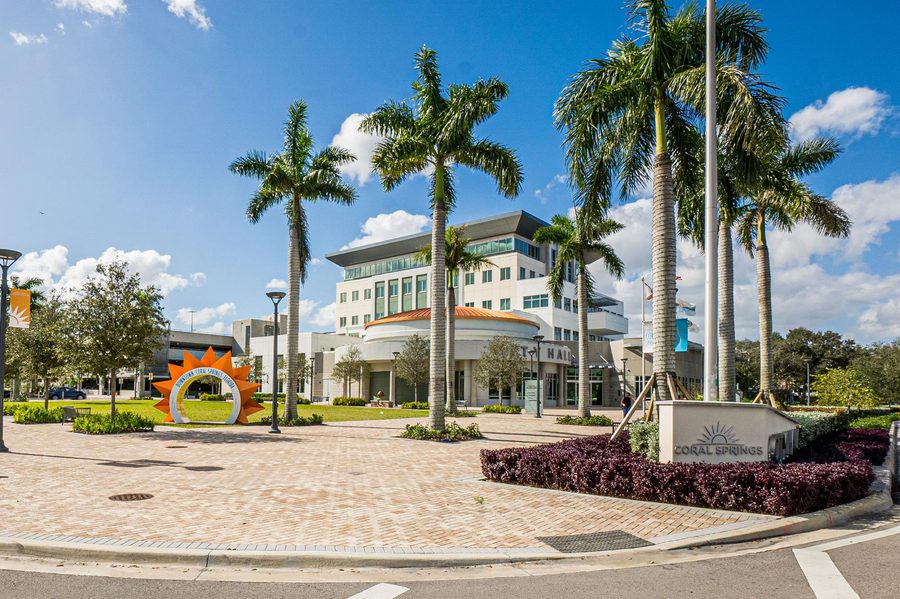
If you’re asking where to live in Coral Springs, the honest answer is that it depends on which version of Coral Springs you want. The city covers roughly 24 square miles of Broward County, and it’s not one uniform suburb, it’s a patchwork of distinct neighborhoods that were built in different decades, at different price points, with different amenity packages. A family cross-shopping Eagle Trace and Ramblewood is looking at two completely different lifestyles, even though both addresses say Coral Springs. This guide breaks down the real neighborhoods, what they cost right now, what the HOA situation actually looks like, and who each one fits, so you’re not guessing based on a drive-by.
For the bigger picture on the city itself, the Coral Springs Complete Guide covers schools, commute times, and city-wide pricing trends. This piece goes narrower, street by street, neighborhood by neighborhood.
Coral Springs Neighborhoods: Where to Live and What Each Area Is Like
Coral Springs is laid out in a grid built around a handful of major corridors: University Drive running north-south through the middle of the city, Sample Road and Wiles Road cutting east-west, and Coral Springs Drive looping through the older, established core near City Hall and the Charter School campus. Generally speaking, the further north and west you go (toward the Parkland border), the newer the construction and the higher the price. The further south and east you go (toward Tamarac and North Lauderdale), the older the housing stock and the more affordable the entry point.
That north-south price gradient is the single most useful thing to understand before you start touring. It’s why Ramblewood, in the southeast pocket of the city, prices meaningfully below Heron Bay and Eagle Trace, which sit in the north near the Parkland line. None of that means south Coral Springs is a lesser choice, it just means you’re paying for age of construction and lot size more than you’re paying for the Coral Springs name itself.
This matters more in Coral Springs than in a lot of Broward cities because the city built out almost entirely in a 40-year window, from the mid-1960s through the early 2000s. There’s very little true new construction left inside city limits, most of what’s left is teardown-and-rebuild or the last few infill lots. That’s a different situation than Parkland or western Palm Beach County, where builders are still actively releasing new phases. In Coral Springs, you’re buying into an already-established street grid, mature trees, and a resale market, not a builder price list. That’s not a downside, but it changes how you should think about the purchase. You’re evaluating what’s already there, not picking finishes from a design center.
Who Should Read This Guide
This is written for three types of buyers: the family relocating from out of state who wants to know which gated community fits their budget, the first-time buyer trying to figure out if Coral Springs is even in reach, and the investor scanning for the neighborhoods with the best rental fundamentals. If you fall into that last category, the Coral Springs Investment Property guide goes deeper on cap rates and tenant demand by area.
A fourth group worth naming directly: the buyer coming from a non-HOA state, often the Northeast or Midwest, who has never budgeted a monthly association fee into a mortgage payment before. If that’s you, read the HOA and CDD section below closely before you fall for a listing photo. The purchase price is only half the monthly number.
Eagle Trace: Golf Course Living with Space and Privacy
Eagle Trace sits in the northwest section of the city and was built around an 18-hole golf course originally designed by Arthur Hills. This is one of the older prestige communities in Coral Springs, most homes went up between the mid-1980s and mid-1990s, and it shows in the lot sizes. You’ll find quarter-acre and larger lots here that simply don’t exist in newer Broward construction, along with mature oak canopies that give the neighborhood a settled, established feel you don’t get in anything built after 2010.
Pricing in Eagle Trace currently runs from roughly $650,000 for smaller interior lots up into the $1.1 million range for golf-course-front estates with pool and expanded square footage. Most homes are single-story or split-level, four to five bedrooms, with a fair number having been renovated since their original build. HOA dues run modest for a gated golf community, typically $150 to $250 a month depending on the section, though buyers should budget separately for optional golf and country club membership if that’s part of the draw.
The lot sizes are really the story here. A lot of relocating buyers who are used to newer Broward or Palm Beach product, where a “large” lot means 6,000 square feet and a strip of grass between fences, are surprised to find quarter-acre and larger parcels in Eagle Trace with real yard space and separation from the neighbor’s window. That’s a direct trade-off against age. You’re not getting the open-concept kitchen and the tankless water heater that comes standard in something built in 2022. You’re getting space, mature landscaping, and a lower price per square foot than you’d pay for equivalent square footage in Heron Bay.
Eagle Trace fits move-up buyers who want space, privacy, and a mature neighborhood over a brand-new build. It’s not the neighborhood for someone chasing the newest floor plans or lowest-maintenance lot, for that you’d look at newer product covered in the New Construction in Coral Springs guide.
Heron Bay: Coral Springs’ Most Prestigious Address
Heron Bay is the community most people mean when they say they want “the nice part of Coral Springs.” It’s a large, guard-gated master-planned community that sits along the Coral Springs and Parkland border, developed primarily by GL Homes starting in the late 1990s and expanded through the 2000s. The homes here skew larger and newer than Eagle Trace, typically 3,000 to 6,000+ square feet, with the estate sections featuring lake and preserve views, three-car garages, and higher-end finishes throughout.
Current pricing in Heron Bay spans a wide range, roughly $750,000 for smaller villa and townhome product up to $1.6 million or more for the largest estate homes on premium lots. HOA fees are on the higher end for Coral Springs, generally $300 to $450 a month, but that covers a genuinely resort-level amenity package: multiple clubhouses, resort pools, a waterpark-style feature, tennis and pickleball, and a full activities calendar. This is also the community where Toll Brothers recently launched Saltgrass, a new enclave of executive homes on 25 acres acquired within Heron Bay, pricing from roughly $1.3 million to $1.6 million-plus on oversized waterfront lots, which tells you where the top of this market is heading.
Heron Bay isn’t one product either, worth saying clearly since people talk about it like a single price point. The villa and townhome sections near the entrance price well under $1 million and carry a different fee structure than the estate sections deeper in the community, where three-car garages and half-acre-plus lots are common. If you’re being shown Heron Bay listings and the numbers seem inconsistent with what a friend paid, ask which section and which builder phase, because the community spans nearly two decades of construction and several distinct product lines.
Heron Bay fits buyers who want the full country-club lifestyle without leaving Coral Springs, and who are comfortable with the higher carrying cost that comes with it. Families cross-shopping this against Parkland’s guard-gated inventory should read the Coral Springs vs. Parkland comparison before deciding, because the two markets overlap more than people expect at this price point.
Wyndham Lakes: Gated, Modern, and Move-In Ready
Wyndham Lakes sits centrally in Coral Springs and was built mostly through the 1990s and into the early 2000s, which puts it a notch newer than Eagle Trace without reaching Heron Bay price territory. It’s a gated community with a straightforward layout, sidewalks, a community pool, and a mix of single-family homes on modest but usable lots, typically a quarter acre or slightly under.
Pricing runs roughly $575,000 to $800,000 depending on square footage and whether the home has been updated. Most floor plans are three to five bedrooms, single or two-story, and because the housing stock is younger than Ramblewood or Eagle Trace, buyers generally find fewer big-ticket renovation needs (roofs, AC systems, and kitchens tend to be in better shape without a full remodel). HOA dues sit around $200 a month, reasonable for a gated community with a maintained entrance and common areas.
For a relocating family, Wyndham Lakes tends to be the easiest neighborhood to picture yourself in on paper. It reads like a lot of newer suburban product elsewhere in the country: gated entry, a community pool instead of a resort waterpark, sidewalks people actually use, and a monthly fee that doesn’t require a separate line item in your budget spreadsheet. It’s a middle-of-the-road option in the best sense, not flashy, not a stretch, and predictable in what it costs to maintain.
This is the neighborhood for buyers who want gated and turnkey without the premium of Heron Bay. It’s a strong fit for a first move-up buyer or a relocating family who wants predictability, both in monthly costs and in what they’re walking into on move-in day.
Ramblewood: The Original Coral Springs, Still the Best Value
Ramblewood is one of the earliest developed sections of Coral Springs, built primarily in the 1970s and 80s in the southeast part of the city near the Tamarac and North Lauderdale lines. It’s the value play in this guide, and it’s worth taking seriously rather than dismissing as “the old part of town.” The bones here are solid, lots tend to be generous for the era, and the location puts you close to Sample Road retail, the Coral Ridge corridor, and quick access to the Sawgrass Expressway.
Pricing in Ramblewood currently runs roughly $425,000 to $575,000 for most three and four-bedroom single-family homes, with some smaller or fixer-upper product dipping below that range and updated homes pushing toward the top. This is meaningfully below Eagle Trace, Wyndham Lakes, or Heron Bay, and it’s often the neighborhood that makes Coral Springs actually reachable for a first-time buyer rather than a stretch goal.
HOA situations vary block by block in Ramblewood. Some sections carry no HOA at all, others have a light homeowners association with dues under $100 a month covering little more than common area landscaping. Either way, this is the lowest carrying-cost neighborhood on this list, which matters as much as purchase price when you’re running the real monthly numbers.
The trade-off is age. Homes in Ramblewood are 40 to 50 years old in many cases, which means roof age, AC systems, and electrical panels need real scrutiny during inspection. Budget for it, negotiate on it, and you’ll end up with one of the better value plays left in Broward County.
Walk into any Ramblewood inspection assuming you’ll find at least one of the big three needing attention within five years: roof, AC, or water heater. That’s not a scare tactic, it’s just math on a home built in 1978. What it means practically is you negotiate a credit or a price reduction for the item that’s closest to end of life, rather than walking away from the deal entirely. A buyer who treats every older Ramblewood roof as a dealbreaker will end up overpaying in Wyndham Lakes for the same square footage. A buyer who negotiates the roof credit and moves forward usually comes out ahead on total cost of ownership.
Turtle Run and the Northwest Corridor
Turtle Run sits in the northwest part of the city, north of Wiles Road, and was largely built out through the late 1980s and 1990s. It’s a family-dense area zoned for well-regarded elementary and middle schools, with a mix of gated and non-gated pockets. Homes here run roughly $550,000 to $750,000, three to five bedrooms, on lots that are smaller than Eagle Trace but larger than what you’ll find in newer Broward townhome product.
What sets Turtle Run apart is the day-to-day convenience: it’s close to the Coral Springs Charter campus, near the Sportsplex and several of the city’s larger parks, and it feeds into a school zoning map that draws relocating families specifically. If schools are the top driver of your decision, cross-reference this section against the Coral Springs Schools guide before committing to a specific pocket, because zoning lines within Turtle Run can shift which school your address feeds into.
Turtle Run also tends to be the neighborhood families choose when they want the Coral Springs school reputation without paying the Heron Bay premium for it. It sits in that middle band, newer than Ramblewood, less expensive than Eagle Trace, without a golf course or resort clubhouse driving the price up. For a family whose top priority is a strong elementary school and a short drive to activities rather than a country club membership, Turtle Run usually pencils out better than the more prestigious addresses on this list.
Smaller Pockets Worth Knowing
Beyond the four major communities above, a few smaller neighborhoods come up often enough in buyer conversations that they’re worth a quick mention.
The Hills of Westchester
A quieter, mid-size community west of University Drive with homes typically in the $500,000 to $650,000 range. Less amenity-heavy than Wyndham Lakes or Eagle Trace, but a solid, low-drama option for buyers who don’t need a clubhouse to justify the price.
Coral Springs Country Club Area
Homes surrounding the municipal Country Club offer some golf course frontage at a lower price point than Eagle Trace, generally because the club here is city-run rather than private. Expect $500,000 to $700,000 depending on frontage and updates.
Cypress Run and Kensington
Smaller, tucked-away sections that trade mostly on word of mouth rather than heavy marketing. Pricing tends to track close to Wyndham Lakes, and both are worth a look if you want a gated feel without paying the Heron Bay premium.
These smaller pockets share a common thread: they rarely show up in national portal searches the way Heron Bay or Eagle Trace do, because they don’t have the name recognition or the marketing budget behind them. That works in a buyer’s favor. Less search traffic on a listing often means less competition and more room to negotiate, especially on a home that’s been updated but sits in a community most out-of-state buyers have never heard of.
Insurance and Age of Construction: A Cost Difference Buyers Underestimate
This doesn’t get talked about enough when people compare Coral Springs neighborhoods, but age of construction drives homeowners insurance costs almost as much as it drives the sale price. Older homes, particularly anything with an original roof past 15 years or a permit history that predates the post-Andrew building code overhaul, are getting harder to insure at a reasonable rate across Broward County right now. That hits Ramblewood and older sections of Eagle Trace and Turtle Run harder than it hits Heron Bay or Wyndham Lakes, where roofs and systems tend to be newer.
Practically, that means the sticker price gap between Ramblewood and Wyndham Lakes is real, but the insurance gap narrows it somewhat. A buyer comparing a $475,000 Ramblewood home with an 18-year-old roof against a $650,000 Wyndham Lakes home with a 12-year-old roof should be pricing insurance quotes on both before deciding the cheaper home is actually cheaper on a monthly basis. Roof age, in particular, is now one of the first things carriers ask about, and a roof past 15 to 20 years old can mean a meaningfully higher premium or, in some cases, a requirement to replace it before binding a policy.
This isn’t a reason to avoid the older neighborhoods, it’s a reason to get real insurance quotes early in the process rather than assuming the number will be similar to what a friend pays in a newer community. Build it into your offer strategy. If the roof is old, that’s leverage in negotiation, not just a future expense.
Commute Times: What Neighborhood Actually Means for Your Drive
Coral Springs sits inland, west of I-95 and the Florida Turnpike, which means every neighborhood in this guide has some version of the same commute conversation. The Sawgrass Expressway is the backbone for anyone headed south toward Sunrise, Plantation, or Fort Lauderdale, and it’s also the fastest route north into Parkland or west toward Coconut Creek and Boca Raton via the Turnpike.
Ramblewood and the southeast pockets of the city sit closest to the Sawgrass on-ramps near Sample Road, which makes them the easiest daily commute if you’re working in Fort Lauderdale or Plantation. Eagle Trace and Heron Bay, further north and west, add real minutes to that same commute, often 10 to 15 minutes each way depending on time of day, because you’re driving further to reach the same on-ramp. Turtle Run and Wyndham Lakes split the difference, close enough to Sawgrass access to keep commutes reasonable without the traffic that builds up around the University Drive corridor during school pickup hours.
If your job is in downtown Fort Lauderdale or near the airport, factor this in seriously. The difference between a Ramblewood commute and an Eagle Trace commute during peak hours can be the difference between a 30-minute drive and a 45-minute drive, five days a week. That’s not a reason to rule out the northern neighborhoods, but it’s a real cost that doesn’t show up on a listing sheet.
How to Choose the Right Neighborhood for Your Situation
Here’s the honest breakdown by buyer type, because “best neighborhood” is a different answer depending on who’s asking.
Families prioritizing schools and space: Turtle Run and Eagle Trace both zone into strong campuses and offer the room a growing family needs. Heron Bay works too, if the budget supports it.
First-time buyers stretching to get into the city: Ramblewood is the realistic entry point. It’s the only neighborhood on this list where a median Broward household income can comfortably clear the mortgage math without financial strain.
Move-up buyers who want gated and low-maintenance: Wyndham Lakes hits the sweet spot between cost and amenities, newer construction than Ramblewood, lower carrying costs than Heron Bay.
Buyers chasing prestige and full resort amenities: Heron Bay, full stop. You’ll pay for it in both purchase price and monthly HOA, but the amenity package and the address both deliver.
Investors: Ramblewood and Turtle Run tend to offer the best rent-to-price ratios in the city, since purchase prices are lower relative to achievable rents. The Coral Springs Investment Property guide breaks down actual cap rate ranges by these sub-areas.
Retirees and downsizers: Worth naming separately, since this guide leans heavily toward families. Buyers who don’t need the school zoning and want a lower-maintenance lot often do well in Wyndham Lakes or the villa sections of Heron Bay, where yard work is minimal and the HOA handles more of the exterior upkeep. Eagle Trace can work too if golf access matters more than a small lot.
HOA and CDD Reality Check
One thing that surprises relocating buyers, especially those coming from states without heavy HOA culture, is how much the monthly assessment can vary within the same city. Coral Springs doesn’t carry the CDD fees you’ll see in newer master-planned communities further west or in Parkland, because most of the city was built out before CDDs became the standard financing mechanism for infrastructure. That’s actually a point in Coral Springs’ favor for buyers comparing it against newer Broward and Palm Beach master-plans, you’re not stacking a CDD bond payment on top of your HOA.
What you will see is a wide HOA range: under $100 a month in older, non-gated Ramblewood sections, up to $200 to $250 in Eagle Trace and Wyndham Lakes, and $300 to $450 in Heron Bay depending on which amenity package your section falls under. Always ask for the HOA’s most recent budget and reserve study before writing an offer, not just the current monthly number. A low fee that hasn’t been raised in five years is often a warning sign of an underfunded reserve, which usually means a special assessment is coming.
The reserve study matters even more since Florida’s condo and HOA reform laws tightened reserve funding requirements statewide. Associations that spent the last decade keeping dues artificially low are now under pressure to catch reserves up, and that catch-up often shows up as a sudden increase or a special assessment rather than a gradual rise. Ask directly whether the association has fully funded reserves under current state requirements, or whether a special assessment is being discussed. Most listing agents will get you a straight answer if you ask the question plainly.
What This Means for Your Search
If you’re relocating to Coral Springs and you’re not sure where to start, work backward from your monthly budget and your must-haves, not from a neighborhood name someone mentioned online. Run the real numbers on HOA dues against your mortgage payment, decide whether gated amenities are worth the premium to you, and then narrow to two or three neighborhoods before you start touring. For current pricing trends and inventory levels across the whole city, the Coral Springs Real Estate Market update gives you the mid-2026 numbers to sanity-check anything a listing agent tells you.
Before you tour, make a short list of the three numbers that actually determine whether a neighborhood works for you: total monthly carrying cost including HOA and estimated insurance, drive time to where you actually spend your weekdays, and the age of the roof and AC on any specific home you’re seriously considering. Those three numbers will tell you more about fit than a walk through a clubhouse ever will.
And if you’re still deciding whether Coral Springs beats the neighboring options entirely, Moving to Coral Springs and the day-to-day breakdown in Living in Coral Springs are the two pieces to read next.
Coral Springs isn’t one neighborhood, it’s a dozen different answers depending on what you value. Know which version of the city you’re actually buying into before you fall in love with a listing photo.


More articles you might like
Coral Springs Complete Guide: Everything You Need to Know Before Moving
13 min readCoral Springs Investment Property: Rental Demand, Returns, and Where to Look
13 min readFirst-Time Buyer in Coral Springs: What to Expect and Where to Start
14 min readCoral Springs vs. Parkland: Which Broward Suburb Is Right for Your Family?
13 min readLiving in Coral Springs: Parks, Dining, Activities, and What Day-to-Day Life Looks Like
17 min read