Coral Springs Complete Guide: Everything You Need to Know Before Moving
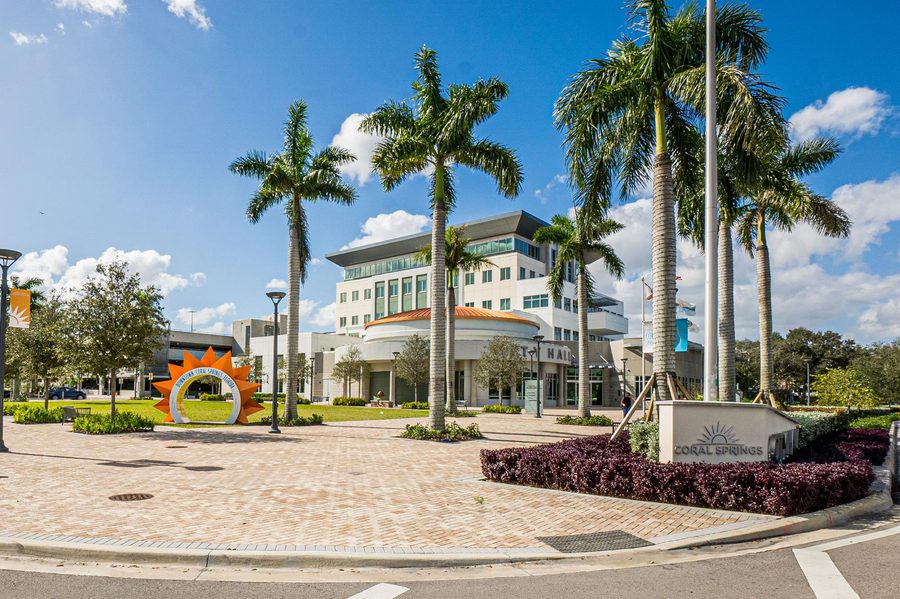
If you’re searching for the Coral Springs complete guide, everything you need to know before moving, here’s the short version: this is a planned, master-designed suburb in northwest Broward County built in the 1960s and 70s around the idea that families deserve good schools, sidewalks, and a city hall that actually answers the phone. It has delivered on that promise for fifty years. It is not beachfront, it is not trendy, and it is not going to show up in anyone’s “hottest neighborhoods” listicle. What it will do is give your kids A-rated public schools, give you a house with a real yard for less than you’d pay closer to the coast, and give you a genuinely low-drama place to build a life. This guide covers the neighborhoods, the schools, the money, the commute, and the tradeoffs nobody puts in the brochure.
Where Coral Springs Sits and Why That Matters
Coral Springs is landlocked, roughly 12 miles inland from the beach, bordered by Parkland to the north, Margate and Coconut Creek to the south and east, and the Everglades buffer to the west. It was developed by the Coral Ridge Properties company starting in 1963 as one of the first fully planned communities in Florida, meaning the street grid, the drainage, the park spacing, and the school placement were all designed together instead of bolted on over decades. That’s why the city still feels organized in a way that older Broward suburbs like Lauderdale Lakes or parts of Sunrise don’t. Curving streets, mature oak canopy, consistent setbacks, and a genuinely low amount of visual clutter.
The tradeoff for that planning is distance. You are not walking to the beach, and you are not in a five-minute Uber to Las Olas. If waterfront proximity or urban energy is the priority, Coral Springs is the wrong city and you should be looking at Fort Lauderdale proper or Hollywood instead. If the priority is schools, safety, and value per square foot, keep reading.
Coral Springs Complete Guide: Neighborhoods and What Each One Actually Offers
This is the part most guides skip, and it’s the part that matters most, because “Coral Springs” covers a lot of ground and the neighborhoods differ more than people expect.
Eagle Trace
A guard-gated golf community built around the former Eagle Trace Golf Club, known for larger lots, mature landscaping, and homes generally in the $650,000 to $1.1 million range. HOA dues run higher here because of the gate and common area maintenance. This is the closest thing Coral Springs has to a prestige address.
Coral Springs Country Club / Country Club Estates
Homes built in the 1970s and 80s around the Country Club at Coral Springs, generally $500,000 to $750,000. Larger lots than the newer sections of the city, mature trees, and a mix of pool and non-pool homes.
The Hills / Turtle Run
Northwest Coral Springs, closer to Parkland, generally newer construction from the late 1980s through the 1990s. Prices typically $475,000 to $650,000. This area feeds into some of the strongest zoned schools in the city and is popular with families cross-shopping Parkland but wanting a lower price point.
Ramblewood-adjacent and Central Coral Springs
The older core of the city, homes built in the 1970s, more affordable entry point in the $400,000 to $525,000 range for a 3-bedroom, 2-bath single-story. This is where a lot of first-time buyers land, especially those priced out of Parkland or Weston. For a deeper look at what that entry looks like in practice, see First-Time Buyer in Coral Springs: What to Expect and Where to Start.
Cypress Run and Chanteclair
Smaller, tucked-away enclaves with a mix of single-family and townhome product, generally mid-range pricing and good access to Sample Road and University Drive.
If you want the full neighborhood-by-neighborhood breakdown with maps and current listings by area, Coral Springs Neighborhoods: Where to Live and What Each Area Is Like goes deeper than this section can.
Schools: The Real Reason Most Families Choose Coral Springs
Be honest with yourself about why you’re looking here. It’s the schools. Coral Springs sits within Broward County Public Schools and is zoned for some of the strongest performing schools in the county, including Coral Springs High School, Marjory Stoneman Douglas High School, J.P. Taravella High School, and Coral Glades High School, depending on exact address. Elementary and middle options like Ramblewood Elementary, Riverside Elementary, and Coral Springs Middle consistently post strong state assessment scores.
Two things to know before you assume every address gets you the school you want. First, zoning lines in Coral Springs are specific down to the street, not the zip code, so verify the exact zoned school for any address you’re considering before you fall in love with it. Second, Marjory Stoneman Douglas carries emotional weight for this community following the 2018 tragedy, and the school and city have invested heavily in safety infrastructure and mental health resources since. Families relocating from out of state sometimes ask about this directly, and it’s worth addressing honestly rather than avoiding it. For the full school-by-school breakdown with boundaries and ratings, see Coral Springs Schools: Why Families Keep Choosing This City.
What Homes Actually Cost in Coral Springs Right Now
Coral Springs is not a bargain city, but it’s meaningfully cheaper than Parkland to the north and Weston to the south for comparable square footage. As of mid-2026, here’s the realistic range by product type:
- Entry-level single-family (3/2, 1,400 to 1,700 sq ft, central/Ramblewood-adjacent): $425,000 to $525,000
- Mid-range single-family (4/2, 1,800 to 2,300 sq ft, Turtle Run/The Hills): $525,000 to $675,000
- Larger homes with pool (Country Club Estates, larger lots): $650,000 to $850,000
- Eagle Trace and guard-gated golf product: $700,000 to $1.1 million+
- Townhomes and villas: $350,000 to $475,000
HOA dues vary widely depending on whether you’re in a gated section with amenities or an unguarded neighborhood with minimal common areas. Expect anywhere from $0 (many non-HOA single-family streets) to $400+ per month in gated golf communities. There is no CDD (Community Development District) burden in most of established Coral Springs the way there is in newer master-planned communities further west, since the city itself, not a district, maintains most infrastructure. Always confirm HOA and any special assessments before you write an offer, especially in older condo and townhome buildings where reserve funding has become a bigger issue statewide since the 2021 Surfside collapse triggered new structural inspection requirements.
For current, dated pricing and inventory trends rather than a snapshot, check Coral Springs Real Estate Market: What Prices and Inventory Look Like in Mid-2026.
New Construction: Limited, But It Exists
Coral Springs is largely built out, so this isn’t a city where you’ll find large master-planned new construction communities the way you would in Parkland, Southwest Ranches, or western Broward. What does exist tends to be infill development, smaller townhome and villa projects, and the occasional teardown-rebuild on larger lots in established neighborhoods. If new construction is a priority over an established neighborhood, it’s worth comparing what’s actually available here against what Parkland offers just a few minutes north. The breakdown of current builders and pricing is in New Construction in Coral Springs: What Is Available and What It Will Cost You.
Commute: The Honest Numbers
This is where Coral Springs asks something of you. It’s an inland suburb, so your commute depends entirely on where you’re going.
- To downtown Fort Lauderdale: 30 to 40 minutes via the Sawgrass Expressway (Sunrise Blvd exit) or University Drive/I-595, longer during peak rush hour.
- To Fort Lauderdale-Hollywood International Airport (FLL): 35 to 45 minutes depending on route and time of day.
- To Miami / Brickell / Downtown Miami: 55 to 75 minutes via I-95 or the Turnpike, and this is the commute that catches people off guard. If you work in Miami five days a week, budget real time or consider a closer suburb.
- To Boca Raton and Palm Beach County job centers: 25 to 35 minutes north via the Sawgrass Expressway or Florida’s Turnpike.
The Sawgrass Expressway (Route 869) is the backbone of Coral Springs commuting, connecting to I-95, the Turnpike, and Sunrise. If your job is anywhere along that corridor (Sunrise, Sawgrass Mills area, Coral Springs itself, or up toward Boca), the commute is genuinely easy. If your job is south in Miami-Dade, go in with realistic expectations rather than finding out the hard way during month one.
Parks, Recreation, and Day-to-Day Life
Coral Springs consistently ranks among the best-run cities in Florida for parks and recreation, and it shows. Mullins Park is the anchor, with sports fields, a skate park, and event space that hosts the city’s holiday and community festivals. The Coral Springs Gymnasium and Sportsplex serve organized youth sports leagues that are a real part of the culture here, particularly travel baseball, soccer, and swim. The Cypress Aquatic Complex and Coral Springs Aquatic Complex give families serious swim training options, which matters if you have a competitive swimmer, and Coral Springs has produced legitimate Olympic-level talent out of its swim programs.
The Coral Springs Museum of Art and the Center for the Arts host a steady calendar of exhibits, classes, and performances, giving the city more cultural programming than most Broward suburbs its size. Dining leans toward reliable, family-oriented chains and a growing set of independent spots along Coral Ridge Drive and Sample Road, rather than the destination restaurant scene you’d find in Fort Lauderdale or Boca. If you’re the kind of buyer who wants a walkable downtown with nightlife, that’s not what Coral Springs is selling. If you want good public schools, organized sports, parks within a five-minute drive of almost any home, and a calm evening at a family restaurant, this city delivers that in a way few others in the county do. The full rundown of what a normal week looks like here is in Living in Coral Springs: Parks, Dining, Activities, and What Day-to-Day Life Looks Like.
Coral Springs vs. Its Closest Competitors
The two cities buyers most often cross-shop against Coral Springs are Parkland and Weston, and it’s worth being direct about the differences rather than letting a real estate agent tell you they’re basically the same.
Parkland sits directly north and generally commands a premium of $150,000 to $300,000+ over comparable Coral Springs homes, largely driven by larger lot minimums, more restrictive zoning, and its own reputation for exclusivity following its incorporation as a distinct city with its own strict development controls. Schools overlap significantly since both cities feed into some of the same high schools. If your budget can stretch and you want more land and a slightly quieter, more insulated feel, Parkland is worth the look. If it can’t, Coral Springs gets you 80 percent of the lifestyle for meaningfully less money. The direct comparison, area by area, is in Coral Springs vs. Parkland: Which Broward Suburb Is Right for Your Family?.
Weston, southwest in Broward, offers a similar planned-community feel with strong schools but generally runs even more expensive than Parkland, with more HOA-controlled product and less variety in housing stock age. Coral Springs wins on affordability and variety, loses on newer construction and some amenity packages.
The Honest Tradeoffs Nobody Puts in the Brochure
A real guide tells you what doesn’t work, not just what does.
You will drive everywhere. Coral Springs is not a walkable city in the way Fort Lauderdale Beach or downtown Delray is. Groceries, school, sports, and work all mean getting in the car.
The beach is a real drive, not a quick trip. Expect 25 to 35 minutes to the nearest Broward beaches depending on traffic and exact location within the city. This is not a spontaneous after-work swim kind of city.
Some housing stock is aging. A meaningful share of Coral Springs homes were built in the 1970s and 80s. That means roofs, plumbing (some homes still have original polybutylene piping, which affects insurability), and electrical systems are worth a hard look during inspection. Florida’s insurance market has gotten stricter about older roofs specifically, and a 15+ year old roof can complicate getting affordable homeowners coverage. Budget for this in your offer strategy, not after closing.
Property taxes and insurance add up. Broward County millage rates plus a Coral Springs municipal rate plus Florida’s homeowners insurance environment (still recovering from years of carrier exits and rate increases) mean your all-in monthly cost runs higher than the mortgage payment alone suggests. Get a real insurance quote before you go under contract, not after.
It’s a family city first. If you’re single, childless, or looking for nightlife and a young professional social scene, Coral Springs will feel quiet, maybe too quiet. This city is built for the school-run, weekend-travel-baseball, backyard-cookout version of life. That’s a feature for the right buyer and a mismatch for the wrong one.
Who Coral Springs Is Actually Right For
Coral Springs makes the most sense for families prioritizing school quality and stability over walkability or beach proximity, for buyers who’ve been priced out of Parkland but want the same school access, for anyone who values a well-run city government and consistent code enforcement over character-driven imperfection, and for investors targeting long-term rental demand from the same family-first renter pool the city has always attracted. If you’re weighing it purely as an investment, the rental numbers and where to look are covered in Coral Springs Investment Property: Rental Demand, Returns, and Where to Look.
It’s the wrong fit if beach access, nightlife, or a short commute to Miami is non-negotiable, or if you want brand-new construction with builder warranties over an established neighborhood with mature trees and character.
The Bottom Line
Coral Springs earns its reputation the boring way: by consistently delivering good schools, safe streets, and well-maintained parks for fifty-plus years without needing a rebrand or a marketing push. It’s not going to be the flashiest suburb in your search, and it’s not trying to be. If you want the deeper dive into any single piece of this, whether that’s the neighborhood-by-neighborhood pricing, the school zoning maps, or a realistic first-time buyer roadmap, the linked guides above break each one down in full. If you’re relocating and want someone who actually knows which streets feed into which schools and which HOAs are worth the dues, that’s a conversation worth having before you start touring, not after you’ve already fallen for a house. Moving to Coral Springs: The Family Suburb That Broward Does Best is the next read if you’re ready to get specific about your own situation.
Watch: learn more
Go deeper with my South Florida Insider videos.
Solterra: Everything You Need to Know Before You Visit
Solterra: Everything You Need to Know Before You Visit
More articles you might like
Coral Springs vs. Parkland: Which Broward Suburb Is Right for Your Family?
13 min readMoving to Coral Springs: The Family Suburb That Broward Does Best
18 min readCoral Springs Investment Property: Rental Demand, Returns, and Where to Look
13 min readFirst-Time Buyer in Coral Springs: What to Expect and Where to Start
14 min readLiving in Coral Springs: Parks, Dining, Activities, and What Day-to-Day Life Looks Like
17 min read