Coral Springs Real Estate Market: What Prices and Inventory Look Like in Mid-2026
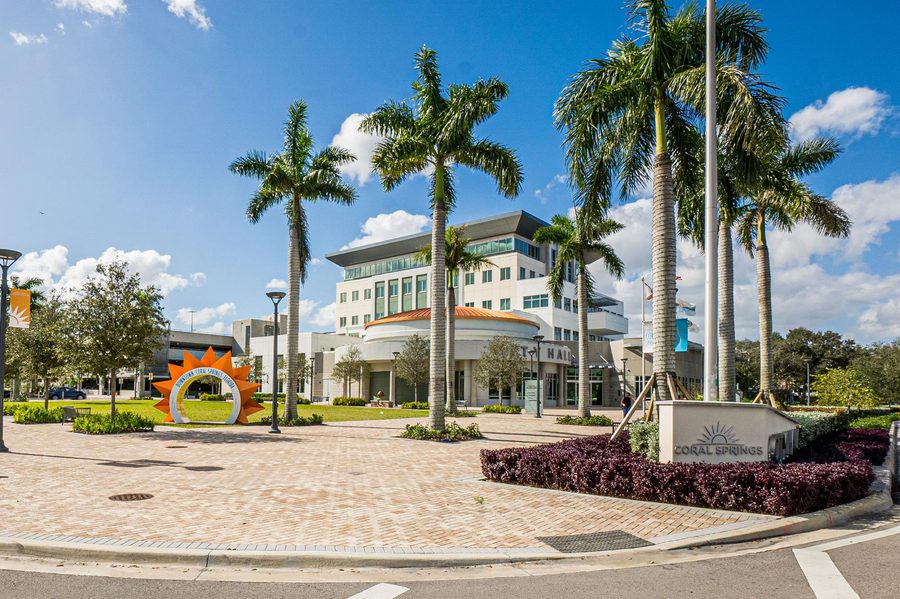
Coral Springs real estate market, what prices and inventory look like in mid-2026, comes down to this: it’s a slower, more measured market than the frenzy of 2021 through 2023, but it hasn’t crashed. Single-family homes are generally priced between $565,000 and $650,000 depending on the neighborhood, inventory has climbed to roughly four and a half to five and a half months of supply, and the average home is taking 45 to 60 days to go under contract instead of the 20 to 30 days buyers got used to a few years ago. If you’re buying or selling in Coral Springs right now, the reality is you’re operating in a market that rewards patience and punishes guesswork on pricing.
This isn’t a dramatic downturn. It’s a correction toward normal, and it’s playing out differently depending on which pocket of Coral Springs you’re looking at. A house in Eagle Trace and a townhome off University Drive are not experiencing the same market, even though they’re both technically “Coral Springs real estate.” Here’s what’s actually happening, street by street and price band by price band.
Coral Springs Real Estate Market: What Prices and Inventory Look Like Right Now
Let’s start with the numbers that matter most.
Single-family homes. The bulk of Coral Springs inventory in the $565,000 to $650,000 range represents three, four, and five bedroom homes built between the late 1970s and early 2000s, mostly in the central and western parts of the city. On a price per square foot basis, most of this inventory is running $280 to $320 a square foot, with newer or recently renovated homes pushing past $340. Homes under $500,000 exist, but they’re getting harder to find and tend to need updating, smaller lots, or busier road frontage along corridors like Wiles Road or Coral Ridge Drive. A buyer who waits for a fully updated four-bedroom under $500,000 in 2026 is, in most cases, waiting for something that isn’t coming back.
Townhomes and condos. This segment is running $310,000 to $375,000 for most product, with older 1980s complexes on the lower end and newer or renovated townhome communities near University Drive pushing toward $400,000. This is where first-time buyers and downsizers are concentrated, and it’s also the segment with the most competition for well-priced units. A clean, updated two-bedroom townhome under $340,000 in a well-run association routinely draws multiple showings in the first weekend it’s listed.
Days on market. Across the city, expect 45 to 60 days from list to contract for an accurately priced home. That’s up from the 20 to 30 day pace during the 2021 to 2022 run, and it tells you something important: buyers have options again, and they’re taking their time to use them. Homes that sit past 75 days almost always have a pricing problem, a condition problem, or both. Rarely is it bad luck.
Months of supply. Coral Springs is sitting around four and a half to five and a half months of inventory depending on price tier. Six months is generally considered a balanced market. That means Coral Springs is close to balanced overall, but leaning buyer-favorable above $600,000 and still leaning seller-favorable under $450,000 where demand from first-time buyers stays strong. Put another way, this is not a market where you can list any house at any number and expect it to move. It’s a market where accurate pricing gets rewarded and everything else gets punished with time on market.
If you want the full picture of what it’s like to actually live here, not just what it costs, the Coral Springs Complete Guide covers the city from top to bottom, and it’s worth reading alongside this market breakdown.
Neighborhood-by-Neighborhood Price Breakdown
Coral Springs isn’t one market. It’s a collection of distinct pockets, each built in a different decade with a different price ceiling. Treating the whole city as a single number is how buyers and sellers both get their pricing wrong. Here’s what each pocket actually looks like right now.
Eagle Trace
The gated, golf-course community on the western edge of the city remains Coral Springs’ premium address. Homes here run $700,000 to $1.2 million, with larger lots, custom finishes, and HOA fees that reflect the guard gate and country club amenities, typically $300 to $500 a month. This segment has held up better than the rest of the city because there’s simply less of it. When a well-maintained Eagle Trace home does come up under $850,000, it tends to move fast, often inside 30 days, because buyers who want this specific combination of privacy, golf frontage, and gated security don’t have many other options in the city.
Turtle Run
Family-focused, well-maintained, and consistently one of the more requested areas by relocating families. Expect $550,000 to $700,000 for most homes, with strong demand tied to school zoning and proximity to Turtle Run Park. Families relocating from out of state specifically ask for this neighborhood by name more than almost any other pocket of Coral Springs, largely because it zones toward Coral Springs and Coral Glades high schools and offers sidewalks, community pools, and a layout that reads as genuinely walkable rather than just car dependent. A typical Turtle Run listing, a 2,200 to 2,600 square foot four-bedroom, is spending closer to 40 days on market right now, faster than the citywide average, because demand here has stayed tighter than in older sections of town.
The Springs
Coral Springs’ canal-front and lake-front pocket, where waterfront lots command a real premium. Prices here run $650,000 to $900,000-plus for true waterfront, with non-waterfront homes in the same neighborhood coming in lower. Buyers looking at waterfront in The Springs need to budget for seawall inspections and maintenance in addition to the purchase price. A seawall in need of replacement can run $30,000 to $60,000 or more depending on linear footage, and that’s a negotiating point that too many buyers skip past because they’re focused on the water view.
Ramblewood and the older east side
Built mostly in the 1970s and 1980s, these homes are Coral Springs’ entry point into single-family ownership, generally $450,000 to $550,000. Lots are smaller, some homes need roof or AC updates, but this is where a lot of first-time buyers land because it’s the last place in the city where a starter single-family home still exists at a starter price. This is also the pocket where insurance underwriting gets the most scrutiny. A home here with an original 1985 roof is going to run into financing friction with several carriers, so buyers shopping Ramblewood specifically should ask for the roof permit history before writing an offer, not after.
Westwood and the western newer sections
Built later, generally 1990s through early 2000s, these homes run $500,000 to $650,000 and offer a middle ground: newer construction standards without Eagle Trace pricing. This is a strong fit for move-up buyers who want more square footage and a newer roof and electrical panel than Ramblewood offers, without paying for the golf course access they’d get in Eagle Trace. It’s also one of the more insulated pockets from the insurance swings hitting older inventory, since most homes here were built to more recent hurricane codes.
If you’re trying to figure out which of these pockets fits your family, the Coral Springs Neighborhoods guide breaks each one down in more depth than price alone.
Why Inventory Has Built Up in 2026
Three things are driving the shift from the tight market of a few years ago to the more balanced one you’re seeing now.
Insurance costs. This is the biggest factor nobody wants to talk about, and it’s real. Homeowners insurance in Broward County has climbed significantly over the past few years, and it’s changed what buyers can qualify for and what sellers can realistically ask. A home that penciled out at $600,000 in 2022 might require a buyer to budget an extra $300 to $500 a month in insurance alone today. That math pushes some buyers into lower price bands or out of the market temporarily, which slows absorption at the top. It also changes who can afford what. A buyer who was pre-approved for a $650,000 home based on a 2022 insurance quote may find that same lender qualifying them for closer to $580,000 once a current insurance estimate is plugged into the debt to income calculation, and that shift alone has quietly reshaped demand across every price band in the city.
Mortgage rates. Rates are still meaningfully higher than the 2021 lows, and that continues to price out some move-up buyers who are otherwise sitting on a low rate from a prior purchase. This “rate lock-in” effect is part of why inventory in the $450,000 to $550,000 range stays tighter than higher price bands. People aren’t moving unless they have to. A homeowner sitting on a 3 percent rate from 2021 needs a real reason, a job relocation, a growing family, a divorce, to give that up for a rate that’s still meaningfully higher, and that math is keeping a lot of otherwise-willing sellers on the sidelines.
More sellers testing the market. After two years of hearing “it’s still a seller’s market,” more Coral Springs homeowners listed in 2025 and into 2026, some of them overpricing based on 2022 comps. Those overpriced listings sit, which inflates the visible inventory number even though genuinely well-priced homes are still moving in a reasonable window.
New construction competition nearby. It’s also worth naming a fourth factor that doesn’t get talked about enough: Coral Springs is largely built out, but Parkland, Coconut Creek, and parts of northern Broward and southern Palm Beach still have active new construction. Some buyers who would otherwise consider a resale home in Coral Springs are cross-shopping brand new product with builder incentives, rate buydowns, and warranties elsewhere. That pulls a slice of demand away from Coral Springs resale inventory, particularly in the $550,000 to $700,000 range where new construction in neighboring cities directly competes.
What Buyers Should Know Before Making an Offer
The reality is buyers have more leverage than they’ve had in years, but that leverage isn’t unlimited, and it isn’t evenly distributed across the city.
Get pre-approved with insurance in mind, not just the mortgage. Ask your lender for a real insurance estimate on the specific property, not a generic number. Older homes, especially those with original roofs, can carry insurance costs that change your monthly payment by hundreds of dollars. Two homes that look identical on paper, same square footage, same neighborhood, same list price, can carry insurance quotes $200 or more apart a month depending on roof age and whether the electrical panel has been updated. That gap matters more than most buyers realize until they’re staring at a closing disclosure.
Don’t assume every listing has room to negotiate. Homes in Ramblewood and other entry-level pockets under $500,000 are still moving close to list price, sometimes with multiple offers, because that inventory is genuinely scarce. Homes above $650,000, particularly ones that have sat 60-plus days, are where you’ll find real negotiating room. As a rough guide, if a home above $650,000 has been listed more than two months, it’s reasonable to open a conversation below asking. If a home under $500,000 just hit the market this week, treat it like 2022 and move fast if it fits what you need.
Check the roof age and year of last insurance inspection before you fall in love with a house. In this insurance environment, a 20-year-old roof can eliminate financing options entirely with certain carriers. Ask the listing agent for the roof permit date up front. It takes one phone call and it can save you from falling in love with a house you can’t actually insure.
Look at the whole picture, not just the number. School zoning, HOA restrictions, and flood zone status all affect long-term cost of ownership as much as the purchase price does. A $580,000 home zoned for a school you’d actually drive your kids across town to avoid isn’t a deal, no matter how the price per square foot compares to the block next door. If you’re new to the process entirely, the First-Time Buyer in Coral Springs guide walks through what to expect step by step.
What Sellers Should Know About Pricing and Timing
If you’re selling in Coral Springs right now, the market is telling you something clearly: price it right the first time, or you’ll chase the market down.
Overpricing costs you more than it used to. In 2021, an overpriced listing might still get an offer within a couple weeks because demand absorbed pricing mistakes. In 2026, an overpriced listing sits for 60, 90, even 120 days, accumulates a stale listing stigma, and eventually sells for less than it would have if it launched at the right number. Buyers and their agents track days on market closely now. A home that’s been sitting for three months gets treated as a negotiation, not a listing price, the moment an offer finally comes in.
Comps from 12 months ago aren’t reliable anymore. Pull comps from the last 60 to 90 days, not the last year. This market has moved enough that older comps overstate value in most price bands above $550,000. A seller pricing off a comp that closed in early 2025 is often working from a number that’s 5 to 8 percent higher than what the same home would fetch today.
Condition matters more than it did. With more inventory for buyers to choose from, a home that shows well, has a newer roof, and comes with recent insurance documentation will outsell a comparable home that doesn’t, even at the same price point. Handing a buyer’s agent a current four-point inspection and a recent insurance quote up front, before they even ask, signals a seller who has nothing to hide, and in a market with options, that matters.
Timing still matters, but less than pricing does. Spring remains the strongest window for showings and buyer traffic in Coral Springs, but a correctly priced home in October will still outperform an overpriced home in March. If you’re weighing whether to wait for spring or list now, the honest answer is that the calendar matters less than getting the number right on day one.
HOA and CDD Considerations Affecting Price
Coral Springs is a mostly built-out city, so unlike newer Broward and Palm Beach developments, you won’t run into many Community Development District (CDD) fees layered on top of property taxes here. That’s a real advantage over some of the newer master-planned communities further west and north, where CDD fees alone can add $100 to $300 a month on top of the mortgage payment and property taxes.
HOA fees vary widely by neighborhood type. Non-gated single-family neighborhoods often run $50 to $150 a month or sometimes have no mandatory HOA at all. Gated and amenity-rich communities like Eagle Trace run $300 to $500 a month, reflecting guard gates, golf access, and common area maintenance. Townhome and condo communities typically fall in the $250 to $450 a month range, covering exterior maintenance, roofs, and often water.
Before making an offer, always pull the HOA’s financials and reserve study. A community with underfunded reserves can hit owners with a special assessment that changes your real cost of ownership overnight, something that’s become a bigger issue across Florida HOAs and condo associations since state reserve requirements tightened. This isn’t a hypothetical. Buyers in townhome and condo communities specifically should ask how much is sitting in reserves relative to the age of the roofs and the buildings, not just whether the monthly fee sounds reasonable. A low monthly HOA fee attached to an underfunded reserve account is often more expensive in year two than a higher fee attached to a well-funded one.
How Coral Springs Compares to Nearby Broward Suburbs
Buyers cross-shopping Coral Springs are usually also looking at Parkland, Coconut Creek, and Tamarac. Coral Springs generally prices below Parkland, where new construction and larger lots push medians well above $700,000, but above older, more centrally located Broward suburbs. What Coral Springs offers that’s hard to find elsewhere at this price point is an established city with mature landscaping, a genuinely walkable downtown corridor around Coral Springs Drive, and school zoning that families specifically target.
Coconut Creek, just to the south, tends to run slightly below Coral Springs on a price per square foot basis, but offers less of the mature single-family stock that Coral Springs is known for, with more of its inventory concentrated in condos and newer townhome product. Tamarac, further south still, prices meaningfully lower than Coral Springs across the board, which makes it a common landing spot for buyers priced out of Coral Springs who still want to stay close to the same commute corridors along the Sawgrass Expressway and Florida’s Turnpike. The tradeoff buyers need to understand clearly is that Coral Springs’ premium over Tamarac and Coconut Creek isn’t just about the house, it’s about the schools, the parks system, and a downtown corridor that those neighboring cities don’t have an equivalent to. For a direct side-by-side, the Coral Springs vs. Parkland comparison is the more detailed read if that’s the decision in front of you.
Investors watching this market should also note that rental demand in Coral Springs has stayed resilient even as purchase prices adjusted, largely because the same insurance and rate pressures keeping some buyers on the sidelines are pushing them into rentals instead. Single-family rentals in the city are leasing steadily, and well-maintained three-bedroom homes in Turtle Run and Westwood are seeing consistent tenant demand from families who want the school zoning without committing to a purchase in this rate environment. That dynamic is covered in more depth in the Coral Springs Investment Property guide.
What This Means for the Second Half of 2026
Here’s the reality heading into the back half of the year. Coral Springs is not crashing, and it’s not booming. It’s a market that rewards buyers who do their homework on insurance and financing before they fall in love with a house, and it rewards sellers who price accurately from day one instead of testing the market with a number from two years ago.
If you’re a buyer, the entry-level segment under $500,000 is still competitive and moves fast. Above $600,000, you have real room to negotiate, especially on homes that have already sat for a month or more. If you’re a seller, condition and accurate pricing matter more than they have in years, and the days of an automatic bidding war are, for most of the city, behind us. Both sides of this market are being shaped by the same underlying force: insurance and financing costs are doing more to set the ceiling on price than buyer enthusiasm is right now, and that’s not something that’s likely to reverse in the next two or three quarters.
Coral Springs’ fundamentals, the schools, the parks, the established neighborhoods, and the location between the Sawgrass Expressway and Turnpike, haven’t changed. What’s changed is that buyers finally have the time to be selective again, and sellers need to respect that. If you want a broader sense of what draws people to this city beyond the price sheet, the Living in Coral Springs guide and the Moving to Coral Springs overview both cover the day-to-day reality that keeps families choosing this suburb year after year.
DM me “CORAL” and I’ll send you a breakdown of current inventory in your specific price range and neighborhood, along with what’s actually selling versus what’s sitting.
More articles you might like
Coral Springs Complete Guide: Everything You Need to Know Before Moving
13 min readCoral Springs Investment Property: Rental Demand, Returns, and Where to Look
13 min readFirst-Time Buyer in Coral Springs: What to Expect and Where to Start
14 min readCoral Springs vs. Parkland: Which Broward Suburb Is Right for Your Family?
13 min readLiving in Coral Springs: Parks, Dining, Activities, and What Day-to-Day Life Looks Like
17 min read