What Is a CDD Fee in Florida? A South Florida Buyer's Guide (2026)
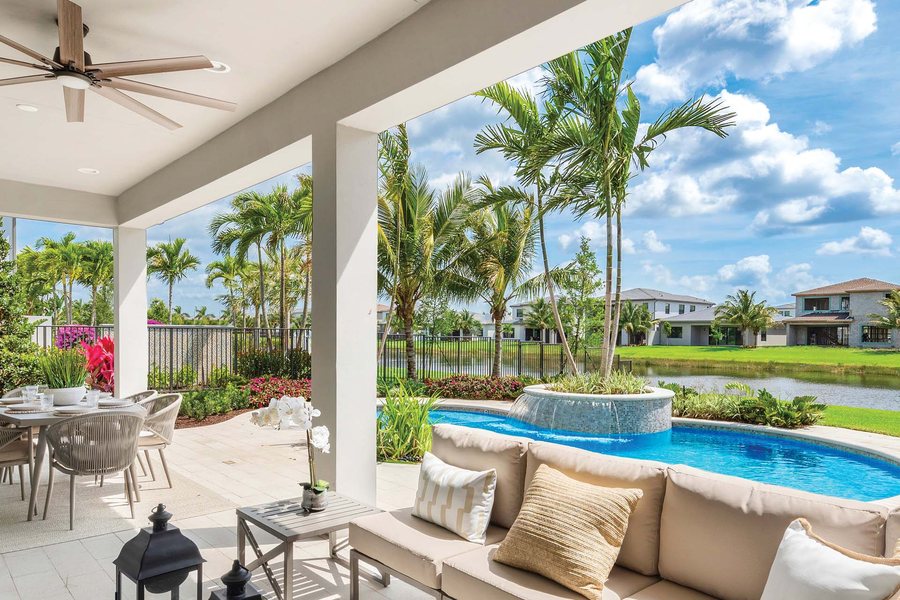
If you’re shopping new construction in Broward, Palm Beach, or Miami-Dade and you keep seeing “CDD” listed next to a community’s HOA fee, here’s the short version: a CDD fee is not your HOA fee. It’s a separate, legally distinct charge that shows up on your property tax bill, and it exists because someone had to pay for the roads, water lines, and drainage systems under your new home before you ever moved in. This guide breaks down what is a CDD fee in Florida, a South Florida buyer’s guide for 2026, in plain terms, using the same questions I get from clients touring model homes from Parkland to Davie to Coconut Creek.
I’ve walked buyers through this exact confusion more times than I can count. They fall in love with a floor plan, the builder rep quotes “$210 a month HOA,” and nobody mentions the CDD line until the mortgage payment estimate comes back higher than expected. This is the guide I wish every buyer read before they signed a reservation agreement.
What Is a CDD Fee in Florida? A South Florida Buyer’s Guide to the Basics
A CDD, or Community Development District, is a special-purpose local government created under Florida law (Chapter 190) to finance, build, and maintain the infrastructure inside a specific community. When a developer breaks ground on a new master-planned community, someone has to pay upfront for roads, water and sewer lines, stormwater drainage, street lighting, and sometimes the clubhouse, pool, and gated entry. Instead of the developer covering that cost out of pocket and building it into the home price, they set up a CDD, the district issues bonds to fund the construction, and the debt gets repaid over time by the homeowners who live in the district.
That repayment shows up as a non-ad valorem assessment on your annual property tax bill. It’s collected by the county tax collector alongside your regular property taxes, but it is not a tax on your home’s value. It’s a fixed assessment tied to your specific lot, and it funds a specific set of infrastructure improvements that directly serve your community.
This is the single most misunderstood cost in new construction, and it matters most for relocators who are budgeting off a builder’s advertised “starting price” without pricing in the full monthly carrying cost.
CDD vs HOA: What’s the Difference
These two get lumped together constantly, and they are not the same thing.
Your HOA fee pays a private homeowners association to maintain common areas, enforce deed restrictions, manage amenities like the clubhouse or pool, and handle landscaping in shared spaces. It’s collected by the HOA management company, not the county, and it’s not deductible or tied to your tax bill.
Your CDD fee is a government assessment that repays construction debt and funds ongoing maintenance of public infrastructure inside the district, things like roads, utility lines, and drainage systems that in a lot of Florida communities would otherwise be paid for by general tax revenue or by the developer directly.
You can have a CDD with no HOA, an HOA with no CDD, or both stacked on top of each other, which is common in newer master-planned communities across Broward and Palm Beach County. When a builder rep tells you “HOA is $200 a month,” ask directly: is there also a CDD, and if so, what’s the current annual amount? That single question saves buyers from a bad surprise at closing.
If you want to see this stacked structure in a real Broward community, look at Estates by Turnberry HOA & CDD Fees: What You’ll Actually Pay Every Month, which breaks down both charges line by line for a specific Davie community, or the fuller Is Estates by Turnberry Worth It? An Honest Look at CC Homes’s Davie Community for how those combined costs factor into whether the community is worth it.
How a CDD Fee Is Structured: O&M vs Bond
Here’s the part almost nobody explains clearly, and it’s the part that actually matters for your long-term budget. A CDD fee is usually made up of two separate pieces.
The O&M Portion
O&M stands for operations and maintenance. This portion funds the ongoing upkeep of the district’s infrastructure, things like maintaining stormwater ponds, common area landscaping the district owns, streetlights, and sometimes amenity center operations. This part does not expire. As long as the district exists and maintains that infrastructure, you’ll pay some version of this fee every year, similar to how you’ll always pay property taxes.
The Bond Portion
This is the debt repayment piece, and it’s the part with an actual end date. When the district issued bonds to pay for construction, that debt gets amortized over a set number of years, commonly 15 to 30 years depending on the district. Each year, your share of that debt service shows up as part of your CDD assessment. Once the bond is paid off, either through the scheduled annual payments or an early payoff, that portion disappears from your bill.
Most buyers never ask which portion is which, and it matters because it changes what you should expect long-term. A $2,400 annual CDD fee that’s mostly O&M is going to look roughly the same in year 20 as it does in year one. The same $2,400 fee that’s mostly bond debt could drop significantly, or disappear almost entirely, once that bond term ends.
How Long Does a CDD Fee Last in Florida?
The bond portion of a CDD typically runs 15 to 30 years from the date the bonds were issued, not from the date you bought your home. If you’re buying resale in a community that’s 10 years into a 30-year bond, you’re only inheriting 20 years of bond payments, not the full term. This is worth confirming directly rather than assuming, because it directly affects your long-term carrying cost if you plan to stay in the home for decades.
The O&M portion, again, doesn’t have an end date tied to a bond schedule. It continues as long as the district operates and maintains the infrastructure it’s responsible for. In practice, O&M amounts can rise modestly over time as maintenance costs increase, similar to how HOA dues tend to increase gradually.
Where You’ll Actually Find CDD Fees Across South Florida New Construction
CDDs are most common in newer, larger master-planned communities, particularly ones built on previously undeveloped land where the developer had to install all new infrastructure from scratch. You’ll see them heavily in Broward’s western corridor and in Palm Beach County’s newer development areas.
In Parkland, communities built out on former agricultural land, including newer sections near Heron Bay, commonly carry CDD assessments alongside HOA dues. If you’re comparing floor plans in that corridor, Parkland Royale Floor Plans Explained (2026): Sizes, Layouts, and Which One Fits and the companion Parkland Royale in Parkland: The New Construction Guide (Floor Plans, Pricing, What to Know) both walk through what buyers are actually paying monthly once HOA and any district fees are factored in. Nearby, Saltgrass at Heron Bay in Parkland: The New Construction Guide (Floor Plans, Pricing, What to Know) covers a community where infrastructure costs are baked into the ongoing fee structure buyers need to budget for.
In Coconut Creek, newer builder communities like the one covered in Mainstreet in Coconut Creek: The New Construction Guide (Floor Plans, Pricing, What to Know) show the same pattern: a builder-advertised base price that doesn’t tell the whole story until you add HOA and any applicable district assessments.
Further south in Davie, Estates by Turnberry HOA & CDD Fees: What You’ll Actually Pay Every Month is one of the clearest local examples of a community where both an HOA and a CDD apply, and the guide spells out the combined monthly number rather than just the HOA line a builder rep might quote on a walkthrough.
Not every new community has a CDD. Sunrise’s Solterra, for example, is a community worth comparing directly, and Is Solterra Worth It? An Honest Look at Lennar’s Sunrise Community along with Solterra Floor Plans Explained (2026): Sizes, Layouts, and Which One Fits are useful references for seeing how the fee structure compares to a CDD-heavy community. And for a newer build with its own distinct fee mix, Hanson Preserve Review (2026): Prices, Floor Plans, HOA, CDD, and Who It’s For lays out exactly what that community’s combined HOA and CDD costs look like today.
The takeaway: don’t assume every new construction community has a CDD, and don’t assume every community without one is automatically cheaper long-term. You have to check community by community.
Three Questions to Ask Before You Buy in a CDD Community
If you’re touring model homes and a CDD is in the picture, ask these three questions before you fall in love with a lot or a floor plan.
1. Is the bond assessment already fully assessed on this specific lot, or could it increase later?
In some districts, especially ones still under active development, not every phase has been fully bonded yet. That means the CDD amount on a home in an earlier phase could differ from a home built later in the same community. Ask specifically whether the assessment on your lot is final or subject to change as later phases get built out.
2. What’s the current annual CDD amount, and how many years are left on the bond?
Don’t accept a vague “it’s a couple hundred a year” answer. Ask for the actual dollar figure and the years remaining on the bond term. A district with 5 years left on its bond is a very different long-term cost than one with 28 years left, even if this year’s fee looks identical.
3. Can the bond balance be paid off early, and does that make sense for how long you plan to stay?
Most CDD bonds allow homeowners to pay off their individual share of the remaining bond balance in a lump sum, which removes that portion of the assessment from future tax bills. Whether that makes financial sense depends on your interest rate environment, how long you plan to own the home, and whether you’d rather have that cash working elsewhere. It’s worth running the math with your lender or a financial advisor rather than guessing.
Can You Pay Off a CDD Bond Early?
Yes, in most Florida CDDs, you have the option to prepay your share of the outstanding bond principal directly to the district, which permanently removes the bond portion of your annual assessment going forward. This is sometimes done at the time of purchase (some buyers negotiate this with a seller or builder) and sometimes done years into ownership.
The math isn’t always obvious. If your CDD bond carries a relatively low effective interest rate, and you could earn more by investing that lump sum elsewhere, paying it off early may not be the better move. If you’re planning to stay in the home for the long haul and want to simplify your annual costs, or if you’re preparing to sell and want to make the home more attractive to buyers who don’t want to inherit a large remaining bond balance, prepayment can make sense. This is a case where running actual numbers with a lender or financial advisor beats guessing.
Where to Actually Find Your CDD Disclosure
Florida law requires developers to provide a CDD disclosure summary before you close, typically included in your purchase contract paperwork. This disclosure should tell you whether a CDD exists, what it currently charges, and reference the district’s public records.
Beyond the disclosure, you can independently verify the numbers through a few channels:
- The county property appraiser’s website will show the non-ad valorem assessments on a specific parcel, which includes CDD charges
- The district’s own website (most CDDs are required to post budgets and meeting minutes publicly) will show the O&M vs. bond breakdown and the bond amortization schedule
- Your Realtor or closing attorney can request the most recent CDD budget directly from the district office
Don’t rely solely on what a builder sales rep tells you verbally. Get it in writing, and cross-check it against the district’s public budget documents.
How a CDD Fee Affects Your Total Monthly Housing Cost
When you’re comparing homes across South Florida, the sticker price and even the HOA fee only tell part of the story. Your realistic monthly cost needs to include:
- Principal and interest on your mortgage
- Property taxes (which will reset to a new assessed value after your purchase, not the seller’s old bill)
- Homeowners insurance
- HOA dues
- CDD assessment, if applicable, divided into a monthly equivalent
That fifth line item is the one relocators most often miss, because it’s buried inside the property tax bill rather than quoted upfront the way HOA dues are. A community with a $150 monthly HOA and a $200 monthly CDD equivalent has a real total of $350 a month in fixed community costs, not $150. That difference matters when you’re comparing two similarly priced homes in different communities, one with a CDD and one without.
Frequently Asked Questions
Is a CDD fee tax deductible? Generally, the O&M portion is typically not deductible the way property taxes are, while some portion of bond-related assessments may have different treatment. This is a question to run by your CPA with your specific district’s documentation, since it varies by how the assessment is structured.
Do all new construction communities in South Florida have a CDD? No. It depends on the developer, the size of the community, and how the land was developed. Always ask directly rather than assuming.
Can a CDD fee increase over time? The O&M portion can increase gradually as maintenance costs rise, similar to HOA dues. The bond portion is generally fixed based on the amortization schedule, though it doesn’t disappear until the term is complete or it’s paid off early.
The Bottom Line
A CDD fee in Florida is not a hidden scam and it’s not something to automatically avoid. It’s how a lot of South Florida’s newer, well-planned communities got the roads, drainage, and utilities that make them livable in the first place. The problem isn’t the fee itself, it’s buying a home without understanding what you’re actually signing up for.
Before you write an offer or put down a reservation deposit on new construction anywhere from Parkland to Davie to Coconut Creek, get the real numbers: the current CDD amount, whether it’s O&M or bond or both, how many years are left, and whether it’s fixed on your specific lot. If you want help pulling those numbers for a specific community you’re considering, reach out and I’ll walk through it with you directly, it costs you nothing to have someone run the real math before you commit.


More articles you might like
Solterra, Sunrise HOA & CDD Fees: What You'll Actually Pay Every Month
19 min read
Altessa at Wilton Manors HOA & CDD Fees: What You'll Actually Pay Every Month
20 min readSolterra HOA & CDD Fees: What You'll Actually Pay Every Month
17 min read
Mainstreet HOA and CDD Fees: What You'll Actually Pay Every Month
13 min readBuying a South Florida Condo in 2026: SIRS, Reserves, and What to Check First
7 min read