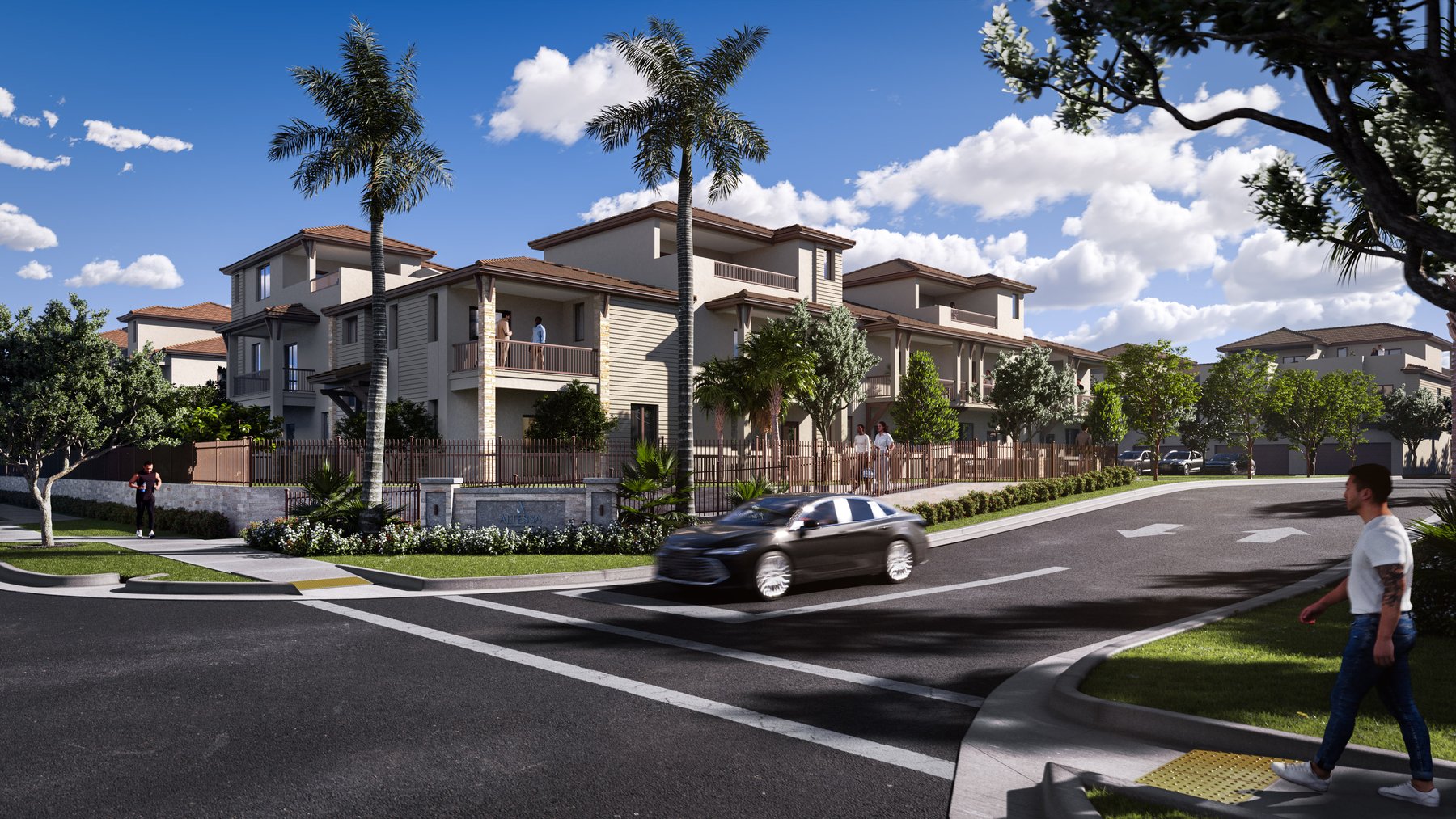
Mainstreet HOA and CDD Fees: What You'll Actually Pay Every Month

If you’re pricing out a home at Mainstreet in Coconut Creek, the sales price on the model is not what you’ll actually pay every month. The real number is the mortgage plus the HOA dues plus, in most cases, a CDD assessment that gets folded into your property tax bill. Mainstreet hoa cdd fees are the two line items that most buyers underestimate, and they’re also the two numbers that determine whether a home that looks affordable on paper actually fits your monthly budget once you’re living in it.
Here’s what you need to know before you fall for a model home: HOA and CDD fees are not optional add-ons you can negotiate away, and they’re not the same thing, even though builders and even some agents lump them together in casual conversation. One is a membership fee for a private association that maintains your community. The other is a public financing mechanism that pays back the infrastructure that made the community possible in the first place. Both show up in your monthly cost of ownership. Only one of them shows up on the HOA disclosure sheet you’re handed at the sales center.
Mainstreet HOA CDD Fees: How to Get the Exact Number
I’ll be straight with you. I don’t have a confirmed, published HOA figure or CDD assessment number for Mainstreet to hand you on this page, and I’m not going to make one up to fill space. New construction pricing and fee structures shift as a community moves through phases, and the only source that has the current, accurate number is Lennar’s sales office for this specific community.
What I can tell you is exactly what to ask for, in this order, before you sign anything:
- Ask for the current HOA fee in writing, not a verbal estimate. Get the monthly dollar amount and ask whether it’s expected to increase once the community reaches full build-out (HOA fees on new communities are frequently set artificially low while the developer still controls the board, then rise once the community turns over to homeowner control).
- Ask specifically whether there is a CDD attached to any lot or section of Mainstreet. Don’t ask “are there extra fees.” Use the term CDD directly. Builders are required to disclose it, but you have to ask the right question to get a direct answer instead of a vague “there may be some additional assessments.”
- If there is a CDD, ask for the current annual assessment amount and whether it’s a fixed term or ongoing. CDD bonds are typically paid down over 15 to 30 years and the assessment can decrease over time as the bond retires, or it can be refinanced and extended. You want to know which situation you’re walking into.
- Ask how the CDD is billed. In nearly every case in Florida, it’s billed through your annual property tax bill (your county’s non-ad valorem assessment line), not as a separate monthly HOA-style invoice. That distinction matters because when you’re mentally budgeting “my HOA is $X a month,” the CDD can be invisible until your first full property tax bill arrives and it’s a few hundred dollars a month higher than you expected.
For the deep dive on floor plans, phasing, and what’s actually being built at Mainstreet, the Mainstreet Floor Plans Explained guide and the full Mainstreet in Coconut Creek new construction guide cover the product side in detail. This post is strictly about the ongoing cost of ownership, because that’s the number that actually determines whether the home works for your household long term.
What the HOA Fee Actually Pays For
A monthly HOA fee at a Lennar community like Mainstreet isn’t just a maintenance charge. It’s what keeps the community looking and functioning the way it did the day you toured the model. Depending on the amenity package, your HOA typically covers some combination of:
- Common area landscaping (front yard maintenance is sometimes included on townhome and smaller-lot single-family product, but not always, so ask specifically)
- Community amenities: pool, clubhouse, fitness center, playgrounds, walking paths
- Private road maintenance and, if applicable, gate staffing or gate technology
- Master insurance on common structures and liability coverage for shared spaces
- Reserve contributions for future repairs (roof replacement on a clubhouse, resurfacing a pool, repaving private roads)
That last one, reserves, is the item most buyers never think to ask about. A community that’s underfunding its reserves can look cheap on the HOA sheet today and hit residents with a special assessment five or ten years down the road. Ask whether the HOA is following a funded reserve study or a bare-minimum statutory reserve schedule. This is the same due diligence question that matters on the condo side too. If you’re weighing a condo purchase anywhere in the region instead of new construction, the fee transparency issues are even sharper there. Our guide to SIRS, reserves, and what to check first walks through why reserve funding is the single biggest hidden risk in South Florida association living, and the same logic (just at a smaller scale) applies to a new HOA community like Mainstreet.
Why New Community HOA Fees Often Rise After Turnover
Here’s something worth knowing going in. While the developer still controls the HOA board (which is standard during the initial build-out years), the fee is often set to cover current, known costs, not necessarily to build a healthy reserve fund for the long term. Once the community reaches a certain percentage of homes sold and control turns over to a homeowner-elected board, that board sometimes discovers the reserves are thin and votes to raise dues, or levies a special assessment, to catch up. This isn’t a Mainstreet-specific problem. It’s a pattern across new construction HOAs statewide. Ask the sales rep directly: has HOA control transitioned to homeowners yet, or is the developer still in charge of the board? If it’s still developer-controlled, budget for the possibility that your dues go up once residents take over.
CDD Assessments: The Fee That Doesn’t Show Up Where You’d Expect It
A Community Development District, or CDD, is a special taxing district that Florida allows developers to establish to finance the infrastructure that makes a large new community possible in the first place: roads, water and sewer lines, drainage, sometimes the amenity center itself. The developer fronts (or bonds) the cost of building that infrastructure, and then homeowners in the district pay it back over time through the CDD assessment.
The reason this matters so much for a community like Mainstreet, which is a larger master-planned, amenity-rich development, is that CDDs are common exactly in this type of project. Smaller infill developments without much shared infrastructure often skip a CDD. Larger, more heavily amenitized communities frequently have one. That’s not a knock on the community. It’s just how a lot of new construction financing in Broward and Palm Beach counties works now.
Two things to understand about how a CDD actually hits your wallet:
It’s billed through your property tax bill, not your HOA statement. This is the single most common point of confusion I run into with buyers. You’ll get your HOA coupon book or portal bill each month, and that’s the number that feels real to you. Then your first November property tax bill arrives and there’s a separate non-ad valorem line item for the CDD that can add another $150 to $250 or more per month when averaged out, depending on the district and the size of the bond. If you didn’t ask about the CDD before you closed, this is the moment it becomes real, and it’s the wrong moment to find out.
It can (sometimes) be paid off early, but almost nobody does that. CDD bonds are occasionally structured so a homeowner can pay a lump sum to retire their share of the assessment and remove it from future tax bills. Ask if that option exists at Mainstreet and what the payoff amount would be. Most buyers don’t do this because the math rarely works out better than just paying it over time, but it’s worth knowing the option exists.
A Real Comparison: What Comparable Broward Lennar Communities Actually Charge
Since I don’t have Mainstreet’s confirmed numbers to give you here, the next best thing is showing you what a genuinely comparable Broward new construction community with a gate, resort-style amenities, and a CDD actually charges, so you have a realistic range to plan around while you’re waiting on Mainstreet’s official disclosure.
At Solterra in Sunrise, a gated Lennar community with a manned entrance, resort-style pool, clubhouse, fitness center, and walking paths, buyers are looking at roughly $385 to $496 a month in HOA dues, plus a CDD assessment of about $2,160 to $2,544 a year, which works out to roughly $180 to $212 a month when you average it across the year, even though it’s actually billed once annually through property taxes.
Add those together and you’re looking at somewhere in the neighborhood of $565 to $708 a month combined at a comparable gated, amenitized Broward Lennar community, on top of the mortgage, insurance, and property taxes.
I want to be clear: this is a reference point, not Mainstreet’s actual number. Mainstreet’s amenity package, lot sizes, and financing structure may land higher or lower than this range. But if a sales rep tells you to expect a combined HOA and CDD cost of $150 a month total at a gated, amenity-rich Broward community in this price range, that number deserves a second look, because it doesn’t match what comparable communities in the market are actually charging. Use this range as your sanity check, then confirm the real figure in writing.
For a different flavor of comparison, guard-gated Lennar product in Parkland tends to run its own fee structure entirely, often higher given the guard staffing and more elaborate amenity package. If you’re cross-shopping, Is Parkland Royale Worth It? breaks down what that guard-gated Lennar community actually costs monthly, which is a useful upper-bound comparison if Mainstreet’s amenities end up being a more modest, non-guard-gated package.
Building Your Real Monthly Budget
Once you have Mainstreet’s actual HOA and CDD figures in hand, here’s the framework to build your true monthly cost, not just the number the mortgage calculator on the builder’s website spits out.
- Principal and interest on your mortgage at your actual locked rate, not a generic estimate.
- Property taxes, estimated off the purchase price at Broward’s millage rate for Coconut Creek, not the previous owner’s tax bill (there is no previous owner on new construction, so your first year’s taxes are based on land value only, then reassessed the following year once the home is complete, which means your tax bill often jumps in year two).
- Homeowners insurance, quoted before you’re under contract, not after. Broward insurance costs have climbed significantly over the past several years even with impact windows and modern construction standards helping your premium.
- HOA dues, confirmed in writing, with a note on whether the community is still developer-controlled.
- CDD assessment, confirmed in writing, converted to a monthly-equivalent figure even though it bills annually, so you’re not surprised in November.
- PMI, if applicable, depending on your down payment.
Add all six together, and that’s the number that determines whether Mainstreet fits your budget, not the base price on the model home sign. This is the same exercise we walk first-time buyers through across the corridor. If you’re newer to this process or budgeting your first South Florida purchase, the First-Time Buyer’s Guide to Deerfield Beach covers the same loan and budgeting fundamentals in more depth, and Coconut Creek sits right next door on that same commute corridor, so most of the guidance transfers directly.
Questions to Ask Before You Fall in Love With a Model
Sales centers are built to sell you on the lifestyle, and that’s fine, that’s their job. Your job is to walk in with the questions that protect your budget:
- What is the current monthly HOA fee, and is the community still developer-controlled or has it turned over to homeowners?
- Is there a CDD assessment on this specific lot or phase, and what is the current annual amount?
- How is the CDD billed, and is it on my property tax bill starting the first year I own the home, or does it phase in?
- Is there an option to pay off the CDD early, and what would that cost?
- Are HOA reserves funded on a study, or at the statutory minimum?
- Has the HOA fee increased since the community first opened, and by how much?
- What specifically does the HOA cover: is front yard landscaping included, or just common areas?
Get every answer in writing. A verbal number from a sales rep on a Saturday afternoon is not something you can hold anyone to. A written disclosure is.
How Mainstreet Stacks Up Against Other Coconut Creek and Broward Options
Coconut Creek sits in a corridor where buyers are also actively comparing product in Deerfield Beach, Coral Springs, and further west toward Parkland and Davie. If your budget has room to flex, it’s worth knowing what else is on the table with similar HOA and CDD structures. Communities like the ones covered in our Miramar new construction guide and the broader Plantation guide give you a sense of how fee structures vary even within the same builder across different Broward submarkets. Amenity-rich, gated new construction almost always carries meaningfully higher combined HOA and CDD costs than an older, established, non-amenitized neighborhood nearby. That’s not a reason to avoid Mainstreet. It’s just the honest tradeoff: you’re paying monthly for the gate, the pool, the clubhouse, and the newly built roads, on top of the mortgage.
The Bottom Line
Mainstreet hoa cdd fees are not a footnote, they’re a core part of what the home actually costs you every month, right alongside your mortgage payment. The mistake I see buyers make over and over isn’t buying in a community with an HOA and a CDD. It’s not asking for the real numbers before they fall for the model home, and then being surprised when the first full property tax bill or the first HOA increase notice lands in their mailbox.
Ask for the HOA fee and the CDD disclosure in writing before you go under contract. Run the full monthly math, mortgage, taxes, insurance, HOA, and CDD, before you decide what you can actually afford at Mainstreet. And if the numbers don’t work, there are other new construction options in this same corridor worth a look before you commit.
If you want a second set of eyes on the actual HOA and CDD disclosure once you have it, or you want help running the real monthly numbers side by side with other Coconut Creek and Deerfield Beach options, reach out before you sign anything at the sales center. On new construction, the builder pays the buyer’s agent, so having your own Realtor walk through the fee structure with you costs you nothing out of pocket.



More articles you might like
Is Mainstreet Worth It? An Honest Look at Lennar's Coconut Creek Community
15 min readMainstreet Review (2026): Prices, Floor Plans, HOA, CDD, and Who It's For
18 min readMainstreet Floor Plans Explained (2026): Sizes, Layouts, and Which One Fits
20 min read
Mainstreet in Coconut Creek: The New Construction Guide (Floor Plans, Pricing, What to Know)
13 min read
Solterra, Sunrise HOA & CDD Fees: What You'll Actually Pay Every Month
19 min read