Altessa at Wilton Manors HOA & CDD Fees: What You'll Actually Pay Every Month
The reality is that a $325.29 monthly HOA and no CDD puts Altessa at Wilton Manors in a favorable position compared to a lot of new-construction competition in the area, where CDD assessments alone can add hundreds of dollars a month for decades. That’s the headline. But if you’re pricing out a home at Altessa, here’s the number you actually need before you fall in love with a Skyview floor plan: the HOA runs about $325.29 a month, and based on Lennar’s builder paperwork, there’s no CDD attached. That’s the short version of altessa at wilton manors hoa cdd fees, but the short version isn’t enough to budget a mortgage payment around. You need the full breakdown, because HOA and CDD confusion is the single most common surprise buyers run into on closing statements, and it’s an easy one to avoid if you ask the right questions early.
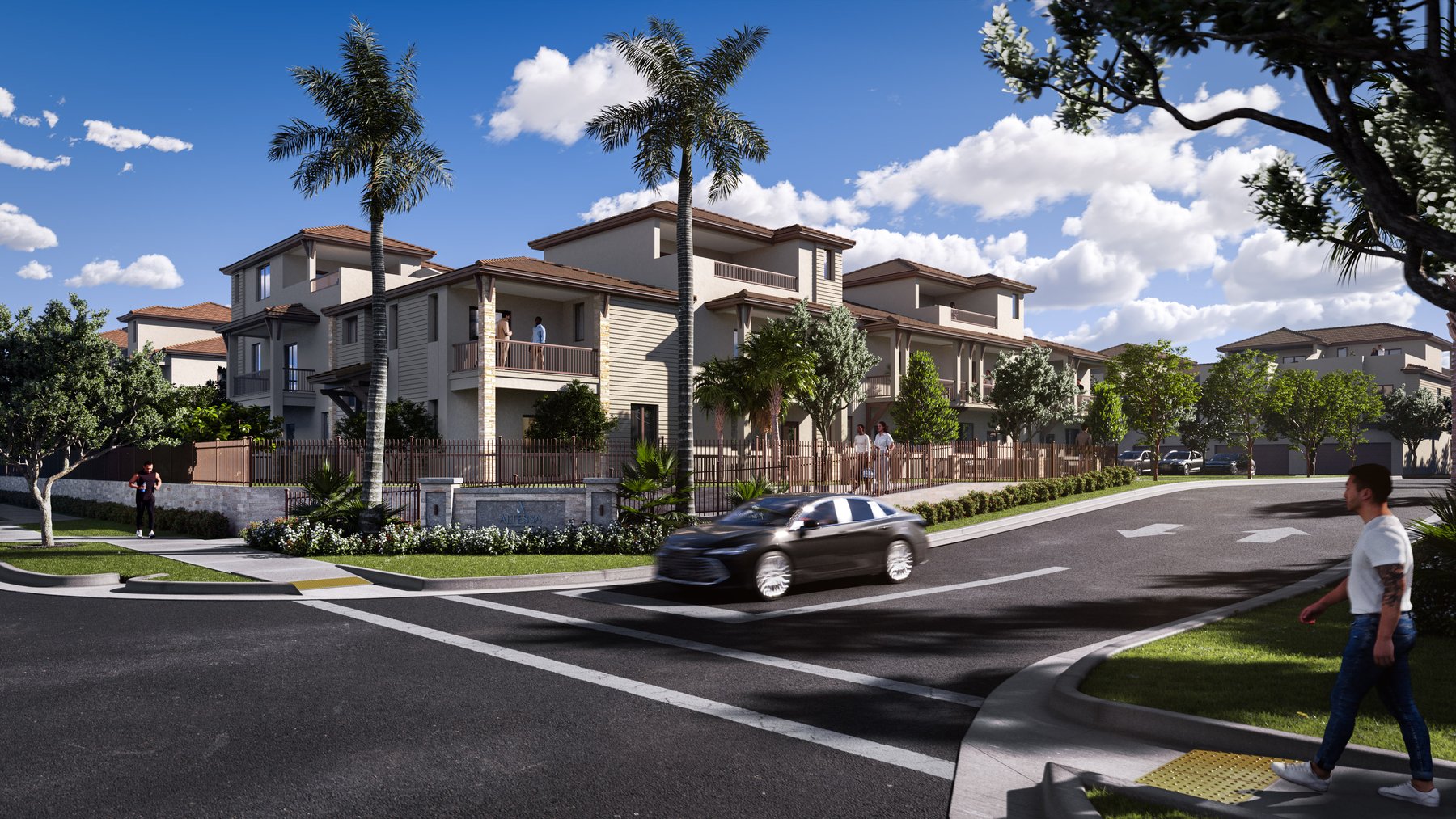
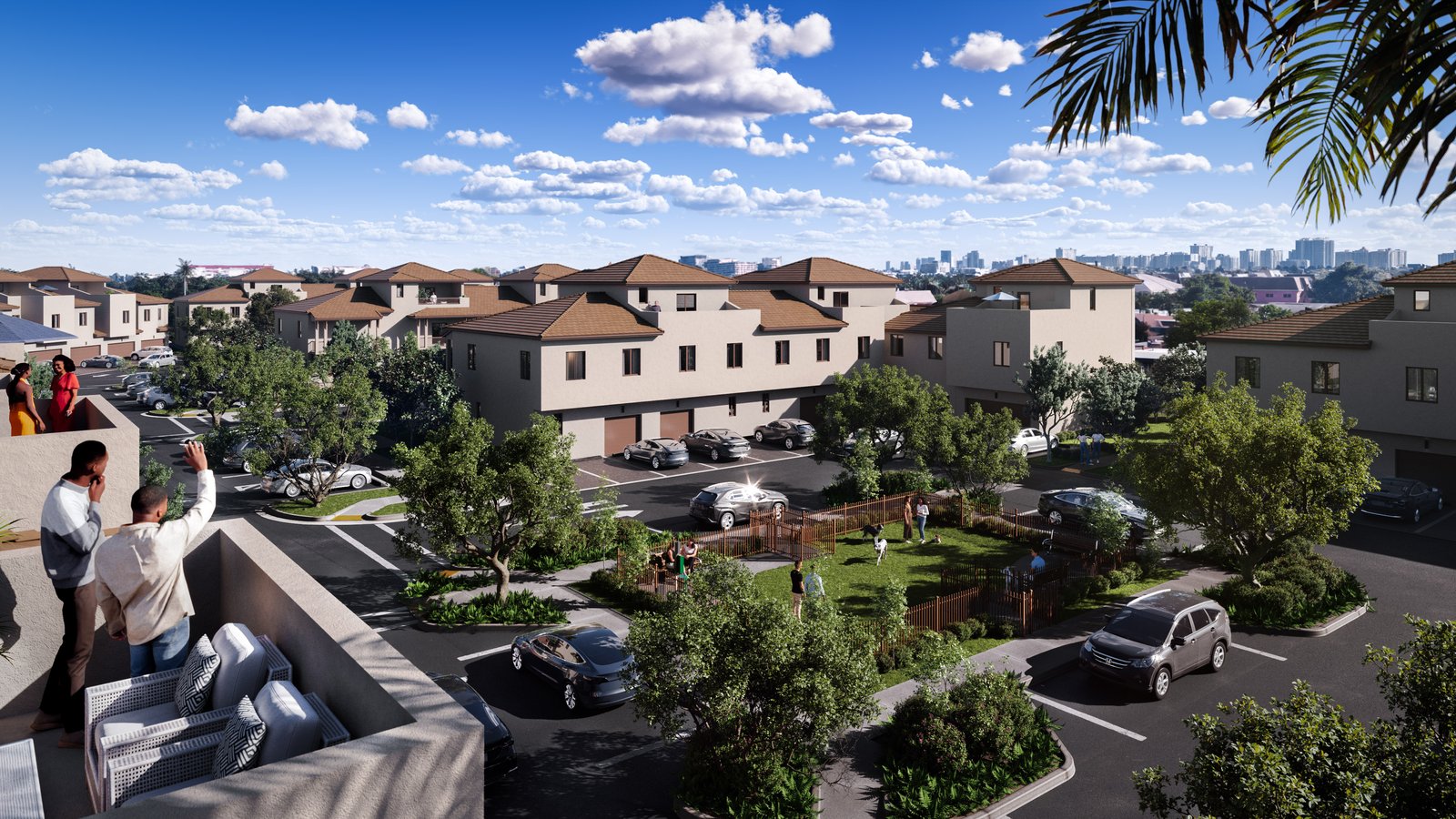
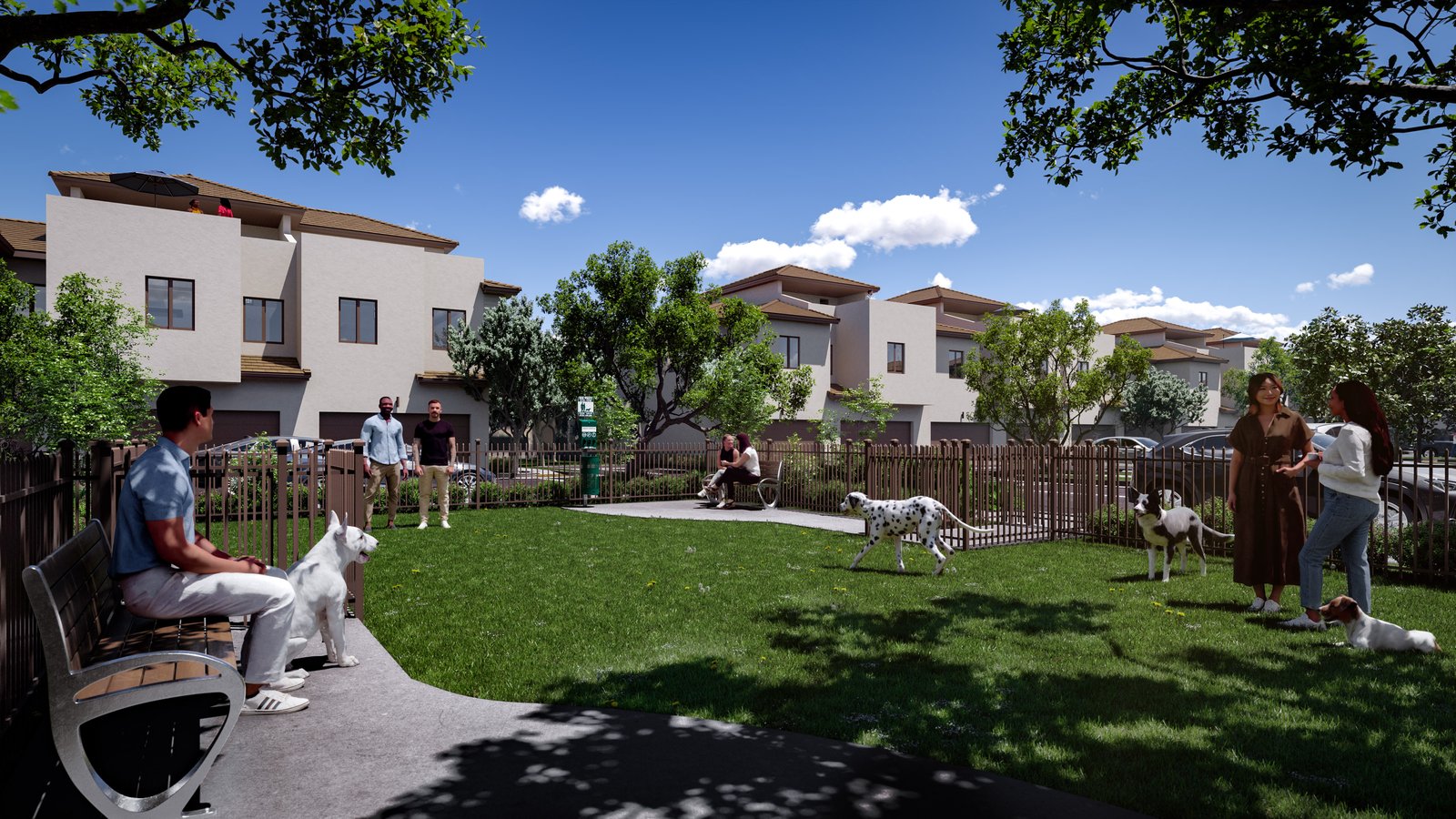
This community sits at 1550 NE 26th St in Wilton Manors, tucked just off Wilton Drive with homesites along NE 16th Avenue and Manor Way. It’s a new Lennar townhome community built around the Skyview floor plans, 2- and 3-story layouts with rooftop terraces, a game room on the top floor, an onsite dog park, and walkable access to the restaurants and shops that make Wilton Drive one of the most walkable corridors in Broward County. Prices on Lennar’s most recent builder sheet range from roughly $793,990 to $1,001,990 across nine floor plans. None of that tells you what you’ll actually pay every month once you own the place, so let’s get into it.
For buyers relocating from out of state, this is the part that trips people up most. If you’re coming from a market where HOA fees cover everything and property taxes are a flat, predictable number, South Florida’s mix of HOA, CDD, and county tax rates can feel like a moving target. Altessa is actually a good example to learn the system on, precisely because one of the three variables (the CDD) isn’t in play. That makes it easier to see clearly how the other two, HOA and property tax, actually work before you go compare a community where all three are stacked on top of each other.
What Altessa at Wilton Manors Actually Charges Each Month
The HOA at Altessa is approximately $325.29 a month, according to Lennar’s community brochure (printed 4/7/2026) and availability sheet (dated 6/27/2026). That fee is a fixed, predictable cost that goes toward:
- Maintenance and landscaping of common areas
- Upkeep of the onsite dog park
- Exterior maintenance on the shared townhome structures, including roofs in most Lennar townhome HOAs of this structure
- General community upkeep tied to the Skyview product type
What it does not cover is just as important. The HOA does not pay your property taxes, doesn’t cover homeowners insurance, and doesn’t touch anything inside your unit. Those are separate line items you’ll carry regardless of which floor plan you choose. If you want the specifics on what each Skyview layout offers for that HOA dollar, the Altessa at Wilton Manors Floor Plans Explained (2026) breakdown walks through sizes and layouts plan by plan.
It’s also worth knowing how that fee actually gets collected. Most Lennar HOAs bill monthly or quarterly depending on the association’s bylaws, and at closing you’ll typically prepay a portion into the association’s reserve account along with your first regular payment. Ask your closing agent to itemize this separately from your escrow deposit for taxes and insurance, because on a settlement statement those three numbers can blur together if you’re not looking closely. Buyers who don’t ask often assume the whole prepaid amount at closing is one lump “HOA and tax” fee, when it’s actually two or three distinct pools of money going to different places.
Why $325 a Month Is Actually on the Lower End for New Construction
For context, a lot of new-construction townhome and condo communities in Broward and Palm Beach carry HOA fees north of $400 to $500 a month once you add in amenity centers, gated entries, or resort-style pools. Altessa’s fee sits lower because the amenity package is intentionally lean: a dog park and walkability to Wilton Drive, not a clubhouse and lazy river. If your priority is a low, predictable HOA number over a packed amenity list, that’s a meaningful trade to understand going in, and it’s covered in more depth in Is Altessa at Wilton Manors Worth It? An Honest Look at Lennar’s Coconut Creek Community.
To put real numbers next to that comparison: a gated community with a full clubhouse, resort pool, and fitness center in western Broward can easily run $450 to $600 a month in HOA fees alone, before you even get into whether a CDD is layered on top. Over a 10-year hold, that $150 to $275 monthly gap between Altessa and a heavier-amenity community adds up to somewhere between $18,000 and $33,000. That’s not a reason to avoid amenity-heavy communities if that’s what you actually want and will use. It is a reason to be honest with yourself about whether you’ll use a lazy river three times a year or whether a dog park and walkable dinner options are the amenities you’ll actually touch every week.
Is There a CDD at Altessa at Wilton Manors?
This is the question that actually matters, because a CDD can add far more to your monthly number than an HOA ever will. Based on Lennar’s builder paperwork for Altessa, the special assessment field is blank, which means there’s no CDD indicated for this community. That’s a real differentiator, especially compared to some of the newer communities further west and north in Broward and Palm Beach that layer a Community Development District tax on top of the HOA.
Here’s the distinction most buyers get wrong, and it’s the one thing worth knowing before you tour any new-construction model in South Florida: an HOA and a CDD are not the same thing, and mixing them up is the most common surprise I see on closing statements.
HOA vs. CDD: What Each One Actually Is
An HOA (Homeowners Association) covers amenities, common area upkeep, and shared maintenance. It’s a membership fee you pay to the community association, and it’s usually the whole story on what you owe beyond your mortgage and taxes.
A CDD (Community Development District) is a completely different animal. It’s a separate taxing structure that finances infrastructure like roads, utilities, and drainage systems, often laid out before the first home is even built. A CDD shows up as its own line item on your property tax bill, separate from and in addition to the HOA, and it can run for decades before it’s paid off. Some CDD assessments are baked into the tax bill and barely noticed; others add hundreds of dollars a month depending on how much infrastructure the district financed.
Here’s how the two actually differ in practice, side by side:
- Who collects it: HOA fees go to the homeowners association. CDD assessments go on your county property tax bill, collected by the tax collector along with everything else.
- What it funds: HOA money funds ongoing maintenance and amenities. CDD money funds infrastructure debt, roads, sewer lines, drainage, sometimes clubhouses or entry features that were built before the community existed.
- How long it lasts: HOA fees are permanent as long as you own in the community. CDD assessments are tied to a bond term, often 20 to 30 years, and can decrease or disappear once the bond is paid off, though that’s a long time to carry an extra monthly cost.
- Can it be paid off early: Some CDD bonds allow a lump-sum payoff option at closing or afterward, which can raise your purchase price but lower your ongoing tax bill. HOA fees don’t have that option; they’re an ongoing membership cost, not a debt balance.
At Altessa, based on the documentation Lennar has provided, there’s no CDD line to worry about. That said, “no CDD indicated” on a brochure is a starting point, not a guarantee. Confirm it directly with your Lennar sales rep and get it in writing before you go under contract, especially since assessment structures can occasionally differ by phase or section within a larger community.
Why This Distinction Costs People Real Money
I’ve walked buyers through closing statements where the CDD line caught them completely off guard, because they budgeted the mortgage and the HOA and assumed that was the full monthly number. Then a CDD assessment showed up on the tax bill, sometimes $150 to $300 a month depending on the community and how much infrastructure debt it’s carrying. That’s not a one-time fee. It’s a recurring cost that can run for 20 or 30 years, and it doesn’t disappear just because you didn’t budget for it.
Picture a buyer comparing two townhomes side by side, both priced around $850,000, both with a $325 HOA. One community has no CDD. The other carries a CDD assessment of $220 a month. On paper, at the mortgage calculator stage, those two homes look identical in cost. In reality, the second buyer is paying an extra $2,640 a year, every year, for two or three decades, for infrastructure that was built before they ever saw the community. That’s the gap that shows up on the first tax bill after closing, not on the sales brochure, which is exactly why it catches people off guard.
This is exactly why the same “ask about HOA vs. CDD” advice applies to every new-construction community you’re comparing, not just Altessa. It’s worth checking on communities like Vineyards in Davie and any Palm Beach or Broward community you’re cross-shopping, because CDD status varies builder to builder and phase to phase. If you’re also looking at Coconut Creek product, the same rule applies at Mainstreet, where the HOA and CDD picture is different from Altessa’s and worth comparing side by side in the Mainstreet Review (2026). It’s also worth checking on recent spotlight communities like Greenview at Presidential and Parkland Royale, since CDD prevalence tends to run higher the further west and north you go into newer master-planned territory in Broward and Palm Beach.
Budgeting the Real Monthly Number at Altessa
Here’s how to actually build out what you’ll pay every month, beyond the sticker price on the floor plan sheet. Using a mid-range Altessa price point as an example, say a Skyview plan priced around $850,000:
Principal and interest. On a 20% down conventional loan (about $680,000 financed) at a rate in the mid-6% range, you’re looking at roughly $4,300 to $4,500 a month in principal and interest, depending on your exact rate and term. Your lender will give you the precise number, but that’s the ballpark to start with.
Property taxes. Lennar’s brochure lists an approximate tax rate around 1.56% for the area. On an $850,000 home, that’s roughly $13,260 a year, or about $1,105 a month. This is billed and escrowed separately from the HOA.
HOA. The fixed $325.29 a month covers the dog park, common area upkeep, and shared exterior maintenance.
Homeowners insurance. Because Altessa is built to Lennar’s Everything’s Included® spec, concrete block construction, concrete roof tile, and impact-resistant glass windows and doors, insurance premiums tend to run more favorably than older Broward stock. Still, budget somewhere in the $200 to $350 a month range for a townhome of this size and value, and get an actual quote before you’re under contract, since insurance costs in South Florida shift community to community.
No CDD. Based on current documentation, this line is zero, which is the real savings compared to CDD-carrying communities where this alone can add $150 to $300 a month.
Add that up and you’re looking at a realistic all-in monthly number somewhere around $5,900 to $6,300 for an $850,000 Skyview plan, before any optional upgrades financed into the loan. That’s a meaningfully different number than what shows up if you only look at principal and interest on the mortgage calculator, which is exactly why HOA and CDD status has to be part of your budgeting conversation from day one, not something you find out at closing.
It’s worth running the same math at both ends of Lennar’s price sheet, since the nine Skyview floor plans span from $793,990 to $1,001,990 and the monthly number shifts meaningfully across that range. At the entry price point of $793,990 with 20% down, you’re financing about $635,192, which lands principal and interest closer to $4,000 to $4,200 a month at a mid-6% rate. Add property tax at 1.56% (roughly $1,032 a month), the same $325.29 HOA, and insurance in the $180 to $300 range, and you’re closer to $5,500 to $5,850 all-in. At the top of the sheet, $1,001,990, financing about $801,592 pushes principal and interest to roughly $5,000 to $5,300 a month, property tax to about $1,300 a month, and your total climbs to somewhere in the $6,800 to $7,200 range. The HOA stays the same $325.29 across every floor plan, since it’s a per-unit community fee, not a percentage of purchase price, which is actually one of the more buyer-friendly things about how Altessa’s association is structured.
If you want the full pricing and plan-by-plan detail to plug into your own numbers, the Altessa at Wilton Manors Review (2026) has the complete rundown of prices, floor plans, HOA, and CDD in one place.
What’s Actually Included in That HOA Dollar
It helps to know what you’re buying with the $325.29, because not every HOA fee delivers the same value. At Altessa, that fee is tied directly to:
- The onsite dog park. A real amenity for a townhome community this size, and one that adds daily-use value if you have a dog, versus a clubhouse you might use twice a year.
- Walkability infrastructure and common areas. The community is positioned for walkable access to Wilton Drive’s restaurants and shops, and common area upkeep supports that.
- Shared building maintenance. Because these are attached townhomes in 2- and 3-story Skyview configurations, exterior maintenance on shared walls and rooflines typically falls under the HOA umbrella rather than being an individual owner’s responsibility. Confirm the specific coverage in the HOA docs before closing, since this varies by community even within Lennar’s own product lines.
Think about what that means for day-to-day ownership. If you’re the type of buyer who wants to walk to dinner on Wilton Drive on a Friday night instead of driving and looking for parking, that walkability is doing real work for your $325.29, even though it doesn’t show up as a line item the way a clubhouse or gym membership would. Compare that to a buyer who wants a gym in the building and a resort pool for weekend use. That buyer is going to be underwhelmed by Altessa’s amenity list regardless of price, and that’s a fit question worth answering honestly before you tour, not after you’re under contract.
Compare that to a community like Solterra, where the HOA and CDD structure is different and the amenity package is built around a larger clubhouse and pool footprint. Neither is right or wrong, they’re just different trade-offs between fixed monthly cost and what you get for it, and the Altessa at Wilton Manors community page has the current homesite and pricing availability if you want to see what’s left on the ground right now.
How to Verify HOA and CDD Status Before You Buy
Don’t take a brochure’s word for it, and don’t take mine either. Here’s the actual process:
Ask the builder directly, in writing. Lennar’s sales team can pull the current HOA budget and disclosure documents, which will spell out exactly what’s assessed and whether any CDD or special assessment district applies to your specific homesite. Brochures get reprinted and homesite allocations shift, so get the number tied to the actual lot you’re considering.
Request the HOA budget, not just the monthly fee. A one-line “$325/month” doesn’t tell you if that number is likely to increase, what reserves look like, or whether a special assessment is on the horizon for something like roof replacement down the line. Ask for the full budget document.
Pull the property record once a homesite is assigned. Once you’re under contract on a specific address, you or your agent can verify tax parcel information directly, which will show whether any CDD or special taxing district is attached to that parcel.
Compare it against neighboring communities. If you’re also looking north toward Parkland or west toward Coconut Creek, CDD prevalence is higher in some of those newer master-planned communities. The Moving to Parkland FL relocation guide covers what that looks like in a different part of Broward, which is a useful comparison if you’re weighing walkable Wilton Manors against a more suburban Parkland setup.
Ask about future phases. In multi-phase communities, later phases sometimes carry different assessment structures than the first phase that got approved and platted. If Altessa expands or adds sections down the line, don’t assume your neighbor’s HOA and CDD situation automatically matches a new phase built two years later. Always confirm against the specific plat and homesite you’re buying.
A Realistic Buyer Scenario
Say you’re relocating from the Northeast and comparing Altessa against a similarly priced townhome further west in Broward that does carry a CDD. Both homes list around $875,000. Both have HOA fees in the $325 to $375 range. On the surface, they look nearly identical in cost. Run the actual numbers, and the CDD community adds roughly $200 a month in assessment on top of everything else, which is about $2,400 a year you’re not paying at Altessa. Over a 7-year hold, a typical timeline for a lot of relocating families before a job change or a kid heading to college shifts the picture, that’s nearly $17,000 in CDD payments the Altessa buyer never has to make. That doesn’t mean the CDD community is a bad choice, especially if the amenities or location fit your life better. It does mean you should know that number exists before you sign anything, and weigh it against what you’re actually getting for it.
Altessa Compared to Other Broward and Palm Beach New Construction
If you’re cross-shopping, here’s how the HOA and CDD picture stacks up against other communities worth knowing:
Altessa at Wilton Manors: HOA around $325.29/month, no CDD indicated on current builder paperwork, walkable Wilton Drive location, Skyview 2- and 3-story townhomes.
Solterra (Sunrise area): Different fee structure entirely, worth reading through directly at Solterra HOA & CDD Fees before assuming it mirrors Altessa’s numbers.
Mainstreet (Coconut Creek): A different Lennar community with its own HOA and CDD profile, broken down in the Mainstreet Review (2026) and the honest take in Is Mainstreet Worth It?
Vineyards (Davie): Another Broward option with its own cost structure, covered in the Vineyards in Davie new construction guide
The point isn’t that one community is better than another. It’s that every one of these has a different HOA and CDD picture, and the only way to make a wise decision is to pull the real numbers on each one instead of assuming they’re interchangeable because they’re all new construction in Broward or Palm Beach.
Frequently Asked Questions on Altessa’s HOA and CDD
Does the HOA fee ever go up? Most HOAs adjust annually based on the association’s budget and reserve needs. $325.29 is the current figure from Lennar’s 2026 paperwork. Ask for the association’s budget history or projected increases before closing, since new communities sometimes start with an introductory HOA number that adjusts once the developer transitions control to the homeowners.
Is the HOA fee the same across all nine floor plans? Yes, based on current documentation. The fee is set per unit within the community rather than scaled to purchase price or square footage, which means a buyer at the $793,990 entry plan and a buyer at the $1,001,990 top plan both pay the same $325.29 a month.
Could a CDD get added later? It’s uncommon for an established, platted community to add a CDD after the fact, but it’s not impossible if new infrastructure gets financed for a later phase. This is another reason to get your specific homesite’s status in writing rather than relying on general community reputation.
What if I want to verify this independently of Lennar? Once you have an address, your real estate agent or title company can look up the parcel directly through the county property appraiser’s records, which will show any special taxing districts attached to that specific lot.
The Bottom Line on Altessa’s Real Monthly Cost
The reality is that a $325.29 monthly HOA and no CDD puts Altessa at Wilton Manors in a favorable position compared to a lot of new-construction competition in the area, where CDD assessments alone can add hundreds of dollars a month for decades. That’s a real advantage if walkability to Wilton Drive and a low, predictable fixed cost matter more to you than a resort-style amenity package.
But “favorable” doesn’t mean “free.” Between principal and interest, property taxes at the area’s roughly 1.56% rate, the HOA, and insurance, you’re realistically looking at a monthly number well above just the mortgage payment on the floor plan sheet. Run your own numbers with an actual lender quote, confirm the HOA and CDD status in writing for your specific homesite before you go under contract, and don’t let a floor plan you love distract you from the full monthly picture.
If you want to walk a specific Skyview plan and get the current homesite pricing, Altessa at Wilton Manors has what’s available right now, and it’s worth pairing that visit with the questions in this piece so you’re not finding out your real monthly number for the first time at the closing table.
More articles you might like
Is Altessa at Wilton Manors Worth It? An Honest Look at Lennar's New Townhomes
15 min readAltessa at Wilton Manors Floor Plans Explained (2026): Sizes, Layouts, and Which One Fits
13 min readAltessa at Wilton Manors Review (2026): Prices, Floor Plans, HOA, CDD, and Who It's For
18 min readAltessa at Wilton Manors in Wilton Manors: The New Construction Guide (Floor Plans, Pricing, What to Know)
13 min read
Solterra, Sunrise HOA & CDD Fees: What You'll Actually Pay Every Month
19 min read