Estates by Turnberry HOA & CDD Fees: What You'll Actually Pay Every Month

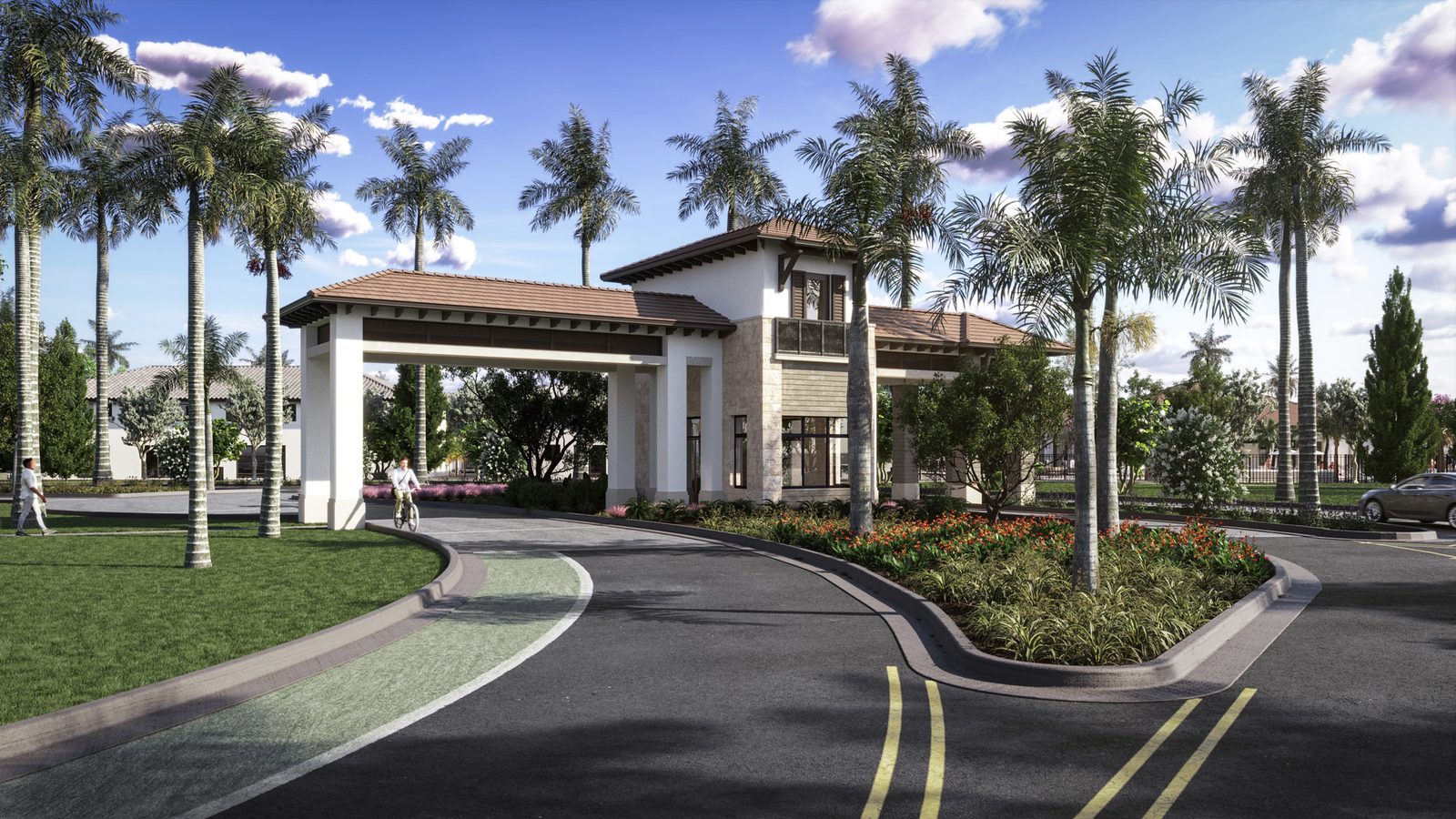
Here’s what you actually need to know before you sit across from a CC Homes sales rep with a checkbook: the mortgage payment they run for you at the sales center is never the full number. If you’re pricing out Estates by Turnberry, the mortgage payment is only part of the story. The real number you need before you fall in love with a model is the Estates by Turnberry HOA CDD fees combination, because that’s what actually lands in your monthly or annual budget on top of principal and interest. Here’s the honest answer: the HOA fee exists and needs to be confirmed at current rates, and the CDD situation is unclear because it wasn’t published on the price sheet CC Homes has been circulating for this west Davie gated community. That’s not a small detail to skip past. It’s the difference between a $2 million home that costs what you think it costs and one that surprises you every November when the tax bill shows up.
This is the piece nobody hands you at the sales center. The rendering is beautiful, the Jubilee floor plan sells itself, and the sales rep is focused on the base price and the lot premium. Nobody’s leading with “and by the way, here’s your total carrying cost.” That’s on you to ask, and this article is here to make sure you ask the right questions before you write a deposit check.
I’ve walked buyers through this exact conversation at other gated new construction communities across Broward, and the pattern repeats every time. The buyer gets excited about the floor plan, gets a number from the loan officer that only includes principal and interest, and doesn’t find out about the real carrying cost until they’re already emotionally committed. By then, walking away from the lot they picked feels like losing something, even though nothing has actually closed yet. The goal of this article is to get you that information before that emotional attachment sets in, not after.
What the “From” Price Doesn’t Include
Before we even get to HOA and CDD, understand that the advertised price for any of the six Estates by Turnberry floor plans (Jubilee, Majestic, Longines, Oasis, Saratoga, and Kinship) is a starting point, not a final number. Elevation upgrades, garage configuration, and lot premiums all move the needle before you ever get to recurring fees. Across the range, homes here run from roughly $1.7 million to $2.2 million depending on plan and lot.
Elevation packages alone can add real money. A second or third elevation option on a plan like the Majestic or the Longines usually carries a premium over the base elevation, and that premium is baked into the “from” price you see in marketing, or it isn’t, depending on which elevation CC Homes used to generate that headline number. Garage configuration is another variable. Some plans offer a 2-car option and a 3-car option, and the difference between them isn’t just square footage, it changes the footprint of the home and, in some cases, the lot it can sit on. Lot premiums stack on top of all of that. A homesite backing to preserve, positioned on a cul-de-sac, or sitting on an oversized parcel inside the 151 total homesites will carry its own premium separate from the base house price.
Why does this matter for a fee conversation? Because HOA dues in some gated communities scale with home value or square footage, and CDD assessments, when they exist, are usually tied to the lot or the infrastructure improvements attached to that specific parcel. A bigger lot on a premium location inside the gates can carry a different assessment than a standard interior lot. So the fee conversation and the price conversation aren’t separate. They’re the same conversation, and you need both numbers from the same source at the same time.
If you haven’t already, read the full Estates by Turnberry Floor Plans Explained (2026): Sizes, Layouts, and Which One Fits breakdown so you know which plan you’re actually budgeting for before you start stacking fees on top of it.
Estates by Turnberry HOA CDD Fees: What’s Confirmed and What Isn’t
Let’s separate fact from assumption, because this is where buyers get burned in every gated new construction community, not just this one.
What’s confirmed: Estates by Turnberry is a gated community with 151 homesites in west Davie, off the Shotgun Road corridor. Gated communities in Broward almost universally carry an HOA fee to cover the gate itself, whether that’s staffed guard service or an unmanned electronic entry, plus landscaping along the common areas, entry monuments, and any shared recreational space. That HOA fee is a certainty here. What’s not certain from public materials is the exact current dollar amount, because price sheets get updated and HOA budgets get reset annually as the community builds out.
What’s unconfirmed: CDD fees. A Community Development District is a special taxing district that Florida developers use to finance infrastructure, roads, utilities, drainage, sometimes amenity centers, and then pass that cost back to homeowners through an annual assessment. Plenty of new construction communities in Broward and Palm Beach use this structure. Some don’t. The price sheet reviewed for Estates by Turnberry did not list a published CDD fee, which could mean one of two things: there genuinely isn’t one, or it exists and simply wasn’t itemized on the sheet you’re looking at. Those are two very different financial realities, and you don’t want to find out which one is true after closing.
This is exactly the kind of detail covered in the Estates by Turnberry Review (2026): Prices, Floor Plans, HOA, CDD, and Who It’s For, where we walk through the full financial picture plan by plan.
Why Builders Don’t Always Lead With This
It’s not necessarily deceptive. HOA budgets and CDD assessments often aren’t finalized until a community reaches a certain build-out threshold, because the math depends on how many homes are sharing the cost. Early in a community’s life, CC Homes may quote an estimated HOA number that gets trued up once more homesites are sold and the community association has real operating history. CDD assessments, if they apply, get set by the district’s board based on the bond issued to pay for infrastructure. None of this is unusual. What’s unusual is when a buyer signs a contract without asking the question directly and in writing.
There’s also a practical sales reason this doesn’t come up unprompted. A sales rep’s job at the table is to get you excited about the home, not to introduce friction. Bringing up an unconfirmed fee on your own initiative is the responsible move, not an awkward one. Every buyer at that sales center is entitled to ask, and the ones who ask are the ones who don’t get surprised later.
How CDD Assessments Actually Get Billed (If One Applies)
If Estates by Turnberry does carry a CDD, here’s how it would show up in real life, because this trips up a lot of first-time new construction buyers.
A CDD is not a monthly bill you write a separate check for. It’s billed once a year, as a line item on your Broward County property tax bill, alongside your ad valorem taxes. It typically has two components: an operations and maintenance (O&M) portion that pays for the district’s day-to-day upkeep, and a debt service portion that pays down the bond used to build the roads, utilities, and infrastructure serving the community. The debt service portion can run for a long time, sometimes 20 to 30 years, though it can often be paid off early in a lump sum if a homeowner chooses to.
Here’s the part that catches people off guard: because it’s billed annually through the tax bill, it doesn’t feel like a monthly expense until you divide it out. A $3,000 annual CDD assessment is $250 a month whether you think about it that way or not. If you have a mortgage with an escrow account, your lender will estimate this and build it into your monthly escrow payment along with your property taxes and insurance, so it does eventually become part of your true monthly housing cost even though it isn’t billed monthly on paper.
There’s also a resale angle worth understanding now, before you buy, not after. CDD debt service follows the property, not the person. If you sell in five or seven years, the remaining balance on that district’s bond transfers with the home unless you’ve paid it off early. Buyers further down the line will ask about it the same way you should be asking about it now, so understanding your CDD status protects your resale conversation too, not just your monthly budget today.
The takeaway: ask the CC Homes sales office point blank, “Is there a CDD attached to Estates by Turnberry, and if so, what is the current annual assessment for the lot I’m considering?” Get the answer in an email, not just verbally at the sales table. If you’re calling directly, the sales office number on file is (305) 424-2203. Ask for the current price sheet in writing while you’re at it, since these get revised as the community sells through its 151 homesites.
The Real Monthly Number: Budgeting Beyond the Mortgage
Here’s how to actually build your real monthly cost estimate before you fall for a model home.
Step 1: Get the base price and every add-on. Elevation package, garage upgrade (2-car versus 3-car where offered), structural options, and lot premium. This gives you your true purchase price, not the “from” price.
Step 2: Run your principal and interest. Use current rates for your down payment scenario. This is the number most buyers stop at, and it’s the least complete number.
Step 3: Add property taxes. Broward County taxes are assessed on the purchase price in year one for new construction, not the developer’s prior assessed value, so budget on the actual price you’re paying, not what an online estimator shows for the raw land.
Step 4: Add homeowner’s insurance. South Florida insurance costs have moved significantly in recent years. New construction with current wind mitigation features (impact windows, newer roof, updated electrical) typically prices better than older homes, but don’t assume it’s cheap. Get a quote before you’re under contract, not after.
Step 5: Add the confirmed HOA fee. Call and get the current monthly or quarterly figure in writing.
Step 6: Add the CDD assessment, if one applies, divided by 12. If CC Homes confirms there isn’t one, get that in writing too. Absence of information is not the same as confirmation of zero.
Step 7: Add it all up before you fall for the model. This is your real number. Compare it against what you’re comfortable carrying every month, not against the base price you saw in a Facebook ad or a Zillow listing photo.
Let’s put actual numbers on this so it’s not abstract. Say you’re looking at the Majestic plan at roughly $1.95 million after elevation and a mid-tier lot premium. On a 20 percent down payment, financing $1.56 million at current jumbo rates, your principal and interest alone could land somewhere in the neighborhood of $10,000 to $11,000 a month depending on the day’s rate. Add property taxes assessed on that $1.95 million purchase price (Broward’s effective rate typically lands in a range that puts an annual tax bill in the tens of thousands), and you could be adding another $1,500 to $1,800 a month before insurance even enters the picture. Insurance on a home this size, even with new construction wind mitigation credits, could reasonably run $400 to $700 a month depending on carrier and coverage. Now stack an unconfirmed HOA fee, which in comparable Broward gated communities often lands somewhere between $150 and $400 a month, and a CDD, if one exists, which could add another $150 to $350 a month depending on the bond size.
Run that math and you can see how a buyer who only budgeted principal and interest could be off by $2,000 to $3,000 a month once every real cost is stacked. That’s not a scare tactic, that’s just what happens when you build a budget off a partial number. This exercise matters more here than in a lot of resale purchases because Estates by Turnberry sits in the $1.7 million to $2.2 million range. At that price point, a few hundred dollars a month in fees you didn’t plan for isn’t a rounding error, it’s a real line item that affects your debt-to-income ratio and your monthly cash flow.
A Note for Buyers Financing With a Jumbo Loan
Most purchases in this price range are going to involve jumbo financing, since $1.7 million to $2.2 million sits well above conforming loan limits. Jumbo underwriting tends to scrutinize debt-to-income ratios more closely than conventional financing, and HOA and CDD payments both count against that ratio the same way property taxes and insurance do. If your loan officer runs your pre-approval without a confirmed HOA number and without knowing whether a CDD applies, your approved loan amount could be based on an incomplete picture. Get the HOA and CDD numbers to your lender before you finalize your pre-approval, not after you’re already under contract on a specific homesite. It’s a lot easier to adjust your target price range in month one than to renegotiate your comfort level in month three.
How Estates by Turnberry Compares to Other West Davie Communities
You’re not choosing in a vacuum. West Davie and the surrounding corridor have several active new construction options, and fee structures vary community to community, which is exactly why you can’t assume Estates by Turnberry’s numbers match its neighbors.
Vineyards and Marigold both sit in the broader Davie new construction landscape, and each carries its own HOA structure and, potentially, its own CDD situation depending on when the community was platted and how its infrastructure was financed. Don’t assume that because one Davie community has no CDD, they all don’t. Every community’s financing is negotiated separately with the county and the district at the time of development.
The Oaks of Davie, built by Rhino Homes, is another comparison point worth running the same fee exercise against. If you’re cross-shopping, read Is The Oaks of Davie Worth It? An Honest Look at Rhino Homes’s Davie Community and The Oaks of Davie Floor Plans Explained (2026): Sizes, Layouts, and Which One Fits so you’re comparing full carrying costs, not just base prices, across communities.
Broader west Broward context matters here too. Communities further west toward Weston and Southwest Ranches have historically leaned toward larger lots, lower-density gated product, and HOA structures that reflect fewer shared amenities but more private acreage, while communities closer to major master-planned developments further west in Broward and into Palm Beach County have leaned more heavily on CDD financing to fund larger shared infrastructure like clubhouses, resort pools, and sports complexes. Estates by Turnberry, at 151 homesites, is a mid-sized gated community rather than a sprawling master-planned district, which is one reason it’s plausible the CDD question could go either way. Smaller, boutique gated communities sometimes skip CDD financing entirely and roll infrastructure costs into the home price instead. Larger master-planned communities almost always use one. This is exactly why you can’t guess, you have to ask.
The point isn’t that one community is better than another on fees alone. The point is that “gated new construction in Davie” is not a single price tag. Each community has its own HOA budget and its own answer on CDD, and the only way to make a wise decision is to pull the actual number for the actual community and the actual lot you’re considering.
Is Estates by Turnberry Worth the Total Cost?
This is really a question about total cost of ownership, not just sticker price. If you want the full honest breakdown of what you get for $1.7 million to $2.2 million here, including the elevation and garage premiums that inflate the “from” price, read Is Estates by Turnberry Worth It? An Honest Look at CC Homes’s Davie Community. It walks through the value proposition against comparable west Davie and Southwest Ranches-adjacent product, which matters because HOA and CDD fees only make sense in context. A $200-a-month HOA fee on a home with a resort-style clubhouse and full-time landscaping is a different value proposition than the same fee on a community with a gate and not much else.
For the full picture on this specific community, the Estates by Turnberry in Davie: The New Construction Guide (Floor Plans, Pricing, What to Know) ties together floor plans, pricing, and what to know before you visit the sales center, so you walk in with the right questions already loaded.
Questions to Ask Before You Sign
Bring this list to the CC Homes sales office. Don’t leave without written answers.
- What is the current monthly or quarterly HOA fee, and what specifically does it cover (gate, landscaping, amenities, reserves)?
- Is there a CDD assessment attached to this community? If yes, what is the current annual amount for O&M and debt service separately?
- Is the CDD debt service portion payable in a lump sum, and if so, what’s that payoff amount?
- Has the HOA budget been finalized, or is this an estimated fee that could change once the community builds out further?
- Are there any special assessments planned or under discussion for capital improvements?
- How does the HOA fee differ, if at all, between floor plans or lot locations within the gates?
If the sales team can’t answer all six on the spot, that’s fine, but ask them to follow up in writing before you go hard under contract. A verbal number at a sales table isn’t a number you can hold anyone to. Save the email thread. If you end up under contract and the number changes materially from what you were told verbally, having it in writing is what protects you during your due diligence period.
What to Do If the Answers Are Still Vague
If you call and the sales office tells you the HOA and CDD figures are “still being finalized,” that’s not a red flag by itself, it’s common in a community that’s still selling out its 151 homesites. What matters is how you handle it. Ask for a worst-case estimate in writing, based on comparable Broward gated communities of similar size and amenity level, so you can budget conservatively rather than optimistically. Ask when the numbers are expected to be finalized, and whether that timeline lines up with your anticipated closing date. And if you’re working with a buyer’s agent, have them push the builder’s sales team for documentation rather than taking a verbal estimate at face value. Builders are used to this question. A community that’s been selling for any length of time should have at least a working number they can share, even if it’s labeled preliminary.
The Bottom Line
The reality is that no new construction purchase at this price point should be decided on base price alone. Estates by Turnberry is a legitimate west Davie option with a real gated community, real floor plan variety across the Jubilee, Majestic, Longines, Oasis, Saratoga, and Kinship plans, and a price range that puts it in serious competition with other Davie and Southwest Ranches-area new construction. But the monthly number you actually carry depends on HOA dues you need confirmed in writing and a CDD status that wasn’t published on the price sheet reviewed for this piece.
Get both numbers before you get emotionally attached to a lot or a model. That’s not being difficult, that’s making an educated decision on what will likely be one of the largest purchases of your life.
Comment the word Turnberry below and I’ll send you the current price sheet and floor plan set directly, along with what I’ve been able to confirm on HOA and CDD as of the latest visit to the sales office. If you want to talk through Estates by Turnberry against other west Davie communities before you decide, book a call and we’ll run the real numbers together, not just the marketing ones.




More articles you might like
Marigold HOA & CDD Fees: What You'll Actually Pay Every Month
13 min readIs Estates by Turnberry Worth It? An Honest Look at CC Homes's Davie Community
16 min readEstates by Turnberry Floor Plans Explained (2026): Sizes, Layouts, and Which One Fits
14 min readEstates by Turnberry in Davie: The New Construction Guide (Floor Plans, Pricing, What to Know)
15 min readEstates by Turnberry Review (2026): Prices, Floor Plans, HOA, CDD, and Who It's For
13 min read