New Construction in Pinecrest: Custom Homes and the Teardown Market
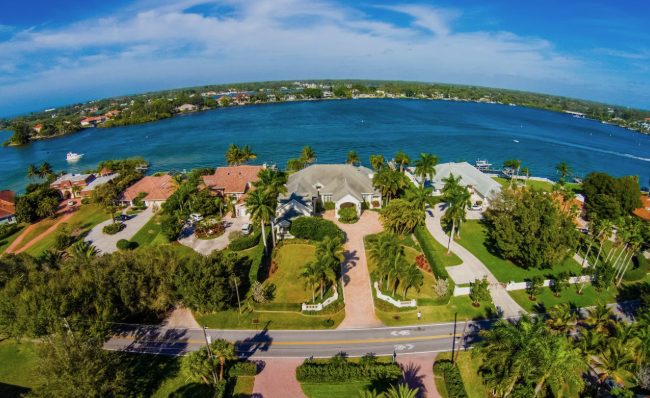
If you’re looking at new construction in Pinecrest, custom homes and the teardown market are really the same conversation. There is no other version of new construction happening in this village. Pinecrest has been fully built out since the late 1990s, there are no production builders with active communities inside village limits, and the last meaningful stretches of raw land were absorbed decades ago. So when people say they want “new construction in Pinecrest,” what they actually mean is: buy an older home on a good lot, tear it down, and build custom. That’s the entire market. Understanding how that process works, what it costs, and where it’s concentrated will save you from a lot of expensive surprises.
This guide covers the real mechanics of building new in Pinecrest: the teardown economics, the neighborhoods where it’s happening, the tree canopy ordinance that catches almost every first-time buyer off guard, realistic cost breakdowns, and the permitting timeline you should actually plan around. If you haven’t already, it’s worth reading our complete guide to Pinecrest for buyers in 2026 first for the village-wide context, since new construction only makes sense once you understand how Pinecrest is laid out and zoned.
Why Teardown Is the Only Real Path to New Construction in Pinecrest
Pinecrest incorporated as a village in 1996, largely to protect its low-density, canopy-heavy character from the kind of redevelopment happening elsewhere in Miami-Dade. That protection worked. Unlike Doral or parts of western Broward, where builders are still platting new subdivisions on former agricultural land, Pinecrest simply doesn’t have that land anymore. Its roughly seven square miles between US-1, SW 57th Avenue (Red Road), SW 136th Street, and the Coral Gables/Palmetto Bay borders were largely subdivided and built out between the 1950s and 1980s.
That means the housing stock skews old. A lot of Pinecrest homes on quarter-acre to full-acre lots were built 40 to 70 years ago, often as modest ranch homes or first-generation South Florida concrete block construction. The land underneath them, especially in the top school zones and along the Old Cutler Road corridor, is now worth more than the structure sitting on it. When land value exceeds the value of the existing improvement, teardown-rebuild becomes the default path to a new home, and that’s exactly what’s happened across Pinecrest for the last 15-plus years.
This is a different dynamic than what you’ll find in a newer suburb. If you’re comparing Pinecrest to somewhere like Doral or Parkland where production builders are still selling brand-new homes off a site plan, you’re comparing two entirely different processes. For that side-by-side, see Pinecrest vs. Coral Gables, which covers how both of these built-out South Miami suburbs handle the same land-constrained reality, just with different zoning philosophies.
The Teardown Math: What You’re Actually Buying
When you buy a teardown candidate in Pinecrest, you’re not paying for the house. You’re paying for the lot, the location, and usually the school zone. Here’s how that typically breaks down:
The purchase. A dated 3-bedroom, 2-bath home on a half-acre lot in a strong Pinecrest school zone might list anywhere from $1.3 million to $2 million depending on exact location and lot size. In the estate sections along Old Cutler Road, where lots regularly run three-quarters of an acre to a full acre or more, teardown candidates can start at $2 million and climb well past $3 million before a shovel ever goes into the ground.
Demolition. Budget $25,000 to $50,000 for a full demo, more if there’s a pool, mature trees requiring protection during demo, or asbestos abatement in an older structure (common in homes built before the 1980s).
The build. This is where Pinecrest separates itself from a lot of South Florida markets. Because nearly every home here is a true custom build, not a production floor plan repeated across a subdivision, construction costs run higher than what you’d see from a builder like Lennar or Pulte in a planned community. Expect $400 to $600+ per square foot for a genuinely custom home with impact glass throughout, high-end mechanical systems, and the kind of finish level that matches the neighborhood. A 4,500 to 6,000 square foot custom home is a realistic size target in most of Pinecrest’s larger lots, which puts total construction costs in the $2 million to $3.5 million range before land.
Add it up and a full teardown-to-custom-home project in a top Pinecrest location commonly lands in the $3.5 million to $6 million all-in range, sometimes higher on Old Cutler-adjacent estate lots. This is not a budget path to new construction. It’s a path for buyers who specifically want Pinecrest’s schools, lot sizes, and tree canopy and are willing to pay for it. If that number is outside your range, it’s worth reading our breakdown of what the entry level actually looks like in Pinecrest, because the entry point into this village was never new construction to begin with.
Where the Teardown Activity Is Concentrated
Teardown-rebuild isn’t evenly distributed across Pinecrest. It clusters in a few identifiable pockets:
Old Cutler Road corridor. This is the highest-activity zone for true custom rebuilds. Lots here tend to be larger (often three-quarters of an acre and up), the tree canopy is the most dramatic in the village, and finished homes resell in the $4 million to $8 million-plus range. Buyers here are paying for the address as much as the house.
The area around Pinecrest Elementary and Howard Drive Elementary. Zoning for these two elementary schools, along with Palmetto Middle and Miami Palmetto Senior High, is a major driver of teardown demand. Families will pay a real premium to guarantee a specific elementary zone, and that premium shows up directly in what teardown candidates list for in these pockets versus elsewhere in the village.
East of US-1, closer to Pinecrest Gardens and the Village Green. Lots here are typically smaller than the Old Cutler estate sections, which keeps total project costs somewhat more contained, but land values are still high given the walkability to Pinecrest Gardens, the Farmers Market, and the Community Recreation Center.
West Pinecrest, toward SW 87th Avenue and the Palmetto Bay border. This is generally the more attainable end of the teardown spectrum, with smaller lots and older, more modest original homes, though “attainable” in Pinecrest still means a seven-figure land purchase in most cases.
If you’re trying to figure out which of these pockets actually fits your budget and priorities, our full breakdown of Pinecrest’s neighborhoods goes street by street through what each area is like, and pairs well with the schools guide if a specific elementary zone is driving your search.
Pinecrest’s Tree Canopy Ordinance: The Part Nobody Warns You About
This is the single biggest surprise for buyers who’ve done teardown-rebuild projects elsewhere in South Florida and assume Pinecrest works the same way. It doesn’t.
Pinecrest has one of the strictest tree preservation ordinances in Miami-Dade County, and it exists specifically because the village’s identity is built around its canopy roads and mature trees, particularly the live oaks, banyans, and gumbo limbos that line streets like Old Cutler Road. Before you can pull a demolition permit, the village typically requires a tree survey identifying every tree on the lot above a certain diameter, and “specimen trees” (generally larger, older, or particularly significant trees) are protected from removal without a separate permit and, often, a hearing.
What this means practically for a rebuild project:
- Your site plan has to work around protected trees, not the other way around. If there’s a mature oak in the middle of your ideal footprint, you may need to redesign the home around it rather than remove it.
- Tree removal permits take time and aren’t guaranteed. Even when removal is approved, the village frequently requires replacement trees, sometimes at a ratio well above one-for-one, planted elsewhere on the property or paid into a tree fund.
- Root protection zones during construction are enforced. Contractors have to fence off protected root zones during demo and construction, which can complicate equipment access and add cost.
- This is a real budget and timeline line item, not a formality. Buyers who don’t account for tree review upfront are the ones who end up with unplanned six-figure redesign costs or months of delay.
If you’re evaluating a teardown lot, get a tree survey and talk to the village’s building and zoning department before you’re under contract, not after. A lot with three protected specimen trees in the wrong spots can be a materially harder (and more expensive) build than a comparable lot with a clean site.
What It Actually Costs to Build Custom in Pinecrest
Beyond the raw land and construction cost math above, a few line items consistently get underestimated by first-time Pinecrest builders:
Impact windows and doors throughout. Not optional in Miami-Dade, and Pinecrest inspectors hold new construction to the county’s Notice of Acceptance (NOA) standard for every opening. Budget accordingly, this is a meaningful percentage of overall build cost on a large custom home.
Elevation and flood considerations. Pinecrest isn’t as flood-exposed as the barrier islands or low-lying coastal pockets, but flood zone designation still varies block by block, and it affects both your foundation design and your insurance costs long-term. Check the FEMA flood zone on any specific lot before finalizing a design.
Design review and architectural standards. Pinecrest has design guidelines that go beyond basic zoning setbacks, and depending on the section of the village, there can be architectural review involved before permits are issued. This isn’t a rubber-stamp process.
Landscaping and irrigation to village standard. Given the tree ordinance, landscaping isn’t an afterthought here, it’s part of the permitted plan, and it needs to meet specific canopy and buffer requirements.
Put together, a realistic Pinecrest teardown-rebuild budget in a strong location looks like this: $1.5M to $2.5M for the land, $50K for demo, $2M to $3.5M for a true custom build on 4,500 to 6,000 square feet, and a contingency of 10 to 15 percent for the tree ordinance, permitting delays, and design changes that come up mid-project. That contingency isn’t optional padding, it’s close to standard on Pinecrest rebuilds.
Permitting Timeline: From Demo to Certificate of Occupancy
Set expectations early, because this is where a lot of buyers get frustrated. A Pinecrest teardown-to-finished-custom-home project realistically runs 18 to 30 months from the day you close on the lot to the day you get a certificate of occupancy, broken down roughly like this:
- Design and permitting (4 to 9 months): Architectural design, engineering, tree survey and removal permitting, and site plan approval through the village. This stage moves faster with an architect who’s done multiple Pinecrest projects and already understands the village’s review process.
- Demolition (2 to 4 weeks): Including any asbestos abatement and tree protection fencing installation.
- Foundation through dry-in (4 to 6 months): Slower than a production build because of the custom scope and the individualized engineering on most Pinecrest homes.
- Interior build-out and finishes (6 to 10 months): This stage is where custom-level finish selections (cabinetry, stone, millwork) tend to add time versus a production spec home.
- Final inspections and CO (4 to 8 weeks): Miami-Dade’s inspection process, plus any village-specific sign-offs on landscaping and tree replacement compliance.
If your timeline assumption was closer to 12 months because that’s what a production builder promises in a planned community, adjust it. Custom, individually-designed, individually-engineered homes on protected lots simply move at a different pace, and the village’s review layers are part of why Pinecrest looks the way it does.
Who’s Actually Building These Homes
There’s no Lennar or Pulte model home center in Pinecrest, because there’s no subdivision to build one in. The builders active here are custom home builders and boutique general contractors, often working with an independent architect the homeowner hires directly, rather than a builder’s in-house design department. This matters for how you shop the process:
- You’re typically assembling a team (architect, builder, sometimes a separate landscape designer for the tree ordinance piece) rather than walking into a sales office and picking a floor plan.
- Reputation and local track record carry more weight than brand name. A builder who has done five successful Old Cutler Road rebuilds and knows the village’s tree and design review process cold is worth more than a larger regional builder with no Pinecrest-specific experience.
- Costs and timelines are far more variable project to project than they’d be in a production community, because every home is genuinely different.
Is a Pinecrest Teardown-Rebuild a Good Investment?
For the right buyer, yes, and the case is straightforward: Pinecrest’s land is finite, its school zones are among the strongest in Miami-Dade, and there is no new supply coming. Every teardown-rebuild permanently converts an older home into a new one on a lot that will never be subdivided further under current zoning. That scarcity is the whole investment thesis.
But it’s not for everyone. The all-in cost, the 18-to-30-month timeline, and the tree ordinance complexity mean this path only makes sense if you’re planning to hold the home long-term, either as your own residence in the school zone you want or as a genuine long-term investment. It is not a fast flip strategy. Margins on a rushed teardown-rebuild in Pinecrest are thin once you account for real build costs and holding costs over two-plus years. For a deeper look at how the numbers work for buyers thinking about Pinecrest as a long-term hold rather than owner-occupancy, see our Pinecrest investment property breakdown, and for where current pricing sits across the village more broadly, our mid-2026 Pinecrest market update has the latest numbers.
The Bottom Line
New construction in Pinecrest means custom homes and the teardown market, full stop. There’s no vacant land inventory, no production builder shortcut, and no way around the village’s tree canopy ordinance if you’re serious about building here. What you get in exchange is one of the strongest school zones in Miami-Dade, some of the most protected tree canopy in South Florida, and a finished product that, done right, holds value the way scarce, well-located land generally does.
If you’re weighing whether to go this route versus buying an already-updated resale, or you want a second opinion on a specific teardown lot before you make an offer, that’s the kind of decision worth talking through before you’re under contract, not after. For the full picture of what makes this village work the way it does, start with our guide to moving to Pinecrest, then reach out and we’ll walk the specific lot or project with you.


More articles you might like
Pinecrest, Florida: The Complete Guide for Buyers in 2026
18 min readFirst-Time Buyer in Pinecrest: What the Entry Level Looks Like
13 min readPinecrest vs. Coral Gables: Which South Miami Suburb Is Right for Your Family?
17 min readPinecrest Investment Property: Returns, Rental Demand, and the Long-Term Case (2026)
14 min readLife in Pinecrest: Pinecrest Gardens, Dining, Community, and What Makes It Special
16 min read