Life in Pinecrest: Pinecrest Gardens, Dining, Community, and What Makes It Special
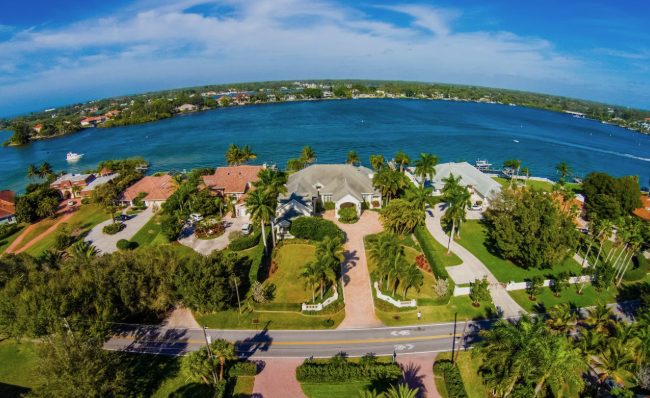
Life in Pinecrest, Florida looks less like South Florida and more like a small town that happens to sit inside Miami-Dade County. Pinecrest Gardens anchors the cultural calendar, dining stays low-key and neighborhood scale around Suniland Shopping Center, and the village enforces some of the strictest tree and lot regulations in the county specifically to keep it that way. If you’re weighing whether this is the kind of place you actually want to live, not just a school district you want to buy into, this is what a normal week looks like on the ground.
We’ve covered the numbers and the buying process in Pinecrest, Florida: The Complete Guide for Buyers in 2026. This piece is about what happens after you close: the park you’ll actually use, the market you’ll go to on Sundays, the streets without sidewalks, and the honest answer to whether Pinecrest is fun to live in or just a good place to raise kids.
Life in Pinecrest: Pinecrest Gardens, Dining, and Community in Practice
Pinecrest was incorporated in 1996, and the founding residents were explicit about why: they wanted zoning control to protect large residential lots, mature tree canopy, and a low density feel against the commercial sprawl swallowing up the rest of US-1. Three decades later, that decision defines daily life more than anything else about the village.
You feel it the moment you turn off South Dixie Highway onto any residential street. The commercial noise drops away almost instantly. Streets narrow, canopy closes overhead, and a lot of blocks still don’t have sidewalks because the village prioritized tree preservation over infrastructure that would have required removing root systems. That tradeoff is the whole personality of Pinecrest in one sentence: quiet and green, at the cost of some conveniences other suburbs take for granted.
Community life is organized around three things: Pinecrest Gardens as the cultural and event hub, a small cluster of parks for daily recreation, and a Village Council government that residents actually pay attention to because zoning and tree ordinances get contested at public meetings. This isn’t a suburb where nobody knows what’s happening at village hall. Pinecrest residents show up to fight over setback variances, and it’s not unusual for a Tuesday night council meeting to run long because three different neighbors want to weigh in on a single tree removal permit. If you come from a place where local government is background noise, expect that to change here.
Pinecrest Gardens: The Actual Heart of the Village
Pinecrest Gardens sits on 20 acres at 11000 SW 57th Avenue (Red Road), and it’s not a park in the ordinary sense. It’s a former botanical attraction, originally opened in the 1930s and later known for decades as Parrot Jungle before the attraction relocated to Watson Island in 2003. The village bought the property and converted it into a public cultural park, and that history is still visible in the tropical hammock, the banyan trees, the wetland areas, and the free-roaming flamingos and peacocks that still live on the grounds.
What actually happens there week to week
- Sunday Farmers Market. This is the single most consistent community ritual in Pinecrest. Local produce, prepared food vendors, and a steady crowd of families make it the closest thing the village has to a town square moment. Get there before 10am if you want parking close to the entrance, because by mid-morning the lot fills and people are parking along the side streets.
- The Banyan Bowl and Center for the Arts. Pinecrest Gardens runs a genuine performing arts program, live theater, comedy, and music programming through its Center for the Arts, plus outdoor events staged around the property’s massive banyan trees. The Banyan Bowl amphitheater seats a few hundred people under open sky, and a lot of families treat a summer concert there the way other suburbs treat a trip to a downtown arena, except it’s a ten-minute drive from home and there’s nowhere to park badly.
- Splash n’ Blast and the wetland trail. For families with young kids, the splash pad and boardwalk trail through the wetland area are a regular after-school and weekend stop, not a once-a-year attraction. Parents who move here from up north are usually surprised how much this one feature gets used, basically year-round given the climate.
- Seasonal festivals. Wine and food events, GreenFest-style sustainability programming, and outdoor movie nights round out the calendar.
If you’re deciding between Pinecrest and a comparable suburb, this is the differentiator that doesn’t show up in a spreadsheet. Coral Gables has the Biltmore and the Venetian Pool; Pinecrest has Pinecrest Gardens, and it functions as free, walkable, weekly community infrastructure rather than an occasional destination. We break down that comparison directly in Pinecrest vs. Coral Gables: Which South Miami Suburb Is Right for Your Family?
Here’s the practical version of that comparison. A family moving from a Coral Gables condo into a Pinecrest single-family home usually tells me the same thing after six months: they miss walking to Miracle Mile on a whim, but they don’t miss it as much as they expected, because Pinecrest Gardens fills a lot of that same “let’s get out of the house” role on weekends, minus the parking meter.
The Dining Scene: Honest Expectations
Here’s what most relocation content won’t tell you straight: Pinecrest is not a dining destination, and that’s by design. The same zoning discipline that protects the tree canopy also caps commercial development, so you won’t find a walkable restaurant row inside the village the way you would in South Miami or Coral Gables.
Where residents actually eat
Suniland Shopping Center, at South Dixie Highway and SW 88th Street, is the real anchor. It’s a classic neighborhood plaza: casual eateries, coffee shops, a hardware store, banks, and service businesses that residents use constantly because it’s five minutes from almost anywhere in the village. It’s not glamorous. It’s functional, and that’s exactly what makes it work for daily life. You’ll see the same faces at the same coffee counter on a Tuesday morning that you saw at the farmers market on Sunday, because the village is small enough that your errands overlap with everyone else’s.
Beyond that, Pinecrest residents treat the surrounding suburbs as an extension of their own dining scene rather than a separate outing:
- Sunset Drive and Red Road in South Miami, a few minutes north, carries a denser mix of casual and mid-range restaurants, plus the Shops at Sunset Place for anyone who wants a movie and dinner in one trip.
- Miracle Mile and Giralda Plaza in Coral Gables, roughly 10 to 15 minutes away, cover date-night and higher-end options, along with the kind of business-lunch spots that matter if you work in the Gables corridor.
- Dadeland, just west via Kendall Drive or US-1, adds mall-anchor dining and a broader chain mix for families who want convenience over character, plus it’s the easiest spot to combine a dinner with a stop at Dadeland Mall or the Container Store.
The honest takeaway: if a walkable restaurant scene inside your own zip code is a top priority, Pinecrest will disappoint you. If you’re fine driving ten minutes for variety and want your immediate neighborhood to stay quiet, the tradeoff works in your favor. This is the same tradeoff that shows up in the entry-level market, which we cover in First-Time Buyer in Pinecrest: What the Entry Level Looks Like: you’re paying for the neighborhood, not the strip mall next door. I tell buyers coming from denser markets, Fort Lauderdale’s Flagler Village or Wynwood in Miami, to sit with that tradeoff before they write an offer, because it’s a real adjustment and not everyone loves it once they’re actually living it day to day.
Community Character: Trees, Lots, and Deliberately Low Density
Pinecrest’s defining physical trait is its tree canopy, one of the largest and best protected in Miami-Dade County. The village enforces a tree preservation ordinance that makes removing a protected specimen tree a genuine permitting process, not a weekend project. You need an arborist report, a village review, and in some cases a public hearing before a mature oak or banyan comes down on your own property, even if it’s threatening your roof. That single policy shapes everything from resale value to how a summer afternoon feels on your own street.
Lot sizes and the “estate” feel
Minimum lot sizes in most of Pinecrest run larger than in neighboring suburbs, with many properties sitting on a half-acre to a full acre, and pockets of South Pinecrest, especially near SW 167th Avenue and Kendall Drive, still zoned for horses. It’s genuinely possible to keep a horse on your property inside Miami-Dade County limits in parts of Pinecrest, which tells you how far the village has gone to preserve a semi-rural character 15 minutes from Downtown Miami traffic. Buyers who grew up around that kind of property, or who simply want the option of a small barn and a paddock without leaving the county, treat South Pinecrest as its own category of search entirely, separate from the rest of the village.
That land use directly shapes the housing stock and the teardown activity happening across the village right now, which we cover in detail in New Construction in Pinecrest: Custom Homes and the Teardown Market. Big lots plus an aging inventory of 1960s to 1980s ranch homes equals a steady stream of knockdown rebuilds, and that construction activity is itself part of daily life here. Don’t be surprised by dump trucks and generator noise on your block; it’s a constant in Pinecrest right now, not an anomaly. If you’re closing on a home next to a vacant or aging lot, ask your agent to check the village’s active permit records before you assume the quiet street you toured stays quiet.
No sidewalks, and that’s intentional
A lot of buyers relocating from sidewalk-heavy suburbs up north are surprised that many Pinecrest streets don’t have them. This isn’t neglect. Adding sidewalks in a lot of areas would mean cutting into root systems of protected trees, and the village has repeatedly chosen the trees. Walkers and runners use the street itself, and it’s genuinely walkable in the sense that traffic is light and slow, just not sidewalk-walkable in the suburban tract-home sense. If you’re moving here with a stroller or a dog on a leash, plan your walking routes around the streets that do have sidewalks, mostly closer to Kendall Drive and the eastern blocks near Old Cutler Road, rather than assuming every block works the same way.
Parks and Everyday Recreation
Outside of Pinecrest Gardens, daily recreation runs through a small, well-maintained set of village parks:
- Evelyn Greer Park (formerly known as Suniland Park) is the workhorse park for tennis, a splash pad, and a dog park, and it’s the one most families with young kids end up at weekly. The tennis courts get booked out fast on weekend mornings, so regulars tend to show up right when the park opens.
- Coral Pine Park covers ballfields and general green space for organized youth sports, and it’s where you’ll find most of the village’s Little League and youth soccer activity in season.
- The Pinecrest Community Center runs the village’s recreation programming, camps, and adult classes, and it’s the default answer for summer camp among families who don’t want to drive their kids out of the village every day.
- Old Cutler Road, running along the eastern edge of the village, is one of the best cycling and walking corridors in Miami-Dade, shaded by a continuous banyan canopy that’s become a signature image of the area.
None of these are regional destinations pulling people in from other parts of the county. They’re neighborhood-scale amenities that work because the village is small enough that everyone’s within a short drive. It’s also worth knowing that Zoo Miami sits just south of the village line off SW 152nd Street, and a lot of Pinecrest families end up with a zoo membership as their default weekend outing when Pinecrest Gardens gets repetitive.
Schools and Family Rhythm
You can’t separate daily life in Pinecrest from its school zoning, because it’s the single biggest reason families move here and the thing that shapes weekday routines the most. Palmetto Senior High, along with a cluster of highly rated elementary and middle schools like Pinecrest Elementary, Howard Drive Elementary, and Palmetto Middle, gives Pinecrest some of the strongest public school performance in Miami-Dade County. We go deep on the actual zoning boundaries, ratings, and what “strong schools” really means street by street in Pinecrest Schools: One of the Strongest School Systems in Miami-Dade.
What that means for weekday life: carpool lines, after-school sports at the village parks, and a real correlation between which elementary school a house is zoned for and what it sells for. Families here plan their week around school and youth sports schedules more than social calendars, and that’s consistent with a village that never tried to be a nightlife destination in the first place. If you’re relocating specifically for the schools, verify the exact zoned school for any address you’re considering before you fall in love with the house. Zoning lines in Pinecrest can split streets in ways that aren’t obvious from a listing sheet, and the wrong side of a boundary can mean a completely different elementary school assignment.
Getting Around: The Corridors That Define Your Commute
Pinecrest sits along the US-1/South Dixie Highway corridor, with Kendall Drive (SW 88th Street) forming the northern edge and Coral Reef Drive (SW 152nd Street) further south. Old Cutler Road runs the eastern boundary. Those three corridors are how you’ll actually experience getting in and out of the village day to day.
- US-1 north gets you to South Miami, Coral Gables, and Downtown Miami, but it’s a corridor that backs up predictably at rush hour, and the Metrorail’s Dadeland South and Dadeland North stations are the practical workaround for anyone commuting into Brickell or Downtown who wants to skip the drive entirely.
- Kendall Drive west connects to the Palmetto Expressway and Dadeland, useful for anyone commuting toward western Miami-Dade or catching the Metrorail at Dadeland South.
- Old Cutler Road is the scenic option south toward Palmetto Bay and Coral Gables’ waterfront edge, better for a Sunday drive than a rush-hour commute.
Miami International Airport sits roughly 25 to 30 minutes northwest depending on traffic, which matters if you’re relocating for a job that involves regular travel. It’s not a short hop the way it would be from a neighborhood closer to the airport, and that’s worth factoring in if frequent flights are part of your routine.
If you’re weighing Pinecrest against nearby suburbs on commute time alone, it’s worth reading how the different pockets of the village compare, since a house on the west side near US-1 has a very different daily drive than one in South Pinecrest near the horse properties. We map that out fully in Pinecrest Neighborhoods: Where to Live and What Each Area Is Like.
A Realistic Week in Pinecrest
It helps to walk through what an actual week looks like rather than just listing amenities. A typical family here drops kids at a zoned elementary school in the morning, runs errands at Suniland or the Publix off US-1 midweek, and treats Wednesday evenings at the Community Center or a village park as the default after-school activity. Friday night usually means a short drive to South Miami or Coral Gables for dinner, since the village itself goes quiet after dark. Saturday mornings are for youth sports at Coral Pine Park, and Sunday is the farmers market at Pinecrest Gardens almost by default, sometimes followed by the splash pad if the kids haven’t had enough sun yet. It’s a routine built around a handful of fixed points rather than constant novelty, and that consistency is exactly what draws people who are tired of a busier pace somewhere else.
Who Pinecrest Life Is Actually For
The reality is Pinecrest isn’t for everyone, and pretending otherwise doesn’t help anyone make a wise decision. Here’s who it fits and who it doesn’t.
It fits you if:
- You want a big lot, mature trees, and quiet streets over a walkable retail strip.
- Strong public schools are a top three priority, not a nice-to-have.
- You’re fine driving 10 to 15 minutes to Coral Gables or South Miami for a bigger night out.
- You want a village government that’s actively protecting the character of the place, even if that means more permitting friction on your own renovation.
- You value routine and consistency over constant new options, and you’d rather know exactly where you’re going on a Sunday than discover something new every week.
It doesn’t fit you if:
- You want to walk to dinner from your front door.
- Sidewalks and dense infrastructure matter more to you than tree canopy.
- You need to be closer to Brickell or Downtown Miami for a daily commute under 20 minutes.
- You’re priced out of the current entry point and unwilling to consider the townhome and smaller-lot pockets covered in First-Time Buyer in Pinecrest: What the Entry Level Looks Like.
- You’re renovating or building and expect a fast permitting process. Pinecrest’s tree and lot regulations mean plans take longer here than in less restrictive suburbs, and buyers who don’t budget that time into their project usually end up frustrated.
The Bottom Line
Life in Pinecrest is quiet, green, and organized around a handful of genuinely well-used community anchors: Pinecrest Gardens for culture and the Sunday market, Suniland for everyday errands and casual food, Evelyn Greer Park and Old Cutler Road for daily recreation, and a school system that shapes the weekly rhythm for most households here. It’s not a nightlife suburb, and it never tried to be. What it offers instead is space, tree canopy, and a village government that’s spent thirty years actively defending that tradeoff, sometimes at the cost of a sidewalk or a faster permit, always in favor of keeping the place recognizable to the people who chose it.
If you’re weighing whether this fits your family or your investment plan, pair this with the current pricing picture in Pinecrest Real Estate Market: Prices and Conditions in Mid-2026 and the broader relocation context in Moving to Pinecrest: Miami-Dade’s Most Prestigious South Miami Suburb (2026 Guide). Want a walk-through of the specific pockets that best match what you’re looking for, whether that’s the horse properties in South Pinecrest or the smaller lots closer to US-1? DM me “PINECREST” and I’ll send you the current inventory breakdown by area.
More articles you might like
Pinecrest, Florida: The Complete Guide for Buyers in 2026
18 min readFirst-Time Buyer in Pinecrest: What the Entry Level Looks Like
13 min readPinecrest vs. Coral Gables: Which South Miami Suburb Is Right for Your Family?
17 min readNew Construction in Pinecrest: Custom Homes and the Teardown Market
13 min readPinecrest Investment Property: Returns, Rental Demand, and the Long-Term Case (2026)
14 min read