Pinecrest Neighborhoods: Where to Live and What Each Area Is Like
Here is the revised, expanded post.
If you’re asking where to live in Pinecrest, the honest answer is that “Pinecrest” isn’t one neighborhood. It’s a village of roughly 19,000 people spread across a wide range of lot sizes, water access, and price points, and the differences between streets a half-mile apart can run into the millions of dollars. Understanding Pinecrest neighborhoods, where to live, and what each area is like starts with one fact: in this village, the price tag almost always tracks two things, canopy and canal access, more than anything else on the spec sheet.
This guide breaks Pinecrest down the way people who actually live here talk about it, not by MLS subdivision name, but by corridor. If you’ve already read our complete guide to buying in Pinecrest, think of this as the zoomed-in version, the one that tells you which streets to drive before you write an offer. I’ve walked a lot of these blocks with buyers who came in with a Zillow map pin and left with a completely different idea of where they wanted to live, and that shift almost always happens on the drive, not on the screen.
Pinecrest Neighborhoods: Where to Live and What Each Area Is Like
Pinecrest sits between South Miami and Palmetto Bay, bounded roughly by US-1 (South Dixie Highway) to the east, the Kendall corridor to the west, and stretching from the mid-SW 90s down through the SW 130s in street numbering. There’s no train track or highway splitting the village into obvious “good side, bad side” halves. Instead, the price map is shaped by three things layered on top of each other:
- Water. Homes on Old Cutler-area canals, on Snapper Creek, or fronting a private lake command a real premium, often 30 to 50 percent over a comparable dry lot a few blocks away.
- Lot size and canopy. Pinecrest’s older interior streets were platted with large lots, many an acre or close to it, and decades of banyan, live oak, and mahogany growth that newer subdivisions can’t replicate. That shade canopy is worth real money here.
- Distance from US-1. The closer you get to South Dixie Highway, the smaller the lots, the newer the product mix (including townhomes and low-rise condos), and the lower the entry price. The farther west and the closer to Old Cutler Road, the bigger the lots and the higher the price.
Once you internalize that framework, every neighborhood below makes sense as a variation on it. It also explains why two buyers with identical budgets can end up in completely different parts of the village. A relocating family from Chicago with $2 million to spend and no boat is often better served in the interior, where that money buys real land and canopy. A buyer moving down from a waterfront property in Connecticut, boat included, is going to end up cross-shopping Old Cutler and Point Royal instead, because for them water access isn’t a preference, it’s a requirement. Knowing which of those two buyers you are before you start touring saves a lot of wasted weekends.
The Old Cutler Road Corridor: Pinecrest’s Signature Address
If someone says “I bought in Pinecrest” with a certain tone, there’s a decent chance they mean somewhere near Old Cutler Road. This is the two-lane road that winds along the historic Old Cutler Trail, shaded by a banyan canopy that predates the village’s 1996 incorporation. Lots here tend to run large, often three-quarters of an acre to a full acre, and a meaningful share back up to canals that connect toward Snapper Creek and, eventually, Biscayne Bay.
What you’re paying for on Old Cutler isn’t square footage, it’s the address and the setting. Estate homes here regularly trade from the high $2 millions into the $6 to $10 million range depending on water frontage, lot depth, and whether the home is an original build or a recent teardown-and-rebuild. That teardown activity is real and accelerating. Original 1960s and 1970s ranch homes on huge Old Cutler-adjacent lots are increasingly bought for land value alone, then replaced with 6,000 to 10,000 square foot modern estates. If that market interests you, our breakdown of new construction and the teardown market in Pinecrest goes deeper on how that pipeline works and what custom builders are charging per square foot right now.
The tradeoff on Old Cutler: privacy and prestige, but also flood zone considerations on canal-front lots, older septic or well infrastructure on some parcels, and property taxes that scale with those higher assessed values. Buyers here are rarely first-time buyers. They’re move-up families or relocating executives who have already priced out Coral Gables and want more land for the dollar. If that’s the comparison you’re actually running, our side-by-side on Pinecrest versus Coral Gables lays out where each suburb wins.
There’s also a practical due diligence step that gets skipped too often on Old Cutler: insurance. Canal-front lots this close to Biscayne Bay can carry meaningfully higher flood premiums than a dry interior lot a half mile away, and elevation certificates matter here in a way they simply don’t on the acre-lot streets further inland. Before you get emotionally attached to a canal-front listing, pull a flood insurance quote alongside the comps. I’ve had buyers walk from a home they loved because the annual flood premium alone ran another $8,000 to $12,000 on top of an already seven-figure carrying cost, and that number changed the math on the whole purchase. On the septic side, older homes on the largest Old Cutler-adjacent lots sometimes still run private septic and well systems rather than county water and sewer. That’s not automatically a dealbreaker, but it’s a line item for your inspection, and it affects resale down the line if the buyer pool you’re eventually selling to expects municipal utilities.
Gated Enclaves: Snapper Creek Lakes, Point Royal, Pine Bay Estates, and Hammock Oaks
Pinecrest is overwhelmingly a non-gated, open-street village, which surprises buyers coming from Weston or Doral. But there are several gated communities tucked into the village that function almost like their own micro-neighborhoods.
Snapper Creek Lakes is the best known. It’s built around a private lake, with homes oriented to take advantage of water views even where there’s no boat access. Gate-guarded entry, mature landscaping, and a tight resale market define it. Homes here typically run from the $2 million range for interior, non-waterfront lots up toward $4 million-plus for lakefront estates. Inventory moves fast when it does hit the market, in part because the pool of buyers who specifically want gated privacy plus lake views is small and well informed, and they tend to already know the community before a listing goes live.
Point Royal sits closer to the canal system off Old Cutler, and some homes here have actual navigable water access toward Biscayne Bay, which matters if you own a boat and don’t want to trailer it. That access adds a real premium over a similarly sized Snapper Creek Lakes home without water. If you’re comparing the two on paper, the square footage and lot sizes can look nearly identical, and the price gap only makes sense once you understand that one gets you a dock and the other gets you a view.
Pine Bay Estates and Hammock Oaks are smaller, quieter gated pockets, generally with less water frontage but the same draw: guarded privacy, consistent architectural standards, and shorter, tighter streets that read almost like a private cul-de-sac neighborhood rather than a subdivision. These two get overlooked by out-of-town buyers who only search the well-known names, but for a family that wants gated security without the price tag of Snapper Creek Lakes or Point Royal, they’re worth a dedicated visit rather than a drive-by.
The tradeoff across all four is HOA structure. These aren’t Broward-style master-planned communities with a clubhouse and a $400 a month HOA covering amenities. Pinecrest’s gated enclaves usually run leaner associations focused on gate security, common area landscaping, and occasionally private road maintenance, with dues that can range widely depending on the community and whether the roads are private. Always pull the actual HOA docs and reserve study before you assume what the fee covers, especially on older gated communities where road resurfacing or gate mechanism replacement can trigger a special assessment. Ask specifically how the reserve study treats the gate house and entry mechanism, since those are expensive to replace and easy for an association to underfund for years before a special assessment lands on current owners.
The Acre-Lot Interior: Pinecrest Estates, Southwood, and the No-Sidewalks Culture
Away from the water, the bulk of Pinecrest is made up of what longtime residents just call “the interior,” streets like those in Pinecrest Estates and Southwood Estates where lots commonly sit at a half-acre to a full acre, homes are set back from the road, and there are, famously, no sidewalks. This isn’t an oversight. It’s a deliberate zoning choice the village has protected for decades because residents like the rural, wooded feel it preserves, and it’s one of the first things a relocating buyer notices when they drive through for the first time.
This is also where Pinecrest’s equestrian zoning shows up. Certain lots in the interior are zoned to permit horses, a rarity this close to central Miami-Dade, and it’s part of why some buyers specifically target Pinecrest over comparably priced suburbs. If horse-friendly zoning matters to you, confirm it parcel by parcel with the village, because it applies to specific lots and streets, not the whole municipality.
Homes in this interior band vary more than any other part of Pinecrest, because you’re mixing original 1960s-1980s construction, remodeled homes, and newer custom builds on the same streets. Realistic pricing runs from roughly $1.3 to $1.8 million for an older, unrenovated four-bedroom on a large lot, up to $3 million-plus for a rebuilt or heavily updated home on the same size parcel. If you’re trying to figure out what actually counts as entry level here, our guide on being a first-time buyer in Pinecrest walks through where that price floor really sits and why “affordable Pinecrest” is a relative term.
The no-sidewalks culture deserves a real explanation, because it’s not just a quirky trivia point, it changes daily life. Residents walk, run, and bike in the street, often with dogs and strollers, and drivers here are conditioned to expect that. It also means county-standard drainage isn’t uniform street to street, and some of the older interior roads still have swales instead of curb-and-gutter systems. That affects how the road handles a heavy summer storm, and it’s worth asking a neighbor, not just the listing agent, how a specific street drains during the wet season. Buyers coming from a manicured Broward master-planned community sometimes read the no-sidewalks look as neglect on the first drive-through, then come to see it as the entire point once they understand what it’s protecting: the canopy, the setbacks, and a lower-density feel that the village has fought hard to keep intact against redevelopment pressure from the surrounding suburbs.
Around Pinecrest Gardens and the Red Road Corridor
The civic and cultural center of the village sits near Pinecrest Gardens, the 20-acre botanical park and cultural center on Red Road (SW 57th Avenue) that used to be Parrot Jungle. This isn’t a residential subdivision by itself, but the streets radiating out from it, roughly the SW 104th to SW 120th Street band near Red Road, function as their own kind of neighborhood: walkable to the farmers market, the amphitheater, and village hall, with a mix of mid-sized lots that split the difference between the acre-lot interior and the smaller parcels near US-1.
This is a strong pick for families who want the Pinecrest school zone and community feel without paying Old Cutler or Snapper Creek Lakes prices. Homes here commonly land in the $1.4 to $2.2 million range, with the exact number driven heavily by which elementary school zone the address falls into. It’s also the part of the village where you’ll feel the most day-to-day community activity: the Sunday farmers market at Pinecrest Gardens, summer concert series at the amphitheater, and the walk-to-village-hall civic engagement that a lot of Pinecrest residents cite as a reason they never seriously consider moving once they’ve settled in. For a buyer weighing lifestyle as much as lot size, this corridor often ends up as the practical answer even when the budget could technically stretch further west.
The US-1 Edge: Condos, Townhomes, and the Entry Point Into Pinecrest
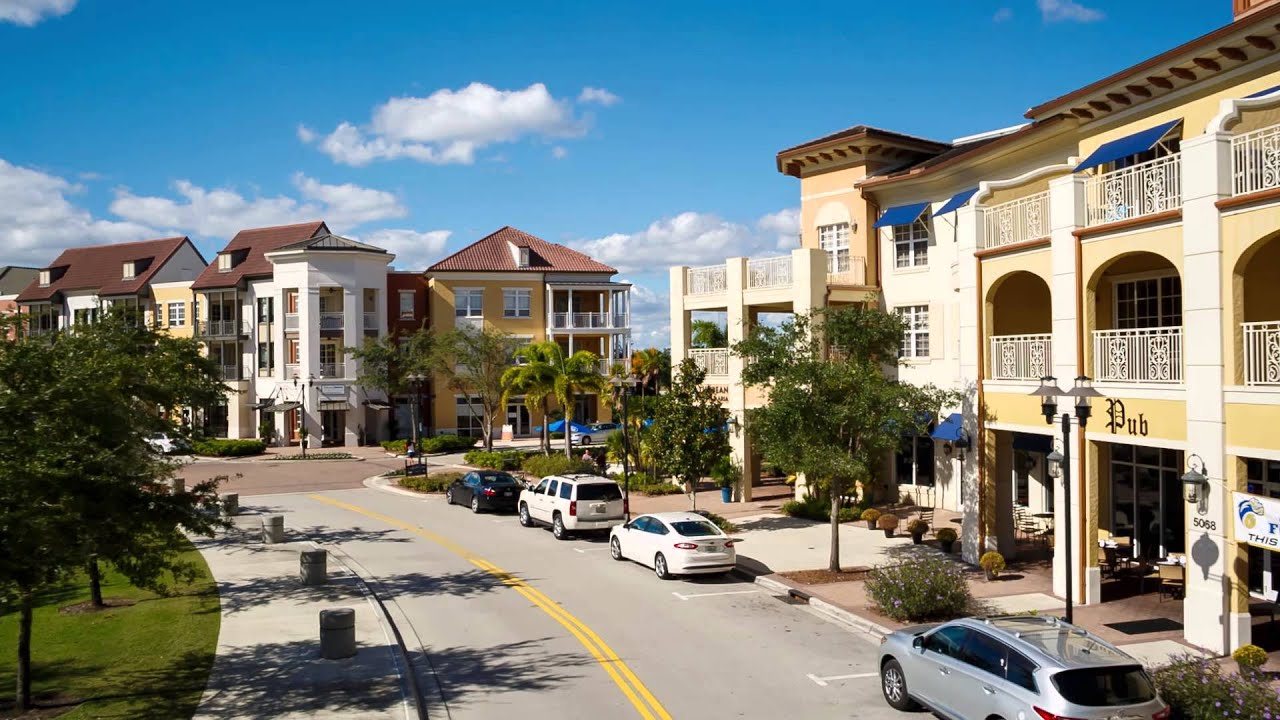
The stretch of Pinecrest closest to South Dixie Highway, near the Suniland shopping corridor and the commercial nodes along US-1, is where the product mix changes entirely. This is where you’ll find the handful of townhome and low-rise condo developments that exist within village limits, along with smaller single-family lots that never got platted at the acre-plus scale common further west.
This is genuinely the most accessible entry point into Pinecrest by price, and it’s worth being clear-eyed about the tradeoff: you get the Pinecrest address and, in many cases, the Pinecrest school zone, but not the tree canopy, the acre lot, or the water access that define the rest of the village. Traffic noise from US-1 is also a real factor on the streets closest to the highway. Still, for buyers priced out of the interior, this corridor is usually the honest answer to “how do I get into Pinecrest.” Our first-time buyer guide covers this corridor specifically, including which streets deliver the best value for the compromise.
Two practical notes for buyers looking here. First, the Suniland shopping corridor along US-1 gives this stretch a walkability that the rest of the village doesn’t have, a real amenity for buyers who want groceries, restaurants, and daily errands within a short walk rather than a mandatory car trip. Second, condo and townhome buyers should scrutinize the association’s reserve funding just as carefully as a single-family buyer would scrutinize a gated community’s HOA docs, since Florida’s post-Surfside structural reserve requirements have pushed some older associations into special assessments that weren’t priced into resale comps a few years ago. Ask for the most recent structural integrity reserve study before you go under contract, not after.
School Zones and How They Shape Where Families Choose to Live
More than almost any other factor besides water, school zoning drives which streets command a premium in Pinecrest. The village is zoned across a few strong elementary schools, including Pinecrest Elementary, Palmetto Elementary, and Howard Drive Elementary, feeding into Palmetto Middle and then Miami Palmetto Senior High, one of the highest-rated public high schools in Miami-Dade County.
Because school assignment is address-specific, not village-wide, you’ll see two homes of similar size and lot on different sides of the same street land in different attendance zones, and that alone can move price by six figures. This is the single most common reason buyers hire a local agent instead of shopping by map pin: the boundary lines aren’t intuitive from a satellite photo, and they shift periodically. For a full breakdown of which zones feed which schools and how the ratings actually compare, see our dedicated guide to Pinecrest schools.
I’ll give you a real scenario I see often. A family finds two listings on the same block, similar bed and bath count, similar lot size, priced $150,000 apart. On paper the cheaper one looks like the better deal. Then it turns out the cheaper home falls just outside the Pinecrest Elementary boundary and into a neighboring zone the family didn’t want, while the pricier one sits inside it. Once they understand that, the “deal” stops looking like a deal. This is exactly why pulling the current zone map, not a two-year-old screenshot someone forwarded, needs to happen before you fall in love with a specific house rather than after.
Price Tiers by Area: What the Differences Actually Buy
Putting the corridors side by side, here’s the realistic 2026 range by area, understanding that individual lots, renovation status, and exact school zone will move any given home up or down within its band:
- Old Cutler Road corridor (waterfront/estate): roughly $2.8M to $10M+
- Snapper Creek Lakes / Point Royal (gated, water-adjacent): roughly $2M to $4.5M
- Pine Bay Estates / Hammock Oaks (gated, interior): roughly $1.8M to $3.2M
- Interior acre-lot streets (Pinecrest Estates, Southwood): roughly $1.3M to $3M+
- Near Pinecrest Gardens / Red Road corridor: roughly $1.4M to $2.2M
- US-1 edge (townhomes, condos, smaller lots): roughly $650K to $1.3M
The pattern holds across almost every sale: water access adds the largest single premium, gated privacy adds a smaller but consistent premium, and proximity to US-1 is the release valve for price. Look at what happens between adjacent tiers. Moving from the US-1 edge into the Pinecrest Gardens corridor roughly doubles the entry price, and that jump buys you the acre-adjacent lot sizes and canopy the interior is known for, not a dramatic jump in square footage. Moving from the interior into a gated enclave like Pine Bay Estates or Hammock Oaks adds privacy and consistent architectural standards more than it adds land or water. And moving from a gated water-adjacent community into true Old Cutler waterfront is where the biggest single jump in the whole village happens, because at that point you’re paying for navigable access to the bay, not just a nice view of a lake. If you’re weighing Pinecrest against renting or buying elsewhere in the corridor first, our current market conditions update has the latest sold data and days-on-market trends by price band.
Which Pinecrest Neighborhood Is Right for You
A few honest rules of thumb, based on what actually drives buyer decisions here:
If school zone is your top priority, work backward from the specific elementary boundary you want, not the neighborhood name. Two homes a block apart can land in different zones.
If you want boat access, your search is really limited to Old Cutler-adjacent canal lots and Point Royal. Don’t assume “waterfront” elsewhere in Pinecrest means navigable access, most of the interior has none.
If budget realistically caps you under $1.3 million, be honest that you’re looking at the US-1 edge or an older, unrenovated interior home that needs work. That’s not a bad strategy, it’s often the smartest way in, but go in with the right expectations.
If privacy and security matter more than land, the gated enclaves (Snapper Creek Lakes, Pine Bay Estates, Hammock Oaks) give you that without requiring Old Cutler money.
If you’re building or planning to rebuild, focus on the interior acre-lot streets and the Old Cutler corridor, where land value supports new construction economics. Our guide on Pinecrest new construction and the teardown market explains what to budget for lot acquisition versus build cost.
If you’re relocating for work and need to move fast, lean toward the Pinecrest Gardens and Red Road corridor or the US-1 edge, where inventory turns over more frequently than the tightly held gated enclaves and Old Cutler estates, which can sit off-market for months before a listing ever hits the MLS.
The Bottom Line
Pinecrest doesn’t have a “bad” neighborhood in the way some suburbs do. What it has is a wide spread between its most exclusive canal-front streets and its most accessible entry points near US-1, and the honest work of house hunting here is figuring out which tradeoff you’re actually willing to make: water versus budget, canopy versus commute, gate versus open street. Drive the corridors above before you fall for a listing photo. The address might say Pinecrest either way, but the street tells you what you’re really buying.
If you’re relocating from out of state and trying to get oriented before you fly in, start with our full moving to Pinecrest guide. It covers the village from the ground up, and pairs well with this neighborhood breakdown once you know which corridor you’re targeting.
More articles you might like
Pinecrest, Florida: The Complete Guide for Buyers in 2026
18 min readFirst-Time Buyer in Pinecrest: What the Entry Level Looks Like
13 min readPinecrest vs. Coral Gables: Which South Miami Suburb Is Right for Your Family?
17 min readNew Construction in Pinecrest: Custom Homes and the Teardown Market
13 min readPinecrest Investment Property: Returns, Rental Demand, and the Long-Term Case (2026)
14 min read