Pinecrest, Florida: The Complete Guide for Buyers in 2026
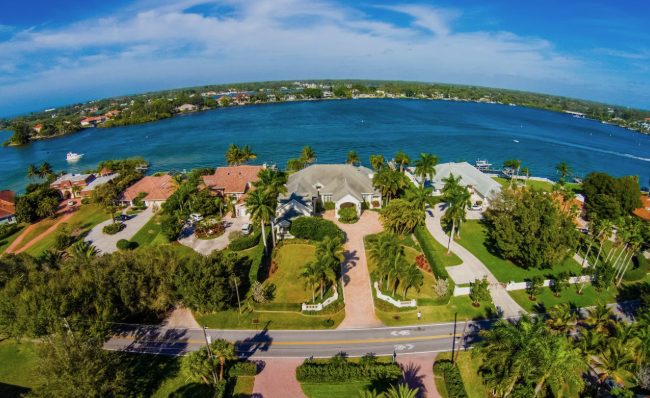
Pinecrest, Florida is one of the most expensive and most consistent suburbs in Miami-Dade County because it has spent thirty years protecting exactly three things, big lots, mature tree canopy, and school quality, and none of that is changing in 2026. This guide covers what you are really buying, what it costs by neighborhood, and where the tradeoffs actually bite.
Pinecrest, Florida: The Complete Guide for Buyers in 2026
Pinecrest sits south of Coral Gables and South Miami, bordered roughly by SW 88th Street to the north, SW 136th Street to the south, US-1 to the east, and SW 87th Avenue to the west, with the eastern edge running along the prestigious Old Cutler Road corridor toward Biscayne Bay. It incorporated as its own village in 1996 specifically so residents could control zoning, lot sizes, and development rather than leaving those decisions to unincorporated Miami-Dade. That single decision is why Pinecrest looks and functions differently than almost anywhere else inside the US-1 corridor today.
Most of the village sits on minimum lot sizes that run from a half acre to a full acre depending on the section, there are no sidewalks on the majority of residential streets by design, and the tree canopy is protected by a village ordinance that makes cutting down a mature oak or ficus a genuine bureaucratic process. You are not buying a subdivision here. You are buying into a village that decided decades ago to stay low-density on purpose, inside a county that has built vertically almost everywhere else.
That decision has a real dollar value attached to it now. Drive five minutes north into unincorporated Miami-Dade or east toward US-1’s newer mixed-use corridors and you will see the density Pinecrest opted out of, apartment podiums, townhome infill, quarter-acre lots. Pinecrest never allowed that pattern to take hold, and buyers in 2026 are paying a premium specifically for the absence of it. If you are relocating from a market where “established suburb” means something different, worth knowing going in: what you are shopping for here is scarcity, not amenities.
Where Pinecrest Is and Why the Geography Matters
The US-1 (South Dixie Highway) corridor is the commercial spine, home to the village’s small shopping nodes, medical offices, and the Suniland Park area near SW 128th Street. Red Road (SW 57th Avenue) and Old Cutler Road run the other direction, and Old Cutler is where you find the largest lots and the highest price points, some backing directly onto canals that lead to Biscayne Bay. Sunset Drive (SW 72nd Street) cuts east-west through the middle of the village and connects Pinecrest to Coral Gables and, eventually, Sunset Place and Downtown Dadeland in Kendall.
Commute-wise, expect 25 to 35 minutes to Downtown Miami or Brickell outside of peak traffic, longer during afternoon rush on US-1. There is no direct Metrorail station inside Pinecrest, the closest stops are Dadeland North and Dadeland South just south of the village line, which matters if a car-optional commute is part of your decision.
For buyers who work Brickell hours, the realistic pattern looks like this: leave by 7:15 a.m. and US-1 north to the Brickell exits runs 25 to 30 minutes. Leave at 7:45 and that same drive can stretch past 45. Some Pinecrest households solve this by parking at Dadeland South and taking Metrorail the rest of the way in, which shaves the unpredictability out of the trip even though it adds a transfer. If your job is in Coral Gables or Doral instead of downtown, the calculus improves, Coral Gables is a straight shot up Red Road or Le Jeune in well under 20 minutes most of the day, and Doral is a reasonable 25 to 30 minute cross-county drive via the Palmetto Expressway. Know your actual commute pattern before you fall in love with a lot on Old Cutler, because the geography that makes Pinecrest feel private and tucked away is the same geography that keeps it off the rail line.
Pinecrest Neighborhoods: Where to Live
Pinecrest is not one uniform product. The village breaks into distinct pockets with real price and character differences, and picking the right one matters as much as picking Pinecrest itself. Broadly:
- Old Cutler Road corridor: the most expensive and most exclusive stretch, waterfront and near-waterfront estates, heavy tree canopy, minimal turnover. Streets branching off Old Cutler toward the bay, including sections near Matheson Hammock, routinely see lots at three quarters of an acre or larger, and it is not unusual for a home here to sit with the same owner for twenty or thirty years before it ever hits the market.
- North Pinecrest (near Coral Gables line): closer to US-1 and Sunset Drive amenities, slightly smaller lots, still commands a premium for the Coral Gables-adjacent address. This pocket tends to move faster than the rest of the village simply because it is walkable, or close to it, to a wider range of daily errands.
- South Pinecrest (toward Palmetto Bay): relatively more attainable per square foot, still zoned for the same top schools, quieter and more residential feel. This is usually where a first-time Pinecrest buyer with a tighter budget starts their search, because the school zoning premium is identical to the rest of the village while the entry price is not.
- Gated enclaves: a small number of gated communities exist inside the village and do carry their own HOA dues, unlike the majority of Pinecrest’s open, sidewalk-free streets. These tend to appeal to buyers who want the Pinecrest school zone and lot size but also want the added security layer of a gate, and they are a genuine minority of the total housing stock.
For the full neighborhood-by-neighborhood breakdown with specific streets and what each pocket actually feels like day to day, see Pinecrest Neighborhoods: Where to Live and What Each Area Is Like.
Pinecrest Schools: The Reason Most Buyers Are Here
Ask any Pinecrest buyer why they are paying what they are paying, and school zoning is usually the first answer, not the second. Pinecrest Elementary and Coral Reef Elementary are among the highest-performing public elementary schools in Miami-Dade, Palmetto Middle feeds into Miami Palmetto Senior High School, which consistently ranks as one of the top public high schools in the county with a strong IB program. That triangle, elementary through high school, zoned entirely within or adjacent to the village, is the backbone of Pinecrest’s value.
What makes this triangle unusual is how rare it is to have A-rated schools stacked all the way from kindergarten through twelfth grade inside one contiguous zone in Miami-Dade. Most families in the county end up making at least one school-related move, out of an elementary zone, into a magnet lottery, across town for a better high school. Pinecrest buyers largely skip that entire process. Buy the right address once, and the family can plan on staying zoned into strong schools for the full run without a second move.
Private options are close by too. Gulliver Preparatory has a Pinecrest-area campus, and families further north often feed into Ransom Everglades in Coconut Grove. A meaningful share of Pinecrest households still choose private even with strong public options next door, sometimes for a specific program, sometimes simply because they were already enrolled before the family relocated. If private school is part of the plan, factor tuition into the total housing budget the same way you would a mortgage payment, because between the home price and private tuition, the all-in monthly number changes the math on what “affordable” means in this village.
If schools are the deciding factor in your move, confirm your target address against the current Miami-Dade County Public Schools boundary map before you write an offer, boundary lines shift block by block and a home two streets over can land in a different zone. This is not a hypothetical warning, it happens every year to buyers who assumed a Pinecrest mailing address guaranteed a specific school and found out at closing that it did not. The full breakdown of what each school actually offers, ratings, and how attendance boundaries split the village, is in Pinecrest Schools: One of the Strongest School Systems in Miami-Dade.
What Homes Actually Cost in Pinecrest in 2026
Here is the honest range, not the marketing range:
- Dated, unrenovated single-family homes: roughly $950,000 to $1.3 million, typically 1970s to 1990s construction on a standard half-acre-adjacent lot.
- Updated or newer single-family homes, standard lots: $1.3 million to $2.2 million.
- Larger lots, custom or recently rebuilt homes: $2.2 million to $3.5 million.
- Old Cutler Road and waterfront estates: $3.5 million to $8 million-plus, with the true trophy properties going well beyond that.
Land value is doing most of the work in these numbers. A half-acre lot in Pinecrest is worth a significant premium on its own, which is exactly why the teardown and custom-build market here is as active as it is, buyers are frequently purchasing the lot and the school zone, not the 1975 house sitting on it.
Two quick scenarios show how differently that plays out in practice. A young family with a $1.1 million budget is typically shopping the dated end of the market, a three or four bedroom home built in the 1980s that needs a kitchen, bathrooms, and probably a roof, on a lot that already delivers the school zone they want. Their real decision is whether to move in and renovate in phases or budget for a gut renovation up front. A move-up buyer with a $2.5 million to $3 million budget is more often looking at either a fully renovated home on a standard lot or a smaller, older home on an oversized lot with the intent to tear down and build custom, and for that buyer the lot size and orientation matter more than the existing structure’s condition.
Property taxes are worth planning for separately from the purchase price. Miami-Dade’s Save Our Homes cap benefits long-term owners, but a new buyer is taxed on the purchase price in the first year, not the seller’s capped assessed value, so a home that a longtime owner paid $4,000 a year in taxes on can reassess to $18,000 or more annually for the new owner at a $1.5 million purchase price. Build that number into your monthly budget before you make an offer, not after the first tax bill arrives.
For current inventory, days on market, and what is actually closing right now, see Pinecrest Real Estate Market: Prices and Conditions in Mid-2026, and for the teardown and rebuild angle specifically, New Construction in Pinecrest: Custom Homes and the Teardown Market.
HOA, Zoning, and the No-Sidewalks Character
This surprises a lot of buyers moving from Broward or Palm Beach County: most of Pinecrest has no HOA. The village government itself functions as the regulatory body, enforcing tree preservation, minimum lot size, and architectural review standards that in most other suburbs would be handled by a private HOA charging monthly dues. That means no HOA fee on the vast majority of Pinecrest streets, but it also means village code, not a board of neighbors, sets the rules on fences, additions, and tree removal, and those rules are genuinely strict.
Removing a protected tree, even a dying or storm-damaged one, typically requires a permit application, a village arborist review, and in some cases a mitigation requirement, planting replacement trees elsewhere on the property. Buyers planning a major landscape change or a home addition that would encroach on canopy should build village review time into their renovation timeline. It is common for this process to add weeks, sometimes longer, compared to a jurisdiction with lighter tree protection.
The absence of sidewalks on most residential streets is intentional, part of preserving the semi-rural, tree-canopy feel the village was incorporated to protect. If you have young kids who will be walking or biking to school, or you simply prefer sidewalks, this is worth seeing in person before you commit, because it is not going to change block by block, it is village-wide policy. Some families adjust by walking or biking in the street itself, which works fine on Pinecrest’s low-traffic residential blocks but is a real adjustment for anyone coming from a sidewalk-heavy suburb.
A small number of gated communities inside Pinecrest do carry their own HOA and dues on top of village requirements, so if you are looking at a gated listing, confirm the HOA fee and rules directly, they are the exception, not the norm.
Lifestyle: What Living in Pinecrest Actually Looks Like
Pinecrest Gardens, the former Parrot Jungle site on SW 57th Avenue, is the village’s cultural anchor: botanical gardens, a Sunday farmers market, a splash pad, and a full calendar of concerts and family events. The farmers market alone draws families from well outside the village on weekend mornings, and it is a good gauge of the crowd Pinecrest actually attracts, stroller-heavy, dog-friendly, unhurried. Suniland Park and several smaller village parks handle sports leagues and everyday recreation, and youth sports, soccer, baseball, swim, run heavy through the same handful of village facilities most families end up rotating through over the years.
Dining and shopping are concentrated along the US-1 corridor and spill into neighboring South Miami and Sunset Place, a few minutes south in Kendall, plus Dadeland Mall for larger retail needs. Do not expect a walkable downtown inside Pinecrest itself, the village deliberately kept commercial development to small nodes rather than a Miracle Mile-style core, which is part of why Coral Gables and Pinecrest feel so different despite sitting right next to each other.
This is a family-oriented, low-key village. It is not a nightlife destination, and it is not walkable to the beach, the closest sand is a 25 to 30 minute drive to Key Biscayne or Miami Beach depending on traffic. What you get instead is space, quiet, mature landscaping, and a strong sense of the same families staying for decades. Evenings here look like driveway basketball, dog walks under a genuine tree canopy, and neighbors who have known each other for fifteen years, not rooftop bars or a walkable restaurant row. For the full picture of what makes the day-to-day different here, see Life in Pinecrest: Pinecrest Gardens, Dining, Community, and What Makes It Special.
Pinecrest vs. Coral Gables vs. Palmetto Bay
Buyers cross-shopping South Miami suburbs usually land on this same short list, and the differences matter:
- Coral Gables has more architectural regulation (Mediterranean Revival requirements in historic sections), a more urban downtown feel with Miracle Mile, and generally higher price-per-square-foot in its core.
- Pinecrest trades that urban core for larger lots, lower density, and typically better value per acre of land, at the cost of being farther from a walkable downtown.
- Palmetto Bay, directly south of Pinecrest, offers a similar low-density, tree-canopy feel at a meaningfully lower price point, with slightly less consistent school performance and a less established brand.
The practical way to think about the three: Coral Gables buyers are paying for urban infrastructure and architectural prestige, Pinecrest buyers are paying for land and schools without the urban layer, and Palmetto Bay buyers are getting a close approximation of the Pinecrest lifestyle at a real discount, with the tradeoff being a step down in school consistency and market recognition. South Miami, tucked between Coral Gables and Pinecrest, is worth a mention too for buyers who want walkability closer to Sunset Place at a smaller lot size than Pinecrest typically offers.
If you are torn between Pinecrest and Coral Gables specifically, the full side-by-side on schools, price, and character is in Pinecrest vs. Coral Gables: Which South Miami Suburb Is Right for Your Family?.
The Honest Tradeoffs
No suburb is right for everyone, and Pinecrest has real tradeoffs that get glossed over in glossy listing copy:
- Price floor is high. There is no true entry-level product here in the way Kendall or Homestead has one. Even the least expensive homes in the village start near $1 million, and there is essentially no townhome or condo alternative inside Pinecrest itself for buyers who want the address at a lower price point.
- Insurance costs. Older homes, some still without impact windows or updated roofs, are seeing meaningfully higher windstorm and flood premiums in 2026 than they did five years ago. It is not unusual for an older, non-updated home on a half-acre lot to carry a combined homeowners and flood premium well into five figures annually, while a similar home with a newer roof and impact windows can come in significantly lower. Get an insurance quote before you fall in love with a house, not after.
- No sidewalks, limited transit. If walkability or car-optional living matters to you, Pinecrest will disappoint. This is a drive-everywhere village, and outside of the closest Metrorail stations at Dadeland, there is no meaningful public transit inside the village boundaries.
- Distance to the water. Despite the tropical feel, you are not beachfront. Budget the drive time to Key Biscayne or the barrier islands into your lifestyle expectations, especially if beach access was part of what drew you to South Florida in the first place.
- Renovation and teardown costs are real. A lot of Pinecrest’s older housing stock needs six figures of work or a full rebuild, and village architectural review can slow that process down compared to unincorporated areas. A full teardown and custom rebuild on a Pinecrest lot, once you include permitting, tree mitigation, and current construction costs, regularly runs well past a million dollars on top of the land price, and timelines of twelve to eighteen months from permit to certificate of occupancy are common, longer if the design requires multiple rounds of village review.
None of these are dealbreakers for the right buyer, they are simply the honest cost of the tradeoff you are making for schools, lot size, and long-term value stability.
Who Pinecrest Is Right For
Pinecrest makes the most sense for buyers who want a long-term, put-down-roots home, value top-tier public schools over walkability or nightlife, and can comfortably clear a $1 million-plus purchase price. It also tends to fit relocating families who already know they want their kids in one school zone from kindergarten through graduation and would rather pay the premium once than move twice. It is a poor fit for buyers who need true entry-level pricing, want a walkable urban lifestyle, or need to be within a few minutes of the beach.
It is also worth being honest about the buyer who ends up disappointed here: someone drawn to Miami’s condo lifestyle, water views from a balcony, walkable nightlife, a doorman, will find Pinecrest feels closer to a quiet suburban town than the Miami they pictured. That is not a flaw in the village, it is simply a different product, and knowing that going in saves everyone time.
If you are trying to break into Pinecrest without an eight-figure budget, the realistic entry points and what “affordable” actually means here are covered in First-Time Buyer in Pinecrest: What the Entry Level Looks Like. And if you are looking at Pinecrest as a rental or long-term hold rather than a primary residence, the numbers on rental demand and appreciation are in Pinecrest Investment Property: Returns, Rental Demand, and Long-Term Case.
Making the Decision
Pinecrest rewards buyers who do their homework before they shop, not after. Confirm the exact school zone for any address you are considering, get an insurance quote on the actual property (not a village-wide estimate), and walk the street at both mid-day and evening to see what “no sidewalks” really feels like for your family. Add a realistic tax reassessment number to your monthly budget, price out renovation or teardown costs before you write an offer on a dated home, and time your actual commute during rush hour rather than trusting a map estimate. The village has held its value and its character for thirty years because it never chased density, and that consistency is exactly what you are paying for.
If you want the current list of what is actually available in Pinecrest right now, broken down by neighborhood and price band, send me a message with “PINECREST” and I will put together a list matched to your budget and school priorities.
More articles you might like
Pinecrest vs. Coral Gables: Which South Miami Suburb Is Right for Your Family?
17 min readMoving to Pinecrest: Miami-Dade's Most Prestigious South Miami Suburb (2026 Guide)
21 min readFirst-Time Buyer in Pinecrest: What the Entry Level Looks Like
13 min readNew Construction in Pinecrest: Custom Homes and the Teardown Market
13 min readPinecrest Investment Property: Returns, Rental Demand, and the Long-Term Case (2026)
14 min read