First-Time Buyer in Pinecrest: What the Entry Level Looks Like
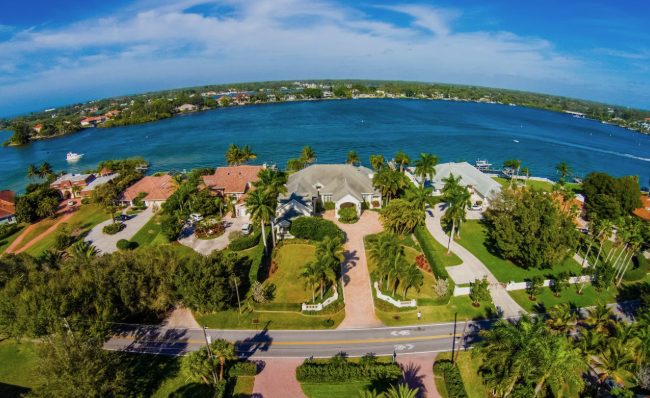
If you’re a first-time buyer in Pinecrest wondering what the entry level looks like, here’s the honest answer: it doesn’t look like an entry level anywhere else in Miami-Dade. There’s no sub-$500,000 starter home waiting for you here. What passes for “entry level” in Pinecrest is a smaller, often dated single-family home on a below-average lot, typically priced between $800,000 and $950,000, and even that range is competitive with multiple offers most of the year.
That’s not a reason to skip this guide. It’s the reason you need it. Pinecrest gets recommended constantly to Miami-Dade families chasing top schools and quiet, tree-canopied streets, but almost nobody explains what it actually takes for a first-time buyer to get in the door, where the relatively affordable pockets sit, and when the numbers simply don’t work. That’s what this piece is for. For the full picture of the Village beyond entry-level buying, our complete guide to Pinecrest covers the broader market, and if you’re still deciding whether Pinecrest is even the right target, Moving to Pinecrest walks through what makes it Miami-Dade’s most prestigious South Miami suburb in the first place.
What the Entry Level Actually Looks Like for a First-Time Buyer in Pinecrest
Pinecrest’s overall median sale price has been sitting in the $1.4 million to $1.6 million range through 2026, pulled up by large estate homes on acre-plus lots in the interior of the Village. That’s not what a first-time buyer is shopping for, and it’s not the number that matters to you.
What matters is the bottom slice of the market, the homes that actually close under $1 million. That slice looks like this:
- A 3-bedroom, 2-bathroom ranch built in the 1960s or 1970s, 1,400 to 1,900 square feet, original terrazzo or dated tile
- A lot in the 8,000 to 12,000 square foot range, smaller than Pinecrest’s typical half-acre-plus estate lots but still larger than a standard Kendall or Homestead lot
- Minimal to no renovation, meaning original kitchens, older roofs (often 15 to 25 years), and dated bathrooms
- Located on the eastern edge of the Village, closer to US-1 and the commercial corridor, rather than the deep interior estate streets
That’s the real entry level. It’s not a fixer-upper bargain. It’s a smaller, older home that happens to sit inside one of Miami-Dade’s most desirable zip codes, priced mostly for the land and the school zone, not the structure sitting on it.
Why Pinecrest Doesn’t Have a “Starter Home” in the Normal Sense
Most Miami-Dade suburbs have a tier system: entry-level condos and townhomes, then starter single-family homes, then move-up homes, then luxury. Pinecrest skips the first two tiers almost entirely, and there’s a structural reason for it.
Pinecrest incorporated as a Village in 1996 specifically to protect its zoning from Miami-Dade County’s broader development pressure. Much of the Village is zoned Estate (ES-1) with minimum lot requirements that keep density low, meaning townhomes, garden condos, and small-lot subdivisions were never built at scale the way they were in Kendall, Cutler Bay, or western Miami-Dade. Some pockets in the eastern and southern parts of the Village, developed before incorporation, sit on smaller 1960s and 1970s-era lots, and that’s almost the entire available “affordable” inventory.
The result: there’s no meaningful condo or townhome market inside Pinecrest proper to absorb first-time buyers, and the smallest single-family lots still aren’t small. You’re not choosing between a $400,000 condo and a $1.2 million house here. You’re choosing between an $850,000 dated ranch and a $1.5 million-plus updated estate home. That’s the actual spread.
Where the (Relatively) Affordable Pockets Are
If you’re set on Pinecrest specifically, three areas consistently produce the closest thing to entry-level inventory:
East of US-1, near the commercial corridor. Smaller pre-incorporation lots here trade at the bottom of the Village’s price range. You’re closer to traffic noise on South Dixie Highway and further from the quiet interior canopy streets, but you’re still zoned into Pinecrest’s schools and still inside the Village limits.
Streets bordering South Miami and the 33156 edge. Homes here can price meaningfully below the Village’s interior, partly because buyers weighing Pinecrest against neighboring options sometimes overlook the boundary streets. If you’re cross-shopping this edge, our Pinecrest vs. Coral Gables comparison and our breakdown of Pinecrest’s neighborhoods both go deeper on how location inside the Village shifts price and lifestyle.
The rare townhome and villa clusters. A small number of attached-housing developments exist near the Village’s northern and eastern edges, built before the current estate zoning locked in. These are genuinely the only attached-housing entry point in Pinecrest, and inventory turns over slowly because there’s so little of it. When one comes up, expect competition even at $700,000 to $900,000.
What you won’t find: new construction at an entry-level price. New builds in Pinecrest are almost exclusively custom homes replacing teardowns on large lots, priced well into seven figures. Our guide on new construction in Pinecrest covers that market in detail, and it is not a first-time buyer’s market.
The Real Numbers: Price, Taxes, Insurance, and Monthly Payment
Here’s what an entry-level Pinecrest purchase actually costs monthly, using a realistic $875,000 home as the example.
Purchase price: $875,000 Down payment (20 percent): $175,000 Loan amount: $700,000 Estimated principal and interest (at a rate in the high-6 to low-7 percent range common in 2026): roughly $4,650 to $4,850 per month Property taxes: Miami-Dade combines county, school board, and Village of Pinecrest municipal millage. Effective rates on homesteaded property typically land near 1.8 to 2.1 percent of assessed value, meaning $1,300 to $1,550 per month on this price point before any homestead exemption phases in Homeowners insurance: South Florida insurance costs have climbed significantly. Expect $400 to $600 per month for a home this age, more if the roof is past 15 years old and needs updating to qualify for standard coverage HOA: Most of the smaller-lot, pre-incorporation subdivisions have no mandatory HOA. The rare townhome or villa product will carry HOA dues, typically $300 to $600 per month
Add it up and you’re looking at a total monthly housing cost in the $6,700 to $7,500 range, before utilities. Lenders generally want housing costs at or under roughly 28 to 30 percent of gross monthly income, which puts the realistic qualifying household income for this purchase in the $260,000 to $300,000 range, depending on debt load and the specific loan program.
That’s the number nobody says out loud when they tell a young buyer to “just look at Pinecrest.” It’s not a first house for a household making $120,000. It’s a stretch purchase for dual-income professional households, often with help from savings, a prior home sale, or family assistance on the down payment. For a broader read on where Pinecrest pricing sits across the whole market, not just the entry tier, see our 2026 Pinecrest market update.
What You’re Actually Buying: Land Value Over House Condition
This is the mental shift most first-time buyers need to make before they write an offer in Pinecrest. You are not paying for square footage, finishes, or a move-in-ready kitchen. You are paying for the lot, the school zone, and the Village.
Appraisers and agents in this market price these entry-level homes almost entirely off land value and comparable lot sales, with the structure itself treated as a minor adjustment, sometimes even a negative one if it’s dated enough to need a gut renovation. That means:
- Don’t expect a discount for an ugly kitchen. The seller already knows the buyer pool is paying for the dirt, not the cabinets.
- Don’t assume a “handyman special” price. Even genuinely rough interiors in Pinecrest still trade near full land value because the lot alone supports it.
- Do expect other buyers in your price range to be builders, contractors, or move-up families planning to renovate or eventually rebuild. You’re competing with people who see the same math you do.
This is also why inspections matter more here, not less. A first-time buyer stretching to the top of their budget for a 1970s home needs to know the real condition of the roof, electrical panel, plumbing (especially polybutylene or cast iron in homes of this era), and any prior flood or insurance claims, because there’s no price cushion left to absorb a $40,000 surprise.
Schools and Zoning: Why Buyers Stretch to Get In
The single biggest reason first-time buyers push their budget to buy in Pinecrest specifically, rather than a comparable home five minutes away in South Miami or Palmetto Bay, is the school zoning. Pinecrest Elementary, Palmetto Middle, and Miami Palmetto Senior High are consistently among Miami-Dade’s highest-performing public schools, and that zoning is tied to the address, not the price paid for the home.
That means a buyer at the entry-level $850,000 tier gets the exact same school zone as the buyer at the $2.5 million tier three streets over. For families prioritizing public school quality over house size, that’s the actual value proposition of stretching into Pinecrest’s entry level rather than buying more house for the same money elsewhere. Our dedicated guide to Pinecrest schools breaks down the zoning boundaries and ratings in more detail, which matters because Pinecrest’s boundaries don’t perfectly track the Village limits. Always confirm the specific address against the current zoning map before assuming a home carries the school assignment you’re expecting.
The Teardown and Renovation Trap First-Time Buyers Fall Into
A pattern shows up often enough to call out directly: a first-time buyer finds an entry-level Pinecrest home, falls in love with the idea of eventually renovating or rebuilding, and underestimates what that actually costs on top of an already-stretched purchase price.
Here’s the reality. Renovation costs in Miami-Dade for a full kitchen and bathroom remodel on a home this age typically run $150,000 to $250,000 done properly, and a full teardown-rebuild on a Pinecrest lot easily runs $500,000 to $800,000-plus once you account for permitting, site work, and current construction costs. If you’re already financing $700,000 to buy the lot with a house on it, you are not also financing a quarter-million-dollar renovation as a first-time buyer. That math is for move-up buyers with substantial equity or cash, not entry buyers.
The honest advice: buy the entry-level home to live in as-is, or with modest cosmetic updates, for at least five to seven years. Let equity and income growth catch up before you take on a major renovation. Trying to do both at once, the stretch purchase and the stretch renovation, is how first-time buyers end up house-poor in a Village where everyone around them is not.
If Pinecrest Doesn’t Pencil: Where First-Time Buyers Land Instead
Sometimes the honest answer is that Pinecrest’s entry level still doesn’t fit a first-time buyer’s actual budget, and that’s a legitimate outcome, not a failure. If your qualifying range tops out under $700,000, these are the realistic alternatives that keep you close to the same lifestyle and school-quality tier:
- Palmetto Bay, immediately south, offers a similar suburban feel with more inventory under $800,000 and its own strong school zoning.
- South Miami, immediately north, has a mix of condos, townhomes, and smaller single-family homes that give first-time buyers more product variety at a lower entry point, with easy access into Pinecrest’s amenities.
- Kendall, to the west, has genuinely first-time-buyer-friendly pricing on both condos and single-family homes, with a longer commute into the Pinecrest school zone not applying, but real value for the money.
None of these are downgrades. They’re different trade-offs between price, lot size, and proximity. The comparison against Coral Gables in our Pinecrest vs. Coral Gables guide uses the same framework you’d apply to any of these alternatives: what are you actually buying, and what are you willing to trade to get it.
A Step-by-Step Game Plan for a First-Time Buyer Targeting Pinecrest
- Get a real pre-approval before you shop, not a pre-qualification. At this price tier, sellers and listing agents want to see verified income and asset documentation before taking an offer seriously.
- Confirm your target monthly number first, then work backward to price. Don’t shop $950,000 homes because a lender approved you for that; shop what your actual monthly budget supports once taxes, insurance, and maintenance on an older home are included.
- Order a full inspection, including roof, electrical, plumbing, and a four-point inspection for insurance purposes, before you’re locked into the contract’s inspection deadline. This determines both your negotiating position and your ability to get insurance at a reasonable rate.
- Verify the school zoning at the specific address, not the general Village boundary, since some edge streets don’t carry the assignment buyers assume.
- Budget separately for the first two years of maintenance on an older home. Roofs, water heaters, and AC systems in 1960s and 1970s Pinecrest housing stock are often past or near end of life even when the home shows well.
- Move fast but don’t skip diligence. Entry-level inventory here moves quickly, often under contract within one to two weeks of listing, but rushing past inspection or insurance verification at this price point is how buyers end up in a deal they can’t actually close.
The Bottom Line
A first-time buyer in Pinecrest should walk in knowing exactly what the entry level looks like: an $800,000 to $950,000 dated single-family home on a smaller lot, purchased mostly for the land and the school zone rather than the house itself, requiring a household income well above the county median to qualify comfortably. That’s not a knock on Pinecrest. It’s simply what “entry level” means inside one of Miami-Dade’s most tightly zoned, highest-demand suburbs.
If the numbers work for your household, the entry point still gets you the same schools, the same tree canopy, and the same long-term appreciation as the multimillion-dollar homes three streets over. If they don’t work yet, Palmetto Bay, South Miami, and Kendall are legitimate stepping stones that keep the door open to Pinecrest later, once income or equity catches up.
If you want a second opinion on whether a specific Pinecrest listing actually makes sense for your budget, or you want a comparison against a neighboring suburb before you commit, that’s a conversation worth having before you write an offer, not after.


More articles you might like
Pinecrest, Florida: The Complete Guide for Buyers in 2026
18 min readPinecrest vs. Coral Gables: Which South Miami Suburb Is Right for Your Family?
17 min readNew Construction in Pinecrest: Custom Homes and the Teardown Market
13 min readPinecrest Investment Property: Returns, Rental Demand, and the Long-Term Case (2026)
14 min readLife in Pinecrest: Pinecrest Gardens, Dining, Community, and What Makes It Special
16 min read