Moving to Parkland: Broward's Most Exclusive Family Suburb Explained
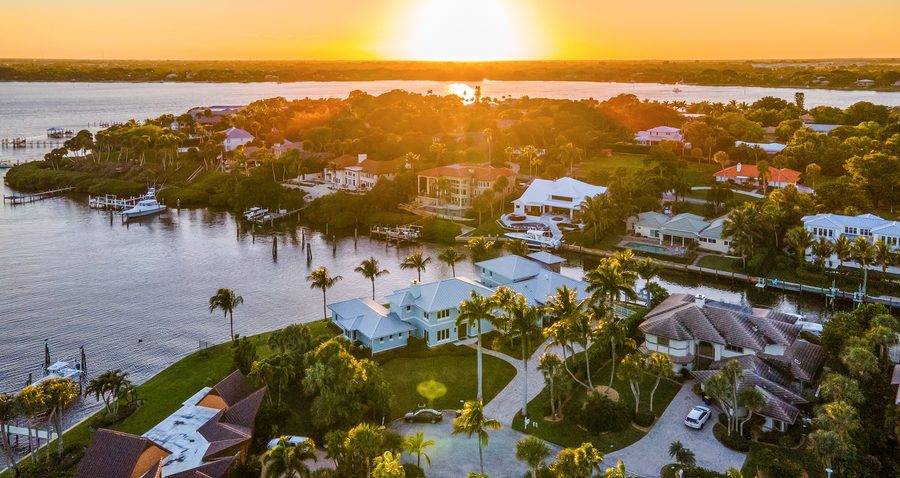
Moving to Parkland means understanding one thing up front: Broward’s most exclusive family suburb explained honestly is a city built around three things, top-ranked schools, gated low-density living, and a price tag that reflects both. If you’re relocating for the schools and the quiet, Parkland delivers. If you’re chasing beach proximity or a starter budget, you need to know what you’re trading away before you sign a contract.
I’ve walked buyers through Heron Bay, MiraLago, Parkland Reserve, and the older sections of Parkland Golf and Country Club enough times to know the pattern. People hear “Parkland” from a relocation search, a school ranking list, or a friend who moved from New York or New Jersey, and they show up assuming it’s just another Broward suburb with a nicer name. It isn’t. It’s a specific kind of community with specific tradeoffs, and this guide lays those out without the sales pitch.
Why Parkland Became Broward’s Most Exclusive Family Suburb
Parkland incorporated in 1963 as a low-density, semi-rural pocket of northwest Broward County, and for decades it stayed exactly that: horse properties, large lots, and a population that barely cracked five figures. The shift happened in the 1990s and 2000s when builders like GL Homes and Lennar started developing master-planned communities such as Heron Bay and Parkland Golf and Country Club, and the city leaned into a strategy most of its neighbors didn’t: protect the schools, protect the density, and let the price do the filtering.
That strategy worked. Marjory Stoneman Douglas High School and its feeder schools (Westglades Middle, Park Trails Elementary, Riverglades Elementary, Heron Heights Elementary, and Discovery Elementary) consistently post some of the highest A-rated scores in Broward County Public Schools. Parkland’s crime numbers are also consistently among the lowest in the county, year after year, not as a marketing claim but as a documented FBI Uniform Crime Report pattern.
Put those two things together, top schools plus low crime, and you get a city where demand from relocating families (especially from the Northeast, Canada, and Latin America) consistently outpaces the limited new supply. That’s the entire reason Parkland trades at a premium over Coral Springs, Coconut Creek, and most of Boca Raton’s non-gated inventory. It’s also worth understanding what this premium actually buys you versus what it doesn’t. It buys you consistency, the same strong elementary, middle, and high school zoning across nearly every gated community in the city, which is not something you get in Coral Springs, where school quality can shift block to block depending on which zone you land in. It doesn’t buy you walkability, nightlife, or a shorter commute, and pretending otherwise is how buyers end up disappointed six months after closing.
For the full context on how the city got here and what’s changed most recently, the Parkland Complete Guide for 2026 walks through the longer history if you want it.
What Homes Actually Cost in Parkland Right Now
Here’s what you really need to know about Parkland pricing in 2026: there is no true “cheap” tier here, but there is a wide range depending on age of construction and which gated community you’re looking at.
Entry-level and resale tier ($650,000 to $900,000)
Older sections of Parkland Isles, Trails at Parkland, and some of the non-golf sections of Heron Bay fall into this range. These are typically 3 to 4 bedroom homes built in the 1990s and 2000s, 1,800 to 2,600 square feet, on standard suburban lots. Kitchens and bathrooms in this tier are usually original or a single renovation cycle deep, so budget for updates on top of the purchase price if you want the home move-in ready. This is the segment where the “is the Parkland premium worth it” question comes up most, and it’s worth reading through honestly rather than assuming. A family relocating from a $500,000 home in a solid school district elsewhere is often the one asking this question hardest, because the jump in price doesn’t always come with a jump in square footage or finish quality, it comes with the zoning. The First-Time Buyer in Parkland guide breaks down exactly what you get and don’t get at this price point compared to Coral Springs or Coconut Creek five minutes away.
Move-up tier ($900,000 to $1.5 million)
This is where most of Heron Bay’s interior, non-waterfront sections sit, along with resale inventory in Parkland Golf and Country Club. Expect 3,000 to 4,500 square feet, 4 to 5 bedrooms, and community amenities (resort pools, tennis, sometimes golf access) baked into the HOA. This tier is where a lot of move-up families land, people who already own in Coral Springs or Weston and are trading equity for more space and the Marjory Stoneman Douglas zoning specifically. Lot sizes here vary more than buyers expect, some interior Heron Bay lots run under a quarter acre while lake and preserve lots in the same community can run considerably larger, so don’t assume the square footage of the home tells you much about the size of the yard.
New construction and luxury tier ($1.3 million to $3 million-plus)
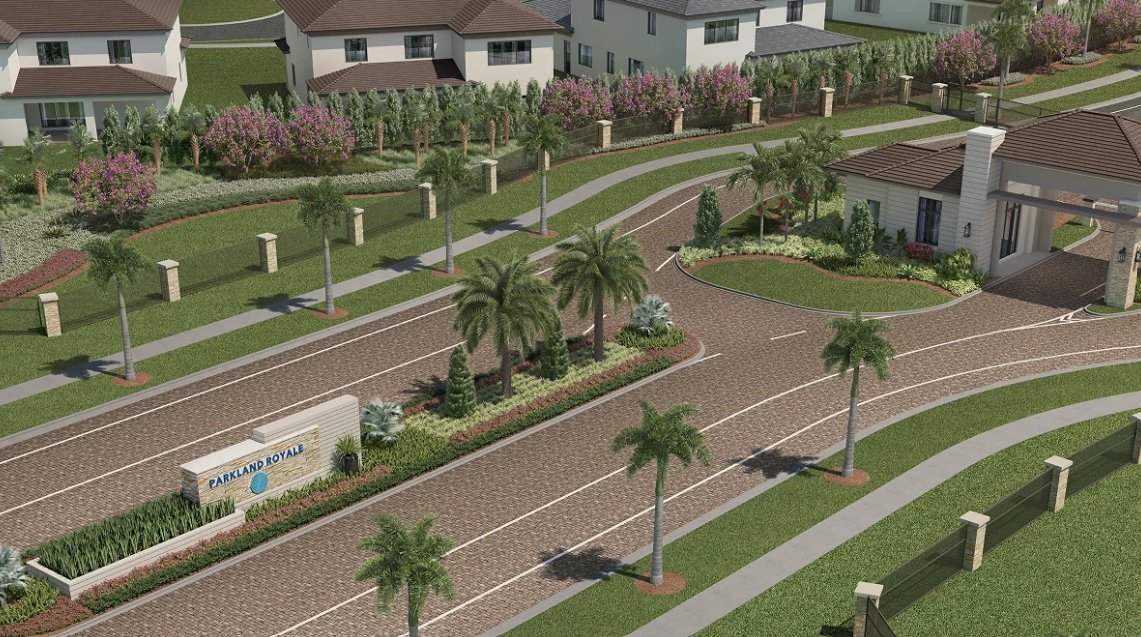
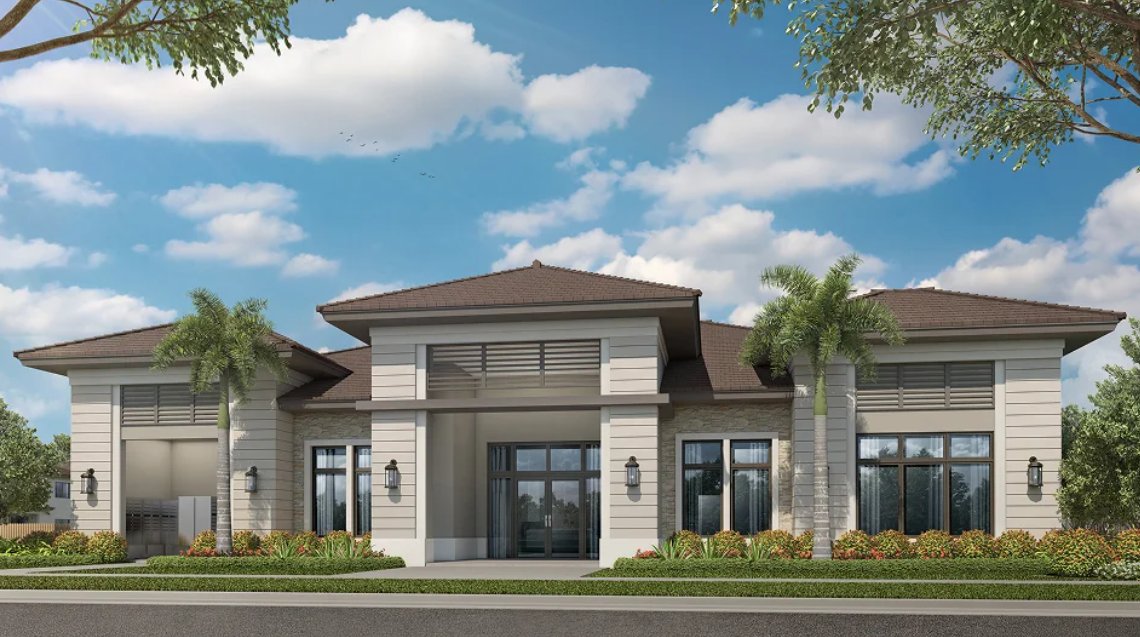
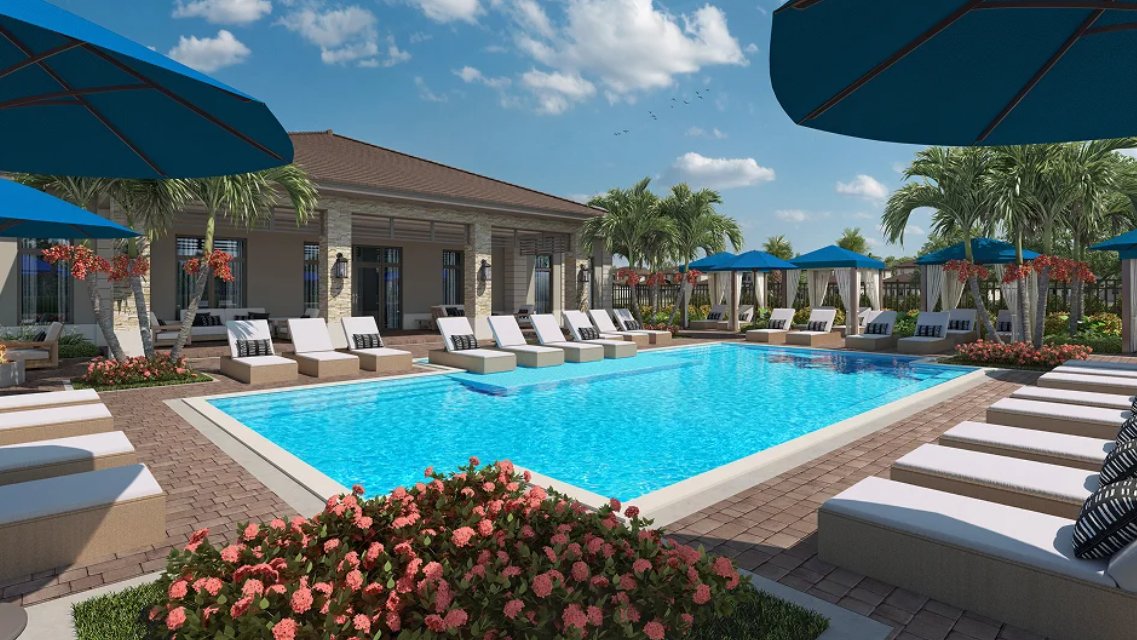
This is Parkland’s growth story right now. Communities like Cascata at MiraLago and Parkland Royale are delivering new single-family homes with modern floor plans, impact glass throughout, and larger lots than anything built in the last two decades in this city. Parkland Royale in particular spans a wide range of buyer needs across its Crown and Monarch collections. Families who want real space and a formal dining room without a second independent living unit start with the Crown Collection, the Barony or Kingsmont plans specifically if a split three-car garage matters, or the Valemont if you need a genuine fifth bedroom and a dedicated game room and don’t mind trading down to a two-car garage. Buyers who want single-story living and are done dealing with stairs have exactly one option in the community, the Astoria in the Monarch Collection. Households with five bedrooms and teenagers or in-laws who each want their own bathroom tend to land on the Marquis, which comes with five and a half baths. And if a parent is moving in or an adult child needs real privacy, the Next Gen suite option is the plan feature that actually solves that, not just an extra bedroom down the hall.
Saltgrass at Heron Bay sits in this same tier, inside one of Parkland’s most established master-planned communities, which matters if you want new construction but don’t want to gamble on a brand-new HOA and amenity package still being built out. If new construction is specifically what you’re after, the New Construction in Parkland 2026 rundown covers which builders are actually delivering on schedule right now versus which ones have slipped.
For a snapshot of where prices stand as of mid-2026 specifically, including median days on market and how much negotiating room actually exists right now, see the Parkland Real Estate Market Update.
HOA and CDD Costs Nobody Explains Clearly Enough
This is where a lot of relocating buyers get surprised, and it’s not because anyone is hiding anything. It’s because most people moving from outside Florida have never dealt with a CDD (Community Development District) before.
A CDD is a separate taxing authority that financed the roads, drainage, and sometimes the clubhouse and gate infrastructure when a community like Heron Bay or MiraLago was originally built. That debt gets repaid over 20 to 30 years through an assessment that shows up on your property tax bill, separate from your HOA dues. In Parkland’s newer master-planned communities, that CDD line item can run anywhere from $1,500 to $4,000-plus per year depending on the community and the size of the home, and it does not disappear when the mortgage is paid off, it runs on its own schedule.
On top of the CDD, you have your HOA dues, which in Parkland’s gated communities typically run $300 to $700 per month depending on the amenity package (staffed gatehouse, resort pool, tennis, golf access). Add those two together and a family moving into a $1.4 million home in MiraLago or Parkland Golf and Country Club could be looking at $700 to $1,000-plus per month in HOA and CDD combined, on top of property taxes and insurance.
Run the actual math on a real example. A family buying a $1.4 million new construction home in a community with a $600 monthly HOA and a $2,800 annual CDD assessment is paying roughly $833 per month before a single dollar of mortgage principal, interest, taxes, or insurance is counted. Layer that onto a mortgage payment and a Florida property tax bill that resets to current assessed value at the time of sale, and the true monthly carrying cost can run $1,500 to $2,500 higher than what a generic online mortgage calculator will show you. Ask the HOA and CDD district office for the actual current-year figures in writing, not the number quoted in a listing description, because those numbers change year to year and older listings often carry stale figures.
None of this makes Parkland a bad deal. It makes the true monthly cost of ownership higher than the mortgage calculator suggests, and you need that number in writing from the HOA and the CDD district office before you go under contract, not after.
The Neighborhood Breakdown: Where Families Actually Land
Heron Bay
Parkland’s largest and most established master-planned community, split into multiple gated sections with a mix of golf course, lake, and interior lots. This is the community most relocating families default to first because of size and school zoning consistency. Because Heron Bay was built out over more than a decade, the age and finish level of homes varies significantly section to section, so two homes at the same price point can feel like they’re from different eras depending on which phase they were built in.
Parkland Golf and Country Club
An 800-plus acre gated community built around a Nicklaus Design golf course, with larger estate lots than Heron Bay and a private country club membership structure layered on top of HOA dues. This is Parkland’s most established luxury tier, and buyers need to separate the HOA cost from the country club membership cost, since golf, social, and dining membership tiers are billed separately and are not optional add-ons in the way they can be elsewhere.
MiraLago
A newer, smaller gated community that’s become the address for buyers who want new or newer construction without leaving Parkland’s school zones. Cascata at MiraLago is the current new-build activity here, and it tends to draw buyers trading up from an older Heron Bay or Parkland Isles home who want modern floor plans without leaving the city.
Watercress and Parkland Reserve
Two of the more recently developed communities, both delivering newer floor plans and layouts that reflect current buyer preferences (open kitchens, larger primary suites, three-car garages) compared to the 1990s and early 2000s product in Heron Bay’s oldest sections. Both are worth a look for buyers who want a newer build but a smaller, quieter footprint than MiraLago or Parkland Royale.
Parkland Isles and Trails at Parkland
The city’s more accessible entry points, both non-golf, standard gated subdivisions that consistently anchor the lower end of Parkland’s price range without sacrificing school zoning. These are the two communities I point first-time Parkland buyers toward when the goal is getting into the city on the smallest realistic budget while still landing in the Marjory Stoneman Douglas feeder pattern.
What Life in Parkland Actually Looks Like Day to Day
The reality is Parkland’s daily rhythm is quiet, almost deliberately so. There’s no downtown corridor of restaurants and shops inside city limits the way Coral Springs or Boca Raton have. Most families drive to Coral Springs’ Sample Road corridor, Parkland’s own small retail nodes on Loxahatchee Road and University Drive, or Sawgrass Mills for shopping and dining. That’s a tradeoff families need to walk in expecting, not discover after their first month.
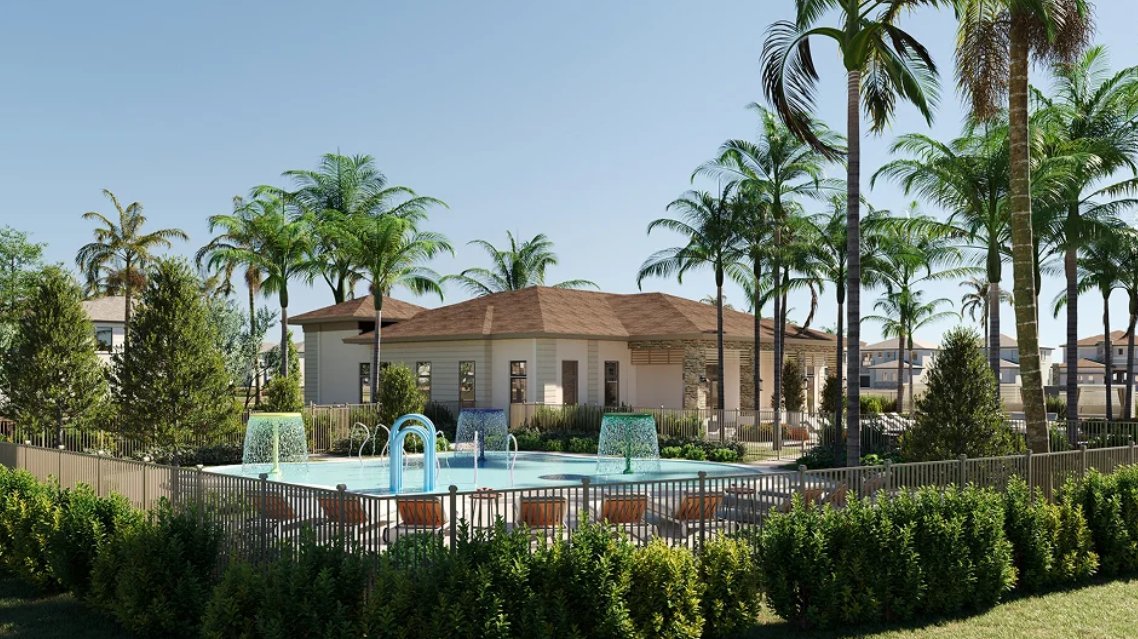
What Parkland does give you: sidewalks and bike paths that actually connect between communities, a robust park system (Pine Trails Park is the anchor, with sports fields, splash pads, and a dog park), and a genuinely tight-knit community feel built around the schools and youth sports leagues. Weeknights in most of these gated communities revolve around practice schedules, not restaurant reservations, and that’s by design, not by accident. Families relocating from dense urban areas sometimes need a few months to adjust to how much of Parkland’s social life happens inside the gates rather than out in a walkable town center. If you want a realistic, unfiltered picture of what an actual day looks like here, from morning school drop-off to evening errands, Life in Parkland: What a Day Actually Looks Like covers it in detail.
The Location Tradeoff You Need to Drive Before You Buy
Parkland sits in the far northwest corner of Broward County, right up against the Everglades line. That location is exactly what gives Parkland its low-density, quiet feel, there’s nowhere left to build to the west, which caps growth and protects the low crime numbers and school ratios that make this city what it is.
But it also means you’re genuinely far from the coast. Fort Lauderdale-Hollywood International Airport, the beach, and the denser dining and retail corridors along Las Olas or Atlantic Boulevard are a real 30 to 45 minute drive, not a “quick trip,” and that number gets worse at rush hour on University Drive or Sawgrass Expressway. If your job or lifestyle depends on being near the coast five days a week, drive that actual commute at 7:45 on a weekday morning before you commit to a Parkland address. What looks like 25 minutes on a map can run closer to 45 in real traffic.
This tradeoff hits different buyer profiles differently. A family with one parent working remotely and one commuting occasionally into Fort Lauderdale or Boca Raton absorbs this easily. A dual-income household with both parents commuting daily toward the coast should treat that drive as a real cost of living in Parkland, not a minor inconvenience, because two 40-minute commutes a day adds up to real hours lost every week, every month, every year you own the home. I’ve had buyers back out of a Parkland purchase after actually driving their commute on a Tuesday morning rather than assuming it from a map, and I’ve had others confirm the drive is fine and move forward with confidence. Either way, drive it first.
For families weighing Parkland against a comparably positioned but coastal-adjacent alternative, the Parkland vs. Weston side-by-side is worth reading, since Weston solves some of this same “top schools, gated, family-oriented” demand with a slightly shorter drive to I-75 and the turnpike.
Is Parkland Worth It as an Investment, Not Just a Home?
Buyers relocating for schools often ask this as an afterthought, but it matters. Parkland’s resale values have historically held up well specifically because the supply is capped (there’s very little land left to develop) and the school zoning is the most consistent draw in the county. That combination tends to support values even when the broader Broward market softens.
That said, Parkland is not a rental-friendly market in the way some other Broward suburbs are. Many of the gated communities have HOA restrictions on lease terms and lease frequency, some capping leases to once per year or requiring a minimum lease term of six months to a year, which rules out the short-term and seasonal rental strategy that works in other parts of South Florida. The CDD and HOA costs also eat into rental yield in a way that changes the math for anyone considering Parkland as a straight investment property rather than a primary home. A $1.4 million home carrying $833 a month in combined HOA and CDD costs before taxes and insurance needs a rent roll that can absorb that number and still cash flow, and in most cases in Parkland right now, it can’t, not without a significant down payment reducing the mortgage burden. If that’s part of your thinking, Parkland Investment Property: The Numbers and the Reality lays out the actual cap rate math rather than the assumption that “top schools always equal good investment.”
Who Should Actually Move to Parkland
Parkland makes sense if you’re a family prioritizing school district consistency above almost everything else, you can comfortably absorb the HOA and CDD costs on top of your mortgage, and your commute pattern doesn’t require daily coastal access. It also makes sense if you’re moving up from a smaller Broward or Palm Beach community and want more space, more privacy, and a gated environment without leaving the county.
Parkland makes less sense if you’re working with an entry-level relocation budget and need room to move up within the same city later. Parkland doesn’t really offer a move-up path internally, it’s largely one price tier. That’s not a flaw in the community, gated luxury single-family is exactly what Parkland is built to be, but if your plan was buy small in Parkland now and upgrade later, that plan doesn’t really exist here the way it does in Coral Springs or Pembroke Pines, where starter, move-up, and luxury inventory all sit within the same city limits. It also makes less sense if beach access is a daily non-negotiable, or if you haven’t yet confirmed the HOA and CDD numbers in writing for the specific community you’re considering.
Next Step
If you’re seriously relocating to Parkland, don’t start with a listing search. Start with three numbers: your actual commute time driven at real rush hour, the combined HOA plus CDD cost in writing for the specific community, and which elementary, middle, and high school your target address is zoned for right now (zoning does shift as Broward County Public Schools rebalances). Get those three numbers first, then the home search gets a lot more efficient. Skipping this step is the single biggest reason relocating buyers end up frustrated three months into homeownership here, not because Parkland failed to deliver what it promises, but because they never confirmed the tradeoffs against their own daily life before they signed.
DM me “PARKLAND” and I’ll send you the current new construction availability across MiraLago, Heron Bay, and Parkland Royale, along with real HOA and CDD figures for each.
More articles you might like
Living in Parkland, Florida (2026): Schools, Cost of Living, and Is It Worth It?
17 min readParkland, Florida: The Complete Relocation Guide for 2026
17 min readParkland vs. Weston: The Side-by-Side for Broward Family Buyers
18 min read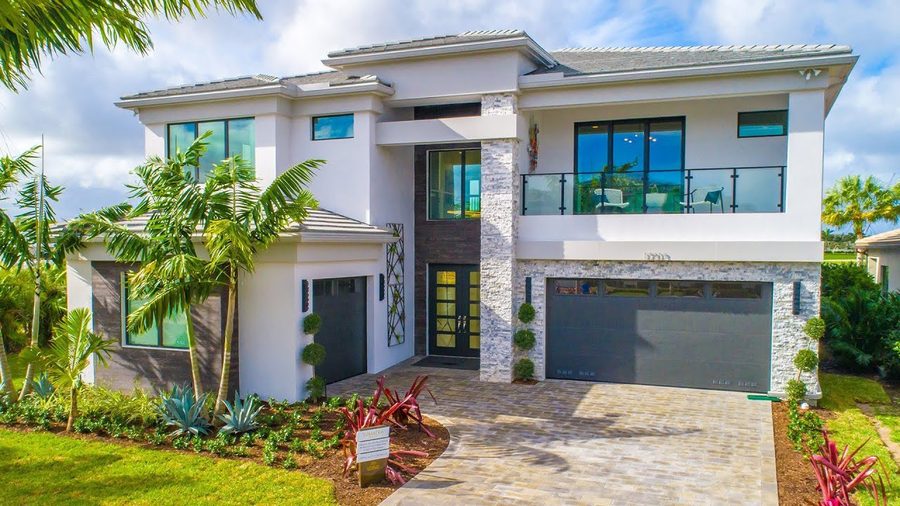
Is Cascata at MiraLago Worth It? An Honest Look at GL Homes's Parkland Community
16 min readIs Saltgrass at Heron Bay Worth It? An Honest Look at Toll Brothers's Parkland Community
13 min read