Parkland, Florida: The Complete Relocation Guide for 2026
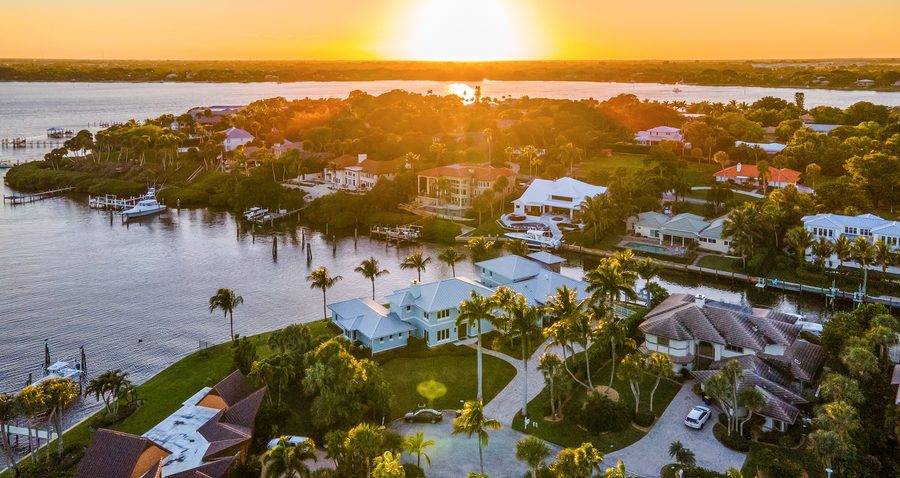
Parkland, Florida: the complete relocation guide for 2026 starts with one number: $1.15M. That’s the median home price in Parkland right now, and it tells you almost everything about who this city is for. If you’re relocating to South Florida and Parkland keeps showing up on your list because of the schools, the gates, and the “safest city in Florida” headlines, this guide walks through what you’re actually buying into: the real cost, the real tax math, the real neighborhoods, and who Parkland fits and who it doesn’t.
I work new construction and relocation buyers across Broward County every week, and Parkland is one of the most asked-about, least honestly explained cities in the market. Most of what you’ll find online is either a builder brochure or a “top 10 reasons to move here” listicle. This is the version with the numbers, the tax bill, the monthly carrying cost, and the tradeoffs most agents won’t walk you through until after you’ve already written an offer.
Who Parkland Actually Works For
Parkland works for move-up buyers and established families who have already built equity somewhere else and are optimizing for schools, safety, and long-term stability. Think: a family selling a $650K home in Coral Springs or Boynton Beach and rolling that equity into a $1.1M to $1.5M home zoned for Marjory Stoneman Douglas High School. It also works for out-of-state buyers relocating with real capital, often from the Northeast or Midwest, who are used to paying $1M+ for a good school district and see Parkland’s price per square foot as reasonable by comparison.
Here’s a realistic qualifying picture. On a $1.15M home with 20% down, you’re financing roughly $920K. At today’s rates, that’s a mortgage payment in the range of $5,800 to $6,000 a month before taxes, HOA, CDD, or insurance are added in. Lenders generally want your total housing cost, including all of that, under 36 to 40% of gross monthly income. In practice, that means most buyers who comfortably close in Parkland are earning somewhere between $280K and $320K a year in household income, or they’re bringing enough cash to significantly reduce the loan amount. If you’re relocating from a market where $1.15M buys a mansion, run your own numbers before you assume Parkland is an easy stretch. It isn’t, even for buyers who are financially comfortable elsewhere.
Parkland does not work well for first-time buyers looking for a foothold, or for anyone planning to “buy small now, move up later” within the city. I cover that tradeoff in detail in First-Time Buyer in Parkland: Is the Premium Worth It at Entry Level?, but the short version is this: Parkland doesn’t really offer an internal move-up path. It’s built almost entirely around one price tier, gated single-family. That’s not a flaw, it’s the design. But if your plan depends on starting small and trading up inside the city over ten years, that plan doesn’t exist here the way it does in Coral Springs or Coconut Creek.
Real Prices and the Full Cost of Ownership
The sticker price is only part of the equation in Parkland, and this is where a lot of relocating buyers get surprised after closing.
Median Price and Price Per Square Foot
The current median home price in Parkland runs around $1.15M, with price per square foot landing between $369 and $403 depending on the community, lot size, and whether you’re buying new construction or resale. New construction communities like Cascata at MiraLago and Parkland Royale tend to sit at the higher end of that range because you’re paying for current-year finishes and builder warranties, not 2015 construction.
HOA and CDD Stacking
This is the part nobody puts in the brochure. Most Parkland communities carry both an HOA and a CDD (Community Development District) fee, and they stack. The HOA covers amenities, gate staffing, and common area landscaping. The CDD is a bond that paid for the roads, utilities, and infrastructure when the community was built, and you’re paying it down over 15 to 30 years, often alongside your mortgage, as a separate line item on your tax bill. Depending on the community, combined HOA and CDD costs can run anywhere from $250 to $600+ a month. That’s before property taxes.
The Tax Recapture Math
Parkland’s effective tax rate, combined with CDD debt service, means a $1.15M home can carry an annual tax and CDD bill north of $20,000. If you’re moving from a state with no state income tax and low property taxes, or even from a lower-tax Florida county, run this number before you fall in love with a floor plan. It’s the single biggest gap between what buyers expect to pay monthly and what actually shows up.
Don’t Forget Insurance
Property taxes and HOA/CDD fees get most of the attention, but homeowners insurance is the third number that catches relocating buyers off guard, and it’s specific to South Florida. A $1.15M home in Parkland typically runs $5,400 to $7,200 a year for homeowners coverage alone, depending on roof age, wind mitigation credits, and whether the community is in a flood zone. If your lender requires flood insurance because of the parcel’s elevation certificate, add another $1,000 to $2,500 a year on top of that. Buyers coming from states without hurricane exposure often budget zero for this line item, then get a real number from an insurance broker and have to rework their whole monthly budget.
Put it all together on that same $1.15M home with 20% down: roughly $5,900 a month in principal and interest, $1,650 a month in property taxes, $400 a month average for HOA and CDD combined, and $500 a month for insurance. That’s a real monthly carrying cost near $8,450, not the roughly $5,900 a mortgage calculator alone would show you. That gap is why I tell every relocating buyer to get the full number in writing before they get emotionally attached to a house.
If you want the full breakdown of what a new construction home in Parkland actually costs once you add HOA, CDD, taxes, and insurance on top of the mortgage, that’s covered specifically in New Construction in Parkland: What Is Available in 2026.
Schools: The Reason Most People Move Here
Let’s be direct about it, because it’s the honest reason most families relocate to Parkland: the school zoning. Parkland sits largely within the Marjory Stoneman Douglas High School zone, feeding from Westglades Middle School and a handful of A-rated elementary schools including Park Trail Elementary, Heron Heights Elementary, and Riverglades Elementary. These schools consistently rank among the top public schools in Broward County, and for families with school-age kids, that zoning is worth real money.
That’s also exactly why the price premium exists. You are not just buying square footage in Parkland, you’re buying a school zone, and the market prices that in. A comparable 3,500 square foot home in a B or C rated Broward school zone can run $200K to $350K less than the same home zoned for MSD. If schools aren’t your top priority, you can get more house for less money one exit south in Coral Springs, which shares some of the same top-tier schools without the same gated-community price tag. I go deeper on that comparison in Living in Parkland, Florida (2026): Schools, Cost of Living, and Is It Worth It?.
It’s also worth knowing that not every Parkland address is zoned for MSD. A handful of parcels along the city’s edges feed into different high schools depending on annual boundary decisions from Broward County Public Schools. If school zoning is the entire reason you’re buying in Parkland, confirm the exact zoned school for the specific address before you write an offer, not the general reputation of the city. Boundaries shift, and a Realtor working the area day to day should be able to pull the current zoning map for you in minutes.
Neighborhoods and Communities: Where People Actually Buy
Parkland isn’t one uniform product. There are real differences between its major communities, and picking the wrong one for your lifestyle is a common mistake among relocating buyers who only compare price per square foot.
Heron Bay
One of Parkland’s most established gated communities, Heron Bay offers a mix of resale homes from the early 2000s alongside newer infill construction like Saltgrass at Heron Bay. It has mature landscaping, an established country club, and a settled feel that appeals to buyers who don’t want to live in an active construction zone. Resale pricing in Heron Bay typically runs from the high $700Ks for smaller, older product up past $1.5M for larger lakefront lots, so it’s actually one of the wider price bands in Parkland if you’re willing to buy something built in the early 2000s instead of brand new.
Parkland Golf & Country Club and MiraLago
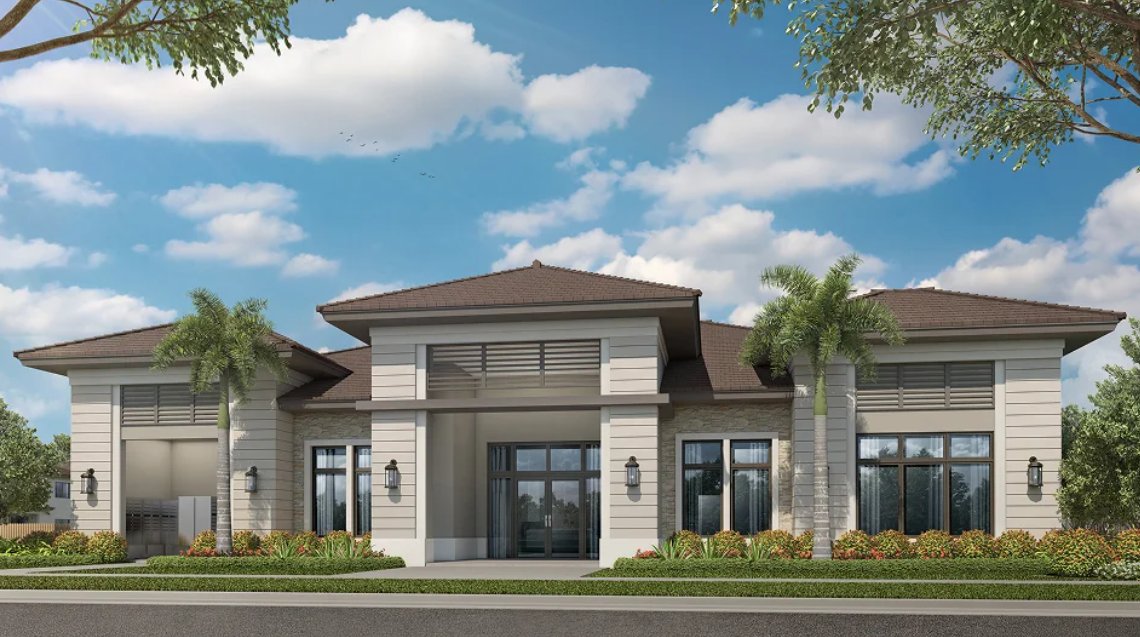
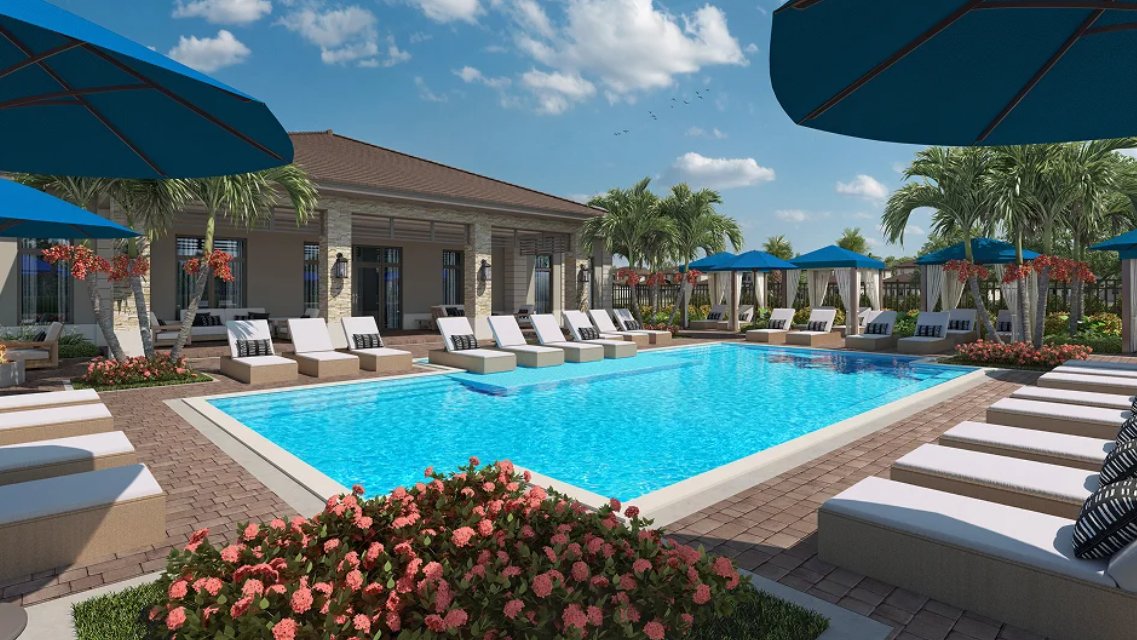
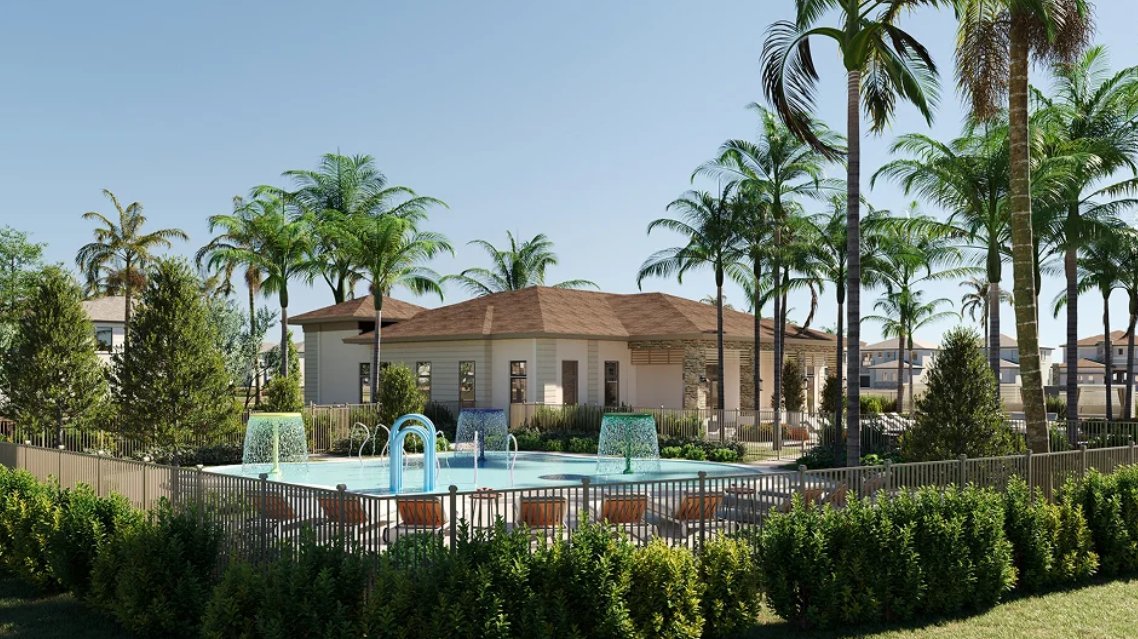
These communities represent Parkland’s newer luxury tier, with larger lots, resort-style amenities, and price points that regularly clear $1.3M to $2M+. Cascata at MiraLago falls into this category, offering current-generation floor plans with the amenity package (clubhouse, resort pool, fitness center) that buyers moving from out of state expect at this price point. Buyers relocating from luxury markets in the Northeast often find these communities the easiest mental adjustment, because the amenity level and finish quality feel familiar even if the tax bill doesn’t.
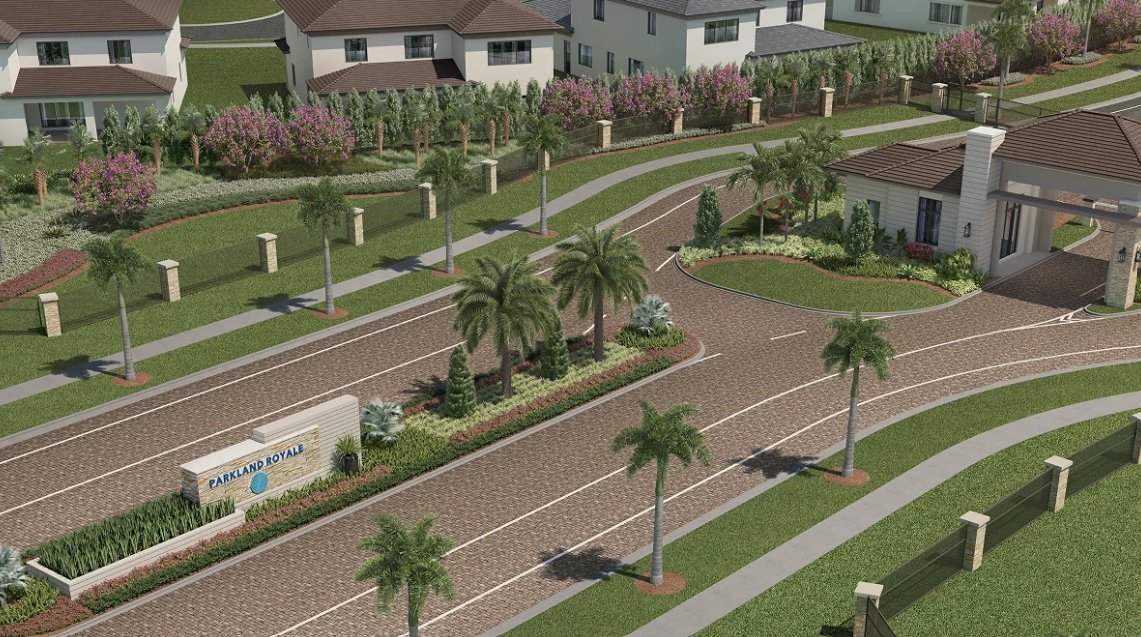
Parkland Royale
On the newer end of the spectrum, Parkland Royale by Lennar brings a more accessible entry point into new construction Parkland, though “accessible” is relative here. I broke down pricing, floor plans, and the Next Gen dual-living option specifically in Parkland Royale by Lennar Review (2026): Prices, Floor Plans, Next Gen, and Who It’s For. It’s one of the better options for buyers who want new construction without paying MiraLago-level premiums, and the Next Gen floor plan in particular is worth a look for multigenerational families relocating together, since it gives a second household a private suite with its own entrance under one roof.
Older, Non-Gated Pockets
Parkland does have a handful of older, non-gated single-family neighborhoods with smaller lots and lower HOA burden, generally on the city’s eastern edge. These homes tend to date from the 1980s and 1990s, sit on quarter-acre to half-acre lots, and skip the clubhouse and guard-gate amenities entirely, which is exactly why the HOA dues are lower or nonexistent. These are the closest thing Parkland has to relative affordability, though “relative” still usually means $700K to $900K, and buyers should expect to budget for updates since a lot of this stock hasn’t been fully renovated.
Commute, Location, and Getting Around
Parkland sits in the northwest corner of Broward County, bordering Palm Beach County. That location is a real tradeoff to understand before you buy.
The Sawgrass Expressway runs along Parkland’s eastern edge and is your main artery south toward Coral Springs, Sunrise, and the rest of Broward, or north toward Coconut Creek and Boca Raton. From central Parkland, expect 15 to 25 minutes to reach the Sawgrass on-ramp depending on which community you’re in, then another 30 to 45 minutes into Fort Lauderdale proper or Boca Raton for work, depending on traffic.
For context on specific commutes: getting to the Boca Raton corporate corridor (think the office parks near Yamato Road and Congress Avenue, home to a lot of finance, healthcare, and tech employers) generally runs 30 to 40 minutes from Parkland. Getting to downtown Fort Lauderdale or the Las Olas business district runs closer to 40 to 55 minutes depending on time of day. If your job is in Miami, you’re realistically looking at 70 to 90 minutes each way during peak hours, which is a serious consideration if you’re relocating for a Miami-based role and just like the idea of Parkland’s schools.
There is no Tri-Rail or Brightline station in Parkland itself. The nearest Brightline access is the Boca Raton station, roughly a 25 to 30 minute drive. If your job requires a daily commute into downtown Fort Lauderdale or Miami, Parkland means a car-dependent lifestyle with real drive time, not a quick hop. That’s a fair tradeoff for a lot of families prioritizing schools and quiet over commute time, but it should be a conscious choice, not a surprise six months in.
What Day-to-Day Life Actually Looks Like
Parkland is quiet, intentionally so. There’s no downtown, no walkable retail corridor, and limited nightlife inside city limits. Most day-to-day errands, groceries, restaurants, entertainment, happen just outside Parkland in Coral Springs or Coconut Creek, both a short drive away. Parkland residents generally accept this trade: you give up walkability and urban energy in exchange for low density, top schools, and a genuinely quiet, family-oriented pace.
What Parkland does offer inside city limits is green space. Pine Trails Park is the anchor, with sports fields, walking trails, a splash pad, and an equestrian center that reflects the city’s roots as horse country before the gated communities went up. Weekends here revolve around youth sports leagues, HOA clubhouse events, and family time at the park rather than restaurants or nightlife. If that sounds appealing, Parkland delivers it well. If you’re picturing evenings walking to dinner or grabbing a drink within city limits, you’ll be disappointed, because that lifestyle simply isn’t what Parkland is built for.
If you want a realistic picture of what a typical day looks like for a Parkland resident, from school drop-off to weekend routines, I wrote that out in detail in Life in Parkland: What a Day Actually Looks Like in Broward’s Quietest City. It’s worth reading before you commit, because the lifestyle here is specific, and it either fits how you want to live or it doesn’t.
The Honest Tradeoffs Nobody Puts in the Brochure
Every South Florida city has tradeoffs. Here are Parkland’s, without the sales spin.
No Starter Homes and No Internal Ladder
As mentioned above, roughly 90% of Parkland’s housing stock is gated single-family, and there’s essentially one price tier. There’s no meaningful stock of $400K townhomes or condos to buy into and grow from. You either enter at the current price point or you look elsewhere first.
HOA and CDD Stacking Adds Up Fast
Combined HOA and CDD costs, on top of a five-figure annual tax bill, mean your true monthly carrying cost can run $1,000 to $1,800 higher than the mortgage payment alone suggests. Get the full number in writing from your lender and the HOA before you write an offer.
Limited Walkability and No Rail Access
If you want a walk-to-dinner lifestyle or quick rail access to Fort Lauderdale or Miami, Parkland isn’t it. You’ll be driving for nearly everything.
It’s Priced for What It Delivers
None of this means Parkland is overpriced. The schools are real, the safety statistics are real, and the gated, low-density feel is real. The price reflects genuine, verifiable value, not hype. The point is knowing exactly what you’re paying for before you sign, not being surprised by it after.
Is Parkland Worth It for an Investment Property?
Buyers occasionally ask about Parkland as a rental or investment play given the school zone demand. The short answer: it’s possible, but the numbers are tight, since HOA and CDD costs eat into rental yield in a way they don’t in less regulated Broward suburbs. I ran the actual cap rate and cash flow numbers on a real Parkland purchase in Parkland Investment Property: The Numbers and the Reality, and it’s worth reading before assuming school-zone demand automatically means strong rental returns. In general, if cash flow is your primary goal, Parkland is not the play. If you’re buying a home you plan to live in for five to ten years and treating equity growth and school access as the return, the math works very differently, and much more in your favor.
How Parkland Compares to Its Neighbors
If you’re cross-shopping, here’s the quick version.
| City | Median Price | Commute to Fort Lauderdale | HOA + CDD | Schools |
|---|---|---|---|---|
| Parkland | ~$1.15M | 40-55 min | $250-$600+/mo stacked | Top-tier, MSD zone |
| Coral Springs | ~$550K-$650K | 30-40 min | Lower, mostly HOA only | Strong, shares some zones |
| Coconut Creek | ~$500K-$600K | 30-40 min | Mixed, newer areas have more | Solid, more variety |
| Boca Raton | ~$800K-$1M+ | 35-45 min (Palm Beach Co.) | Varies widely | Strong, different district |
Coral Springs gets you many of the same schools and a shorter commute for meaningfully less money, but with less gate coverage and older housing stock overall. Coconut Creek sits a bit further from the top school zones but offers more variety in price point and newer mixed-use development. Boca Raton, just over the county line, gets you walkability and rail access that Parkland doesn’t have, at a higher price and different tax structure under Palm Beach County. Parkland’s specific value is the combination of top-tier schools, gated density, and quiet, all in one package, at a price that assumes you want all three.
Frequently Asked Questions
Is Parkland, Florida safe? Yes. Parkland consistently ranks among the safest cities in Florida by crime statistics, and the gated community structure that most of the city is built around adds an additional layer of controlled access on top of that.
What is the median home price in Parkland right now? Around $1.15M as of 2026, with price per square foot generally between $369 and $403 depending on the community and whether the home is new construction or resale.
Do all Parkland homes have HOA and CDD fees? The large majority do, since most of the city was built as planned gated communities. A small number of older, non-gated pockets on the city’s eastern edge have lower or no HOA and no CDD, but they’re a limited slice of the overall inventory.
Is Parkland a good starter home market? No. Parkland is built around one price tier, gated single-family homes generally starting near $700K and running well past $2M. There’s very little entry-level inventory and no real internal move-up path.
The Bottom Line
Parkland, Florida in 2026 is a city built for one kind of buyer: someone with real capital, prioritizing schools and safety over walkability and commute time, buying into a gated, single-price-tier market with real HOA and CDD costs layered on top of the mortgage. If that’s you, it delivers exactly what it promises. If you’re looking for a starter home, short commute, or walkable lifestyle, you’ll be better served, and better off financially, looking at Coral Springs or Coconut Creek first and treating Parkland as the eventual move-up, not the entry point.
Before you write an offer anywhere in Parkland, get the actual HOA and CDD figures in writing for the specific community you’re considering, not the citywide average. Every gated community here prices differently, and that number changes your real monthly cost more than almost anything else on the sheet.
More articles you might like
Living in Parkland, Florida (2026): Schools, Cost of Living, and Is It Worth It?
17 min readParkland vs. Weston: The Side-by-Side for Broward Family Buyers
18 min readMoving to Parkland: Broward's Most Exclusive Family Suburb Explained
16 min read
Is Cascata at MiraLago Worth It? An Honest Look at GL Homes's Parkland Community
16 min readIs Saltgrass at Heron Bay Worth It? An Honest Look at Toll Brothers's Parkland Community
13 min read