Living in Parkland, Florida (2026): Schools, Cost of Living, and Is It Worth It?
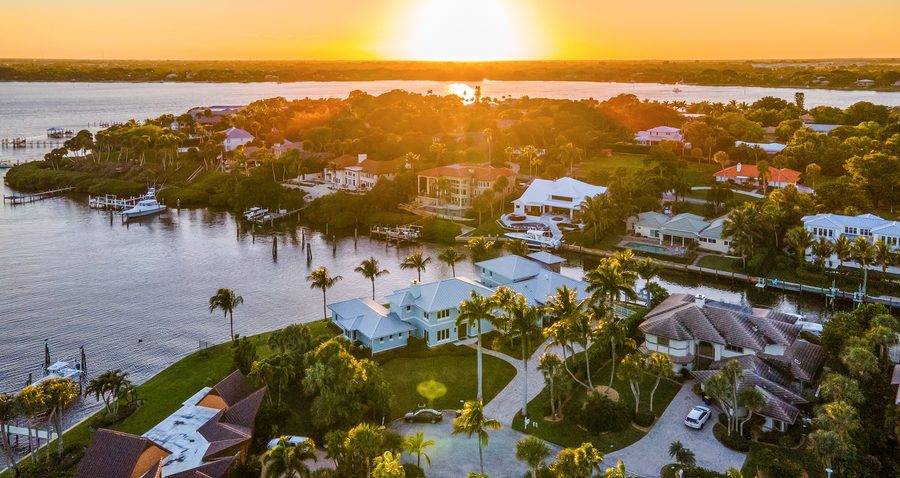
Living in Parkland, Florida in 2026: The Real Cost, The Real Schools, and Who Should Actually Move Here
Living in Parkland, Florida in 2026 means paying a premium, usually $369 to $403 per square foot, for a specific trade: some of the highest-rated public schools in Broward County, low crime, and a gated, master-planned lifestyle. Whether that trade is worth it depends entirely on what you’re optimizing for. This guide breaks down the real numbers, the actual schools, and who should (and shouldn’t) be looking here in 2026.
I’ve walked buyers through Parkland for years, and the question is always the same: “Is it actually worth the price?” The honest answer is that Parkland does what it says it does. The schools are strong, the streets are quiet, and the HOAs keep things looking uniform. What it doesn’t do is compete on affordability. If you’re cross-shopping Parkland against Coral Springs, Weston, Cooper City, Davie, or Pembroke Pines, you need real numbers, not a listing price and a gut feeling.
The Real Cost of Living in Parkland, Florida in 2026
Start with the number everyone glosses over: price per square foot. Parkland is running $369 to $403 per square foot in 2026. Broward County as a whole has a countywide median single-family price around $615,000 with about 4.6 months of supply, which is a balanced-to-slightly-seller-leaning market. Parkland sits well above that county median, which tells you it’s a move-up and luxury product, not an entry-level city.
But the sticker price on the listing is never the real monthly number. Here’s why.
HOA Dues Are the Baseline, Not the Exception
Almost every community in Parkland is gated and single-family, and almost all of them carry mandatory HOA dues. This isn’t optional landscaping money. It’s baked into the cost of owning here, and it varies widely by community, sometimes running into the hundreds of dollars a month depending on the gate, amenities, and common areas being maintained. A smaller, older gated section might run you closer to $150 to $250 a month. A newer master-planned community with a clubhouse, resort-style pool, fitness center, and full-time gate staff can run $350 to $500 or more a month. Before you compare two listings on price alone, pull the HOA disclosure on both. A $50,000 difference in list price can get wiped out by a $150 a month difference in dues over the life of a mortgage.
CDD Assessments Stack on Top
In a lot of Parkland communities, especially newer master-planned developments, you’re also paying a Community Development District (CDD) assessment on top of the HOA. This is a separate line item that funds infrastructure like roads, drainage, and sometimes the clubhouse and amenity center itself. Buyers coming from out of state are frequently caught off guard by this because CDDs simply don’t exist in most other states. Budget for both, not just one. And ask specifically whether the CDD is being paid off (amortized) or is a perpetual assessment, because that changes the long-term math on the home significantly. Your closing agent or the community’s sales office can pull the actual CDD payoff schedule, and you should see it before you write an offer, not after.
The Property Tax Reset Nobody Explains Upfront
Florida’s Save Our Homes cap limits how much a homesteaded property’s assessed value can increase each year, but that cap resets when the home sells. So the tax bill the seller was paying is not the tax bill you’ll pay. On a $1.15 million Parkland home, a year-one property tax bill can land around $21,153 before any exemptions are applied, once the assessment resets to market value. That’s a number worth running with your lender before you fall in love with a listing photo. I’ve seen buyers get their pre-approval based on the seller’s current tax bill, only to find out at closing that their actual bill is thousands of dollars higher once the assessment resets to what they actually paid for the home.
Insurance Is the Other Number People Forget
South Florida insurance is its own conversation, and Parkland isn’t exempt. Homeowners insurance for a $1 million-plus new construction home in Broward County commonly runs $4,000 to $7,000 a year depending on the carrier, the wind mitigation report, and whether you’re insured through the private market or Citizens Property Insurance as a backstop. Newer construction with impact windows and current hurricane-rated roofing tends to price better than older stock, which is one more reason new construction communities like Parkland Royale and Cascata at MiraLago carry an edge on the insurance line even if the sticker price is higher. Get a real quote before you go under contract, not an estimate from a mortgage calculator that assumes a national average.
What This Adds Up To
Put it together (mortgage, HOA, CDD, reset property taxes, insurance) and Parkland’s real monthly number is meaningfully higher than the mortgage calculator on the listing suggests. For a newer, larger new-construction home in a community like Parkland Royale, an entry-level home with 20% down can land in the $9,000 to $10,000 a month range once you include principal, interest, estimated taxes, insurance, and HOA, and that’s before confirming the final CDD figure with the on-site sales team since those numbers aren’t always locked at time of purchase. That’s not a knock on the community. It’s the actual number you should be comparing against your budget, not the marketed monthly payment. For the full breakdown of that specific community, see the Parkland Royale by Lennar Review.
None of this means skip Parkland. It means budget the real number, not the marketed one.
A Quick Buyer Scenario
Say you’re relocating from New Jersey with two kids, a $950,000 budget, and a pre-approval based on a 20% down payment. You find a resale home in an established Parkland community listed at $925,000 with HOA dues of $310 a month and no CDD. Your mortgage payment alone might come in around $4,800 a month at current rates. Add the HOA, add a realistic reset property tax estimate (not the seller’s current bill), add insurance, and you’re likely closer to $7,000 to $7,500 a month all-in. That’s the number to compare against your actual take-home pay, not the $4,800 the listing’s calculator shows you. This is exactly the exercise I run with every buyer before they write an offer here, and it’s the single biggest source of “sticker shock” after closing when it’s skipped.
Parkland Schools: What the Ratings Actually Mean
Schools are the single biggest reason families pay the Parkland premium, and they’re not paying for nothing. Most Parkland neighborhoods feed into Park Trails Elementary and Westglades Middle School, both of which have consistently posted strong ratings within Broward County Public Schools. Families in Parkland typically zone into Marjory Stoneman Douglas High School at the high school level. That said, school zone boundaries shift, and they should always be verified directly with Broward County Public Schools before you write an offer, not assumed based on a neighborhood’s name or a listing agent’s claim.
Why the School Reputation Holds Up
Parkland’s school performance isn’t a marketing story, it’s a function of the community itself: high household income levels, engaged PTAs, low mobility (families stay put once they buy), and a city government that has consistently prioritized school-adjacent infrastructure like sidewalks, parks, and traffic calming near campuses. That combination is hard to manufacture in a newer community and it’s part of why Parkland commands its price per square foot premium over school zones in Coral Springs or Tamarac that are otherwise geographically similar.
The Catch: You’re Paying for the Zone, Not Just the House
Because the schools drive so much of the demand, you’ll pay a real premium for a specific address even when the home itself isn’t dramatically nicer than something ten minutes away in Coral Springs. If your kids are already out of the house, or you’re not planning to use the public school system, that premium is worth interrogating hard before you pay it. It’s one of the most honest conversations I have with buyers: are you paying for square footage, or are you paying for a school zone? I ask every family this directly, because the answer changes which city I’d point them toward next.
Private School Alternatives Change the Math
If your plan involves private school regardless of zip code, the calculation shifts again. A family paying $20,000 to $30,000 a year per child in private tuition in Coral Springs or Coconut Creek may come out ahead of a family paying the Parkland premium purely for public school access, depending on how many kids are in the house and how long you plan to stay. Run both scenarios with real numbers before assuming the public school premium is automatically the better financial move.
Where People Actually Live: Neighborhoods and New Construction
Parkland isn’t one uniform product. It ranges from older single-family communities built in the 1990s and 2000s to brand-new master-planned developments still under construction in 2026.
Established, Amenity-Heavy Communities
Communities like Heron Bay have been the backbone of Parkland’s identity for years, gated, golf and lake adjacent in parts, with mature landscaping and an established HOA structure. Newer phases and adjacent developments, like Saltgrass at Heron Bay, bring new construction pricing and floor plans into an area with an already-established reputation, which is a different value proposition than buying into a brand-new community with no track record yet. Older established communities elsewhere in the city carry a different tradeoff: mature trees, larger lots relative to newer construction, and generally lower HOA dues, but dated kitchens and bathrooms that will need updating, plus older roofs and AC systems that affect your insurance quote.
The New Construction Wave
If you want new construction specifically, 2026 is giving Parkland buyers more options than it has in years. Cascata at MiraLago and Parkland Royale represent two different builders and two different approaches to what a new Parkland home looks like, from floor plan flexibility to price point to amenity package. For a full rundown of what’s actually available right now across the city, not just one builder’s sales office pitch, see New Construction in Parkland: What Is Available in 2026.
What This Means for Buyers
New construction in Parkland comes with the CDD conversation baked in more often than resale does, since new master-planned communities are frequently the vehicle that funds a CDD in the first place. Resale in an established community may have an HOA without a CDD, or a much smaller one. Ask specifically, community by community. Don’t assume. If you’re choosing between new construction and resale purely on the CDD question, remember that a CDD often funds real, tangible infrastructure (roads, drainage, amenity centers) that an older resale community already built and paid off decades ago. You’re not paying for nothing, you’re paying on a different timeline.
Living in Parkland, Florida 2026: Schools, Cost of Living, and Is It Worth It Compared to the Rest of Broward
This is the real comparison shopping question, and it deserves real numbers instead of vibes.
Parkland vs. Coral Springs
Coral Springs sits directly south and shares some of the same school district strength in specific zones, but at a noticeably lower price per square foot than Parkland’s $369 to $403 range. Coral Springs also has more product diversity, meaning more condos, townhomes, and older single-family stock without mandatory HOA and CDD stacking. If your top priority is school quality on a tighter budget, Coral Springs deserves a serious look before you commit to Parkland’s premium. Commute-wise, Coral Springs sits closer to the Sawgrass Expressway and gives you a shorter run to Coral Springs Corporate Park and the broader Sunrise/Sawgrass Mills employment corridor.
Parkland vs. Weston
Weston is Parkland’s closest competitor in terms of buyer profile: gated, master-planned, strong schools, high HOA presence. The two cities pull from a similar buyer pool, often literally the same household cross-shopping both. The decision here usually comes down to commute pattern (Weston sits closer to the I-75/Sawgrass corridor and western Broward employment) versus Parkland’s positioning near the Palm Beach County line for buyers working north. Price per square foot between the two runs comparably high, so this comparison is less about saving money and more about which commute and which specific school zone actually fits your household.
Parkland vs. Cooper City and Davie
Cooper City and Davie offer a more suburban, less gated feel, with lower HOA burden and, in many pockets, larger lots. You’ll give up some of Parkland’s uniform curb appeal and some school zone certainty, but you’ll also give up a meaningful chunk of the monthly cost. For a buyer who wants space and doesn’t need the gate, this comparison often tips away from Parkland. Cooper City in particular has quietly built its own strong school reputation without Parkland’s price premium, which makes it worth a serious look for value-conscious families who still want strong public schools.
Parkland vs. Pembroke Pines
Pembroke Pines sits further south and carries a lower price per square foot with a much larger inventory of both new construction and resale. It’s a reasonable fallback for buyers priced out of Parkland who still want new construction and decent schools, though it won’t match Parkland’s specific school zone reputation head to head. Pembroke Pines also puts you closer to the Miramar Park Road corridor and I-75, which matters if your commute runs south toward Miami-Dade rather than north.
The Bottom Line on the Comparison
If you’re asking whether Parkland is worth it purely on schools and cost of living, the honest answer is: it’s worth it if the specific Parkland school zone is the deciding factor for your family and you can comfortably absorb the HOA, CDD, and tax reset stack on top of the mortgage. If you’re more price-sensitive, Coral Springs and Cooper City give you a meaningfully lower monthly number with a smaller, but still real, tradeoff on gate exclusivity and lot uniformity.
Who Parkland Is Genuinely Not For
I’d rather tell you this now than have you find out after closing.
Buyers stretching to the top of their budget. The HOA, CDD, and tax reset stack means your real monthly number is higher than your mortgage pre-approval letter suggests. If you’re already maxed out on the base mortgage, Parkland’s hidden layers will hurt. For a deeper look at this exact tension, read First-Time Buyer in Parkland: Is the Premium Worth It at Entry Level?
Buyers who want lot privacy or acreage. Parkland’s product is dense, gated, single-family with HOA-controlled uniformity. If you want a big yard with no rules about your fence height or paint color, look toward Southwest Ranches or unincorporated Broward instead.
Buyers without kids in the public school system. If school zone quality isn’t driving your decision, you’re paying a real premium for something you won’t use. That money goes further in Coral Springs or Pembroke Pines.
Investors chasing cash flow. Parkland’s price point makes straightforward rental cash flow difficult in most product types. If that’s your play, run the actual numbers before assuming it pencils. See Parkland Investment Property: The Numbers and the Reality for the honest math.
Buyers who are insurance-sensitive and choosing an older resale home. If your budget is tight and you’re eyeing a home built before current hurricane codes, get the insurance quote before you get emotionally attached. An older roof can add thousands a year to your premium, and that number belongs in your monthly comparison right alongside the mortgage.
Who Parkland Is Actually Worth It For
Flip it around, and Parkland makes complete sense for a specific buyer:
Families relocating for the school system specifically. If Park Trails Elementary or Westglades Middle is the reason you’re moving, and you’ve verified current zoning with BCPS, the premium is buying exactly what you’re looking for.
Buyers who value uniformity and a managed community. If you want the HOA to handle the aesthetic consistency and the gate to handle who’s driving through your neighborhood, that’s a real and legitimate preference, and Parkland delivers it consistently.
Move-up buyers who’ve outgrown Coral Springs or Coconut Creek. If you already know Broward, already like the north county corridor, and you’re moving up in both home size and budget, Parkland is a logical next step rather than a leap into the unknown.
Buyers prioritizing long-term resale strength. Parkland’s combination of school reputation and gated inventory has historically held value well relative to some surrounding cities, which matters if you expect to sell again in five to ten years rather than staying for decades.
What Day-to-Day Life Actually Looks Like
Numbers and school ratings only tell part of the story. Parkland’s daily rhythm is quiet by design: low through-traffic, community events built around the HOA calendar, and a strong walkability inside gated sections even though the city as a whole is car-dependent like the rest of Broward. Grocery runs, sports practices, and errands mean regular trips out toward University Drive or into Coral Springs, since Parkland itself is intentionally light on commercial development compared to its neighbors. For a ground-level look at what an actual day looks like, from school drop-off to the closest grocery run, read Life in Parkland: What a Day Actually Looks Like in Broward’s Quietest City.
If you want the full picture beyond this cost and schools breakdown, including neighborhood-by-neighborhood detail and relocation logistics, the Parkland, Florida: The Complete Relocation Guide for 2026 is the deeper resource to work from next.
Is Parkland Worth It in 2026? The Direct Answer
Yes, for the right buyer, and no, for the wrong one. Parkland delivers exactly what it advertises: strong schools, low crime, and a managed, gated environment. It does not deliver affordability, lot privacy, or straightforward rental yield. The mistake isn’t buying in Parkland. The mistake is buying in Parkland without running the real monthly number first, HOA and CDD included, and without confirming the specific school zone with BCPS directly instead of assuming based on the community’s marketing.
If you’re weighing Parkland against Coral Springs, Weston, or Cooper City right now, what’s actually weighing on you more: the price per square foot, or the tax reset once you close? That answer tells you which city actually fits.
Comment “PARKLAND” and I’ll send you a current breakdown of HOA and CDD figures by community, along with the latest verified school zone map. Tell me your budget and whether the school zone is a hard requirement, and I’ll tell you honestly whether Parkland fits or whether I’d point you somewhere else in the Fort Lauderdale metro.
More articles you might like
Parkland, Florida: The Complete Relocation Guide for 2026
17 min readParkland vs. Weston: The Side-by-Side for Broward Family Buyers
18 min readMoving to Parkland: Broward's Most Exclusive Family Suburb Explained
16 min read
Is Cascata at MiraLago Worth It? An Honest Look at GL Homes's Parkland Community
16 min readIs Saltgrass at Heron Bay Worth It? An Honest Look at Toll Brothers's Parkland Community
13 min read