Parkland Real Estate Market: Where Prices Stand in Mid-2026
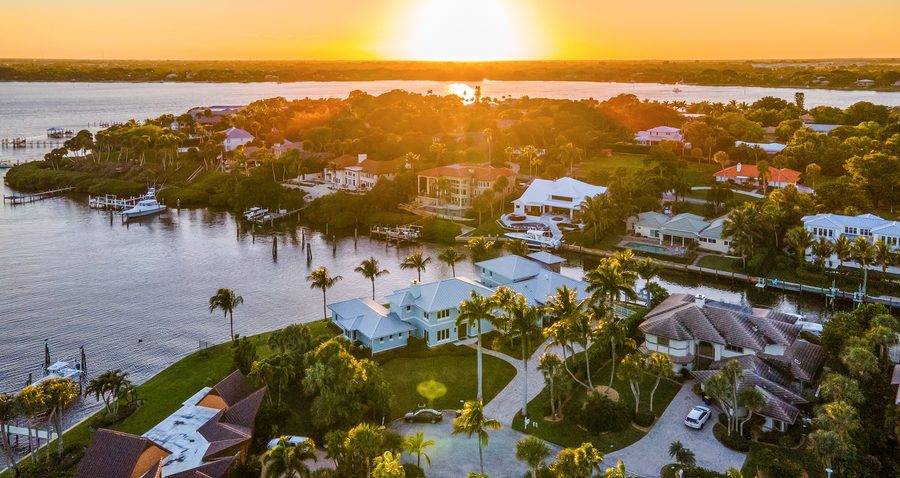
If you’re watching the market and asking where Parkland home prices actually stand right now, here’s the direct answer: the median sits between $1.1 million and $1.15 million, running $369 to $403 a square foot. That’s not a typo, and it’s not a temporary spike. It’s the result of a housing stock that never diversified the way its neighbors did, combined with a wave of buyers who moved in during and after the pandemic and never left. If you’re trying to make sense of the Parkland real estate market and where prices stand in mid-2026, you need to understand both numbers, the median and the per-square-foot cost, because they tell two different stories.
This is the piece that walks through both, plus what’s actually selling, how long it’s taking, and where the real competition is happening on the ground in Parkland right now.
Parkland Real Estate Market: Where Prices Stand in Mid-2026
Let’s start with the number everyone asks about first. As of mid-2026, Parkland’s median home price is running $1.1 to $1.15 million. That climb happened for a specific reason, not a vague “hot market” explanation. During the pandemic-era migration wave, remote workers and high net worth families moved into South Florida and specifically bid up gated estate communities like the ones that make up most of Parkland. That demand never fully released. It settled into a new baseline.
Here’s the part that actually matters if you’re trying to buy here: Parkland’s housing stock is almost entirely single-family, spacious, estate-style homes in gated developments, roughly 90 percent of it. There is very little smaller, lower-priced inventory, condos, townhomes, or starter product, to pull that median down the way it would in a more mixed city. When almost everything on the market is a 4-bedroom-plus home on a larger lot in a guard-gated or attended-gate community, the floor price is simply higher across the board.
That’s different from a market where prices climbed because of general appreciation. In Parkland, the price floor is structural. It’s baked into what actually gets built and sold here.
The Per-Square-Foot Number Tells the Real Story
The median tells you what a typical home costs. The price per square foot tells you what you’re actually paying for the same amount of space, and this is where Parkland separates itself sharply from the rest of Broward County.
Parkland is currently running $369 to $403 a square foot. Compare that to the closest comparable luxury suburbs:
- Weston: $302 to $350 a square foot, on a median home price of $727,000 to $799,000
- Cooper City: $388 a square foot, on a $625,000 median
- Coral Springs: $254 a square foot
- Davie: $289 a square foot
- Pembroke Pines: as low as $256 a square foot
The reality is you’re not just paying more for a house in Parkland. You’re paying a premium per square foot that doesn’t exist one exit down the road. Weston, which is arguably the closest apples-to-apples comparison in terms of school quality and gated-community feel, is meaningfully cheaper per square foot despite also being a high-demand suburb.
If your budget caps out around $700,000 to $800,000, this is the number that should change your strategy. That budget in Weston or Cooper City buys you a larger footprint and a bigger lot. In Parkland, that same budget is going to price you out of the layout and lot size you actually want, and push you into a smaller home than the identical dollar amount buys one exit over. For a full breakdown of what that tradeoff looks like at the entry level specifically, see First-Time Buyer in Parkland: Is the Premium Worth It at Entry Level?
Why Buyer Competition Still Isn’t Cooling Off
Parkland’s demand pressure hasn’t let up the way some other South Florida submarkets have. Part of that is simple math: with almost no smaller or lower-priced product being built, every new listing under $900,000 gets disproportionate attention relative to how few of them exist. A four-bedroom home priced competitively in a community like Heron Bay or Parkland Golf & Country Club still draws multiple showings in the first weekend, especially from relocating families racing the school calendar.
The competition isn’t uniform across the city, though. It clusters in a few specific spots:
- Entry-level gated communities (roughly $650,000 to $850,000) see the fastest turnaround and the most competing offers, simply because so few homes exist in that band.
- Established mid-tier neighborhoods ($900,000 to $1.4 million) move at a more normal pace, with serious but not frantic buyer interest.
- Custom estates and larger lots above $2 million sit longer. That segment is thinner on demand and buyers there are more deliberate, often relocating executives who are comparing Parkland against Boca Raton or Weston before committing.
Days on market reflects that split. Well-priced homes in the established gated sections move quickly when they’re priced realistically for the current per-square-foot benchmarks. Homes that get listed based on what a similar house sold for two years ago, before sellers adjust to where the market actually sits today, sit longer and eventually get a price cut. If you’re selling in Parkland right now, pricing to today’s $369 to $403 a square foot range, not to last cycle’s number, is the difference between a fast close and a stale listing.
Where the Actual Inventory Is Right Now
Parkland isn’t one uniform market. It’s a collection of gated communities, each with its own price band, HOA structure, and buyer profile. Understanding which pocket you’re shopping in matters more here than in almost any other Broward suburb.
Heron Bay and Parkland Golf & Country Club
These are the city’s most established gated communities, and they anchor the middle of the market. Resale inventory here ranges widely depending on lot size and whether the home backs up to a golf course or preserve. This is also where you’ll find newer product like Saltgrass at Heron Bay, which lets buyers get new construction inside an already-mature, amenity-rich community rather than starting from scratch in a brand-new development with unproven landscaping and unfinished common areas.
MiraLago
MiraLago has become one of the more active new-construction corridors in the city, and Cascata at MiraLago is a good example of what’s currently pulling relocating buyers who want a newer home with modern floor plans, rather than competing for resale inventory built in the 2000s and 2010s.
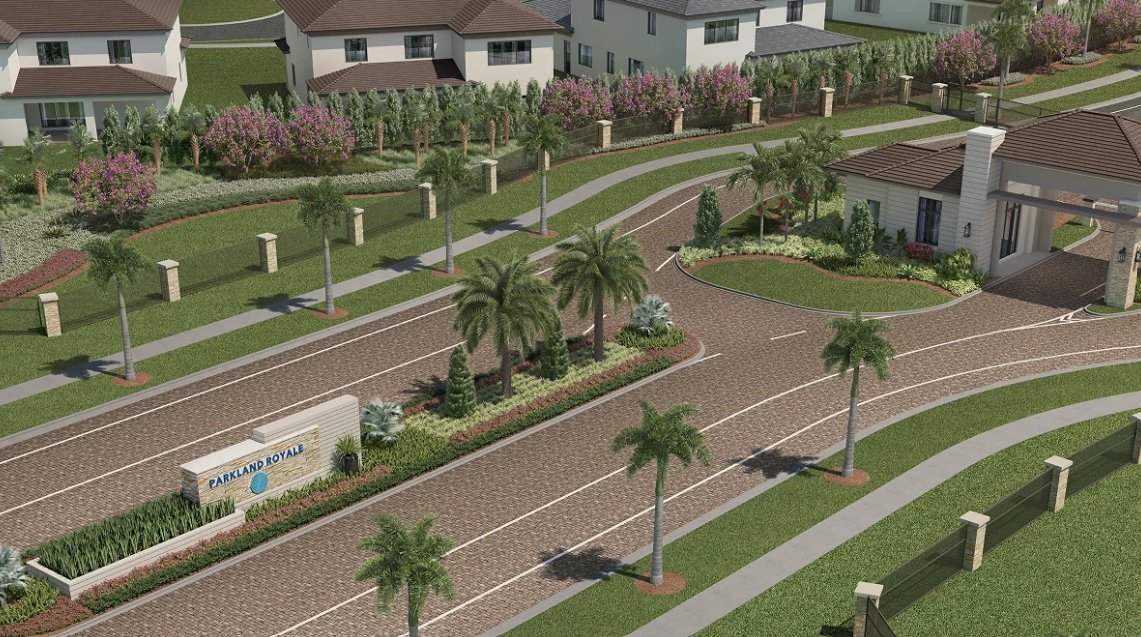
Parkland Royale
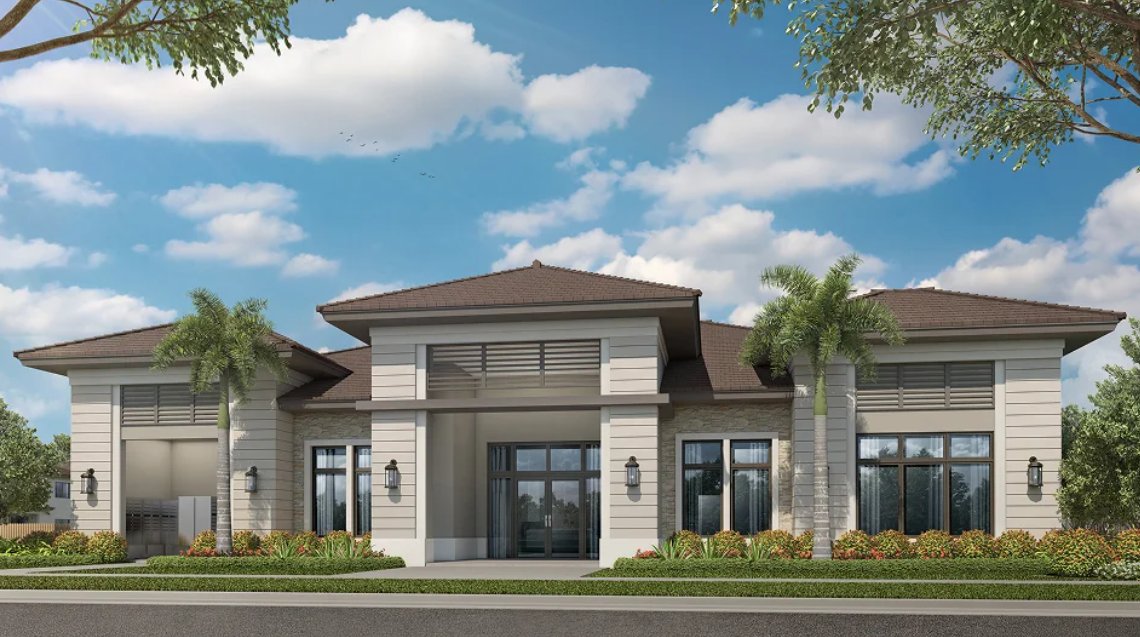
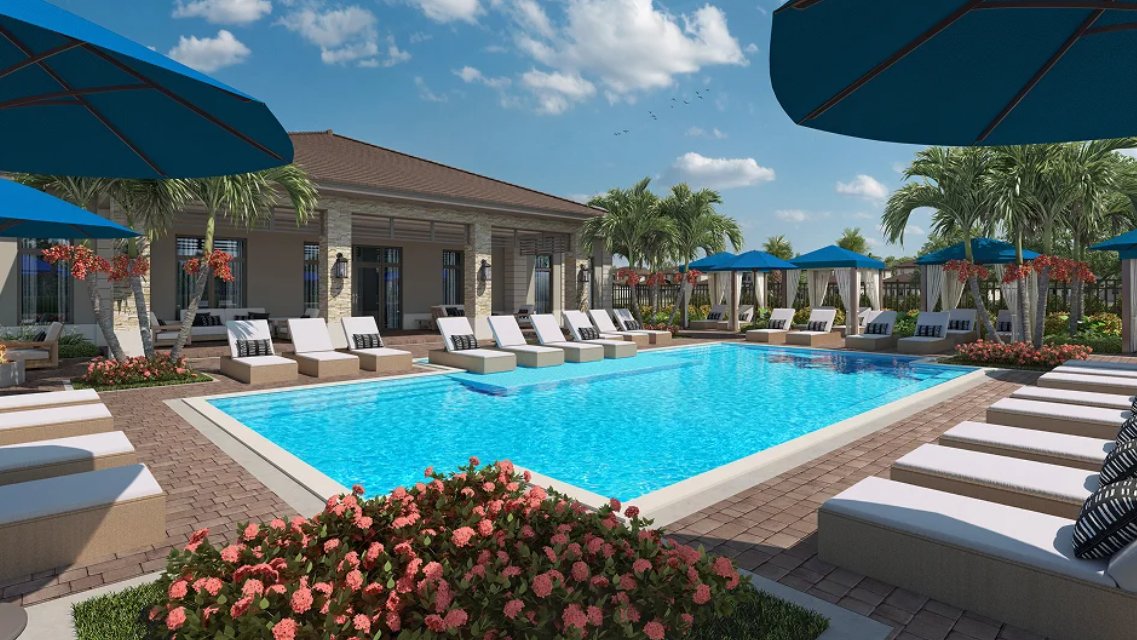
On the newer end, Parkland Royale (built by Lennar) has become one of the most talked-about communities in the city for buyers who want new construction with genuinely high-end included features rather than an upgrade list. Lennar builds it under their Everything’s Included program, meaning things other builders charge extra for, like a built-in 42-inch Sub-Zero French door refrigerator and freezer, a 30-inch Wolf transitional speed oven, quartz countertops, and 8-foot solid-core doors with 8-inch baseboards, are already part of the base price. Structurally, both floors are CBS (concrete block construction), not wood frame on the second story the way a lot of builders still do to cut costs, with structural concrete tile roofs and impact-rated glass throughout. That construction spec matters twice over in Broward: it’s a real hurricane-season upgrade, and it can meaningfully lower your homeowners insurance premium compared to an older wood-frame home, since insurers price risk based on exactly this kind of build quality.
If you’re weighing Parkland Royale specifically, the full breakdown of pricing, floor plans, and the Next Gen home-within-a-home layout is here: Parkland Royale by Lennar Review (2026): Prices, Floor Plans, Next Gen, and Who It’s For, and the community page is here: Parkland Royale
For a wider view of everything currently being built across the city, not just these three communities, see New Construction in Parkland: What Is Available in 2026
New Construction vs. Resale: Which Way Buyers Are Leaning
Right now, buyers with flexibility are leaning toward new construction, and the reasoning is straightforward once you run the numbers. Resale inventory in Parkland is often 10 to 20 years old, built to older wind codes, and priced close to what new construction costs once you factor in the insurance savings from modern CBS-and-impact-glass construction. When a resale home and a new-construction home land in a similar price range, the new build’s lower ongoing insurance cost and included high-end finishes often make it the better long-term value, even at a similar sticker price.
That said, resale still wins on two fronts: established landscaping and mature communities with amenities already fully built out, and, in some cases, larger lots that newer, denser developments don’t replicate. If lot size and privacy matter more to you than finishes, resale in Heron Bay or Parkland Golf & Country Club is still the stronger play.
The Property Tax Number Nobody Runs for You Before Closing
This is the part of the Parkland market that catches out-of-state buyers off guard every single time, and it has nothing to do with the listing price. Florida has a rule called the Save Our Homes cap. It limits how much a homesteaded property’s assessed value can climb each year, capped at the lesser of 3 percent or the CPI. Over years of ownership, that creates a widening gap between what a home is actually worth and what it’s taxed on. Great deal for the long-term seller. Here’s what most buyers don’t realize: that cap resets completely the moment the property changes hands.
What that means in practice: what you pay in property taxes in year one as the new owner can be double what the seller was paying the month before you closed, because your tax bill gets recalculated off the new purchase price, not the seller’s capped assessed value. On a $1.1 million Parkland home, that reset is not a rounding error, it can be a five-figure annual swing between what you budgeted based on the listing’s “estimated taxes” and what actually shows up on your first bill. Run this number with your lender and a local closer before you finalize your offer, not after.
Who Parkland Actually Makes Sense For Right Now
Given where prices stand in mid-2026, Parkland isn’t the right fit for every relocating buyer, and it’s worth being honest about that rather than selling everyone on the same city.
Parkland makes sense if:
- Your budget comfortably clears $900,000 and you want top-rated schools (Marjory Stoneman Douglas High, Westglades Middle, and the elementary feeders in the district) paired with a gated, low-density feel.
- You value newer construction with modern hurricane-resistant building specs and are comparing that against the insurance savings over 10+ years of ownership.
- You’re relocating from a higher cost-of-living market (parts of the Northeast, California) where $1.1 million still represents relative value.
Parkland is a harder sell if:
- Your budget tops out around $700,000 to $800,000. That money buys more house, more land, and a lower per-square-foot cost in Weston or Cooper City.
- You’re a first-time buyer without significant relocation equity behind you. The premium-per-square-foot gap makes the math tighter here than almost anywhere else in Broward.
- You need to move fast and can’t absorb the property tax reset without adjusting your monthly budget in year one.
For a deeper look at daily life, school ratings, and cost of living beyond just the purchase price, see Living in Parkland, Florida (2026): Schools, Cost of Living, and Is It Worth It? and the full Parkland, Florida: The Complete Relocation Guide for 2026
Is Parkland Still Worth It as an Investment in Mid-2026?
For buy-and-hold buyers or anyone weighing Parkland against a rental strategy, the math looks different than it does for an owner-occupant chasing schools. Appreciation has been strong, but it started from an already-elevated base, and the same lack of lower-priced inventory that pushes the median up also limits your pool of future buyers if you ever need to sell in a downturn. Rental demand exists but skews toward larger, higher-cost properties, which narrows your renter pool compared to a market with more product diversity. The full numbers, including what actual rent-to-price ratios look like on Parkland inventory right now, are broken down in Parkland Investment Property: The Numbers and the Reality
What to Expect Through the Rest of 2026
A few things are worth watching if you’re timing a purchase or a sale in Parkland over the next several months:
- New construction supply will keep growing, particularly around MiraLago and the Parkland Royale corridor. As more of that inventory delivers, it will give buyers more negotiating room on incentives (closing cost credits, rate buydowns) even if base prices hold.
- The $650,000 to $850,000 band will stay the most competitive. There’s no indication more product is coming online at that price point, so expect continued multiple-offer situations whenever something in that range hits the market in good condition.
- Sellers pricing off old comps will keep sitting longer. The market has moved to the $369 to $403 a square foot range as the real benchmark. Listings priced above that without a clear justification (lot size, full renovation, golf course frontage) are the ones accumulating days on market right now.
- Insurance costs will keep favoring newer CBS construction. As premiums continue rising across Broward County, the gap between insuring a new-construction Parkland home and an older resale home is likely to widen further, which will keep pulling demand toward the newer product.
The Bottom Line
Parkland’s prices aren’t a bubble and they’re not random. They’re the direct result of a housing stock that’s almost entirely large, gated, single-family homes, with a demand wave from the pandemic era that never fully receded. That means $369 to $403 a square foot is the real number to plan around, not the median price alone, and it’s a genuine premium over Weston, Cooper City, Coral Springs, Davie, and Pembroke Pines. If your budget and priorities line up with what Parkland actually offers, gated communities, top school ratings, and increasingly strong new-construction options, it remains one of the strongest suburbs in Broward County. If your budget is tighter, the honest move is to look one exit over before you fall in love with a neighborhood you can’t comfortably afford.
If you want a number specific to your budget and timeline, the fastest way to get it is to walk through your situation directly rather than guessing off a median. That’s a conversation worth having before you start touring, not after you’ve already picked a favorite community.
More articles you might like
Is Cascata at MiraLago Worth It? An Honest Look at GL Homes's Parkland Community
16 min readIs Saltgrass at Heron Bay Worth It? An Honest Look at Toll Brothers's Parkland Community
13 min readCascata at MiraLago Review (2026): Prices, Floor Plans, HOA, CDD, and Who It's For
15 min readIs Parkland Royale Worth It? An Honest Look at Lennar's Guard-Gated Parkland Community
14 min readCascata at MiraLago in Parkland: The New Construction Guide (Floor Plans, Pricing, What to Know)
15 min read