Moving to Coral Gables: Miami-Dade's Most Established Luxury City
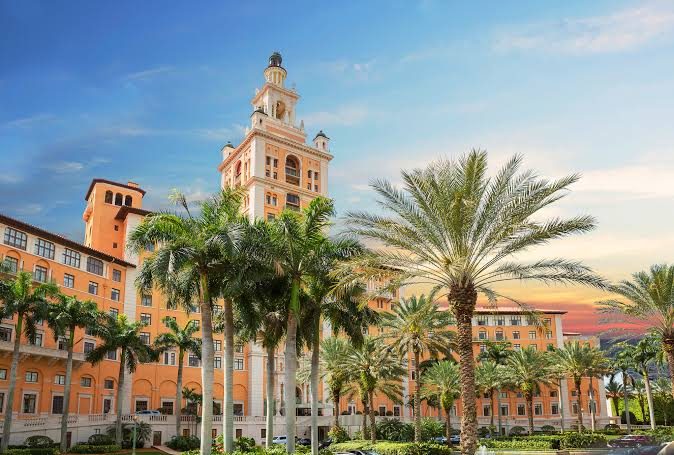
If you are moving to Coral Gables, Miami-Dade’s most established luxury city, the short version is this: you are buying into a place that has protected its character for a century, and that discipline is exactly why property here has held value through every Miami boom and bust since the 1920s. Coral Gables was not built organically like most South Florida suburbs. It was planned, in full, by George Merrick in 1925, with wide boulevards, plazas, fountains, and a Mediterranean Revival building code that is still enforced block by block today. That is the entire story of why people pay a premium to live here, and why they stay.
This guide covers what it actually costs to move here in 2026, which neighborhoods fit which budget and lifestyle, how the schools stack up, what the HOA and permitting rules mean for you, and who Coral Gables is genuinely right for. No fluff, just the details you need before you sign anything.
Why Coral Gables Is Miami-Dade’s Most Established Luxury City
Most of Miami-Dade’s luxury markets are relatively new money: Brickell high-rises built in the last fifteen years, Miami Beach towers competing on amenity lists, Pinecrest and Palmetto Bay suburbs that grew fast in the 1990s and 2000s. Coral Gables predates all of it. The city incorporated in 1925, has its own police and fire departments, its own zoning board, and a Board of Architects that reviews exterior changes on every property, including paint colors and roof tile. That level of control is unusual in Florida, and it is exactly why the tree canopy on streets like Coral Way and Sunset Drive still looks the way it did fifty years ago.
That established infrastructure matters practically, not just aesthetically. Coral Gables Fire Rescue response times are strong, the city runs its own trolley system connecting Downtown Miami’s Metrorail to Miracle Mile, and the city’s underground utility program (still being phased in neighborhood by neighborhood) means fewer power outages during storm season compared to overhead-line suburbs nearby. If you want the deep dive on incorporation history, zoning, and what “Coral Gables” legally includes versus what people casually call Coral Gables, the Coral Gables, Florida: The Complete Relocation Guide for 2026 covers the boundaries and city services in more detail than we can fit here.
What It Actually Costs to Move to Coral Gables in 2026
Coral Gables prices are not uniform, and the spread between the entry level and Gables Estates is enormous. Here is the honest breakdown by segment.
Condos and Townhomes ($650,000 to $2,000,000)
This is the realistic entry point for most people moving here without generational wealth. Buildings around Merrick Park, along Ponce de Leon Boulevard, and in the Village at Coral Gables townhome community from MG Developer (priced from $2,450,340, 48 units, under construction with 2025/2026 delivery) sit at the upper end of that range. If you want new construction at a lower price point, look at pre-construction condos still taking reservations, several of which won’t close until 2027, which means you can lock in today’s pricing before completion. For a full breakdown of what “affordable” looks like in a city known for luxury, First-Time Buyer in Coral Gables: What the Entry Level Looks Like walks through the actual listings and HOA fees you will run into.
Single-Family Homes ($1,200,000 to $3,500,000)
This is the bulk of the Coral Gables market: 1920s and 1930s Mediterranean Revival homes in Old Gables and Coral Gables Riviera, mid-century homes in Ponce Davis, and newer construction or renovated homes in the University area near the University of Miami. Lot sizes, historic designation status, and proximity to Biltmore golf course all move price significantly within this range.
Luxury Estates ($3,500,000 to $15,000,000+)
Gables Estates, the city’s guard-gated waterfront enclave with direct ocean access, is where you find the highest price points in the city, often north of $10 million for deepwater lots with yacht docks. Old Cutler Bay and parts of Hammock Oaks compete in the $3.5 million to $8 million range. If this is your budget, Coral Gables Luxury Homes: What $2M to $15M+ Gets You breaks down what separates a $4 million home from a $12 million one here, which usually comes down to waterfront access, lot size, and how much of the original historic structure survives versus a full teardown rebuild.
Coral Gables Neighborhoods: Where People Actually Move
Coral Gables is not one market. It is a collection of distinct neighborhoods, each with its own price band, architecture, and reason people choose it.
Old Gables (Central Coral Gables)
The historic core near Miracle Mile and the Biltmore. Homes here are almost entirely subject to the city’s historic preservation guidelines, meaning any exterior renovation goes through a review process. Walkable to shops, restaurants, and the trolley line. Expect $1.5 million and up for anything in good condition.
Ponce Davis
Straddles the Coral Gables and Miami city line, known for larger lots, mature oaks, and a quieter, more suburban feel despite being minutes from Downtown Coral Gables. Popular with families who want space without leaving the school zone.
Gables Estates
The most exclusive address in the city. Guard-gated, waterfront, deepwater access to Biscayne Bay. This is where Coral Gables competes directly with Miami Beach’s top waterfront markets, minus the density.
Coral Gables Riviera and South Gables
More attainable single-family stock, still inside the architectural code, with strong access to US-1 and the Falcon-Sunset corridor toward Pinecrest. A common landing spot for buyers priced out of Old Gables but who still want the Coral Gables address and schools.
For a neighborhood-by-neighborhood price comparison with actual recent sales, Coral Gables Neighborhoods: Old Gables, Ponce Davis, Gables Estates and More is the deeper resource, and it is worth reading before you pick an area to focus your search on, because the difference between Old Gables and South Gables pricing can be 40 percent or more for a comparable square footage.
New Construction: What’s Actually Being Built Right Now
Coral Gables restricts new development more than most Miami-Dade cities, which keeps supply tight, but there is real new inventory in the pipeline for 2026 and 2027 buyers.
On the condo side, several boutique towers are in pre-construction or under construction near Merrick Park and the historic core. CORA, from Constellation Group and The Boschetti Group, is a 12-story, 74-unit tower designed by Arquitectonica on Aurora Street, priced from $898,350 to just over $4 million, with delivery estimated 2027. Ponce Park Coral Gables, from Allen Morris Company, is a smaller 58-unit building designed by Zyscovich targeting empty-nesters who want walking access to retail, priced from $2.4 million to $4.55 million, also delivering around 2027. The Avenue Coral Gables, a 54-unit boutique tower from Roger Development Group, sits directly across from the Shops at Merrick Park and is already under construction with a 2025/2026 delivery window, which makes it one of the few options where you are not waiting years to close.
On the low-rise and townhome side, The Village at Coral Gables from MG Developer is building 48 Spanish-style row homes modeled on George Merrick’s original residential village concept, priced from $2,450,340, with 2025/2026 delivery.
If new construction is the strategy you are considering, whether for a primary residence or an investment hold, New Construction in Coral Gables: What Is Being Built and What It Costs tracks the full list of active projects with delivery timelines, deposit structures, and which builders have a track record of delivering on schedule in this city versus which ones have slipped.
Schools: What Families Need to Know Before They Move
Coral Gables sits inside a strong Miami-Dade County Public Schools zone, anchored by Coral Gables Senior High, George Washington Carver Middle, and a mix of elementary schools including Coral Gables Elementary and Sunset Elementary. Carver Middle in particular runs a well-regarded magnet program that draws applicants from outside the immediate zone, so boundary lines matter more than they might in a district with fewer options.
Private school density here is genuinely unusual for a city this size. Gulliver Preparatory’s main campus sits just outside Coral Gables proper but pulls heavily from Gables families, and Riviera Presbyterian, St. Theresa Catholic School, and Carrollton School of the Sacred Heart all sit inside or immediately adjacent to city limits. The University of Miami’s presence also shapes the surrounding neighborhoods, with faculty and staff housing demand keeping the University area competitive.
None of this is a substitute for checking current attendance boundaries directly, since Miami-Dade County Public Schools redraws lines periodically and a home two blocks apart can land in different zones. Coral Gables Schools: Private Options, Public Magnets, and What Families Need to Know goes through boundary maps, waitlist realities for the top private schools, and what tuition actually runs in 2026 dollars.
The Lifestyle: What Living Here Actually Feels Like
Miracle Mile is the city’s spine, a walkable stretch of restaurants, bridal shops, and small retail that has gone through several waves of revitalization and is currently in one of its strongest stretches in years, with new restaurant openings filling in storefronts that sat empty a decade ago. The Biltmore Hotel anchors the western side of the city, with its golf course, spa, and the pool that once hosted Esther Williams’ swim shows, still functioning as the city’s social and event hub.
Coral Gables is genuinely walkable and bike friendly by South Florida standards, which is rare. The city’s trolley connects Downtown to the Douglas Road Metrorail station, and Merrick Park gives you a second walkable retail node on the east side of the city. Ponce de Leon Boulevard and Alhambra Circle handle most of the daily traffic, and while rush hour on US-1 through the city can back up, it is manageable compared to the Palmetto Expressway corridor further west.
This is also a city that takes its cultural calendar seriously: the Coral Gables Museum, the Actor’s Playhouse at the Miracle Theatre, and a full calendar of art walks and festivals give it a small-city feel that is deliberately different from the high-rise, nightlife-driven identity of Brickell or South Beach. For a closer look at what a week actually looks like living here, from where people actually eat to which Biltmore membership tiers are worth the cost, read Life in Coral Gables: Miracle Mile, The Biltmore, and What Makes This City Different.
HOA, Historic Preservation, and What You Need to Know Before You Buy
This is the part most out-of-town buyers underestimate. If your home sits in a designated historic district, and large parts of Old Gables do, any exterior change (roof, paint color, windows, landscaping visible from the street) requires review from the city’s Board of Architects or Historic Preservation staff before you can pull a permit. This is not a rubber stamp process. It protects the character that makes the city valuable, but it also means renovation timelines run longer than in a typical Broward or Palm Beach suburb.
Condo and townhome buyers need to look closely at HOA structure. Newer buildings like CORA and Ponce Park will carry higher monthly fees reflecting full-service amenities (pool, gym, concierge, valet), often in the $1,200 to $2,500 monthly range once fully established, while older, smaller buildings can run considerably less but may be facing upcoming special assessments under Florida’s post-Surfside structural inspection requirements. Ask for the most recent milestone inspection report and reserve study before making an offer on anything built before 2000. This applies statewide now, but it is worth double-checking in a city with as much older mid-rise inventory as Coral Gables has near Ponce de Leon Boulevard.
Investment Angle: Is Coral Gables Worth Buying for Rental Income or Appreciation?
Coral Gables does not behave like a typical Miami-Dade rental market. Rents are strong because of University of Miami faculty, graduate students, and international corporate tenants (the city hosts a large concentration of Latin American regional headquarters), but cap rates on single-family homes tend to run lower than in Kendall or Doral because purchase prices are higher relative to rent. Where Coral Gables performs well is appreciation and holding value, not cash-on-cash yield. Buyers looking for pure rental income often do better in adjacent submarkets, while buyers optimizing for long-term equity growth and low volatility gravitate toward Coral Gables specifically because of the building code and limited new supply. Coral Gables Investment Property: What the Market Looks Like for Investors runs the actual numbers on cap rates, HOA drag, and which building types are performing best for investors right now.
Where Prices Actually Stand in Mid-2026
Coral Gables has not moved in lockstep with the rest of Miami-Dade over the past two years. Inventory in the ultra-luxury tier (Gables Estates, Old Cutler Bay) has stayed tight and prices there have held, while the $1.5 million to $2.5 million single-family band has seen more negotiating room as rates kept some buyers on the sidelines. Pre-construction condo pricing, particularly for the 2027 delivery projects like CORA and Ponce Park, reflects the assumption that the city’s tightly controlled supply keeps values defensible even if the broader Miami condo market softens. For the current data, actual days on market, and where sellers are and are not budging, Coral Gables Real Estate Market: Where Prices Stand in Mid-2026 is updated with the latest numbers rather than a snapshot that goes stale.
Who Coral Gables Is Actually Right For
Coral Gables makes sense if you value stability and architectural consistency over the newest amenities, if you want a walkable village core inside a major metro, and if your budget realistically starts at $650,000 for a condo or $1.2 million for a house. It is not the right fit if you want brand-new high-rise amenities at Brickell density, or if you need the absolute lowest price per square foot Miami-Dade offers, since Kendall, Doral, and parts of Homestead will beat Coral Gables on affordability every time.
What you are paying for in Coral Gables is not just a house. It is a century of enforced planning discipline that has made this one of the few places in South Florida where the neighborhood you buy into today will look recognizably the same in twenty years. For most buyers moving here, that predictability is the actual product.
If you are weighing Coral Gables against other Miami-Dade submarkets or want a walk through current listings that match your specific budget and timeline, that is the conversation worth having before you start touring homes. DM me “GABLES” and I will send you the current inventory list broken down by neighborhood and price band.
More articles you might like
Coral Gables, Florida: The Complete Relocation Guide for 2026
13 min readFirst-Time Buyer in Coral Gables: What the Entry Level Looks Like
13 min readNew Construction in Coral Gables: What Is Being Built and What It Costs
13 min readCoral Gables Investment Property: What the Market Looks Like for Investors in 2026
14 min readCoral Gables Luxury Homes: What $2M to $15M+ Actually Gets You in 2026
13 min read