Coral Gables Real Estate Market: Where Prices Stand in Mid-2026
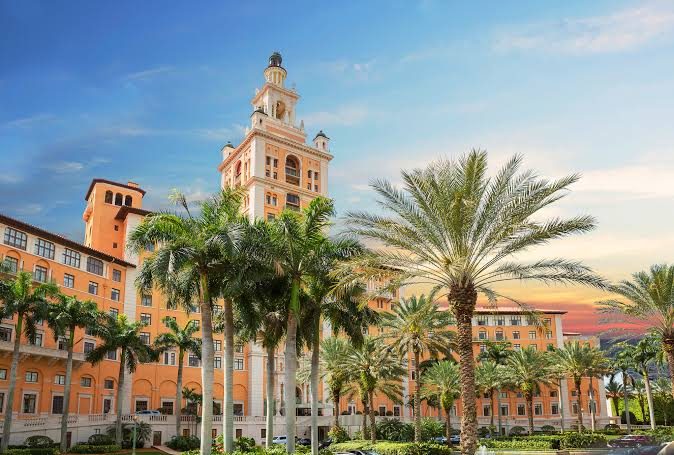
Coral Gables home prices in mid-2026 are holding firm but not sprinting. Single-family homes are running roughly $1.6 million to $2 million at the median citywide, with the number stretching well past $5 million in Gables Estates and the Old Gables historic core, and dipping closer to $900,000 to $1.2 million in the more accessible pockets of South Gables. Condos and new construction are pricing anywhere from the high $800,000s to over $4 million depending on the building. Days on market have lengthened compared to the frenzy of 2021 through 2023, but this is not a market in retreat. It is a market that has stopped rewarding sellers for simply listing a sign in the yard.
If you are trying to make a decision this year, whether you are buying, selling, or just watching, here is what the numbers actually say and what they mean for you.
Coral Gables Real Estate Market: Where Prices Stand in Mid-2026
The headline number people want is “the median price,” and in Coral Gables that number is almost meaningless without context. This is a city of roughly 13 square miles that contains everything from 1920s Mediterranean Revival bungalows on quarter-acre lots to brand new waterfront estates in Gables Estates listing north of $15 million. Averaging those together tells you nothing useful.
What we can say with confidence heading into the back half of 2026:
- Single-family homes citywide are trading in a broad $1.6 million to $2 million median range, a figure that has been roughly flat to slightly up over the past 12 months, not the double-digit annual gains buyers got used to a few years ago.
- Entry-level and first-time buyer inventory (smaller homes, older condos, South Gables) is where the real activity is. That’s the segment covered in detail in First-Time Buyer in Coral Gables: What the Entry Level Looks Like, and it is still the most competitive tier in the city.
- The ultra-luxury tier ($4 million and up) has more inventory sitting on the market than it did two years ago, giving buyers actual leverage for the first time in a while.
- New construction condos are pricing at a premium to resale, which is normal for new product, but the spread has widened as buyers get more selective.
Price appreciation has not stopped in Coral Gables. It has just slowed to something closer to a normal, sustainable pace, somewhere in the low single digits annually rather than the 15 to 20 percent jumps of the pandemic years. For a city with this little buildable land and this much institutional demand, that is not a red flag. It is a market maturing.
Single-Family Homes by Neighborhood
Coral Gables prices only make sense broken out by area, because the city was master-planned in distinct sections and the market treats each one differently.
Old Gables and the Historic Core
The blocks closest to the Biltmore Hotel, the Granada Golf Course, and the historic entrances along Coral Way are the most expensive and the most stable part of the city. Homes here, many built between the 1920s and 1950s with Mediterranean Revival detailing, are trading from $2 million into the $6 million range depending on lot size, historic designation status, and how much of the original architecture survives. Buyers here are paying for scarcity. The historic preservation ordinances that protect these homes also cap how many can hit the market in a given year, which keeps a floor under pricing even when the broader luxury market softens.
Gables Estates and Waterfront
Gables Estates is its own animal, a private, gated, deep-water community where homes routinely list from $8 million to $20 million or more. This segment moves on its own calendar, driven by ultra-high-net-worth buyers, often paying cash, who are less sensitive to interest rates and more focused on dock access, lot size, and construction quality. Days on market here can stretch past 150 days even in a healthy overall market, simply because the buyer pool is small by design.
Ponce Davis
Ponce Davis, straddling the Coral Gables and Pinecrest border, has become one of the more sought-after single-family pockets for buyers who want larger lots (a third of an acre and up is common) without paying full Old Gables historic-district pricing. Expect a range of roughly $1.8 million to $3.5 million, with older ranch and Mediterranean homes increasingly being torn down and rebuilt new. This is one of the more active teardown-and-rebuild corridors in the city right now.
South Gables and the More Accessible Pockets
South of US-1, toward the Riviera and Sunset areas, is where buyers priced out of the historic core are landing. Homes here, often 1,500 to 2,500 square feet on smaller lots, are trading from roughly $950,000 to $1.4 million. This is the segment most connected to first-time and move-up buyers, and it is also the segment with the tightest inventory relative to demand. For a full breakdown of what that entry point actually looks like room by room and street by street, see First-Time Buyer in Coral Gables: What the Entry Level Looks Like.
The Condo and New Construction Story
Coral Gables has quietly become one of the more active luxury pre-construction and under-construction condo markets in Miami-Dade, and the pricing tells you where the city is positioning itself.
A handful of projects define the current pipeline:
- CORA, from Constellation Group and The Boschetti Group, is a 12-story, 74-unit Arquitectonica-designed tower on Aurora Street, pricing from $898,350 to $4,088,000, with a rooftop pool and garden deck, delivery estimated 2027.
- Ponce Park Coral Gables, from Allen Morris Company, is a high-luxury, 58-unit building designed by John Cunningham of Zyscovich, pricing from $2.4 million to $4.55 million, aimed squarely at local empty-nesters who want to walk to retail without leaving the city.
- The Avenue Coral Gables, from Roger Development Group, is a 54-unit boutique building across the street from the Shops at Merrick Park, pricing from $1 million and up, currently under construction with delivery estimated 2025 to 2026, and notably offering more flexible rental guidelines than some of its peers.
- The Village at Coral Gables, from MG Developer, is Spanish-style townhomes and villas, 48 units, pricing from $2,450,340, modeled after George Merrick’s original Spanish-Mediterranean design vision for the city, under construction with delivery estimated 2025 to 2026.
- A new 9-story, 78-unit Mediterranean-inspired condo from Bellin Pratt & Fuentes is in pre-construction near the historic core, pricing from $1 million, with delivery estimated 2027.
What this tells buyers: the new construction pipeline in Coral Gables is not chasing volume. Every one of these projects is positioned above $1 million, and most cluster well above $2 million. Developers are betting that Coral Gables buyers want walkability to Miracle Mile and the Shops at Merrick Park, architectural continuity with the city’s Mediterranean roots, and low unit counts over high-rise density. That’s a different bet than what’s happening in Brickell or Edgewater, and it keeps Coral Gables new construction pricing at a premium to resale condos in older buildings, which are still trading in the $500,000 to $900,000 range for comparable square footage.
For anyone specifically shopping new construction, the full rundown of what’s being built and what it actually costs is in New Construction in Coral Gables: What Is Being Built and What It Costs. And if the goal is the highest end of the market rather than mid-market new construction, Coral Gables Luxury Homes: What $2M to $15M+ Actually Gets You in 2026 breaks down what separates a $2 million home from a $10 million one in this city.
Days on Market and What’s Actually Selling
This is the number that tells the real story, more than median price ever will.
- Under $1.5 million: Homes priced correctly are going under contract in 30 to 45 days. Multiple offers are still happening in South Gables and Ponce Davis for turnkey homes on good lots.
- $1.5 million to $3 million: This middle tier is averaging closer to 45 to 75 days. Buyers here are more selective and more likely to negotiate on inspection items.
- $3 million and up: Expect 75 to 120 days on average, sometimes longer in Gables Estates. Overpriced luxury listings are sitting for six months or more before a price adjustment brings buyers back to the table.
The takeaway for sellers: the market has not collapsed, but it has stopped forgiving aggressive pricing. A home priced 5 to 8 percent over recent comparable sales in 2022 might have still sold in a month. In mid-2026, that same overpricing gets you a stale listing, a string of price cuts, and a buyer pool that assumes something is wrong with the house.
The takeaway for buyers: patience has real value again. You are no longer required to waive inspections and offer $200,000 over ask to compete. That said, the entry-level segment under $1.5 million is still moving fast enough that hesitation costs you the good ones.
What’s Driving the Market Right Now
A few forces are shaping Coral Gables pricing heading into the second half of 2026, and none of them are secret, but buyers consistently underestimate how much they matter.
Interest Rates and Buyer Qualification
Mortgage rates easing off their 2023 to 2024 peaks have brought some buyers back off the sidelines, but qualification is still tighter than it was five years ago. That has pushed more transaction volume toward cash and low-leverage buyers, which is part of why the luxury tier has stayed relatively resilient even as days on market stretch.
Insurance and Carrying Costs
Property insurance in Miami-Dade has become a real underwriting factor, not a footnote. Older homes, especially anything with an original 1950s or 1960s roof, are seeing insurance quotes that materially change a buyer’s monthly payment math. This is pushing demand toward newer construction and recently renovated homes, and it’s part of why the new construction pipeline described above commands its premium.
Historic District Appeal and Land Scarcity
Coral Gables is not adding land. The historic district protections that make Old Gables desirable also mean supply in that corridor is essentially fixed. That scarcity is the single biggest reason the historic core has held value better than almost any other segment in Miami-Dade during periods when the broader market cooled.
Continued Relocation Demand
Coral Gables keeps pulling relocation buyers, from other parts of Florida, from the Northeast, and from Latin America, drawn by the school options, the walkable urban core around Miracle Mile, and the University of Miami’s presence. That steady, non-speculative demand is a big part of why prices have plateaued rather than dropped. For anyone relocating and trying to understand the city before making an offer, Coral Gables, Florida: The Complete Relocation Guide for 2026 covers the full picture, and Life in Coral Gables: Miracle Mile, The Biltmore, and What Makes This City Different covers what day-to-day life actually looks like once you’re here.
HOA, CDD, and Carrying Costs Buyers Underestimate
Coral Gables does not have the CDD (Community Development District) fees you see in newer master-planned communities out west in places like Doral or Weston, since it’s a historic, built-out city rather than a new development. But that doesn’t mean carrying costs are simple.
- City of Coral Gables property taxes run on top of Miami-Dade County millage, and combined with the county’s non-homestead assessment caps, buyers moving from out of state are often surprised by the first full-year tax bill, which reflects the purchase price rather than the prior owner’s long-held assessed value.
- Condo and townhome HOA dues in the new luxury buildings described above are running higher than older Coral Gables condo stock, often $1,200 to $2,500 a month depending on amenities, reflecting the concierge service, pool decks, and lower unit counts that keep per-unit costs elevated.
- Historic district homes can carry additional review requirements for exterior renovations, which isn’t a monthly cost but absolutely affects your renovation budget and timeline if you’re buying an older Old Gables property planning to update it.
- Flood and wind insurance on anything near the waterway system, particularly in Gables Estates and along the canals, needs to be quoted before you write an offer, not after. It has changed enough in the last two years to affect what a home is actually worth to you.
Buyers who skip this step and only look at list price are the ones who get surprised at the closing table or, worse, six months into ownership when the insurance renewal comes in.
What Buyers Should Do Heading Into the Second Half of 2026
- Get pre-approved with a lender who understands jumbo loans. Most Coral Gables purchases, even in the entry tier, exceed conforming loan limits. Not every lender handles this well.
- Price out insurance before you fall in love with a house. This is now a deal-breaker line item, not an afterthought, especially on anything built before the 1990s.
- Decide what tier you’re actually shopping. The entry-level, mid-market, and luxury segments in Coral Gables are functionally three different markets with three different negotiating dynamics. Know which one you’re in before you write an offer.
- If you’re buying to rent or hold, run the numbers on new construction versus resale. New construction commands a premium, but often comes with lower near-term maintenance risk. Coral Gables Investment Property: What the Market Looks Like for Investors walks through the actual return math for both paths.
- Don’t assume every neighborhood behaves the same way. Old Gables, Ponce Davis, Gables Estates, and South Gables are all technically “Coral Gables,” and all four are pricing and moving differently right now. Coral Gables Neighborhoods: Old Gables, Ponce Davis, Gables Estates and More breaks down the differences block by block.
The Reality Heading Into the Second Half of the Year
Coral Gables is not a market that spikes and crashes. It’s a market that grinds, protected by fixed land supply, historic district scarcity, and a buyer base that isn’t going anywhere regardless of what the Fed does with interest rates. What has changed in mid-2026 is the pace and the negotiating leverage, not the fundamental desirability of the city.
If you’re buying, the opportunity right now is in the patience the market is finally allowing you to have. If you’re selling, the opportunity is in pricing honestly the first time instead of testing the market and chasing it down over 90 days. Either way, the numbers above are the starting point, not the whole conversation. Every one of these ranges moves based on the specific block, the specific lot, and the specific building.
If you want the real number for your specific situation, whether that’s what your Old Gables home is worth today or what a $2.4 million budget actually gets you in Ponce Park versus The Avenue, DM me “GABLES” and I’ll walk you through the current comps for exactly what you’re looking at.
More articles you might like
Coral Gables, Florida: The Complete Relocation Guide for 2026
13 min readFirst-Time Buyer in Coral Gables: What the Entry Level Looks Like
13 min readNew Construction in Coral Gables: What Is Being Built and What It Costs
13 min readCoral Gables Investment Property: What the Market Looks Like for Investors in 2026
14 min readCoral Gables Luxury Homes: What $2M to $15M+ Actually Gets You in 2026
13 min read