Coral Gables Neighborhoods: Old Gables, Ponce Davis, Gables Estates and More
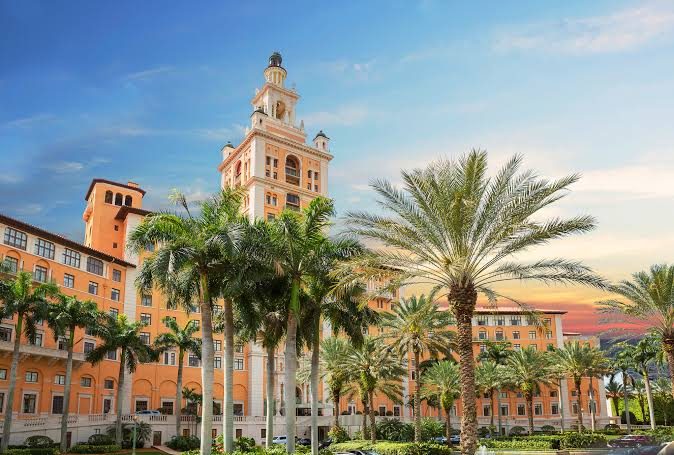
Coral Gables is not one market. It is a dozen small ones stitched together under a single zip code and a shared set of Mediterranean Revival building codes. When people ask about Coral Gables neighborhoods, Old Gables, Ponce Davis, Gables Estates and more, they are really asking a budget question and a lifestyle question at the same time, because the difference between a home two blocks apart can be a million dollars depending on whether you are inside George Merrick’s original 1920s plat or outside it, on a canal or off one, behind a guard gate or not.
This guide walks through the real neighborhoods that make up Coral Gables, what each one actually costs right now, what the lots and homes look like, and who tends to buy there. If you want the full relocation picture first, our Coral Gables Complete Relocation Guide for 2026 covers the city overall. This piece goes block by block.
Old Gables: The Historic Core Everyone Pictures
When someone says “Coral Gables” and pictures barrel tile roofs, coral rock walls, and banyan-canopied streets, they are picturing Old Gables, the original section George Merrick platted starting in 1921. This runs roughly from Douglas Road east to Granada Boulevard, and from Coral Way north down toward the University of Miami campus, threaded by the grand boulevards Merrick designed: Alhambra Circle, Granada Boulevard, De Soto Boulevard, and the entrance fountains that still mark the old village gates.
Homes here are protected by strict historic and design review standards. You cannot just repaint a house whatever color you want or tear out original coral rock without a fight through the city’s Board of Architects. That is a feature for the buyers who choose this neighborhood, not a bug. They want the real thing.
Price range: Restored or well-maintained Mediterranean Revival homes in Old Gables run from roughly 1.2 million to 4 million dollars, with the largest estate-scale homes on De Soto Boulevard or near the Biltmore reaching 6 million and up. Fixer-uppers that still need historic-compliant renovation occasionally surface in the 900,000 to 1.1 million range, but they move fast because builders and design-focused buyers know what they are worth finished.
Who buys here: Architecture-minded buyers, second and third-generation Coral Gables families, and professionals who want walkability to Miracle Mile, the Biltmore, and the University of Miami without living in a condo. If you want the full texture of daily life in this part of the city, from Giralda Avenue’s restaurant row to the Biltmore’s Sunday brunch, that is covered in Life in Coral Gables: Miracle Mile, The Biltmore, and What Makes This City Different.
Ponce Davis: Wooded Lots, No HOA, and a Different Kind of Quiet
South and west of the historic core, Ponce Davis is the neighborhood most outsiders have never heard of and most locals quietly love. It sits in the area bounded roughly by South Dixie Highway, Red Road, and Sunset Drive, and it straddles the line between the City of Coral Gables and unincorporated Miami-Dade County. That line matters. Some Ponce Davis addresses carry Coral Gables city services and schools zoning, others fall under the county, so confirming jurisdiction before you buy is not optional, it is a due diligence step.
Ponce Davis lots are large, heavily wooded, and irregular by South Florida standards, many a third of an acre to a full acre, with old oak and mahogany canopy that developers elsewhere in the county cleared decades ago. There is generally no HOA, which draws buyers who want privacy and flexibility without a board dictating fence height or paint color, but it also means the neighborhood’s character depends more on individual owners than a governing document.
Price range: Older ranch-style homes on raw lots start around 1.3 million to 1.8 million, while newer construction and gut renovations on the larger parcels run 2.5 million to 5 million. Teardown lots themselves, when they surface, have traded well north of 1.5 million given the canopy and the acreage.
Who buys here: Buyers who want land and trees more than architectural pedigree, families who plan to build custom, and people leaving Pinecrest or South Miami who want a similar wooded, low-key feel with a Coral Gables mailing address.
Gables Estates and the Waterfront Enclaves
This is where Coral Gables becomes one of the most expensive residential markets in Miami-Dade County, full stop.
Gables Estates is a guard-gated peninsula community off Old Cutler Road with private security, no through traffic, and deep-water frontage that accommodates yachts well over 100 feet, a real differentiator versus most Miami waterfront where dockage depth limits boat size. Homes here range from roughly 8 million to over 30 million dollars, with waterfront lots alone sometimes trading for 5 million or more before anything is built.
Hammock Oaks, just north of Gables Estates, offers a similar waterfront lifestyle at a lower entry point, generally 5 million to 15 million, with slightly smaller lots and less exclusive gating but still direct bay access for many properties.
Cocoplum, west of Old Cutler Road near the LeJeune corridor, is a large guard-gated community with its own private clubhouse, tennis courts, and a mix of waterfront and interior homes. It has long attracted athletes and entertainers along with established Miami business families. Prices span a wide range here, from around 4 million for interior homes to 20 million-plus for the best waterfront lots. HOA dues run in the 3,000 to 5,000 dollar per year range depending on the section, which covers the guard gate and common areas, not insurance or landscaping on your own lot.
Journey’s End, a smaller enclave near Sunrise Harbor, offers waterfront living at a comparatively gentler price point, typically 3 million to 8 million, appealing to buyers who want a boat dock without the Gables Estates price tag.
If this tier of the market is what you are shopping, Coral Gables Luxury Homes: What $2M to $15M+ Gets You breaks down exactly what separates a 3 million dollar waterfront home from a 15 million dollar one.
The Golf and Country Club Corridor
North of Old Gables, closer to the Biltmore Hotel and its Donald Ross-designed golf course, sits a cluster of neighborhoods built around the country club lifestyle rather than the water.
Riviera wraps the Biltmore golf course itself, with homes backing directly onto fairways. Architecture here skews slightly later than Old Gables, more 1930s through 1950s, with some newer construction replacing older ranch homes on the larger lots. Prices run 1.5 million to 5 million, with true golf-frontage lots at the top of that range.
Country Club Section, closer to the Biltmore Hotel and Granada Golf Course, has a similar profile, walkable to the hotel and Coral Gables Country Club, with homes from 1.4 million to 4.5 million.
These neighborhoods draw a buyer who wants the country club membership lifestyle (golf, tennis, the Biltmore’s fitness and pool facilities) baked into daily life, plus a shorter commute to Downtown Coral Gables than Old Gables’ western edges.
Snapper Creek Lakes and the Old Cutler Corridor
South of Gables Estates and Hammock Oaks, along and near Old Cutler Road, Snapper Creek Lakes is a guard-gated community centered on private lakes rather than saltwater canals, appealing to buyers who want gated security and larger lots without the deep-water dockage premium. Homes here run roughly 3 million to 10 million, with the lake-front lots commanding the top of that range.
This whole Old Cutler corridor, from Snapper Creek Lakes down through Gables Estates, shares a few practical traits worth knowing before you shop it: flood zone status varies lot by lot given the water proximity, insurance costs run meaningfully higher than inland Coral Gables, and several of these communities have their own private security patrol in addition to Coral Gables police, which is reflected in HOA dues.
The Merrick Park and Downtown Condo Corridor
Not everyone buying in Coral Gables wants a single-family lot with a lawn to maintain. The area around the Shops at Merrick Park and the Miracle Mile core has become a genuine condo and mixed-use corridor, and it is where much of the city’s new construction activity is concentrated right now.
Recent and upcoming projects illustrate the range: The Avenue Coral Gables, a 54-unit boutique tower across from the Shops at Merrick Park, is under construction with deliveries expected 2025 to 2026, priced from roughly 1 million. CORA, a 74-unit Arquitectonica-designed tower on Aurora Street, is in pre-construction with pricing from 898,350 to just over 4 million, delivery estimated 2027. Ponce Park Coral Gables, a 58-unit executive-focused building from the Allen Morris Company, targets empty-nesters who want walking proximity to Merrick Park retail, with pricing from 2.4 million to 4.55 million and delivery also estimated 2027. On the townhome side, The Village at Coral Gables, a 48-unit Spanish-style row house community from MG Developer modeled on Merrick’s original architectural vision, is under construction with pricing starting at 2,450,340 and delivery expected 2025 to 2026.
This corridor suits buyers who want low-maintenance living, walkability to restaurants and retail, and a Coral Gables address without the upkeep of a historic single-family home. It is also where much of the investment activity in the city concentrates, since these units rent well to UM-affiliated professionals and relocating executives. For a full breakdown of what is being built and what it costs across the city, see New Construction in Coral Gables: What Is Being Built and What It Costs, and for the investment angle specifically, Coral Gables Investment Property: What the Market Looks Like for Investors.
University Area and South Gables: The Closest Thing to an Entry Point
Coral Gables does not have a cheap neighborhood in the way some Broward suburbs do, but it does have a relative entry point. The area near the University of Miami campus, and pockets of South Gables closer to US-1 and the Coral Gables Youth Center, offer smaller single-family homes and townhomes that run 700,000 to 1.5 million, along with condos in older 1970s and 1980s buildings starting around 300,000 to 500,000 for a one or two bedroom.
This zone attracts a different buyer entirely: young professionals, UM faculty and staff, and investors targeting student and academic rentals given the campus proximity. It is also the neighborhood where first-time buyers actually have a realistic shot at ownership inside city limits. We cover exactly what that looks like, unit by unit and price by price, in First-Time Buyer in Coral Gables: What the Entry Level Looks Like.
Matching the Neighborhood to the Buyer
A few patterns hold consistently across every deal we work in this city:
Buyers chasing architecture and walkability land in Old Gables. They are paying for the coral rock, the barrel tile, and the ability to walk to Miracle Mile, not for square footage per dollar.
Buyers chasing land and privacy without a board telling them what to do land in Ponce Davis, understanding they need to verify jurisdiction and school zoning before closing.
Buyers chasing water and security land somewhere on the Gables Estates to Hammock Oaks to Cocoplum to Journey’s End spectrum, with dock depth and gate exclusivity as the real price differentiators, not just square footage.
Buyers chasing golf and club life land in Riviera or the Country Club Section, close enough to the Biltmore to make membership part of the weekly routine.
Buyers chasing low maintenance and walkable retail land in the Merrick Park condo corridor, often trading a yard for a doorman and a five-minute walk to dinner.
Buyers chasing the most realistic entry point land near the University of Miami or in South Gables, accepting a smaller footprint for a Coral Gables zip code.
What to Verify Before You Commit to a Section
A few things trip up buyers who fall in love with a neighborhood before doing the homework:
Jurisdiction lines. Ponce Davis and a few other border pockets sit partly in the city and partly in unincorporated Miami-Dade, which affects everything from permitting to police response to school zoning.
HOA structure and dues. Gated communities like Cocoplum, Snapper Creek Lakes, and Gables Estates carry mandatory association dues that fund private security and common areas, separate from city taxes. These range from a few hundred dollars a year in smaller enclaves to several thousand in the larger gated communities.
Flood zone and insurance cost. Waterfront and near-waterfront sections along Old Cutler Road carry meaningfully higher insurance premiums than inland Old Gables or the University area, and that cost belongs in your monthly budget math from day one, not as a surprise at closing.
Historic district review. If you are buying in Old Gables or another historic-designated block, exterior changes go through the city’s Board of Architects. That protects the neighborhood’s value long-term, but it slows down renovation timelines, and buyers should plan for that upfront.
For the city-wide numbers behind all of this, where median prices actually stand across these neighborhoods as of mid-2026, our Coral Gables Real Estate Market Update tracks it section by section. And if you are still deciding whether Coral Gables is the right city at all versus a neighboring option, Moving to Coral Gables: Miami-Dade’s Most Established Luxury City lays out the bigger picture.
The Reality of Buying by Neighborhood in Coral Gables
The mistake most out-of-town buyers make is searching “Coral Gables homes for sale” as if it is one market with one price range. It is not. A 1.3 million dollar budget gets you a solid, unrenovated ranch home in Ponce Davis or a small historic cottage on the edges of Old Gables. The same 1.3 million gets you nothing in Gables Estates and barely a starter condo’s down payment in some Merrick Park towers under construction now.
The right move before you start touring is deciding what you are actually optimizing for: architecture, water, land, walkability, or price. Coral Gables has a real neighborhood for each of those priorities. What it does not have is a neighborhood that gives you all of them at once for under a million dollars, and anyone who tells you otherwise is not looking at the same MLS data we are.
If you want a second set of eyes on which of these sections actually fits your budget and your list of must-haves, that is the conversation worth having before you fall for a house on a street that turns out to be the wrong side of the map.
More articles you might like
Coral Gables, Florida: The Complete Relocation Guide for 2026
13 min readFirst-Time Buyer in Coral Gables: What the Entry Level Looks Like
13 min readNew Construction in Coral Gables: What Is Being Built and What It Costs
13 min readCoral Gables Investment Property: What the Market Looks Like for Investors in 2026
14 min readCoral Gables Luxury Homes: What $2M to $15M+ Actually Gets You in 2026
13 min read