Coral Gables Luxury Homes: What $2M to $15M+ Actually Gets You in 2026
Coral Gables Luxury Homes: What $2M to $15M+ Gets You
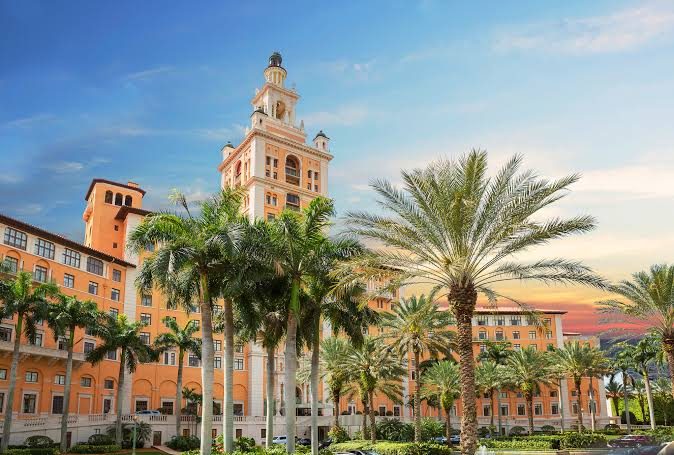
Coral Gables luxury homes span a wider range than most buyers expect. At $2M, you’re buying into the entry tier of a city built on Mediterranean Revival architecture, coral rock, and red barrel tile roofs. At $15M and up, you’re buying deepwater dockage in a guard-gated peninsula minutes from Biscayne Bay with no fixed bridges to clear. The city hasn’t changed its bones since George Merrick platted it in the 1920s, but the price tiers inside it have stretched dramatically over the last five years, and what each tier delivers is not what most buyers assume walking in.
This guide breaks down what $2M, $3.5M, $6M, $10M, and $15M+ actually buy in Coral Gables right now, neighborhood by neighborhood, with the HOA structures, architectural rules, and tradeoffs that don’t show up in a listing photo.
If you’re new to the city entirely, start with the Coral Gables complete relocation guide for the full picture on schools, commute, and neighborhood layout. This piece is focused specifically on the luxury single-family market.
Why Coral Gables Luxury Pricing Works Differently Than the Rest of Miami-Dade
Most Miami-Dade luxury markets (Miami Beach, Coconut Grove, Pinecrest) price primarily on lot size and water access. Coral Gables prices on those two things too, but it adds a third variable almost nobody else in the county has to the same degree: architectural control.
The city’s Board of Architects reviews exterior changes on a huge share of Coral Gables housing stock, not just designated historic homes. That means a $2M fixer in Old Gables can’t just get gutted and modernized with a flat-roof contemporary facade. It has to read as Mediterranean, Spanish, or one of the other approved historic styles Merrick’s original code allowed. This keeps the streetscape intact (it’s why Coral Gables still looks like Coral Gables), but it also adds cost, timeline, and a layer of approval risk that buyers coming from Fort Lauderdale or Doral new construction aren’t used to.
Waterfront changes that math again. Gables Estates and Cocoplum operate more like private club communities, with their own architectural review layered on top of the city’s, plus HOA-run gates and amenities. Once you’re paying for water, you’re also paying for governance.
$2M to $3.5M: Entry-Level Luxury, No Water
This is where most buyers land their first Coral Gables purchase, and it’s the segment covered in more depth in First-Time Buyer in Coral Gables: What the Entry Level Looks Like. At the luxury end of that range, here’s what’s realistic:
What you get: A 3 to 4 bedroom, 2,500 to 3,500 square foot home, usually built between the 1920s and 1960s, in Old Gables, the Coral Gables Country Club area, De Soto Park, or the Ponce-Davis fringe closest to the Gables line. Lots run 8,000 to 12,000 square feet. Most of these homes have been renovated at least once; the ones that haven’t sell below $2M and go fast to buyers planning a full gut.
Architecture: Mediterranean Revival is dominant, coral rock accents, arched doorways, barrel tile roofs, French doors onto interior courtyards. Some Colonial and Dutch South African-influenced homes exist in pockets near Coral Way, part of Merrick’s original mixed-style plan for the city.
HOA: Almost none in this tier. What you’re subject to instead is the Board of Architects for any exterior work, plus standard Miami-Dade permitting.
Property taxes: Expect an effective rate close to 2% of assessed value annually, and note that Florida’s homestead exemption and Save Our Homes cap only kick in after you close and file, so your first year’s bill reflects the prior owner’s non-homesteaded assessment in many cases.
Who buys here: Professionals relocating from out of state who want the Coral Gables school zone and walkability to Miracle Mile without waterfront pricing, and buyers trading up from a Fort Lauderdale or Pinecrest starter home.
$3.5M to $6M: Bigger Lots, Deeper Renovations, Still No Water
This tier is where Old Gables starts to show its range. You’re now looking at larger footprints on Granada Boulevard, Alhambra Circle, and the streets feeding into the Biltmore Golf Course frontage, plus fully modernized homes in Hammock Oaks and the interior (non-waterfront) sections of Journey’s End.
What you get: 4,000 to 6,000 square feet, 4 to 6 bedrooms, lots often 12,000 to 20,000 square feet. At this price point sellers have usually already done the heavy lifting: new mechanical systems, impact windows throughout, updated kitchens, and often a pool addition that met Board of Architects approval. Some homes back up to the Biltmore Golf Course, which carries a real premium even without direct water access.
New construction enters here too. A growing share of $4M to $6M Coral Gables listings are ground-up new builds on torn-down historic-adjacent lots, built by local boutique builders working within the city’s Mediterranean design code. If new construction is specifically what you’re after, the pricing and builder landscape is broken down in New Construction in Coral Gables: What Is Being Built and What It Costs.
Flood and insurance: Even without water frontage, Coral Gables sits close enough to Biscayne Bay that flood zone designation matters for financing and insurance. Homes further from the bay (north of Bird Road, closer to the Gables/Coconut Grove line) generally price lower on insurance than anything south of US-1.
$6M to $10M: Where Water Access Begins
This is the real dividing line in Coral Gables luxury. Below $6M you’re almost never on the water. Above it, Gables Estates and Cocoplum start to enter the conversation, though not at the top of their range.
Gables Estates entry level: Gables Estates is a guard-gated peninsula off Old Cutler Road with no fixed bridges between most lots and Biscayne Bay, meaning larger yachts can move in and out without height restrictions. Interior lots without direct deepwater frontage, or older homes on smaller canal lots, can land in the $6M to $9M range. Waterfront lots with real dockage push past $10M on land value alone in many cases.
Cocoplum: A larger guard-gated community with canal frontage throughout, a private marina, and a residents-only beach club. Cocoplum’s non-waterfront interior homes can land in the $4M to $6M range, while canal-front homes with dockage move into this $6M to $10M tier depending on lot size and how recently the home was built or renovated.
HOA and gate fees: Both communities carry HOA dues that fund 24-hour guard gates, common area landscaping, and in Cocoplum’s case, the marina and beach club. Budget $2,000 to $6,000+ annually depending on the community and amenity package, on top of city property taxes.
Who buys here: Established South Florida families moving up from Pinecrest or non-waterfront Gables, and out-of-state buyers (frequently from the Northeast or Latin America) who specifically want boat access without leaving the Coral Gables school zone and city services.
$10M to $15M+: Deepwater Estates and the Top of the Market
At the top of Coral Gables, you’re buying scarcity as much as square footage.
Gables Estates waterfront: This is the tier where Gables Estates earns its reputation as one of Miami-Dade’s most exclusive addresses. Deepwater lots with real dockage, no-bridge access to Biscayne Bay, and estate-sized homes (8,000 to 15,000+ square feet) on half-acre to acre-plus lots command $12M to $20M+ depending on dock length, water depth, and how recently the home was built. Land value alone on premier Gables Estates lots can exceed $8M to $10M before a structure is even counted.
Cocoplum’s top end: Cocoplum’s largest waterfront estates, especially those on wider canals with direct bay access, compete in the same $10M to $15M range, generally at a modest discount to comparable Gables Estates product because Cocoplum’s canals are canal, not bay-adjacent open water in the same way.
New construction spec mansions: A number of the deals in this tier are speculative builds, developers buying a waterfront teardown, securing Board of Architects approval for a large Mediterranean or transitional-Mediterranean design, and delivering a finished 10,000+ square foot estate. These carry a premium over renovation projects because the buyer isn’t absorbing construction risk or timeline.
Financing reality: At this level, most transactions are cash or bridge-financed, and comparable sales are thin enough that appraisals lean heavily on land value and recent private sales data rather than a deep public comp set. Buyers at this tier typically work with an agent who tracks off-market activity in Gables Estates and Cocoplum specifically, because a meaningful share of inventory never hits the MLS.
What Doesn’t Change Across Every Tier
A few things hold true whether you’re spending $2M or $18M in Coral Gables:
The Board of Architects review applies broadly. Exterior color, roofline, window style, and landscaping all get reviewed on most properties, not just designated historic homes. Budget extra time, not just extra money, for any exterior renovation or new build.
Coral Gables city services are a real amenity. Its own police department, its own building department, and tree canopy maintenance the city takes seriously. Buyers moving from HOA-heavy new construction communities in western Broward or Palm Beach often underestimate how much the city itself functions like an amenity package here.
Schools drive demand at every price point, not just the entry tier. Coral Gables Senior High and the zoned elementary and middle schools pull buyers who could afford to live anywhere in Miami-Dade. The private school options (Ransom Everglades, Gulliver, Carrollton) sit close enough that some luxury buyers skip the public zoning question entirely. Either way, it’s worth understanding before you commit to a neighborhood; see Coral Gables Schools: Private Options, Public Magnets, and What Families Need to Know for the full breakdown.
Old Cutler Road is the spine of the luxury market. Nearly every high-end community, Gables Estates, Cocoplum, Journey’s End, sits off this corridor, and traffic patterns, tree canopy, and even mail delivery times get discussed by buyers touring multiple communities in one day.
Neighborhood-by-Neighborhood Quick Reference
- Old Gables (Granada Blvd, De Soto Blvd, Alhambra Circle corridor): $2M to $8M, no water, strongest Mediterranean Revival architecture, walkable to Miracle Mile and The Biltmore.
- Ponce-Davis (Gables-adjacent fringe): $2M to $4M, larger lots than Old Gables, straddles the Coral Gables/South Miami line.
- Hammock Oaks: $3M to $6M, quieter interior streets, larger renovated lots, no water.
- Journey’s End: $5M to $12M, mix of interior and canal-front homes, gated in sections.
- Cocoplum: $4M to $15M, guard-gated, canal-front with marina and private beach club.
- Gables Estates: $6M to $20M+, guard-gated, deepwater, no fixed bridges, the top address in the city.
For a wider map of how these neighborhoods relate to each other geographically and in character, Coral Gables Neighborhoods: Old Gables, Ponce Davis, Gables Estates and More covers the full list beyond just the luxury tier.
Buying Considerations Specific to This Price Range
Get a real land value opinion before you get attached to a house. At $6M and above, a meaningful share of what you’re paying for is the lot, not the structure. An outdated 1970s home on a premier Gables Estates dock lot might be a teardown at asking price, and buyers who fall in love with the existing house instead of pricing the land often overpay.
Understand dock rights before assuming yacht access. Not every waterfront lot in Cocoplum or Gables Estates supports the same vessel size. Water depth, canal width, and any existing dock permits should get verified with the seller’s permit history, not assumed from a listing description.
Flood insurance is a real line item at every waterfront tier. Homes in Gables Estates and Cocoplum sit in flood zones that require insurance most buyers moving from inland Broward or Palm Beach communities haven’t budgeted for. Get a quote during due diligence, not after closing.
Renovation timelines run longer than buyers expect. Between the city’s Board of Architects and, in gated communities, an additional HOA architectural committee, a straightforward renovation that would take four months in a non-historic Broward community can take eight to twelve in Coral Gables. Factor that into any purchase where the home needs work.
Where Coral Gables Luxury Pricing Stands Right Now
Pricing across every tier described here has moved up over the past several years as Coral Gables has pulled in buyers relocating from higher-tax states, particularly into Gables Estates and Cocoplum. For the most current read on where specific price bands and days-on-market stand across the city, see the Coral Gables Real Estate Market: Where Prices Stand in Mid-2026 update, and if you’re evaluating the luxury segment specifically as an investment rather than a primary residence, Coral Gables Investment Property: What the Market Looks Like for Investors covers rental demand and appreciation patterns at this end of the market.
The Bottom Line
Coral Gables luxury homes deliver something genuinely different at each price band. At $2M to $3.5M, you’re buying architectural character and a school zone, no water. At $3.5M to $6M, you’re buying size and renovation quality, still mostly no water. Past $6M, water access enters the picture through Gables Estates and Cocoplum, and past $10M, you’re paying primarily for deepwater dockage and scarcity on one of the most tightly controlled peninsulas in Miami-Dade.
The reality is that price alone doesn’t tell you what you’re getting in this city. Two homes at $6M, one in interior Hammock Oaks and one on a Cocoplum canal, are fundamentally different products serving different priorities. Know which one you’re actually buying before you tour, and you’ll save yourself several rounds of wasted showings.
If you’re weighing Coral Gables against other options in Miami-Dade, or you’re relocating from out of state and trying to understand what makes this city worth the premium over comparable square footage elsewhere, Moving to Coral Gables: Miami-Dade’s Most Established Luxury City and Life in Coral Gables: Miracle Mile, The Biltmore, and What Makes This City Different fill in the lifestyle side of the decision. DM me “GABLES” and I’ll send you current inventory in your price range, including anything that hasn’t hit the MLS yet.
More articles you might like
Life in Coral Gables: Miracle Mile, The Biltmore, and What Makes This City Different
18 min readCoral Gables, Florida: The Complete Relocation Guide for 2026
13 min readFirst-Time Buyer in Coral Gables: What the Entry Level Looks Like
13 min readNew Construction in Coral Gables: What Is Being Built and What It Costs
13 min readCoral Gables Investment Property: What the Market Looks Like for Investors in 2026
14 min read