Coral Gables, Florida: The Complete Relocation Guide for 2026
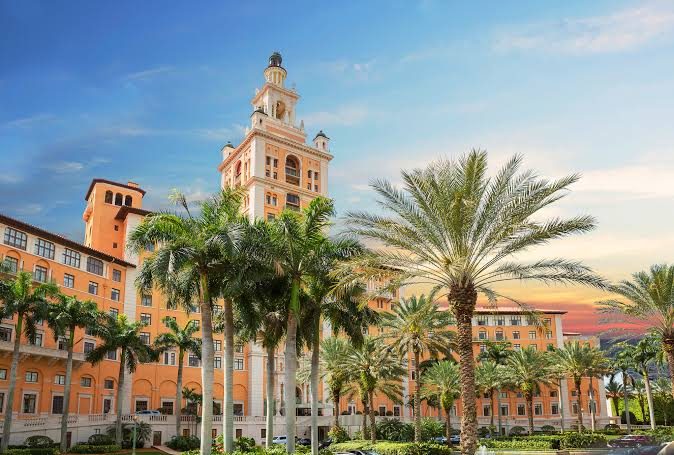
The reality is that Coral Gables, Florida is not a hidden gem. It is Miami-Dade’s most established luxury city, and moving here in 2026 means budgeting like it. This guide is the complete relocation guide for Coral Gables, Florida for 2026: what things actually cost, which neighborhoods fit which buyer, what the schools and HOA rules look like, and where the honest tradeoffs are. No hype, just what you need to know before you sign a contract.
If you’re relocating from out of state, or moving over from Miami Beach, Kendall, or Pinecrest, Coral Gables asks a different question than most of South Florida: do you want to live inside a planned city with real architectural rules, or do you want more square footage for less money somewhere with fewer restrictions? Once you answer that, the rest of this guide gets a lot easier to use.
Coral Gables, Florida: The Complete Relocation Guide for 2026
Coral Gables was developed in the 1920s by George Merrick as one of America’s first planned communities, built around Mediterranean Revival architecture, wide boulevards, and formal entrance gates you can still drive through today (Douglas Entrance, the DeSoto Fountain, the Alhambra Entrance). That history is not decoration. It is enforced. The city’s Board of Architects reviews exterior renovations in historic sections, which is why the housing stock looks so consistent almost a century later: barrel tile roofs, stucco facades, and setbacks that keep the streets shaded and walkable.
Quick facts for anyone relocating in 2026:
- Location: Miami-Dade County, bordered by Coconut Grove to the east, South Miami and Pinecrest to the south, and Little Havana/Silver Bluff to the north
- Main corridors: US-1 (South Dixie Highway), Le Jeune Road, Bird Road (SW 40th Street), and SW 8th Street on the northern edge
- Anchor institutions: University of Miami’s main campus, the Biltmore Hotel, and Merrick Park (the upscale open-air shopping center on Ponce de Leon)
- Downtown corridor: Miracle Mile and Giralda Plaza, both walkable dining and retail strips
- Commute: 15 to 25 minutes to Brickell or Downtown Miami depending on traffic and time of day, closer to 10 minutes to Coconut Grove
For a full walkthrough of what makes the city tick day to day, Life in Coral Gables: Miracle Mile, The Biltmore, and What Makes This City Different covers the daily rhythm in more depth than we can here.
Where Coral Gables Sits in South Florida
Coral Gables is not a suburb in the sense that Weston or Parkland are suburbs. It’s an incorporated city with its own police department, its own zoning code, and a downtown core that functions independently of Miami proper. That matters for relocation planning because you’re not just picking a neighborhood, you’re picking a municipality with its own tax rate, permitting process, and set of rules.
The city is roughly bounded by US-1 to the south and east, SW 8th Street to the north, and stretches west to around Red Road and beyond into the Ponce-Davis area. South Dixie Highway (US-1) runs along the eastern edge and connects straight up to Brickell and Downtown Miami, while also giving you Metrorail access at the University station if you want to skip driving into the city core.
If you work in Brickell or Downtown, Coral Gables is one of the few places in Miami-Dade where you can get a genuinely walkable, tree-canopied neighborhood without adding much to your commute. That’s a big part of why prices here haven’t softened the way some other Miami-Dade submarkets have.
The Neighborhoods: Old Gables, Ponce-Davis, Gables Estates and More
Coral Gables is not one housing market, it’s several, and the price gap between them is enormous. Here’s how they break down:
Old Gables (the historic core) runs roughly between Alhambra Circle, Coral Way, and Granada Boulevard. This is the neighborhood most people picture when they think Coral Gables: 1920s Mediterranean Revival homes, mature oak canopies, and walking distance to Miracle Mile. Prices here are among the highest in the non-waterfront market, and nearly every exterior change goes through historic review.
Gables Estates is the city’s premier guard-gated waterfront enclave, with direct deep-water access to Biscayne Bay for yacht owners. This is the top of the market, with estate homes routinely priced in the eight figures.
Cocoplum is another guard-gated waterfront community, generally considered slightly more accessible than Gables Estates but still firmly in the luxury tier, with canal and bay-adjacent lots.
Ponce-Davis sits on the western edge, technically split between Coral Gables, the City of Miami, and unincorporated Miami-Dade. It’s known for larger lots, a more suburban feel, and slightly more flexibility on renovations since not every parcel falls under Gables historic rules.
South Gables and the area around Sunset Drive offer a more attainable entry point, with smaller homes and closer proximity to South Miami, while still carrying the Coral Gables zip code and school zoning.
Hammock Lakes and other gated pockets near Old Cutler Road add another layer of private, guard-gated inventory for buyers who want security without going all the way up to Gables Estates pricing.
We break down the boundaries, HOA structures, and buyer profile for each of these in detail in Coral Gables Neighborhoods: Old Gables, Ponce Davis, Gables Estates and More, which is worth reading before you start touring.
What Homes Cost in Coral Gables in 2026
Here’s the part people actually want to know, and where a lot of relocation content gets vague on purpose. It shouldn’t be vague.
Entry-level single-family homes (smaller lots, South Gables, areas near the University of Miami) generally start around $900,000 to $1.2 million as of mid-2026. This is the realistic floor for a detached home carrying the Coral Gables name and school zoning.
Mid-tier historic core homes (Old Gables, Granada, Coral Gables Section) run from roughly $1.5 million to $3 million depending on lot size, renovation status, and whether the home has been updated to meet current hurricane and flood standards.
Waterfront and estate properties in Gables Estates and Cocoplum start around $5 million to $8 million and run well past $20 million for larger bay-front lots with deep water dockage.
New construction condos are where the wiki data gets specific. The George, a 13-unit ultra-exclusive boutique condo from MG Developer designed by De La Guardia Victoria Architects, is pricing at $1.5 million and up, in pre-construction with delivery estimated for 2027. CORA, from Constellation Group and The Boschetti Group, is a luxury mid-rise pricing between roughly $898,000 and $4.09 million. A separate nine-story, 78-unit Mediterranean-inspired mid-rise designed by Bellin Pratt & Fuentes is pricing from $1 million and up, targeting delivery around 2027, and trades on walking access to the historic core as its main selling point.
That gives you a real spread: condo entry near $900K, single-family entry near $900K to $1.2M, and no real ceiling on the top end. For the full current-market breakdown including days on market and price trends, see Coral Gables Real Estate Market: Where Prices Stand in Mid-2026. If you’re specifically trying to figure out what your budget actually buys at the bottom of the market, First-Time Buyer in Coral Gables: What the Entry Level Looks Like goes deeper on that exact question, and if your number is $2 million or up, Coral Gables Luxury Homes: What $2M to $15M+ Actually Gets You in 2026 lays out what changes at each price tier.
Property Taxes and Carrying Costs
Coral Gables carries its own municipal millage on top of Miami-Dade County’s rate, which means effective property tax rates here tend to run higher than in unincorporated parts of the county. Add in windstorm and flood insurance, which has climbed across South Miami-Dade generally, and buyers need to underwrite carrying costs before falling in love with a listing price. This is especially true on older homes that haven’t had roof or electrical updates, since insurers have gotten stricter about both.
Schools: Public Magnets and Private Options
Coral Gables Senior High School is the zoned public high school for most of the city, known for its International Baccalaureate program and a long list of notable alumni. On the elementary and middle level, George Washington Carver Elementary and Middle operate as arts-focused magnet programs that draw families from outside the immediate zone.
On the private side, Carrollton School of the Sacred Heart is an all-girls Catholic school located in the heart of Coral Gables and one of the most established private options in Miami-Dade. Gulliver Preparatory operates a campus on Red Road in Coral Gables and is one of the most requested private schools among relocating families, particularly those coming from out of state who want a college-preparatory track with strong athletics.
The University of Miami’s presence also shapes the school-age conversation indirectly: it draws a large population of graduate students, faculty, and visiting professionals into the rental market, which affects inventory and pricing for smaller condos and townhomes near campus, particularly along South Dixie Highway and Ponce de Leon Boulevard.
Zoning lines matter more than people expect in Coral Gables, since a home a few blocks apart can fall into different elementary zones. If schools are your primary driver, verify the exact zone for any address you’re considering before you write an offer. The full rundown of public magnets, private options, and how to check your zone is in Coral Gables Schools: Private Options, Public Magnets, and What Families Need to Know.
Life in Coral Gables: Miracle Mile, The Biltmore, and Daily Rhythm
Miracle Mile and the surrounding Giralda Plaza are the closest thing Coral Gables has to a downtown, with restaurants, boutiques, and Ponce de Leon’s office corridor a short walk in either direction. The Biltmore Hotel, a National Historic Landmark, anchors the western side of the city with its golf course, spa, and the pool once used by Johnny Weissmuller. The Venetian Pool, a coral-rock quarry converted into a public swimming pool in the 1920s, remains one of the more unusual and genuinely local landmarks in South Florida.
Merrick Park brings higher-end retail (Neiman Marcus, a mix of national and boutique tenants) along with a walkable outdoor layout that functions as both a shopping and dining destination. For day-to-day errands and a more neighborhood feel, Giralda Plaza has become a pedestrian-only dining strip on weekend evenings.
The University of Miami adds an academic, slightly younger energy to what is otherwise a family-and-retiree-heavy city, and it’s a major employer in its own right between the university and UHealth’s medical campus. If you’re relocating for work in healthcare, education, or law (Coral Gables has a dense concentration of law firms along Ponce de Leon and Alhambra Circle), you’ll find a lot of your professional peers already living here.
New Construction and What’s Being Built
New construction in Coral Gables skews condo, not single-family, because there’s very little vacant land left for ground-up detached homes inside city limits. What’s in the pipeline right now:
- The George: 13-unit boutique condo, MG Developer, $1.5M+, pre-construction, delivery estimated 2027, designed by De La Guardia Victoria Architects with an emphasis on large floor plans and privacy
- CORA: luxury mid-rise from Constellation Group and The Boschetti Group, priced from roughly $898,000 to $4.09 million
- A nine-story, 78-unit Mediterranean-inspired mid-rise designed by Bellin Pratt & Fuentes, priced from $1 million, targeting walking access to the historic downtown core
These are boutique, low-density projects compared to what’s happening in Downtown Miami or Edgewater, which tracks with how the city has always approached growth: slow, controlled, and filtered through historic and architectural review. If new construction is specifically what you’re shopping for, New Construction in Coral Gables: What Is Being Built and What It Costs tracks the full pipeline with delivery timelines.
For investors, the lack of large-scale new supply combined with steady rental demand from University of Miami staff, graduate students, and relocating professionals has kept this a market worth watching. Coral Gables Investment Property: What the Market Looks Like for Investors walks through cap rates and what’s actually renting.
The Honest Tradeoffs
Every South Florida Insider guide is supposed to tell you what most people won’t, so here it is plainly.
Historic preservation rules cut both ways. They’re why the city looks the way it does, and they’re also why renovating an older home here can take longer and cost more than in a neighborhood with no design review. If you’re buying a fixer in Old Gables expecting to modernize it quickly, budget extra time for Board of Architects approval.
Traffic on US-1 and Le Jeune during peak hours is real, especially with University of Miami and UHealth traffic layered on top of commuter flow. Walkability inside the city core is genuinely good, but if your daily life depends on driving through the Gables at 8 a.m., plan for it.
Prices have not softened the way some other Miami-Dade submarkets have. Coral Gables holds value because supply is genuinely constrained, which is good for owners and tougher for buyers hoping to find a discount. There is no meaningful “cheap” pocket of Coral Gables left; the floor has simply moved up.
Property taxes and insurance stack up. Between the city’s own millage, county taxes, and windstorm/flood premiums on older housing stock, carrying costs deserve as much attention as the purchase price.
HOA and gate fees in Gables Estates and Cocoplum are significant on top of the home price itself, and they fund private security, guard gates, and in some cases marina or common-area maintenance. Ask for the exact HOA docs and fee history before you assume a number.
Who Coral Gables Is Actually Right For
If you want walkability, architectural consistency, strong schools, and you can comfortably clear $900,000 for entry-level single-family or condo product, Coral Gables should be near the top of your South Florida relocation list. If your budget tops out closer to $500,000 to $700,000, you’ll likely get more home for the money in South Miami, Pinecrest’s outer edges, or parts of Kendall, and you should look there first rather than stretching into a Coral Gables condo that doesn’t fit your actual life.
For a broader look at why relocating families and professionals keep choosing this city specifically over other Miami-Dade luxury options, Moving to Coral Gables: Miami-Dade’s Most Established Luxury City rounds out the picture.
Next Step
If you’re relocating to Coral Gables in 2026 and want a straight answer on what your specific budget actually buys, and in which neighborhood, DM me “GABLES” and I’ll send you current inventory that matches your number, not a generic list.

More articles you might like
Moving to Coral Gables: Miami-Dade's Most Established Luxury City
13 min readFirst-Time Buyer in Coral Gables: What the Entry Level Looks Like
13 min readNew Construction in Coral Gables: What Is Being Built and What It Costs
13 min readCoral Gables Investment Property: What the Market Looks Like for Investors in 2026
14 min readCoral Gables Luxury Homes: What $2M to $15M+ Actually Gets You in 2026
13 min read