Fort Lauderdale Neighborhoods: A No-Nonsense Guide to Where to Live
Here is the revised post.
If you’re trying to figure out Fort Lauderdale neighborhoods, a no-nonsense guide to where to live has to start with one fact: this city is not one market. It’s a dozen small, distinct pockets stacked between the beach and I-95, and the difference between two neighborhoods a mile apart can be $1 million in price and a completely different lifestyle. Las Olas Isles is not Victoria Park. Rio Vista is not Sailboat Bend. Picking the wrong one because it “sounded nice” is how buyers overpay for a commute they didn’t want or underbuy into a flood zone they didn’t understand.
I’ve walked buyers through all of these streets. Here’s what each neighborhood actually costs, who it’s built for, and what nobody puts in the listing description.
Fort Lauderdale Neighborhoods: A No-Nonsense Guide to Where to Live
Zoom out first. Fort Lauderdale proper (not the metro, the actual city) breaks into three price tiers.
Tier one, deepwater luxury: Las Olas Isles, Harbor Beach, and the finger islands off Rio Vista. You’re paying $2 million and up, often well up, for direct ocean access with no fixed bridges.
Tier two, established core: Victoria Park, Rio Vista’s interior streets, Colee Hammock, and Coral Ridge. This is $700,000 to $2 million territory, walkable, historic bones mixed with modern renovations and spec builds.
Tier three, value and transition: Sailboat Bend, Flagler Village, Progresso, and Middle River Terrace. Entry points from the $500,000s, with more upside but also more variability block to block.
Notice that tier isn’t the same thing as quality. A well-bought home in Progresso or Middle River Terrace can outperform a tired renovation in Coral Ridge over a five-year hold, because you’re buying at a lower basis in a neighborhood that’s still repricing upward. A lot of relocating buyers assume the most expensive tier is automatically the safest financial decision. It isn’t. It’s the safest decision if what you actually want is the lifestyle that comes with it, the walk to Las Olas Boulevard, the private dock, the gated privacy. Match the tier to the life you want to live, not just the appreciation curve you’re chasing.
If you’re cross-shopping the whole metro and not sure Fort Lauderdale proper is even the right call versus a country club suburb further south, read Fort Lauderdale vs Boca Raton: City Life vs Country Club South Florida before you go further. It’ll save you a few weekends of touring the wrong kind of neighborhood.
Las Olas Isles: Deepwater Access at Deepwater Prices
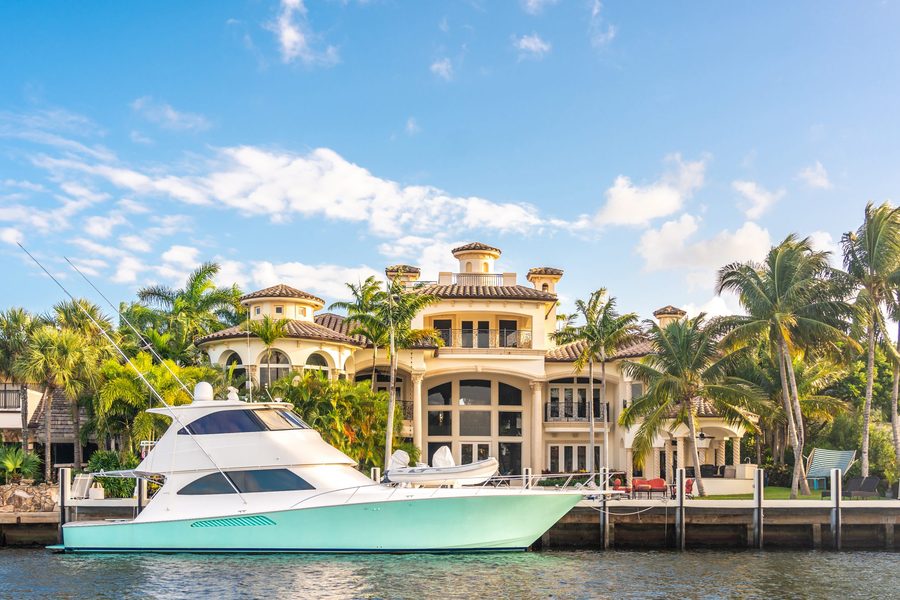
Las Olas Isles is the finger-island network south of Las Olas Boulevard, each one carved out with a private street and canal frontage on both sides. If you own a boat over 40 feet and want it in your backyard with no fixed bridge between you and the Intracoastal, this is the neighborhood.
Pricing runs from roughly $2 million for a smaller, older canal home on the interior streets to $6 million to $8 million plus for a modern rebuild on wide water with 100 feet of dockage. Most of the original 1950s and 60s homes have either been renovated top to bottom or torn down for new construction, so you’ll see a real mix of styles on the same block.
There’s typically no formal HOA on the Isles, just a voluntary civic association with modest annual dues. The real monthly number to plan around is insurance. Flood zone AE, wind exposure, and older seawalls push combined flood and wind coverage into the $8,000 to $15,000 a year range on a lot with real water frontage, sometimes higher depending on the seawall’s condition and the home’s elevation certificate. Seawall replacement itself, if you inherit one that’s failing, runs $1,000 to $1,500 per linear foot in this part of the county, and a typical Isles lot can carry 80 to 120 linear feet of seawall. That’s not a rare surprise. On homes over 40 years old, get the seawall inspected before you write the offer, not after closing. If you want the full breakdown of what waterfront ownership actually costs beyond the sticker price, that’s covered in Waterfront Living in Fort Lauderdale: What It Actually Costs and How It Works.
Who it suits: boat owners, empty nesters downsizing from a bigger estate lot, and buyers who want walkability to Las Olas Boulevard’s restaurants without living directly on it. I’ve had clients relocating from Connecticut and New Jersey who sold a 5,000 square foot suburban house and landed on the Isles specifically because the boat became the backyard, and the maintenance of a smaller lot with water access felt like less work than the house they left behind, even with the insurance premium.
Rio Vista: The Sweet Spot Between Downtown and the Beach
Rio Vista sits just south of Las Olas Boulevard and east of the 17th Street corridor, close to Broward Health and Holy Cross, and it’s the neighborhood I point most buyers to who want water without the Isles price tag.
The interior streets, no water frontage, run $900,000 to $1.5 million for a renovated 1930s to 1950s home on a decent lot. Move to a canal lot with a dock and you’re at $1.8 million to $3 million-plus, with the true wide-water and river-frontage homes going higher. Rio Vista has a mix of old Florida bungalows, Mediterranean revival homes from the original 1920s plat, and newer spec construction on lots where the original house came down.
It’s genuinely walkable, close to the 17th Street Causeway for beach access, and close enough to downtown that a lot of professionals skip the car for dinner on Las Olas. Families like it too. Rio Vista Elementary is a neighborhood draw in itself for buyers with young kids, one of the reasons interior lots here hold value even without water. If schools are part of your decision, don’t assume, verify the assigned school for the specific block, because zoning lines cut through this area in ways that surprise people. Full context on that is in Fort Lauderdale Schools: What Parents Need to Know Before They Buy.
The buyer profile here skews toward physicians on staff at the two nearby hospitals, professionals who work downtown, and move-up buyers coming from Victoria Park who want a yard and a dock without leaving the same five-mile radius they already love.
Victoria Park: Walkable, Historic, and Close to Everything
Victoria Park is north of Las Olas Boulevard, and it’s probably the most “lifestyle first” neighborhood in the city. You can walk to Las Olas for dinner, walk to Sunrise Boulevard for coffee, and be at the beach in ten minutes by bike.
Pricing runs $700,000 to $1.2 million for the classic 1940s to 1960s bungalows and ranch homes, many renovated, and up to $1.8 million or more for larger rebuilds and newer construction on bigger lots. It’s a mixed housing stock, some blocks are almost entirely original Florida cottages, others have been quietly replaced one lot at a time with modern two-story builds.
No HOA on the single-family streets, just an active neighborhood civic association that actually does things, block parties, a community garden, regular meetings. That’s worth knowing if you care about neighbors who show up. Victoria Park skews toward young professionals and families who want to be car-optional for daily errands but still want a real yard, which is a rarer combination than people think this close to downtown. Lot sizes vary more than people expect too, some interior streets sit on standard 50 by 100 foot lots, while a handful of blocks closer to Sunrise Boulevard have wider, deeper lots left over from the original 1920s platting, which is where you’ll see the bigger rebuilds going up. For a sense of what daily life actually looks like in this part of the city, see Life in Fort Lauderdale: Restaurants, Beach, Boating, and What a Day Actually Looks Like.
Sailboat Bend: The Value Play West of Downtown
Sailboat Bend sits along the New River just west of the downtown core, and it’s the neighborhood I steer first-time buyers toward when they want in-city living without the Rio Vista or Victoria Park price tag.
It’s a designated historic district, so you’ll find genuine 1920s and 30s Florida cottages, frame vernacular homes, and a scattering of townhomes, mostly on smaller lots. Pricing for the interior, non-waterfront streets runs $500,000 to $900,000, which is meaningfully below Victoria Park for a comparable walk to downtown Himmarshee and the Riverwalk. A handful of homes back directly to the New River, and those command a premium and come with their own flood considerations given the river frontage.
Because it’s a historic district, exterior renovations go through a design review process, which protects the character of the neighborhood but also means you can’t just gut and modernize the outside without approval. That review process typically adds a few weeks to permitting timelines for anything visible from the street, roofline changes, additions, exterior siding. Worth knowing before you buy expecting a fast flip. If you’re weighing this against a straightforward starter purchase, First-Time Buyer in Fort Lauderdale: Is It Realistic and Where Do You Start? walks through the actual numbers on what a first purchase here looks like, and Fort Lauderdale Investment Property: What the Numbers Look Like in 2026 is relevant too, since Sailboat Bend’s proximity to downtown makes it one of the better rental plays in the city core.
Colee Hammock and Harbor Beach: When Money Isn’t the Question
Two more tier-one neighborhoods worth knowing, even if they’re aspirational for most buyers.
Colee Hammock sits between Las Olas Boulevard and the beach, one of the oldest platted neighborhoods in the city, with brick streets and mature banyan canopies. Homes run $1.2 million to $3 million, non-waterfront, with the handful of canal-front lots pushing higher. It’s smaller and quieter than Victoria Park, with less foot traffic and a real sense of privacy despite being blocks from the beach.
Harbor Beach is the gated, deepwater enclave south of Las Olas Boulevard along the barrier island, no fixed bridges to the ocean, private security patrol, and some of the highest price points in the city, $3 million on the low end, climbing well past $10 million for the biggest lots. It’s the natural comparison point to the Isles, but Harbor Beach trades a little bit of walkability for privacy and gated exclusivity. If ultra-luxury waterfront is genuinely on the table, the cost breakdown in Waterfront Living in Fort Lauderdale: What It Actually Costs and How It Works applies here even more than on the Isles, insurance and dock maintenance at this scale is its own budget line.
Buyers considering both usually decide on one question: do you want to walk to a restaurant, or do you want a guard gate between you and the rest of the city. Colee Hammock answers the first. Harbor Beach answers the second. I rarely see a buyer seriously cross-shopping both, they tend to already know which answer matters more to them before they call me.
Coral Ridge and Flagler Village: Two Different Kinds of New
These two get lumped together by out-of-market buyers because both have “newer” housing stock, but they’re opposite lifestyles.
Coral Ridge is the canal-laced neighborhood on the east side of the city, closer to Galt Ocean Mile and the beach, with a mix of 1950s and 60s ranch homes and newer rebuilds. Non-waterfront runs $900,000 to $1.4 million, canal-front climbs to $1.6 million to $2.5 million-plus. It’s quieter and more suburban-feeling than downtown-adjacent neighborhoods, popular with families who want proximity to the beach without Isles-level pricing, and it’s close to the Coral Ridge Country Club if golf matters to you. It also sits closer to Fort Lauderdale-Hollywood International Airport by drive time than most of the western suburbs, which matters more than people admit if you fly often for work.
Flagler Village is the opposite, dense, urban, walkable to the Brightline station and FAT Village’s breweries and galleries. This is where most of the city’s new-construction condos and townhomes have gone up over the last decade. Townhomes run $500,000 to $850,000, condos vary widely by building and view, and almost everything here carries an HOA, typically $300 to $650 a month depending on amenities. It’s the right pick for someone who wants a lock-and-leave lifestyle and doesn’t care about a yard. For what’s actually being built and delivered right now, both here and citywide, see New Construction in Fort Lauderdale: What’s Being Built and What It Costs.
Progresso and Middle River Terrace: The Next Wave
These two round out tier three, and they’re the neighborhoods I get the most questions about from buyers who’ve already priced out Victoria Park and Sailboat Bend and want to know what’s coming next.
Progresso, just north of downtown and adjacent to the Sistrunk corridor, is one of the older platted neighborhoods in the city, with a mix of original 1920s bungalows, some in original condition and some fully renovated, plus newer infill construction on lots where older homes were removed. Pricing on renovated homes runs roughly $450,000 to $700,000, with original-condition homes needing work priced lower. This is the neighborhood where I tell buyers to walk the specific block before making assumptions, because renovation and reinvestment have moved unevenly, one street can look transformed while the next one over still has a handful of vacant lots.
Middle River Terrace, north and east of Progresso along the Middle River, has a similar profile but leans slightly more residential and settled, with 1940s and 50s homes on tree-lined streets and a growing number of full renovations. Pricing runs $550,000 to $850,000, with the handful of homes on the river itself commanding more.
Both neighborhoods sit close enough to downtown and Flagler Village to make the commute a non-issue, and both are the kind of area where getting in early on a well-built renovation has historically outperformed buying at the top of Victoria Park’s price range. The tradeoff is block-by-block variability. This is exactly the situation where working with someone who tours these streets regularly matters, because a listing photo can’t tell you whether the house two doors down is renovated or boarded up.
The Real Monthly Costs Nobody Mentions
Every one of these neighborhoods has a real number beyond the purchase price that buyers underestimate.
Insurance. Coastal Broward County insurance has gone up meaningfully in the last few years. Waterfront properties on the Isles, Rio Vista’s canal lots, and Harbor Beach are the extreme end, $8,000 to $15,000-plus annually for combined flood and wind. Interior, non-waterfront homes in Victoria Park or Sailboat Bend run more like $3,000 to $6,000 a year, still higher than most buyers relocating from outside Florida expect. Buyers coming from a state without hurricane exposure are usually the most surprised, they’re used to budgeting a few hundred dollars a year for homeowners insurance, and the first quote here can feel like sticker shock even on a modest interior lot. Get a real insurance quote, not an estimate, before you’re under contract. Some older homes, especially ones without updated roofs, wiring, or plumbing, will struggle to find coverage from a standard carrier at all and end up with Citizens Property Insurance as the option of last resort, which comes with its own rate volatility.
HOA versus no HOA. The historic single-family neighborhoods, Victoria Park, Rio Vista, Sailboat Bend, Colee Hammock, mostly have no mandatory HOA. Newer townhome and condo product in Flagler Village and parts of Coral Ridge does, and that fee needs to go into your monthly budget math the same way a mortgage payment does. A $600 a month HOA is roughly $130,000 of additional purchasing power you’re giving up over a 30-year loan if you were instead putting that money toward a bigger mortgage, so run the real math before you assume a lower purchase price with an HOA is automatically the cheaper option.
Flood zone. Almost the entire city sits in some flood zone designation given the canal and river network. That’s not a reason to avoid these neighborhoods, it’s a reason to get the elevation certificate and flood insurance quote before you’re under contract, not after. A home two feet higher in elevation than its neighbor on the same street can carry a meaningfully lower flood premium, and you won’t know the difference just by looking at two houses that look identical from the curb.
Property taxes. Fort Lauderdale’s millage rate plus Broward County and school district taxes lands most homes in the 1.8% to 2.1% of assessed value range annually, and assessed value resets to market price at purchase under Florida’s Save Our Homes rules, so budget off the price you’re paying, not what the seller was paying. That reset catches a lot of relocating buyers off guard when they compare their new tax bill to the low number the seller had been paying for a decade under the homestead cap. For where prices actually stand across the city right now, Fort Lauderdale Real Estate Market Update: Mid-2026 has the current numbers.
Questions I Get Asked About These Neighborhoods
A few things come up often enough that they deserve a straight answer here instead of waiting for you to ask.
Should I rent first before buying in one of these neighborhoods? If you’re relocating from out of state and have never spent a summer here, renting for six months to a year in the neighborhood you think you want is not a bad move. It costs you time, but it’s cheaper than buying in Coral Ridge and realizing you actually wanted the walkability of Victoria Park.
Is one of these neighborhoods meaningfully safer than the others? Crime patterns shift block by block more than neighborhood by neighborhood in this part of the city. I’d rather walk a specific street with you and show you what I see than give you a blanket answer that doesn’t hold up once you’re actually there at 9pm on a Tuesday.
Can I still find a deal in Victoria Park or Rio Vista? Occasionally, usually on a home that needs real work, a dated interior, an outdated electrical panel, something that scares off buyers who don’t want a renovation project. Those exist. They require moving fast and having a contractor relationship lined up before you write the offer.
How different is the flood insurance between an interior lot and a canal lot two blocks away? Often two to three times higher on the canal lot, sometimes more depending on the elevation certificate and the age of the seawall. This is the single most common number I have to walk buyers through line by line, because it rarely shows up clearly until you request an actual quote.
Which Fort Lauderdale Neighborhood Fits You
Here’s the short version if you don’t want to read all of the above twice.
Want a boat in your backyard and don’t blink at the insurance bill: Las Olas Isles or Harbor Beach.
Want walkable, historic, family-friendly, and can spend $700,000 to $1.5 million: Victoria Park or Rio Vista’s interior streets.
Want water access without Isles pricing: Rio Vista’s canal lots or Coral Ridge.
Want the lowest entry point into the city core with real upside: Sailboat Bend, Progresso, or Middle River Terrace.
Want lock-and-leave, walkable to nightlife and the Brightline, don’t need a yard: Flagler Village.
None of these are the “right” answer in general. They’re the right answer for a specific budget and a specific way of living. The mistake I see most often is a buyer falling in love with a street on Instagram without checking whether that neighborhood’s price tier, HOA structure, and flood exposure actually match their plan for the next five to ten years.
If you’re relocating to Fort Lauderdale and want a straight answer on which of these neighborhoods actually fits your budget, your family, and how you want to live, tell me your situation and I’ll point you to the right one. No sense touring six neighborhoods when we can narrow it to two in one conversation.

More articles you might like
Best New Construction Communities Near Fort Lauderdale (2026): Ranked by Price and Fit
13 min readWhere to Live in the Fort Lauderdale Area (2026): Best Suburbs by Who You Are
18 min readFort Lauderdale vs Boca Raton: City Life vs Country Club South Florida (2026 Guide)
13 min readFort Lauderdale vs. Miami: Which One Is Actually Right for You?
13 min readLife in Fort Lauderdale: Restaurants, Beach, Boating, and What a Day Actually Looks Like
14 min read