Fort Lauderdale Investment Property: What the Numbers Look Like in 2026
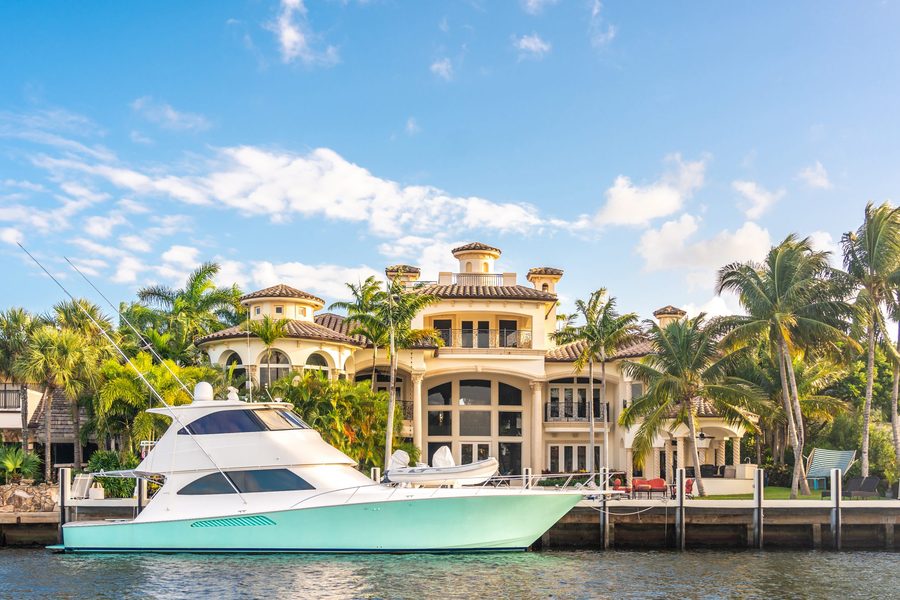
If you’re running the math on Fort Lauderdale investment property, what the numbers look like in 2026 comes down to this: gross rental yields of 4.5% to 6.5% depending on property type, insurance and property tax costs that now eat a bigger share of your return than they did five years ago, a short-term rental market that’s legal but heavily zoned, and a handful of neighborhoods still offering real cash flow instead of pure appreciation bets. This isn’t 2021. Prices didn’t crash, but they stopped sprinting, and rents caught up faster than most out-of-town investors realized. That combination changes which deals actually work.
This guide walks through the real numbers: what things cost to buy, what they rent for, what cap rates look like by property type, what short-term rental rules actually allow, and which Fort Lauderdale neighborhoods and corridors are where local investors are actually putting money right now.
Fort Lauderdale Investment Property: What the Numbers Look Like in 2026
Start with the baseline. Median single-family home prices in Fort Lauderdale proper are sitting in the $550,000 to $650,000 range depending on neighborhood, with older non-waterfront homes in workforce corridors starting closer to $400,000 to $450,000. Condos run a wider spread: older 1970s and 1980s buildings without amenities can trade from $180,000 to $300,000, while newer or renovated buildings near the beach or downtown push $450,000 and up.
On the rental side, a 3-bedroom single-family home in a solid but non-waterfront Fort Lauderdale neighborhood is renting for roughly $3,200 to $3,800 a month in 2026. Two-bedroom condos and townhomes without direct water access are landing between $2,400 and $3,000. That’s the number most investors underweight: rent growth in Broward has been real, but it’s been outpaced by insurance and tax increases, which is where the actual return gets squeezed.
Here’s the rough math on a $500,000 single-family rental at $3,400/month:
- Gross annual rent: $40,800
- Property tax (no homestead exemption, roughly 2% of assessed value): ~$10,000
- Insurance (wind, flood if applicable, liability): $4,500 to $7,000
- Property management (8-10% if you’re not self-managing): ~$3,700
- Maintenance and vacancy reserve: ~$2,500
- Net operating income: roughly $17,000 to $20,000
- Cap rate: 3.4% to 4%
That’s the honest number for a turnkey single-family home bought at full retail price with a management company. It’s not a bad return in a market with strong long-term appreciation and no state income tax, but it’s not the 8% cap rate era some investors remember from a decade ago. The way to improve on it is either buying below market (estate sales, off-market, or a home needing light renovation), self-managing, or shifting property type.
Where the Better Numbers Are
Small multifamily is where the local investor math still works well. A duplex or triplex in a workforce neighborhood, bought in the $500,000 to $750,000 range for the whole property, renting each unit at $1,800 to $2,400, can produce a 6% to 7.5% cap rate because you’re spreading fixed costs (roof, insurance, taxes) across multiple rent rolls instead of one. These properties rarely hit the MLS with a “for sale” sign that gets noticed by out-of-state buyers; they move through relationships and local agents who know which owners are getting tired of self-managing.
Rental Demand: Who’s Actually Renting in Fort Lauderdale
Demand isn’t uniform across the city, and understanding who’s renting where changes what you should buy.
Downtown and Flagler Village pull young professionals working in Las Olas offices, healthcare, and the growing tech and finance presence downtown. These renters want walkability, a gym, and a short commute, not square footage. This is condo and new-build apartment territory, not single-family.
Victoria Park, Rio Vista, and Colee Hammock attract a different renter: established professionals, some empty nesters downsizing but not ready to buy, and relocation transfers wanting a real house near downtown without the new-construction premium. These are your $3,500-$4,500/month single-family rentals.
Melrose Park, Franklin Park, and Twin Lakes are workforce housing markets. Renters here are teachers, healthcare workers, tradespeople, service industry employees who work in Fort Lauderdale but can’t afford (or don’t want) to buy at current prices. Rents are lower ($1,900-$2,600 for a 2-3 bedroom), but so is the entry price, and turnover is lower than the downtown rental pool.
Coastal areas (Central Beach, Galt Ocean Mile, Coral Ridge) split between long-term renters willing to pay a premium for beach proximity and the short-term/vacation rental crowd, where the zoning and licensing actually allow it. If you want a full picture of what daily life looks like in these coastal pockets before you buy for a rental strategy, the Life in Fort Lauderdale lifestyle guide is worth reading, because renter demand tracks lifestyle demand almost exactly.
Short-Term Rental Rules: What’s Actually Legal in 2026
This is where most out-of-town investors get burned, so get this part right before you buy anything with an Airbnb business plan attached.
Florida law (Chapter 509) generally lets cities regulate rental duration but not ban vacation rentals outright in most cases, with a grandfather clause for ordinances that predate June 1, 2011. Fort Lauderdale’s zoning code uses that authority: in most single-family residential zoning districts (RS-4.4, RS-8, and similar), the minimum rental term is 31 days. That means the classic “buy a house, list it on Airbnb for weekend stays” strategy is not legal in the majority of Fort Lauderdale’s single-family neighborhoods unless the specific property was licensed and operating as a short-term rental before the ordinance took effect.
Where short-term rentals (under 30 days) are actually workable:
- Multifamily and mixed-use zoned buildings where the zoning doesn’t carry the 31-day restriction.
- Condo and HOA buildings that explicitly permit it, which is rare in older buildings (most condo docs in Fort Lauderdale restrict rentals to 6 months minimum, or require board approval, specifically to protect insurance and avoid the “hotel building” reputation with lenders).
- New construction towers built and licensed for it. Natiivo Fort Lauderdale, for example, is designed and fully licensed to permit flexible short-term rentals and homesharing, with studios through 3-bedroom layouts from roughly 500 to 1,100 square feet, priced from around $500,000. That’s the model: buildings purpose-built for transient use, with the licensing, insurance, and HOA structure already set up for it, rather than trying to retrofit a residential zoning district.
On top of city zoning, you also need: a City of Fort Lauderdale Certificate of Use and Business Tax Receipt, a Florida DBPR vacation rental license, and Broward County registration. Skipping any of these gets properties shut down through code enforcement complaints, which happen constantly in residential neighborhoods where a full-time resident lives next to a weekend party rental.
The practical takeaway: if short-term rental income is central to your investment thesis, buy in a building or zoning district built for it, not a single-family home in a quiet residential street where a neighbor will report you within the first month.
Condo Investing: The Assessment Risk Nobody Skips Anymore
Since the Surfside collapse in 2021, Florida passed structural integrity requirements (SB 4-D and related legislation) that changed condo investing math statewide, and Fort Lauderdale has plenty of older beachfront and inland buildings from the 1970s and 1980s affected by it.
Buildings three stories or taller and older than 30 years now require milestone structural inspections, and associations must fund Structural Integrity Reserve Studies (SIRS) instead of waiving reserves like many did for decades. The result: a wave of special assessments across older Broward and Miami-Dade condo buildings, some running $20,000 to $100,000+ per unit, to cover deferred concrete restoration, roofing, plumbing, and electrical work.
For an investor, this means the sale price of an older condo is only half the story. Before buying:
- Pull the last two years of association board minutes, not just the budget.
- Ask directly whether a milestone inspection has been completed and what it found.
- Confirm whether reserves are fully funded or whether a special assessment is pending or likely.
- Factor a “phantom assessment” into your cap rate math even if nothing has been announced yet, if the building is over 30 years old and reserves look thin.
This is a big part of why newer construction, buildings like Selene Oceanfront Residences, Andare Residences on Las Olas, or Viceroy Residences near Flagler Village, has become more attractive to investors even at a higher entry price. You’re not buying someone else’s deferred maintenance. If new construction condo economics interest you as an investment vehicle, Best New Construction Communities Near Fort Lauderdale breaks down current pricing and builder delivery timelines across the market.
Insurance and Taxes: The Line Items Driving 2026 Returns
Two costs have done more to compress Fort Lauderdale rental returns over the last three years than price appreciation has done to inflate them: insurance and property taxes.
Insurance has climbed 20% to 40% for older roofs and pre-2002 construction, and many carriers now require a 4-point inspection and a roof under 15 years old to bind or renew a policy at a reasonable rate. Flood insurance is a separate line item for anything near the Intracoastal, canals, or low-lying areas, which describes a lot of Fort Lauderdale given the canal system running through neighborhoods like Rio Vista, Riverside Park, and Idlewyld. Budget $4,500 to $8,000+ a year on insurance for a single-family home depending on age, roof, and flood zone, more for waterfront.
Property taxes matter more for investors than owner-occupants because there’s no homestead exemption and no Save Our Homes assessment cap protecting you from year-over-year increases. Broward County’s effective millage rate lands around 2% of assessed value in most Fort Lauderdale areas once you add city, county, and school district levies. On a $500,000 purchase, that’s roughly $10,000 a year, and it reassesses toward market value more aggressively for non-homesteaded property.
Run both of these as real numbers, not estimates from a listing sheet, before you commit to a cap rate on paper.
Where Smart Investors Are Actually Looking in 2026
A few corridors and neighborhoods stand out right now for different strategies:
Progresso and the Sistrunk corridor are in an active transition, close to downtown and Flagler Village with lower entry prices than the established neighborhoods around them. This is a longer-hold, appreciation-plus-cash-flow play, not a flip market, and it requires local knowledge of block-by-block conditions.
Melrose Park, Franklin Park, and Twin Lakes remain the workforce housing cash flow plays: lower purchase prices, dependable rent from long-term tenants, less turnover than the downtown rental pool chases.
Flagler Village and the FAT Village arts district work for investors focused on newer condo and apartment product renting to young professionals who want walkability over square footage. Rental demand here is steady because it’s the closest dense, amenity-rich neighborhood to downtown offices.
New construction towers licensed for flexible rental use, like Natiivo, fit investors specifically chasing the short-term rental income model without fighting zoning or HOA restrictions.
For a broader look at how these neighborhoods compare on livability, not just investment numbers, Where to Live in the Fort Lauderdale Area is a useful companion read, since the same factors that attract owner-occupants (schools, walkability, flood risk, HOA rules) are exactly what drives long-term rental demand.
Fort Lauderdale vs. the Rest of South Florida for Investors
Investors comparing Fort Lauderdale to Miami or Boca Raton should know the trade-offs. Miami offers higher international demand and stronger short-term rental infrastructure in specific submarkets, but entry prices and HOA fees run higher, and competition from institutional buyers is heavier. Boca Raton skews toward higher-end, lower-yield properties with more restrictive HOA and rental rules across its country club communities. Fort Lauderdale sits in between: better cash flow potential than Miami’s luxury core, more rental flexibility than Boca’s country club HOAs, and a genuinely diverse renter base from downtown professionals to workforce tenants to seasonal residents.
If you’re weighing markets more broadly, Fort Lauderdale vs. Miami and Fort Lauderdale vs Boca Raton both go deeper into those comparisons from a livability and cost standpoint, which maps directly onto rental demand.
Waterfront Rentals: A Separate Category With Its Own Math
Waterfront and canal-front properties in Fort Lauderdale (Rio Vista, Las Olas Isles, Coral Ridge, Harbor Beach) command higher rents, sometimes $2,000 to $3,000 more per month than a comparable inland home, but they also carry higher flood insurance, higher purchase prices, and often dock or seawall maintenance costs that inland investors don’t budget for. Cap rates on waterfront single-family rentals typically run lower than inland properties, 3% to 4.5%, because the price premium outpaces the rent premium. Waterfront works better as a long-term appreciation and lifestyle-rental hybrid than a pure cash flow play. For the full picture on what waterfront ownership actually costs, including docks, seawalls, and flood zone specifics, see Waterfront Living in Fort Lauderdale.
New Construction as an Investment Vehicle
Buying new construction for rental income is a different calculation than buying resale. You’re paying a premium over comparable resale product, but you’re also getting a warranty, lower near-term maintenance costs, better insurance terms (new roofs, updated electrical and plumbing, often impact windows), and in the case of buildings like Natiivo, a rental structure already built into the licensing. The trade-off is a lower initial cap rate that improves over the first several years as maintenance costs on the resale competition rise while yours stay flat. New Construction in Fort Lauderdale covers current builder pricing and delivery timelines if this is the direction you’re considering.
The Bottom Line for 2026
Fort Lauderdale investment property still works in 2026, but it rewards discipline over speed. Run real numbers on insurance and taxes before you fall in love with a listing price. Confirm short-term rental legality at the zoning and HOA level before you build a business plan around Airbnb income. Pull real association financials on any condo over 20 years old. And match the property type to the actual demand in that neighborhood rather than assuming what worked five years ago still applies today.
If you want the numbers run on a specific property or neighborhood you’re considering, that’s a conversation worth having before you make an offer, not after. DM me the address or the neighborhood and I’ll walk through what the real return looks like.
More articles you might like
Best New Construction Communities Near Fort Lauderdale (2026): Ranked by Price and Fit
13 min readWhere to Live in the Fort Lauderdale Area (2026): Best Suburbs by Who You Are
18 min readFort Lauderdale vs Boca Raton: City Life vs Country Club South Florida (2026 Guide)
13 min readFort Lauderdale vs. Miami: Which One Is Actually Right for You?
13 min readLife in Fort Lauderdale: Restaurants, Beach, Boating, and What a Day Actually Looks Like
14 min read