Waterfront Living in Fort Lauderdale: What It Actually Costs and How It Works
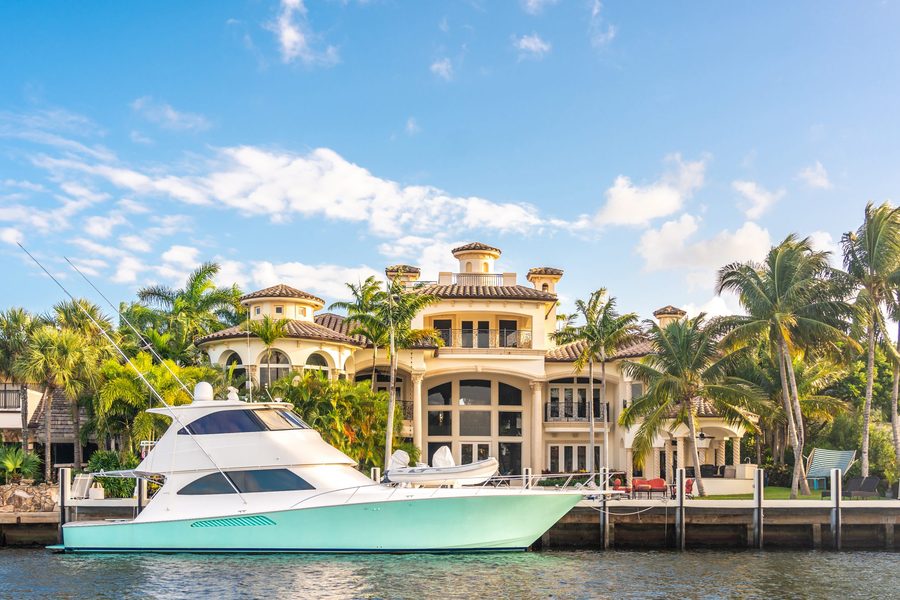
Waterfront living in Fort Lauderdale is not one product. A canal home behind a fixed 15-foot bridge in Riverland and a no-fixed-bridge estate in Rio Vista are both technically “waterfront,” and they cost completely different amounts of money to buy, insure, and keep. If you’re shopping this market and every agent keeps saying “it’s waterfront” like that settles the price, it doesn’t. What actually determines cost is the water type, the bridge situation between your dock and the ocean, the seawall condition, and the insurance zone. Here’s what you need to know before you write an offer.
Fort Lauderdale earned the nickname “Venice of America” because it has over 300 miles of navigable waterways, more than any other coastal city its size in the country. That’s the draw. It’s also why the details matter so much here, more than almost anywhere else in South Florida. Get the bridge clearance wrong and you bought a house you can’t get your boat out of. Get the flood zone wrong and your insurance quote will make you rethink the whole purchase. I’ve watched buyers fall in love with a listing photo of a dock and a sunset, then find out three weeks into their financing contingency that the seawall needs $90,000 of work. That’s not a deal killer. It’s a math problem you want to solve before you’re emotionally attached, not after.
The Four Types of Waterfront, and Why the Difference Is Six Figures
Canal Homes (Fixed Bridge)
This is the entry point. Neighborhoods like Riverland, Lauderdale Isles, Poinsettia Heights, and parts of Melrose Park sit on finger canals that eventually connect to the New River or the Intracoastal, but you have to pass under at least one fixed bridge to get there. Fixed bridges in these areas typically clear 15 to 20 feet at mean high water. That’s fine for a center console or a smaller cruiser. It rules out a sailboat with a mast and most yachts over 40 feet.
Prices here run roughly $650,000 to $1.3 million for a 3-4 bedroom canal home with a private dock, depending on lot width and canal width. This is the realistic starting point for someone who wants “I have a boat in my backyard” without ocean-access pricing. A typical buyer here is a family moving from out of state with a 24 to 32 foot boat, maybe a pontoon or a fishing center console, who wants weekend access to the Intracoastal and doesn’t care about clearing a bridge with a sailboat mast. If that’s you, don’t overpay for ocean access you’ll never actually use. The math only makes sense if you need it.
Canal Homes (No Fixed Bridge / Ocean Access)
This is the premium tier, and it’s where the real money is. Rio Vista, the Las Olas Isles (Nurmi Isles, Seven Isles, Cypress Isles, Compass Isles, Riviera Isles), Idlewyld, and Bermuda Riviera all offer direct ocean access with no fixed bridges between the dock and open water. That means any size vessel, any mast height, no tide-timing your departure.
That freedom carries a real premium. Rio Vista alone spans a wide range, roughly $1.5 million for a smaller renovated home on a narrower canal, up into the $5 million to $8 million range for wide-canal or deep-water lots close to the New River mouth. The Las Olas Isles run similarly, with waterfront lots on the widest canals commanding $4 million and up before you’ve built anything. This is the tier where you’ll see buyers who own a 50-plus foot yacht or a sport fisherman with an outrigger and tuna tower, boats that simply cannot exist west of the fixed bridges. If you’re one of those buyers, you’re not really shopping the whole market. You’re shopping a short list of specific streets, and you need to know exactly which ones qualify before you get attached.
Intracoastal Frontage
Direct Intracoastal Waterway frontage, in neighborhoods like Coral Ridge, Sunrise Key, or the eastern edge of Bay Colony, gives you wide open water views and no canal navigation at all, straight out to Port Everglades and the ocean inlet. This is a different buyer than the canal buyer. You’re paying for the view and the width of open water, not just dock access. Single-family Intracoastal homes here start around $3 million and climb well past $10 million for larger lots with unobstructed water views. Wake from the Intracoastal channel is also a real consideration for seawall longevity, homes directly on the main channel take more wave action over the decades than homes tucked into a quiet finger canal, which is one more reason the seawall inspection matters more here, not less.
Intracoastal and Beachfront Condos
If you want waterfront without a house, boat maintenance, or a seawall to worry about, the condo corridor along A1A and the Intracoastal covers everything from older 1970s buildings on the Intracoastal (starting around $400,000 to $600,000 for a renovated 2-bedroom) up to new luxury towers like Auberge Beach Residences or the Ritz-Carlton Residences, where units run $3 million to $15 million-plus. Condos solve the maintenance question but introduce a different cost conversation, covered below. If price is the deciding factor and you’re open to leaving Fort Lauderdale proper, it’s worth widening the search. Hallandale Beach, just south in Broward, has waterfront towers like Oasis Hallandale and Residences at Shell Beach with new construction pricing that starts lower than most of what’s currently selling on the Fort Lauderdale beach strip, worth a look if you want new construction on the water without Las Olas pricing.
The Neighborhoods, Ranked by What You’re Actually Buying
Rio Vista is the benchmark ocean-access neighborhood. No fixed bridges, minutes to Port Everglades and open water via the New River, walkable to Las Olas Boulevard. Homes range from $1.5 million to $8 million. Lots along the New River itself command the highest prices in the city.
Las Olas Isles (Nurmi, Seven, Cypress, Compass, Riviera) sit just east of Las Olas Boulevard, all with ocean access, all walkable to restaurants and shopping. This is where a lot of new construction and full teardown-rebuilds have happened over the last five years. Expect $3 million to $10 million depending on canal width and whether the home is new or original. If you’re comparing a renovated 1960s original against a brand new spec build on the same street, know that the new build isn’t just newer, it’s also going to carry a meaningfully lower insurance premium because of current wind mitigation and elevation standards, which partially offsets the higher purchase price over time.
Harbor Beach is a private, guard-gated peninsula neighborhood south of Las Olas Beach, deep water, ocean access, and some of the widest lots in the city. This is a $5 million-and-up neighborhood, often well past $10 million on the water. The gate and the peninsula layout also mean less drive-by traffic than Rio Vista, which matters to buyers who want privacy as much as water access.
Coral Ridge and Coral Ridge Isles offer a mix, some fixed-bridge canals, some direct Intracoastal frontage near the Coral Ridge Country Club. Prices span a wide range, roughly $1.2 million to $4 million, making it a good comparison shop against Rio Vista for buyers who don’t need the absolute widest canal. Coral Ridge also tends to have larger lots for the price than Rio Vista, worth factoring in if a pool, yard, and dock all matter more to you than walking distance to Las Olas.
Victoria Park and Lake Estates give you smaller, older canal homes closer to downtown, often fixed-bridge, in the $900,000 to $1.8 million range. Good for buyers who want walkable-to-downtown waterfront without Rio Vista pricing.
Riverland and Lauderdale Isles, both west of downtown, are the value plays. Fixed bridges, smaller canals, but still a private dock and deeded waterfront, starting around $650,000. This is genuinely the most realistic entry point if you want a boat in the backyard on a normal budget, and it pairs well with what we cover in our First-Time Buyer in Fort Lauderdale guide if you’re stretching to make waterfront work on a first purchase.
If none of these fit your budget or your family situation, it’s worth stepping back and looking at the broader map of where to live in the Fort Lauderdale area before you lock into “it has to be waterfront.” A lot of buyers who start there end up in Victoria Park or Riverland once they see the real numbers.
What Waterfront Actually Costs: The Full Picture, Not Just the Price Tag
The purchase price is the smallest recurring number in this conversation. Here’s what actually shows up every year.
Property Taxes
Broward County’s combined millage rate for Fort Lauderdale runs roughly 19 to 21 mills depending on the exact taxing district. On a $2 million waterfront home without a homestead exemption, that’s commonly $35,000 to $42,000 a year in property tax. If it’s your primary residence, homestead exemption and the Save Our Homes 3% annual cap help over time, but the first year’s bill is still based on the purchase price, not a capped value. Buyers coming from lower-tax states are usually the ones most surprised by this line item, run the actual number with your lender before you get comfortable with a monthly payment estimate that only assumes principal and interest.
Homeowners Insurance
This is the number that surprises out-of-state buyers most. Coastal Broward homeowners insurance for a waterfront property, especially anything built before 2002 wind mitigation standards, commonly runs $8,000 to $25,000 a year, and can go higher on larger or older homes. Newer construction with impact windows and updated roofs gets meaningfully better rates. This is one more reason new construction in Fort Lauderdale keeps coming up as an alternative worth pricing out, even for buyers set on being near the water. Get a wind mitigation inspection done on any home built before the early 2000s. It’s a few hundred dollars and it can shave real money off your premium if the roof and openings qualify.
Flood Insurance
Almost every waterfront parcel in Fort Lauderdale sits in FEMA Zone AE or VE. Lenders require flood coverage. NFIP policies cap building coverage at $250,000, which doesn’t come close to covering a $2 million home, so buyers layer on private flood insurance for the gap. Depending on elevation certificate results, expect $3,000 to $10,000-plus a year combined. Two homes on the same street can have meaningfully different flood premiums based purely on the elevation certificate, lowest finished floor elevation matters more than most buyers realize, and it’s worth asking for this document early rather than waiting until underwriting flags it.
Seawalls
This is the cost nobody explains until you’re already under contract. Most Fort Lauderdale waterfront lots have a concrete seawall, and older ones (30-plus years, common in Rio Vista and Coral Ridge) may be nearing the end of their structural life. Replacement runs $600 to $1,200 per linear foot. A typical 80 to 100 foot lot means $60,000 to $120,000 if the wall needs full replacement. Get a seawall inspection during your due diligence period, every time. It’s a negotiating point, not a surprise you want after closing. If the seawall is cracking, leaning, or missing cap sections, that’s not automatically a walk-away, it’s leverage. Sellers in this price range would often rather credit you $80,000 at closing than lose the deal over a wall they’ve been putting off for years.
Docks and Lifts
A private dock with a boat lift adds real value but also real cost. Installing a new dock runs roughly $150 to $300 per linear foot, and a boat lift adds $15,000 to $40,000 depending on capacity. If the home already has one, get it inspected. If it doesn’t, budget for it separately from the purchase price. Also ask about the dock’s electrical and water hookups specifically, older docks were sometimes wired before current code, and if you plan to keep a boat there full time you’ll want shore power that actually holds up.
HOA and Condo Fees
Most single-family waterfront neighborhoods (Rio Vista, Las Olas Isles, Victoria Park) have no HOA at all, which is part of the appeal. Some newer or gated communities do carry dues. Waterfront condos are a different story entirely: expect $1,200 to $4,000-plus a month in some luxury Intracoastal buildings, and since the 2021 Surfside collapse, Florida’s 40-year (and now milestone) structural inspection requirements have pushed special assessments higher across older coastal buildings. Ask for the last three years of association minutes and any reserve study before making an offer on a condo. If the reserve study shows an underfunded reserve account, that’s a strong signal a special assessment is coming, and it’s a lot cheaper to know that before you close than to get the letter six months later.
Landscaping, Pest, and Dock Maintenance
Waterfront properties also carry ongoing costs that inland homes don’t. Seawall-adjacent landscaping needs more attention because of salt exposure, and older homes near canals deal with higher termite and moisture pressure than homes further inland. None of this is a dealbreaker, but it’s a real monthly cost most out-of-state buyers don’t budget for in year one. Plan on a few hundred dollars a month beyond a standard inland home’s upkeep, more if the dock and lift need annual service.
Fixed Bridges: The Detail That Quietly Sets the Price
If you take one thing from this article, make it this: before you fall in love with a canal home, find out what’s between that dock and the ocean. Fort Lauderdale’s fixed bridges (as opposed to drawbridges like the Las Olas Boulevard bridge, which opens on a schedule) typically clear 15 to 21 feet at mean high water. That’s enough for most powerboats. It is not enough for a sailboat mast or many larger yachts.
Neighborhoods with zero fixed bridges to open water, Rio Vista via the New River, the Las Olas Isles, Idlewyld, Harbor Beach, carry a real premium specifically because of this. Two nearly identical homes, one with a fixed bridge in the way and one without, can differ by hundreds of thousands of dollars. If boating is the actual reason you want waterfront, confirm your vessel’s air draft against the specific bridge clearance for that canal before you get attached to a listing. Clearance also isn’t fixed in the way most buyers assume, it’s measured at mean high water, so tide and even seasonal water levels can shave a foot or more off the number on a hot, high-tide afternoon. If your mast or tower height is within a foot or two of a bridge’s published clearance, that’s too close, don’t assume you’ll thread it every time.
I’ve had buyers walk a listing, love the house, and only realize at the dock that their sailboat’s 42-foot mast has no path to open water without unstepping it first. That’s an expensive mistake to catch after you’ve written an offer. Confirm it before you tour, not after you fall for the kitchen.
How Financing and Insurance Actually Work Here
Lenders treat waterfront differently than a standard purchase in a few specific ways. Appraisals take longer because waterfront comps are thinner and more varied, an appraiser has to account for canal width, bridge access, and seawall condition, not just square footage. Flood insurance quotes need to be locked in before closing, not after, because they materially affect your total monthly payment and, in some cases, your debt-to-income qualification. And on older homes, some lenders will require a four-point inspection covering roof, electrical, plumbing, and HVAC before approving the loan, on top of a standard home inspection.
Cash buyers skip a lot of this friction, which is part of why waterfront Fort Lauderdale has a heavier cash-buyer presence than the market overall. If you’re financing, get pre-approved with a lender who has actually closed waterfront deals in Broward before you start touring. A lender who’s never dealt with an elevation certificate will slow your closing down. Also build in more time on your calendar than you would for a standard inland purchase. A typical financed waterfront closing here runs 45 to 60 days once you account for the appraisal timeline, the flood and elevation review, and any seawall or dock inspection contingencies. Rushing a 30-day close on an older canal home is where deals fall apart at the finish line.
Who Waterfront Actually Makes Sense For
Be honest with yourself about this before you shop. Waterfront makes sense if you actually own a boat, or will within the first year, and you want to use it regularly, not just look at the water. It also makes sense for buyers prioritizing resale and long-term appreciation, waterfront in Fort Lauderdale has consistently outperformed inland comparable homes over the last decade because the supply is fixed. Nobody’s building more canals.
It doesn’t make sense if the appeal is purely the view and you’re not accounting for the insurance and seawall math above, because a comparable inland home in Coral Ridge or Victoria Park (not on the water) can run 30 to 50% less with a fraction of the insurance cost. It’s also worth comparing against nearby markets if you’re not locked into Fort Lauderdale specifically. Our breakdown of Fort Lauderdale vs. Boca Raton and Fort Lauderdale vs. Miami both cover how waterfront pricing and lifestyle compare across the three markets, worth a read if you’re still deciding on the metro before you decide on the canal.
If you want a feel for what daily life actually looks like on the water here, boating out for dinner, walking to Las Olas, the whole rhythm of it, that’s covered in detail in our Fort Lauderdale lifestyle guide.
For relocators specifically, here’s a piece of advice I give often: if you’re not 100% certain waterfront is right for your family, rent a season first. A three to six month rental in Rio Vista or Coral Ridge costs a fraction of what a seawall replacement or a surprise flood premium will cost you if you buy the wrong canal. It lets you actually test the boat lifestyle, the humidity on a dock in August, the noise from a busy channel, before you commit seven figures to it. Plenty of buyers who do this end up more sure than ever. Some end up realizing they wanted the Fort Lauderdale lifestyle more than the boat itself, and they’re just as happy a half mile inland for a fraction of the carrying cost.
How to Actually Buy a Waterfront Home in Fort Lauderdale
- Get clear on bridge access first. Before you tour anything, know whether ocean access matters to you and confirm the bridge clearance for any canal you’re considering.
- Order a seawall inspection during due diligence. Not after closing. Make the results a negotiating point on price or a repair credit.
- Get a real flood and homeowners insurance quote before you’re under contract, not during your financing contingency. On older homes, this number can change your budget entirely.
- Review the elevation certificate. It affects your flood insurance premium directly and should be provided by the seller or ordered during inspection.
- Confirm dock and lift condition, or budget separately if there isn’t one.
- If it’s a condo, pull the reserve study and recent association minutes before you fall for the view.
- Build real time into your closing timeline. Waterfront deals with financing, elevation review, and inspection contingencies routinely run 45 to 60 days, plan for it rather than fighting it.
Waterfront living in Fort Lauderdale is one of the most genuinely rare assets in South Florida real estate, fixed supply, deep local demand, and a lifestyle you can’t replicate inland. It’s also a purchase where the sticker price is maybe 60% of the real financial picture. If you’re weighing a canal home against new construction, or trying to figure out whether Rio Vista, Coral Ridge, or Riverland actually fits your budget and boat, reach out before you start touring. On new construction the builder covers your agent’s side, so there’s no reason to go in without representation, and on resale waterfront, having someone who’s actually pulled seawall records and flood quotes in these specific neighborhoods will save you from a costly surprise. Make a wise decision on this one, it’s not an easy purchase to undo.

More articles you might like
Life in Fort Lauderdale: Restaurants, Beach, Boating, and What a Day Actually Looks Like
14 min readBest New Construction Communities Near Fort Lauderdale (2026): Ranked by Price and Fit
13 min readWhere to Live in the Fort Lauderdale Area (2026): Best Suburbs by Who You Are
18 min readFort Lauderdale vs Boca Raton: City Life vs Country Club South Florida (2026 Guide)
13 min readFort Lauderdale vs. Miami: Which One Is Actually Right for You?
13 min read