First-Time Buyer in Fort Lauderdale: Is It Realistic and Where Do You Start?
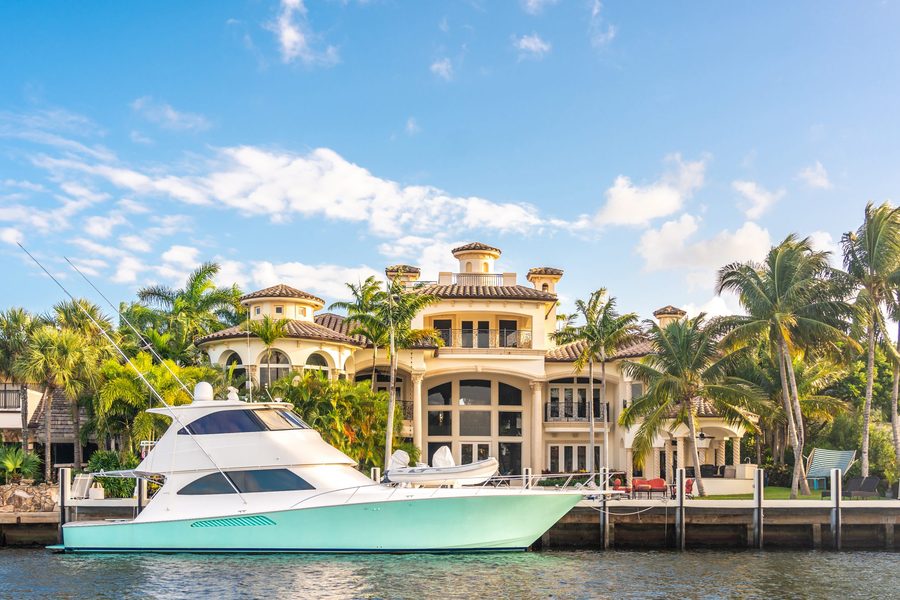
The reality is you can buy your first home in Fort Lauderdale. But “Fort Lauderdale” isn’t one market, it’s dozens of micro-markets stacked next to each other, and where you land determines whether this is realistic on your income or a stretch that keeps you up at night. This guide is the one I wish more first-time buyers had before they started scrolling Zillow and falling in love with listings they can’t actually afford.
I’m not going to tell you every neighborhood is within reach, because it isn’t. Las Olas waterfront and Coral Ridge single-family homes are not first-time buyer territory, those start around $800,000 and run past $2 million. Fort Lauderdale is the real urban anchor of this whole part of Broward County, over three hundred miles of navigable waterways, boat-dock living, a genuine downtown skyline, and that comes with a price tag in the neighborhoods built around it. But there’s a real, functional path into ownership here if you know which streets to look on, which loan programs actually apply to you, and which costs nobody mentions until you’re under contract.
First-Time Buyer in Fort Lauderdale: Is It Realistic and Where Do You Start? The Honest Numbers
Fort Lauderdale’s overall single-family median sits in the $550,000 to $600,000 range, which sounds discouraging if that’s the only number you’ve seen. But that median includes waterfront estates in Rio Vista and new construction in Victoria Park. It’s not what a first-time buyer is actually shopping, and it’s not a useful number for you at all. A citywide median is an average of two very different markets smashed together, waterfront and inland, new and 1950s block construction, and treating it as your baseline is how people talk themselves out of buying before they’ve even looked at a real listing.
Here’s what’s real:
- Condos and townhomes in the city start in the low $300,000s, with plenty of one and two-bedroom units in the $250,000 to $400,000 range once you move slightly off the beach.
- Single-family homes in emerging or transitional neighborhoods (more on those below) run $400,000 to $600,000, which is achievable on a household income of $95,000 to $130,000 depending on your down payment and debt load.
- New construction townhomes in parts of Broward, some close enough to commute into Fort Lauderdale, start in the $390,000s to $500,000s. Check the Best New Construction Communities Near Fort Lauderdale breakdown for exact pricing by community.
So the realistic path isn’t “can I afford Fort Lauderdale.” It’s “which part of Fort Lauderdale, in which product type, fits my actual budget.” That’s a very different, much more answerable question, and it’s the one your lender and your agent should be helping you answer in your first conversation, not your fifth.
To make this concrete: a single buyer making $78,000 a year with $12,000 saved is not shopping Rio Vista, and shouldn’t be discouraged by that. That buyer is shopping a one-bedroom condo in Flagler Village or the Sailboat Bend fringe, or possibly a small single-family in Lauderdale Manors with FHA financing. A dual-income couple making $145,000 combined with $40,000 saved is a completely different buyer, one who can realistically compete for a Riverland or Poinsettia Heights single-family. Same city, two entirely different, entirely achievable plans. That’s the point of this whole guide.
What “First-Time Buyer” Actually Means (and Why It Matters for Financing)
The federal definition is broader than most people think. You qualify as a first-time buyer if you haven’t owned a primary residence in the past three years, even if you’ve owned property before. That opens up programs a lot of people assume they’re not eligible for, including divorced buyers who sold a marital home years ago, people who inherited and later sold a property, and buyers who owned out of state a decade ago and have been renting since.
FHA loans
3.5% down, more forgiving credit requirements (usually 580+), and the most common path for first-time buyers here. On a $450,000 home, that’s about $15,750 down. FHA loan limits in Broward County are high enough to cover most starter homes and condos in the neighborhoods below. The tradeoff is mortgage insurance premium (MIP), which stays on the loan for the life of it in most cases unless you refinance later, and FHA has its own condo approval list, meaning not every building in Flagler Village or downtown is FHA-eligible. Confirm the building is on the approved list before you fall for a specific unit.
Conventional loans with 3-5% down
If your credit is strong (680+) and you don’t want mortgage insurance sticking around for the life of the loan, conventional can actually beat FHA long-term, even with a similar down payment. Private mortgage insurance (PMI) on a conventional loan drops off automatically once you hit 20 percent equity, which is a meaningful difference over a ten-year hold compared to FHA’s MIP. If your credit is closer to 700 or above, run both scenarios side by side with your lender before assuming FHA is automatically the cheaper path. It often isn’t.
Florida Hometown Heroes Program
Down payment and closing cost assistance for teachers, nurses, first responders, and other eligible professions, up to $35,000 in some cases. A significant number of my first-time buyers qualify for this and don’t know it exists. Teachers in Broward County Public Schools, nurses at Broward Health or Holy Cross, firefighters, police, corrections officers, active military, this covers a wide swath of the workforce that actually lives and works in this city. If you fall into one of these categories, this should be the first program your lender checks, not an afterthought.
Broward County SHIP Program
State Housing Initiatives Partnership funds offer down payment assistance to income-qualified buyers purchasing in Broward County, including Fort Lauderdale. Income limits and available funds change year to year, so this needs to be checked at the time you’re actually applying, not based on something you read six months ago. SHIP funds also run out mid-cycle in some years, so timing matters. Ask your lender or the county housing office directly what’s currently funded rather than assuming it’s available.
The reality is most first-time buyers never ask about these programs because their lender doesn’t bring them up unless prompted. Ask directly. It’s the difference between needing $30,000 to close and needing $8,000, and that gap is often the entire reason someone thinks they can’t buy yet when they actually can.
The Neighborhoods Where First-Time Buyers Actually Buy in Fort Lauderdale
This is the part that matters most. Here’s where the actual first-time buyer activity happens, not the postcard neighborhoods.
Melrose Park
West of downtown, mostly 1950s and 60s block construction, single-family homes running $400,000 to $550,000. It’s not glamorous, but it’s a real neighborhood with real bones, walkable blocks, and it’s five minutes from downtown and the beach corridor. Budget for updates on older systems (roof, AC, electrical) since a lot of this housing stock hasn’t been touched since it was built. Insurance underwriters will ask about roof age here before anything else, so get that answer before you write an offer.
Poinsettia Heights
Sits just northwest of Flagler Village, one of the more visibly transitioning pockets in the city right now. Small single-family and duplex product, $450,000 to $650,000, with new infill construction pushing prices up each year. If you want to be early to a neighborhood that’s clearly on its way up, this is one to watch. Walk the blocks on a weekday morning, not just a Sunday open house, and you’ll see the mix of original 1950s homes next to brand new infill, which tells you exactly where this neighborhood is headed over the next five years.
Riverland (Southwest Fort Lauderdale)
One of the most underrated starter neighborhoods in the city. Established single-family homes, larger lots than you’d expect this close to downtown, generally $450,000 to $600,000. It’s got a real community feel, a neighborhood association, and it’s close enough to I-595 and the airport for an easy commute. It’s also one of the better options if you want a yard, a garage, and no HOA, without paying Riverside Park or Rio Vista pricing to get it.
Croissant Park
South of downtown near the New River, small bungalow-style homes, similar price range to Riverland. Popular with young professionals and first-time buyers who want charm over square footage. Lots here tend to be smaller than Riverland, so if space matters more to you than architectural character, that’s the tradeoff to weigh between the two.
Franklin Park and FAT Village fringe
Right on the edge of the arts district and Flagler Village. This is more speculative territory, prices have moved up fast as development pushes north from downtown, but you can still find entry points in the $500,000s for a small single-family or townhome. This is the neighborhood I tell buyers to consider if appreciation matters more to you than moving in and being fully settled today, because it’s still actively changing.
Lauderdale Manors
Further west, more affordable, single-family homes often in the $350,000 to $450,000 range. It’s a longer-term hold if you’re looking for appreciation, and it requires the most patience in terms of neighborhood change, but the price point is the most accessible on this list. For a buyer who is priced out of Riverland or Poinsettia Heights entirely, this is often where the math actually works, and it puts you in a real single-family home with a yard instead of a starter condo.
Downtown and Flagler Village condos
If a house isn’t realistic yet, condos in Flagler Village, the Sailboat Bend fringe, or along the Himmarshee corridor start in the $250,000 to $350,000 range for one-bedrooms. You trade square footage and a yard for walkability, no exterior maintenance, and proximity to Las Olas, the beach, and Brightline. Just understand condo financing rules below before you fall in love with a specific building.
For a wider view of how these neighborhoods compare to suburbs further out, the Where to Live in the Fort Lauderdale Area guide breaks down Parkland, Weston, Coral Springs, Pembroke Pines, and Davie by buyer type, useful if you’re weighing city living against more space for the money in the suburbs. If walkability and nightlife matter more to you than square footage, it’s also worth reading how Wilton Manors compares, since it’s a smaller, more scarce single-family market just north of the neighborhoods above, but with a similarly walkable, urban feel to Flagler Village.
Condo vs Townhome vs Single-Family: Which Makes Sense First
Condos
Lowest entry price, zero exterior maintenance, often the best walkability. But since the Surfside collapse in 2021, Fannie Mae and Freddie Mac tightened lending rules significantly. Buildings need adequate reserves, no significant deferred maintenance, and to pass a structural integrity review if they’re over a certain age. Some older buildings in and around Fort Lauderdale have failed these reviews or are mid-special-assessment, which can kill your financing or hit you with a bill of $20,000 to $50,000+ after closing. Ask for the building’s reserve study and milestone inspection report before you write an offer, not after. If a listing agent hesitates or can’t produce these documents quickly, treat that as a warning sign, not a coincidence.
Townhomes
The middle ground. Usually a smaller HOA than a condo, no shared walls with neighbors above or below you, and often a small yard or patio. New construction townhome communities feeding into the Fort Lauderdale market are a real option here, and they come with builder warranties, which matters a lot if you’re not planning to do renovation work in year one. Resale townhomes in the neighborhoods above tend to have lower HOA dues than downtown condos, since there’s usually no elevator, no lobby staff, and less shared infrastructure to maintain.
Single-family homes
Highest entry price of the three in most cases, but no HOA in a lot of the older neighborhoods listed above, full control over the property, and generally the strongest long-term appreciation. If your budget allows it and you can handle owning the maintenance outright, this is usually the better long-term financial move. The tradeoff is that you’re now responsible for the roof, the AC, the water heater, and everything else, with no association absorbing any of it, so budget a real maintenance reserve, not just the mortgage payment.
If you want to see what’s actually being built at these price points right now, New Construction in Fort Lauderdale: What’s Being Built and What It Costs has current pricing by community.
The Real Monthly Costs Nobody Tells You About
This is where I see first-time buyers get blindsided, and it’s not the mortgage payment.
Homeowners insurance. Florida insurance costs have climbed hard the past few years. Expect $4,000 to $8,000 a year for a single-family home depending on age, roof condition, and flood zone. Homes with roofs older than 15 years can be difficult or expensive to insure at all. Get an insurance quote before you go under contract, not during your inspection period when you’re already emotionally attached. I’ve watched buyers get a $9,000 annual quote on day three of their inspection period and have to decide, under time pressure, whether the deal still works. Get the quote earlier and you never end up in that position.
Flood zone and elevation. A lot of Fort Lauderdale sits in flood zones given the canal and waterway network. Flood insurance is a separate policy from homeowners insurance and can add another $600 to $2,000+ a year depending on the zone and elevation certificate. Ask for the elevation certificate on any home near a canal or the New River before you assume the flood premium will be manageable, since two homes on the same block can carry very different flood costs depending on their elevation.
HOA and condo fees. Ranges wildly. A small single-family HOA in a Riverland-type neighborhood might be $0 to $50 a month if there’s an HOA at all. A downtown condo can run $500 to $900+ a month, which needs to be underwritten into your budget the same way a mortgage payment is. Always ask whether a special assessment is pending or has recently passed, since a building’s monthly fee can look reasonable while a $15,000 one-time assessment sits quietly in the meeting minutes.
Property taxes and homestead exemption. Florida’s homestead exemption caps annual assessment increases once you own and occupy the property as your primary residence, but your first year’s tax bill is based on the prior owner’s assessed value reset to the sale price, meaning your first year taxes can jump notably from what the seller was paying. Budget for the higher number, not the number on the listing sheet. This trips up more first-time buyers than almost anything else on this list, because the listing shows the seller’s tax bill, not yours.
Closing costs. Beyond your down payment, plan on 2 to 4 percent of the purchase price for closing costs (title insurance, lender fees, prepaid escrow, and recording fees). On a $450,000 home, that’s roughly $9,000 to $18,000 on top of your down payment. Some of this can be negotiated as a seller credit depending on market conditions, which is another reason to have an agent who’s actively negotiating for you, not just showing you houses.
New Construction as a First-Time Buyer Option
New construction isn’t just for move-up buyers. A number of builders offer townhome and smaller single-family product specifically priced for first-time buyers, with the added benefit of a builder warranty and no immediate renovation costs. On new construction, the builder typically pays your buyer’s agent’s commission, meaning you get full representation at no direct cost to you, which is worth taking advantage of rather than walking into a sales center alone. Builder incentives also shift monthly, rate buydowns, closing cost credits, design center upgrades included at no charge, and none of that is posted publicly. It’s only available if someone is asking the sales rep the right questions on your behalf.
The tradeoff is location. A lot of the most affordable new construction sits further west or north of the urban core, so you’re trading walkability and commute time for a lower price and a brand new home. Whether that tradeoff makes sense depends on where you work and what your daily life actually looks like, which is covered in more detail in Life in Fort Lauderdale: Restaurants, Beach, Boating, and What a Day Actually Looks Like.
If schools are part of your decision (even if kids aren’t in the picture yet, resale value tracks school zones), Fort Lauderdale Schools: What Parents Need to Know Before They Buy is worth reading before you commit to a specific neighborhood.
Fort Lauderdale vs. the Alternatives
Some first-time buyers widen their search once they see real numbers. If you’re cross-shopping, Fort Lauderdale vs. Miami: Which One Is Actually Right for You? lays out the price and lifestyle differences directly, and it usually confirms that Fort Lauderdale gives you more home for the money without giving up the urban, waterfront lifestyle that draws people to South Florida in the first place. If your budget is closer to the top end of what’s covered here, it’s also worth comparing against the family suburbs west of the city like Plantation or Cooper City, where single-family inventory is deeper but you give up the walkability and city feel that likely drew you to Fort Lauderdale in the first place.
Step-by-Step: How to Actually Start
- Get pre-approved before you look at a single listing. Not pre-qualified, pre-approved. This tells you your real number, which loan programs you qualify for, and whether Hometown Heroes or SHIP funds apply to your situation.
- Get a real insurance quote on a comparable property, not an estimate. Insurance is the number that changes your monthly payment the most and the number most buyers skip until it’s too late.
- Pick two or three neighborhoods from the list above, not ten. First-time buyers who try to keep every neighborhood in play end up paralyzed. Narrow it down based on commute and budget, then focus.
- Work with an agent who knows the neighborhood-level pricing, not just the citywide median. The difference between Melrose Park and Coral Ridge is enormous, and a citywide median tells you nothing useful about either one.
- On new construction, bring your own agent to the sales center on your first visit. Once you walk in without one, most builders won’t let you add representation later, and you lose access to free advocacy that costs you nothing.
- Budget the full monthly number, not just principal and interest. Add taxes, insurance, HOA, and PMI if applicable before you decide what price range is actually comfortable.
- Ask about closing costs and available credits before you’re three weeks into the process. Knowing whether you need $12,000 or $22,000 to close changes which homes you should even be looking at.
The Bottom Line
Buying your first home in Fort Lauderdale is realistic if you go in with accurate numbers instead of the citywide median, target the right neighborhoods, and use the loan programs actually built for buyers in your position. It’s not realistic if you’re shopping Las Olas waterfront on a starter budget, and no honest agent should let you believe otherwise.
Drop your budget and what you do for work in the comments or reach out directly, and I’ll tell you which of these neighborhoods actually fits. Make a wise decision, not a rushed one.
More articles you might like
Best New Construction Communities Near Fort Lauderdale (2026): Ranked by Price and Fit
13 min readWhere to Live in the Fort Lauderdale Area (2026): Best Suburbs by Who You Are
18 min readFort Lauderdale vs Boca Raton: City Life vs Country Club South Florida (2026 Guide)
13 min readFort Lauderdale vs. Miami: Which One Is Actually Right for You?
13 min readLife in Fort Lauderdale: Restaurants, Beach, Boating, and What a Day Actually Looks Like
14 min read