Pompano Beach Waterfront Homes: More Access, Lower Price Than Fort Lauderdale
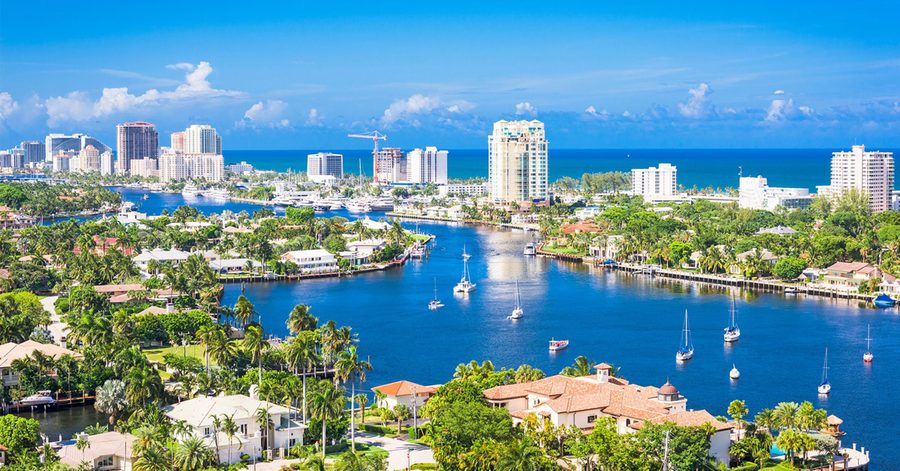
If you want deep water and dock space without a Fort Lauderdale price tag, Pompano Beach waterfront homes are where you look first. That is the honest, short version of pompano beach waterfront homes more access lower price than fort lauderdale, and it holds up whether you are comparing a canal home, an Intracoastal property, or a deep water lot with direct ocean access. Buyers who spend a weekend driving both markets usually come back to Pompano Beach for the same three reasons: the water is real, the bridges are fewer, and the price per foot of dockage is meaningfully lower.
This guide breaks down what “waterfront” actually means in Pompano Beach, which neighborhoods deliver on it, what it costs compared to Fort Lauderdale, and what nobody tells you about owning a seawall and a dock before you sign anything.
Pompano Beach Waterfront Homes: More Access, Lower Price Than Fort Lauderdale
Fort Lauderdale earned its “Venice of America” reputation honestly. Rio Vista, the Las Olas Isles, Harbor Beach, and Idlewyld built the brand, and the brand carries a premium. That premium is not really about the water itself. Pompano Beach sits on the same canal and Intracoastal system, feeds into the same Hillsboro Inlet and Port Everglades-connected waterways, and in some neighborhoods offers cleaner, more direct access to the ocean than parts of Fort Lauderdale do.
What you are paying for in Fort Lauderdale waterfront is the zip code and the walk to Las Olas Boulevard. What you get in Pompano Beach is the same salt water, a shorter commute to the Hillsboro Inlet, and in many pockets, a dock that does not require you to time a fixed bridge opening. For a boat owner, that last point is not a lifestyle nicety. It is the difference between owning a 45-foot sport fisherman you can actually use on a Tuesday afternoon and owning one you plan trips around.
The price gap is not marginal. It is the kind of gap that lets a buyer step into real waterfront ownership five to ten years earlier than they could in Fort Lauderdale, or buy the same budget in a bigger house with better dockage. That is the actual argument for Pompano Beach, and it is worth understanding neighborhood by neighborhood, because “waterfront” in Pompano Beach is not one product.
The Three Kinds of Waterfront You’ll Find in Pompano Beach
Buyers searching “waterfront homes” often lump everything together. In Pompano Beach, there are three distinct products, and the price and the lifestyle change a lot between them.
Canal Homes (No Direct Ocean Access)
These are homes on interior finger canals that connect to the larger waterway system but dead-end or require passing through lower, narrower bridges to reach open water. You still get a private dock, you can still keep a boat, but it might be a pontoon, a center console, or a smaller cruiser rather than anything with real air draft. This is the entry point into Pompano Beach waterfront living, and it is where most first-time waterfront buyers land.
Intracoastal Waterway Homes
Homes directly on the Intracoastal get wider water, better views, and easier navigation, since you are not threading a narrow canal to get out. Boats here tend to run larger. Pricing sits above interior canal homes but still well under Fort Lauderdale’s Intracoastal-front inventory in comparable condition.
Deep Water, Ocean Access Homes Near the Hillsboro Inlet
This is the category that makes Pompano Beach genuinely different from most of Broward County’s waterfront stock. Neighborhoods clustered near the north end of the city, close to the Hillsboro Inlet, offer deep water canals that reach the ocean without a fixed bridge in the way. For a boater, this is the whole ballgame. No mast height limit, no tide-dependent bridge timing, no clearance math before every trip. Sailboats, larger sport fishing boats, and anything with real vertical clearance needs can move in and out on their own schedule.
Neighborhood by Neighborhood: Where the Water Is
Pompano Beach waterfront is spread across several distinct pockets, each with its own price band and boat profile. If you are cross-shopping, this is the map to know before you call a listing agent.
Harbor Village and Riverside Park
Both sit closer to the western side of the waterway system, off Federal Highway, with interior canal lots. These are the more attainable entry points, with a mix of original 1960s and 1970s ranch homes and renovated or rebuilt properties on the same canals. Dockage tends to be modest, in the 40 to 60 foot range, suited to a cruiser or center console rather than a sport fisherman.
Cresthaven and Snug Harbor
Established canal neighborhoods with a mix of older homes and newer builds or major renovations. Lot sizes and dock lengths vary block by block, which is why a walk-through with someone who knows the specific canal matters more here than almost anywhere else in the city. Two homes on the same street can have very different boat capacity depending on canal width and bridge clearance between the house and open water.
Hillsboro Shores, Watersedge, and Silver Shores
This is the deep water, bridge-free cluster near the Hillsboro Inlet, and it is the most boater-serious real estate in the city. Homes here are priced higher than the interior canal neighborhoods, but the value proposition against Fort Lauderdale is still strong: comparable ocean-access dockage in Fort Lauderdale’s higher-end canal neighborhoods routinely costs more per linear foot of seawall. Buyers who fish offshore, run a sailboat, or just want to leave the dock without checking a bridge schedule end up here.
Pompano Beach Isles and Near-Beach Pockets
Closer to the barrier island and the beach itself, waterfront properties trade partly on boat access and partly on proximity to A1A, the pier, and the beachfront restaurant corridor. These command a premium over the interior canal neighborhoods for lifestyle reasons as much as dockage.
For a full breakdown of which pockets of the city fit which kind of buyer, including the ones that are not waterfront at all, the Pompano Beach Neighborhoods guide lays out the city block by block.
The Price Gap: Pompano Beach vs. Fort Lauderdale Waterfront
Here is the comparison buyers actually want, in plain numbers.
Interior canal homes, no ocean access: In Pompano Beach, expect a range roughly from the high $600,000s to the low $1 million range for a renovated three or four bedroom home with a private dock. A comparable canal home in Fort Lauderdale’s interior neighborhoods, outside the marquee zip codes, tends to start closer to $1.2 million to $1.5 million.
Deep water, ocean access homes: In Pompano Beach’s Hillsboro Shores and Watersedge pockets, deep water homes with real dockage generally run from $1.5 million into the low $3 millions depending on lot width, seawall condition, and whether the home is original or rebuilt. In Fort Lauderdale, the equivalent product in Rio Vista, Harbor Beach, or the Las Olas Isles starts around $2 million and climbs well past $10 million for larger estates on wide water.
Intracoastal-front: Pompano Beach Intracoastal homes typically land between the canal and deep water tiers, often $1.2 million to $2.5 million depending on lot size and view. Fort Lauderdale’s Intracoastal-front inventory in comparable neighborhoods regularly clears $3 million.
The pattern holds across every tier: Pompano Beach delivers similar or better boat access at 30 to 50 percent less than Fort Lauderdale’s version of the same product. That gap has been narrowing slightly as more buyers catch on, which is part of why waiting rarely helps in this segment. For current pricing trends across the city, not just waterfront, the Pompano Beach Market Update tracks where values are moving.
What Waterfront Ownership Actually Costs (Insurance, Seawalls, HOA)
This is the part most listings skip, and it is the part that actually determines whether a waterfront home is a good decision or an expensive mistake.
Insurance
Homeowners insurance across Broward County has climbed 30 to 80 percent since 2020, and waterfront property carries its own additional layer on top of that baseline increase because of flood and wind exposure. Expect to budget $6,000 to $15,000 a year in combined wind and flood coverage on a Pompano Beach waterfront home, with the low end applying to newer or elevated construction and the high end applying to older homes at grade. This is exactly why new construction and recently rebuilt waterfront homes are drawing so much buyer interest right now: modern wind mitigation features (impact windows, updated roofs, elevation) translate directly into lower premiums, sometimes by thousands of dollars a year.
Seawalls
The seawall is not decorative. It is a structural retaining wall holding your yard, and in some cases your foundation setback, in place against tidal water. Seawalls in Pompano Beach’s older canal neighborhoods were largely built in the 1950s through 1970s, and many are approaching or past their functional lifespan. A seawall replacement runs anywhere from $600 to $1,200 per linear foot depending on materials and access, which on a typical 80 to 100 foot waterfront lot means a six-figure project. Before making an offer on any canal or Intracoastal home, get a marine contractor to inspect the seawall specifically, not just a general home inspector glancing at it from the yard. Cracking, leaning, or visible rebar are all signs of a wall nearing the end of its life.
Dock Condition and Permitting
Older wood docks need regular maintenance and eventual replacement. If you plan to add or upgrade a lift, or extend a dock, that requires permitting through the city and sometimes the state (Florida DEP) depending on the waterway. Factor timeline, not just cost, into any dock work you plan after closing.
HOA and Deed Restrictions
Most Pompano Beach waterfront neighborhoods are not governed by a formal HOA in the way a new construction community is, since many were built out decades ago as individual lots rather than planned developments. That means lower or no monthly HOA dues in a lot of the classic canal neighborhoods, but it also means less enforcement consistency on things like dock condition, boat storage, or landscaping next door. Newer waterfront developments and any condo or townhome waterfront product will carry standard HOA or condo association dues, and those should be reviewed the same way you would review dues on any other property, including whether a reserve study shows the association is funding seawall or dock maintenance adequately.
Who Pompano Beach Waterfront Actually Fits
Waterfront living is not for everyone, and it is worth being honest about who benefits from this trade versus who should stay inland.
Boat owners get the clearest win. If you already own a boat, or you are buying specifically to own one, the math is straightforward: dockage that costs $30,000 to $60,000 a year to rent at a marina becomes free once you own the water behind your house. Over a decade of ownership, that alone can offset a meaningful chunk of the price premium over a non-waterfront home.
Fort Lauderdale downsizers get real value. Buyers who already know they want canal or Intracoastal living, and who priced out Rio Vista or the Las Olas Isles, routinely find they can buy more house and more dock in Pompano Beach for the same or less money.
First-time waterfront buyers should start with interior canals, not deep water. The jump from a non-waterfront budget straight into a Hillsboro Shores deep water lot is a big one. Interior canal neighborhoods like Harbor Village or Riverside Park let a buyer get into dock ownership, learn what seawall and dock maintenance actually involves, and trade up later once they know what they are doing. The First-Time Buyer in Pompano Beach guide covers this entry-level path in more detail, including where waterfront intersects with realistic starter budgets.
Buyers who just want beach proximity, not a private dock, should look at condos or non-waterfront homes near A1A instead. Paying for a private dock you will not use is the most common regret among waterfront buyers who bought on emotion rather than actual boating plans.
How to Buy Waterfront in Pompano Beach the Right Way
-
Decide what kind of water access you actually need. A pontoon and a paddleboard need almost nothing. A 40-foot sport fisherman needs deep water and bridge-free access. Be honest before you start touring, because it changes which neighborhoods are even relevant.
-
Get a marine contractor on the seawall before you get emotionally attached to the house. This is the single biggest cost variable in waterfront ownership and it is invisible to a standard home inspection.
-
Check flood zone and elevation certificates early. Base flood elevation and the home’s actual elevation determine both your insurance cost and whether a future rebuild or renovation will require raising the structure.
-
Confirm dock permitting history. Ask whether the current dock, lift, and any seawall work were permitted through the city and, where applicable, the state. Unpermitted work becomes your problem at resale.
-
Compare against the Fort Lauderdale alternative directly. Pull two or three comparable listings across the county line and run the numbers side by side. Most buyers only need to do this once to see the gap clearly.
-
Think about new construction as an alternative to renovation. Some Pompano Beach waterfront lots are being redeveloped with new, elevated, hurricane-code construction that solves the insurance and seawall risk in one move, at a higher purchase price but lower ongoing cost. The New Construction in Pompano Beach guide covers what is currently being built and what it costs.
Investment and Resale Considerations
Waterfront property in Pompano Beach has historically held value better than inland inventory during slow markets, simply because the supply of true waterfront lots is fixed and cannot expand. That scarcity is also why investors have started paying closer attention to the segment, not just owner-occupants. If you are weighing a waterfront purchase partly as a long-term hold or rental play, the Pompano Beach Investment Property guide breaks down how waterfront performs against other property types in the city, including short-term rental rules that can affect canal and Intracoastal homes differently than beach condos.
Bottom Line
Pompano Beach waterfront homes deliver the same salt water, the same Intracoastal system, and in the neighborhoods near the Hillsboro Inlet, better bridge-free ocean access than most of what Fort Lauderdale offers, all at 30 to 50 percent less than the comparable Fort Lauderdale product. The trade-off is not the water quality or the access. It is the zip code and the walk to Las Olas. For most boat owners and waterfront buyers, that is an easy trade to make.
Get the seawall inspected, understand your insurance number before you fall in love with the dock, and match the neighborhood to the boat you actually own, not the one you might buy someday. If you are still mapping out whether Pompano Beach fits your broader relocation plans beyond just the water, the Pompano Beach Complete Relocation Guide and the Moving to Pompano Beach guide cover the rest of the city, from schools to daily life, so you can see how the waterfront decision fits into the bigger picture.
Want a short list of current waterfront listings that match your boat and budget? Send me a message with your dock length needs and I will put together options across the interior canal, Intracoastal, and deep water tiers.


Watch: learn more
Go deeper with my South Florida Insider videos.

The Best Flex-Space Townhome in West Palm Beach: Pulte's Nautical Plan

Inside Everton's Latitude II Model: $458k New Homes In Palm Beach
The Best Flex-Space Townhome in West Palm Beach: Pulte's Nautical Plan
More articles you might like
Life in Pompano Beach: Beach, Pier, Restaurants, and What the City Is Becoming
17 min readPompano Beach, Florida: The Complete Relocation Guide for 2026
20 min readFirst-Time Buyer in Pompano Beach: The Coastal Broward Option at a Better Price
18 min readPompano Beach Schools: What Families Need to Know (2026 Guide)
17 min readNew Construction in Pompano Beach: What Is Being Built and What It Costs (2026)
14 min read