Pompano Beach, Florida: The Complete Relocation Guide for 2026
Pompano Beach, Florida: The Complete Relocation Guide for 2026
If you’re asking whether Pompano Beach, Florida is a smart place to relocate in 2026, the honest answer is yes, particularly if Fort Lauderdale prices already knocked you out of the water. Pompano Beach, Florida: the complete relocation guide for 2026 comes down to this: you get a real beach, a real pier, real waterfront canal access, and a downtown that’s mid-transformation, all for a price that still trails its southern neighbor by a wide margin. That gap is closing fast, which is exactly why this city deserves a serious look right now instead of in three years when the pricing has caught up.
This guide covers what actually matters if you’re considering the move: neighborhoods, real price ranges, schools, new construction, investment potential, taxes and insurance, and the corridors that will define your daily commute. No hype, no “hidden gem” language. Just what you need to make an informed decision.
I get some version of the same question every week from relocating buyers: “Is Pompano actually a good area, or is it just cheaper Fort Lauderdale?” The honest answer is both. It’s cheaper because it’s earlier in its transformation, not because something is wrong with it. That distinction matters when you’re deciding whether to buy now or wait.
Pompano Beach, Florida: The Complete Relocation Guide for 2026
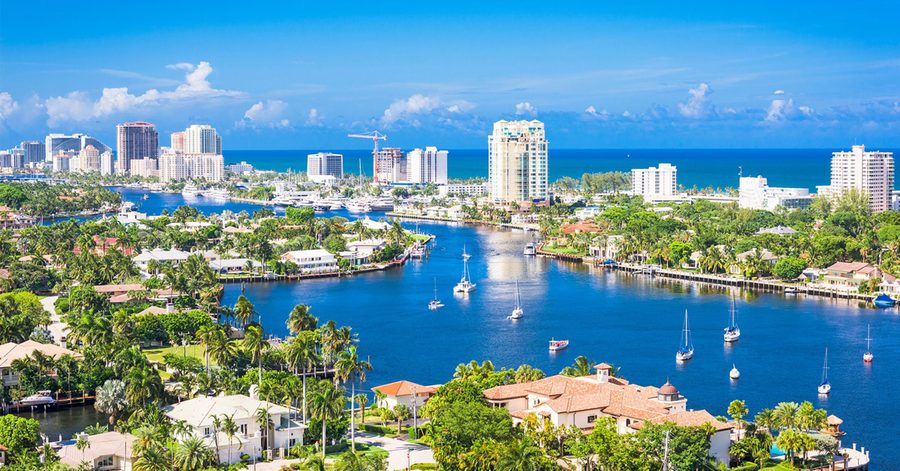
Pompano Beach sits in northeast Broward County, wedged between Fort Lauderdale to the south and Deerfield Beach/Boca Raton to the north. It has 3+ miles of Atlantic beachfront, a working municipal pier, one of the largest natural harbors in the region (Hillsboro Inlet and the Intracoastal), and a network of canals that rival Fort Lauderdale’s “Venice of America” waterways, just without the Venice of America price tag.
The city has spent the last several years on a deliberate revitalization push. The old Pompano Beach Municipal Pier area, Fisherman’s Village, and the downtown core around Atlantic Boulevard have all seen public and private investment. The Community Redevelopment Agency (CRA) has been actively courting mixed-use development, and it’s working. That matters for you as a relocation buyer because you’re not betting on a city that might change, you’re buying into one that is already mid-change, with visible cranes to prove it.
What that redevelopment actually looks like on the ground: new sidewalks and lighting along Atlantic Boulevard, restaurant and retail buildout at Fisherman’s Village, permitting activity around the pier corridor, and a steady stream of small and mid-size residential projects filling in parcels that sat vacant or underused for a decade. None of this happened overnight, and none of it is finished. But the direction is consistent, and consistency over multiple years is what separates a real revitalization from a marketing pitch.
For a broader look at what daily life actually feels like here, the beach, the pier, the restaurant scene, see Life in Pompano Beach: Beach, Pier, Restaurants, and What the City Is Becoming.
Why People Are Actually Moving to Pompano Beach in 2026
Three forces are driving relocation demand into Pompano Beach right now, and none of them are speculative.
Price relative to Fort Lauderdale. A three bedroom single family home in a comparable canal-front location in Fort Lauderdale (Rio Vista, Coral Ridge, Victoria Park) will run you a significant premium over the same footprint in Pompano’s Harbor Village or Pompano Isles. Buyers doing side by side comparisons are realizing they can get similar dockage and similar proximity to the ocean for less. I’ve walked buyers through this exact comparison more than once: same boat length, same no-bridge access to the Intracoastal, and a difference of several hundred thousand dollars in purchase price depending on the specific street and lot.
New construction and luxury capital migration. Global hospitality brands are placing bets on this stretch of Broward. The Waldorf Astoria Residences Pompano Beach, the first standalone Waldorf Astoria residential project of its kind, is a clear signal that institutional capital sees Pompano the way it saw Fort Lauderdale a decade ago. When a luxury flag like that plants itself in a market, price appreciation tends to follow, and it pulls the surrounding submarket up with it. That’s not a guess, it’s a pattern that’s played out in Fort Lauderdale’s own Las Olas corridor, in Miami’s Edgewater, and now here.
Insurance and construction quality. Broward County homeowners insurance premiums have climbed somewhere between 30% and 80% since 2022, depending on the carrier and the age of the home. That has made new construction materially more attractive than it was five years ago, because homes built to current wind-mitigation and hurricane-impact codes qualify for real insurance discounts compared to older legacy housing stock. If you’re relocating and comparing a 1970s canal home to a new build, the insurance line item alone can change the math. I’ve seen quotes on older beachside condo buildings in Pompano come back two to three times higher per year than a comparable unit in a building built after 2020 with impact glass and a reinforced roof.
There’s a fourth factor worth naming even though it’s less measurable: quality of life per dollar. A relocating family moving from a landlocked market, or from a higher cost coastal market like South Florida’s own Miami Beach or Palm Beach, often finds that Pompano gives them beach access, boating, and a slower pace without asking them to give up proximity to major employment centers in Fort Lauderdale and Miami-Dade.
Pompano Beach Neighborhoods: Where to Actually Live
Pompano Beach is not one neighborhood, it’s a patchwork of very different submarkets, and picking the wrong one for your lifestyle is the most common relocation mistake buyers make here. I tell every relocating client the same thing before we tour anything: decide what you actually want your weekday morning to look like, walkable coffee and beach, quiet cul-de-sac with a golf view, or boat in the backyard, because Pompano genuinely offers all three within a fifteen minute drive of each other, and they price very differently.
Beachside and the Pier Area
Directly east, along and near A1A. This is where you find the older mid-rise condo stock, plus new luxury towers rising around the pier and Fisherman’s Village redevelopment. Walkable to the beach, restaurants, and the pier itself. Prices here run from the $300,000s for a dated one bedroom condo to well over $1 million for new construction with ocean views. This is the right fit for buyers who want to walk to dinner and the sand more than they want a yard, and it’s popular with downsizers and second-home buyers as much as full-time relocators.
Harbor Village and Pompano Isles (Waterfront)
These are the deepwater and canal-front pockets that compete directly with Fort Lauderdale’s waterfront neighborhoods. Direct or near-direct ocean access without a bridge is the premium feature here, and it’s the one thing that stays scarce no matter how much gets built. Expect $900,000 to well over $2 million depending on dockage and lot size. If a boat is the whole point of the move, this is where you start your search, but confirm actual bridge clearance and dock depth before you assume “waterfront” means “your specific boat fits.”
Palm Aire
An established, golf-course-anchored community inland, popular with retirees and move-up families who want quiet streets and mature landscaping over walkability to the beach. Single family homes generally run $450,000 to $900,000. HOA fees vary significantly by sub-section, some are voluntary, some mandatory with amenities, so confirm this per listing rather than assuming. Palm Aire also tends to zone into some of the stronger performing schools in the city, which is part of why families with kids gravitate here over the beachside condo stock.
Cresthaven, Kendall Green, and Collier City
More affordable, inland, and in various stages of transition. Good entry points for buyers who want Pompano zip codes and proximity without waterfront pricing, but these areas require block-by-block due diligence. Some streets are well maintained and stable, others are not there yet. This is where I tell first-time buyers to slow down and actually drive the street at two different times of day before writing an offer, not just pull comps off a portal.
Highland Estates and the Northwest Corridor
Newer construction pockets and larger lots, popular with families wanting more space without leaving city limits. This corridor is also where a lot of the mid-market townhome and single family infill product mentioned later in this guide is actually being built, so it’s worth watching if new construction is your priority.
For the full neighborhood by neighborhood breakdown, including which streets to avoid and why, see Pompano Beach Neighborhoods: Beach, Waterfront, and Where to Avoid.
Pompano Beach Real Estate Prices in 2026
Pricing in Pompano Beach spans a wider range than most Broward beach cities because the inventory itself is so varied, from 1960s concrete block homes to brand new luxury towers. That range is actually an advantage for relocating buyers, since it means there’s a real entry point at almost every budget, something that’s no longer true in Fort Lauderdale proper.
- Condos (non-waterfront, inland or older beachside): $250,000 to $450,000
- Condos (new construction, near beach or downtown): $500,000 to $1.2 million
- Single family (inland, non-waterfront): $450,000 to $750,000
- Single family (canal or waterfront, no ocean access): $700,000 to $1.3 million
- Single family (deepwater, ocean access): $1.3 million to $3 million+
- Ultra-luxury new construction (Waldorf Astoria Residences and comparable): starting in the low $2 millions and up
These are general ranges, not appraisals, and they move with interest rates and inventory. For the most current data and trend direction, see Pompano Beach Real Estate Market Update: Prices and Opportunity in 2026.
If you’re a first-time buyer specifically, the calculus is different, and there’s a real argument that Pompano is currently the best entry point on the coastal Broward corridor. That’s covered in detail in First-Time Buyer in Pompano Beach: The Coastal Broward Option at a Better Price.
Worth noting for buyers weighing condo versus single family here: older condo buildings, especially those approaching or past the 30 year mark, are now subject to Florida’s post-Surfside structural inspection and reserve funding requirements. That can mean a special assessment showing up on a building you’re otherwise excited about. It’s not a reason to avoid older condo stock outright, plenty of buildings are well managed and fully funded, but it is a reason to ask for the structural inspection report and reserve study before you write an offer, not after.
Waterfront Access: The Real Reason to Consider Pompano Over Fort Lauderdale
If waterfront living is the whole point of your move to South Florida, Pompano Beach deserves a serious look before you default to Fort Lauderdale. The math is straightforward: comparable dockage, comparable proximity to inlet access, and a meaningfully lower price per square foot in most Pompano waterfront pockets versus Rio Vista, Las Olas Isles, or Coral Ridge.
The tradeoff is that Pompano’s waterfront neighborhoods are less uniformly polished than Fort Lauderdale’s most prestigious isles. You’ll find beautifully renovated modern homes next to properties that haven’t been touched since the 1980s, sometimes on the same block. That’s not a red flag, it’s an opportunity, but it means you need to walk the actual street, not just look at comps on a screen. I’ve had buyers fall in love with a listing photo and then change their mind entirely after standing on the seawall and seeing what’s next door, and I’ve had the opposite happen too, buyers who almost passed on a great lot because the neighboring home needed work.
A few specifics that matter more here than they do in Fort Lauderdale’s more established isles: fixed bridge heights along certain canal routes, seawall condition and age (Florida seawalls have a real service life and repair or replacement is not cheap), and whether the dock has permitted electrical and water hookups already in place. None of these show up clearly in listing photos, so this is where working with someone who knows the specific canal system pays off.
Full breakdown of dockage types, canal widths, and which pockets have true ocean access without a fixed bridge in the way: Pompano Beach Waterfront Homes: More Access, Lower Price Than Fort Lauderdale.
New Construction: What’s Actually Being Built
New construction in Pompano Beach breaks into two very different categories right now.
Luxury towers near the beach and downtown. The Waldorf Astoria Residences Pompano Beach anchors this category, bringing hotel-branded residential product to the market for the first time in this specific stretch of Broward. Expect amenity packages built around wellness, marina access, and concierge service, priced accordingly. This category is drawing buyers who might otherwise have looked exclusively at Fort Lauderdale beach or Miami’s Edgewater and Sunny Isles corridor, and who are realizing they can get a comparable branded product here at an earlier stage of pricing.
Mid-market infill and townhome product inland. Builders are filling in smaller parcels west of Federal Highway and around the Palm Aire and northwest corridors with townhome and single family product in the $500,000s to $700,000s range. This is where most relocating families actually end up buying new, not in the luxury towers. These communities tend to be smaller footprint developments rather than the massive master-planned projects you’d see further west in Broward, which means shorter build timelines but also fewer resort-style amenities.
One thing worth knowing before you fall in love with a model home: verify whether the community carries a CDD (Community Development District) assessment in addition to standard property taxes and HOA dues. Large master-planned developments elsewhere in Broward (Coconut Creek’s Mainstreet project is a good regional example) have used CDD financing to fund the infrastructure and walkable retail buyers love, but that debt service shows up as a long-term line item on your tax bill. Ask for the CDD disclosure on any new construction contract before you sign, not after. If you’re comparing a Pompano new build against a similar product in the western Broward corridor, run the CDD math into your monthly cost comparison, because a home with a lower purchase price and an active CDD assessment can end up costing more per month than a home with a higher price tag and no CDD at all.
Full rundown of active and planned projects, builders, and realistic all-in costs: New Construction in Pompano Beach: What Is Being Built and What It Costs.
Schools and Family Considerations
Pompano Beach falls under Broward County Public Schools, and like most of the county, school quality varies significantly by specific zoned school rather than by city name alone. Families relocating here should check the zoned elementary, middle, and high school for the exact address they’re considering, not just assume “Pompano Beach schools” as a monolithic answer.
Some pockets, particularly around Palm Aire and the northern parts of the city bordering Lighthouse Point, zone into stronger-performing schools. Other central and southern sections zone into schools that are still improving. There are also charter and magnet options within reach that some relocating families use to sidestep zoning concerns entirely.
This is one of the areas where I push back hardest on buyers who fall in love with a house first and ask about the school district second. In Broward County, two homes half a mile apart can zone into very different schools, and that zoning line can shift the resale value of the home as much as the waterfront premium does. If schools matter to your family, get the zoned school confirmed through the district’s own address lookup before you get emotionally attached to a listing, not after you’ve already made an offer.
Full school-by-school breakdown: Pompano Beach Schools: What Families Need to Know.
Investment Opportunity: Why Investors Are Paying Attention
Pompano Beach is one of the few remaining coastal Broward markets where an investor can still find cash-flowing rental product within reasonable proximity to the beach. That window is closing as luxury capital moves in, which is exactly why investors are moving now rather than waiting.
The short-term rental and seasonal snowbird rental market here benefits from the same beach and boating appeal as Fort Lauderdale, at entry prices that still pencil for a reasonable cap rate in the right condo buildings and duplex/triplex inventory. Long-term rental demand is also strong given the number of service workers, healthcare staff, and young professionals priced out of Fort Lauderdale and Boca Raton but still wanting coastal proximity.
Investors need to do their homework on two fronts before buying here that they might skip in a more established market. First, confirm the specific building or HOA’s rental restrictions, some allow short-term rentals outright, some require minimum lease terms of six months or a year, and some are actively tightening those rules in response to condo association reform. Second, factor the true cost of insurance and any pending or likely special assessments into your cap rate calculation, not just purchase price and projected rent. A property that pencils at a 7% cap rate on paper can look very different once a real insurance quote and an association reserve study come back.
Full investment breakdown, including which product types are actually cash-flowing at today’s prices: Pompano Beach Investment Property: Why Investors Are Paying Attention in 2026.
Cost of Living: Taxes, Insurance, and HOA Realities
Florida has no state income tax, which is the headline most relocation guides lead with, but it’s not the full cost of living picture in Pompano Beach.
Property taxes follow Broward County’s millage rate, applied to your home’s assessed value, which for new buyers starts at purchase price rather than a long-held assessed value protected by homestead exemption caps. Budget accordingly in your first year, it will be higher than what the previous owner was paying. This trips up more relocating buyers than almost anything else in the process, because the tax bill the seller shows you during the search is not the tax bill you’ll actually pay once the county reassesses at your purchase price.
Insurance is the line item that surprises most relocating buyers. As noted earlier, premiums countywide have climbed 30% to 80% since 2022. This is the single strongest financial argument for buying new construction over older housing stock: modern wind-mitigation features (impact windows, reinforced roof-to-wall connections, updated roofing) qualify for meaningful discounts that older homes simply can’t match without expensive retrofits. Get an actual insurance quote, not an estimate, before you go under contract on anything built before 2010. That quote can change your monthly payment enough to affect what you can qualify for.
HOA and condo association dues vary enormously. A no-frills inland townhome community might run $150 to $300 a month. A full-amenity waterfront or golf community, or a new luxury tower with concierge and marina access, can run well into four figures monthly. Always request the last two years of association financials and any pending special assessments before you close, this is standard due diligence in Florida condo purchases post-Surfside, and it matters even more in a market with as much aging inventory as Pompano’s beachside towers.
Add these three line items together, property tax reassessment, real insurance quotes, and HOA dues with any pending assessments, and you get a far more accurate monthly cost picture than the mortgage calculator on a listing portal will ever show you. This is the conversation I have with almost every relocating client before we start touring, because the sticker price on the home is only part of what you’re actually budgeting for.
Getting Around: Corridors and Commute
Pompano Beach’s daily geography runs on a few key corridors. Federal Highway (US-1) and Dixie Highway run north-south through the inland neighborhoods. A1A hugs the coast and beach communities. I-95 and the Florida Turnpike both cut through the western half of the city, giving reasonable access south to Fort Lauderdale and the airport, or north to Boca Raton and Palm Beach County.
Commute times to downtown Fort Lauderdale run roughly 25 to 40 minutes depending on time of day and which corridor you’re on. To Fort Lauderdale-Hollywood International Airport, plan on a similar window. This matters if you’re relocating for work in Fort Lauderdale or Miami-Dade and want the lower price point without an unreasonable commute.
For buyers commuting north instead, Pompano also sits within a manageable drive of the Boca Raton and Delray Beach employment corridors in Palm Beach County, roughly 20 to 30 minutes depending on traffic. That north-south flexibility is part of what makes the city attractive to relocating professionals who aren’t fully locked into one specific job center yet, or who have two commuters in the household heading different directions each morning. Brightline’s Fort Lauderdale and Boca Raton stations are also within reasonable reach for buyers who want an occasional car-free option to Miami or West Palm Beach.
Should You Actually Move to Pompano Beach in 2026?
If you want beach and waterfront access without Fort Lauderdale pricing, and you’re comfortable doing real due diligence neighborhood by neighborhood rather than assuming uniform quality across the whole city, Pompano Beach is one of the strongest relocation values left on the Broward coast right now. The luxury capital moving in, the pier and downtown revitalization, and the insurance advantage of new construction all point the same direction.
The honest caveat: this is not a finished, polished market yet. You will see a beautifully renovated waterfront home next to a property that needs work. That’s the nature of a city mid-transformation, and it’s also where the opportunity is. Buyers who wait for Pompano to look exactly like Fort Lauderdale will pay Fort Lauderdale prices to get it.
The buyers who do best here are the ones who come in with a clear picture of what they actually want, walkability, waterfront, or space and quiet, and who are willing to walk the street before they trust the comps. The buyers who struggle are the ones trying to treat Pompano like a single, uniform market, because it isn’t one, and never has been.
For the full, unfiltered version of this guide with more on what the city is becoming block by block, read Moving to Pompano Beach: The Honest Guide to Broward’s Emerging Waterfront City.
If you’re actively considering a move, the next step is simple. Reply with “POMPANO” and I’ll send you current listings by neighborhood along with the CDD and HOA disclosures for the specific communities on your radar.



Watch: learn more
Go deeper with my South Florida Insider videos.

The Best Flex-Space Townhome in West Palm Beach: Pulte's Nautical Plan

Inside Everton's Latitude II Model: $458k New Homes In Palm Beach
The Best Flex-Space Townhome in West Palm Beach: Pulte's Nautical Plan
More articles you might like
Moving to Pompano Beach: The Honest Guide to Broward's Emerging Waterfront City
18 min readFirst-Time Buyer in Pompano Beach: The Coastal Broward Option at a Better Price
18 min readLife in Pompano Beach: Beach, Pier, Restaurants, and What the City Is Becoming
17 min readPompano Beach Schools: What Families Need to Know (2026 Guide)
17 min readNew Construction in Pompano Beach: What Is Being Built and What It Costs (2026)
14 min read