Moving to Pompano Beach: The Honest Guide to Broward's Emerging Waterfront City
Below is the full revised post.
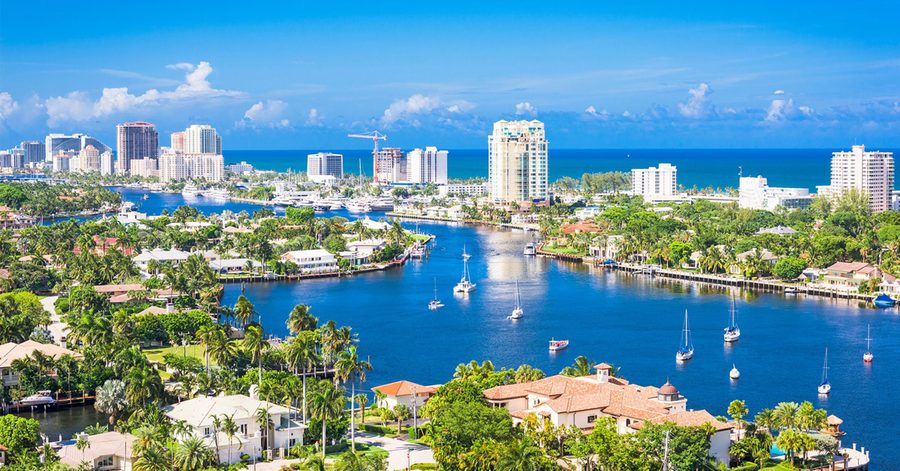
If you’re moving to Pompano Beach, the honest guide to Broward’s emerging waterfront city starts with this: Pompano is no longer a secret, but it’s still underpriced compared to Fort Lauderdale, and that gap is closing fast. You can still find real beach access, deep water boating, and a laid-back coastal feel here for less money than fifteen minutes south. But “Pompano Beach” covers a lot of ground, from oceanfront towers to inland canal streets, and treating it as one uniform market is how people end up disappointed.
This guide is meant to replace the surface-level version of this story. Below is what’s actually happening with prices, neighborhoods, insurance, schools, and new construction, so you can make an informed decision instead of a hopeful one.
Why Pompano Beach, and Why Now
Pompano Beach sits between Fort Lauderdale and Deerfield Beach, with roughly three miles of public beach, a working fishing pier, and one of the highest concentrations of deep-water canal access in Broward County. For years it was viewed as Fort Lauderdale’s more affordable, less polished neighbor. That’s changing.
Global hospitality brands are now putting real capital into Pompano Beach. The Waldorf Astoria Residences Pompano Beach, developed by Related Group and Merrimac Ventures, is the first standalone Waldorf Astoria residential tower anywhere, a 28-story oceanfront building priced from roughly $2 million and slated for delivery in late 2027. That’s not a small signal. When a brand like Waldorf Astoria commits to a market, it tends to pull pricing and buyer attention upward across the whole corridor. You can read the fuller breakdown in our complete relocation guide for Pompano Beach.
Waldorf Astoria isn’t the only branded project reshaping the beach corridor either. The Ritz-Carlton Residences Pompano Beach is bringing a dual-tower project, a 32-story Beachfront Tower and a 14-story Marina Tower, spanning ocean-to-Intracoastal frontage, with roughly 269 private residences priced from about $1 million into the $5.7 million range. It’s currently under construction, with structural completion estimated for late 2026 or early 2027. Marina Tower units come with yacht-friendly slips, and the building is managed directly by Ritz-Carlton, with resort pools, private dining, and a medical spa. When you have Waldorf Astoria and Ritz-Carlton both committing nine-figure projects to the same three-mile beach corridor within a couple of years of each other, that’s not a marketing narrative, that’s capital voting with its feet.
At the same time, Broward as a whole is narrowing the luxury gap with Miami-Dade, and Pompano is one of the main beneficiaries because it still has land and older inventory that can be redeveloped, unlike a built-out Fort Lauderdale beach corridor. Legacy motels and low-rise apartment buildings along A1A, the kind of parcels that don’t exist anymore in Las Olas or Rio Vista, are exactly what’s making room for these towers. That’s the arbitrage: Pompano still has assemblage opportunities that Fort Lauderdale ran out of a decade ago.
Moving to Pompano Beach: The Honest Guide to Broward’s Emerging Waterfront City
Here’s the part most relocation content skips: Pompano Beach isn’t one market, it’s at least four.
- The barrier island and immediate beach corridor (A1A, Ocean Blvd), dominated by condos and now the new luxury towers.
- The waterfront canal neighborhoods west of the Intracoastal, like Harbor Village, Riverside Park, and Pompano Isles, where you get boat dockage without ocean-tower pricing.
- The inland single-family neighborhoods, roughly east of I-95 and west toward Powerline Road, including areas like Kendall Green, Collier City, and Highland Park, where prices are the most affordable in the city.
- The western/newer growth areas toward the Sawgrass corridor, including Palm Aire and Cypress Bend, where you’ll find newer construction, more HOA-governed communities, and a more suburban feel with less water access.
If you’re relocating for the water, you need to be in category one or two. If you’re relocating for value and don’t care about direct water access, category three or four will save you real money. Most of the confusion people run into moving here comes from not knowing which of these four markets they actually want. For a deeper neighborhood-by-neighborhood breakdown, see Pompano Beach Neighborhoods: Beach, Waterfront, and Where to Avoid.
To make this concrete, here’s how three real buyer profiles typically sort themselves into these four submarkets:
- A retired couple from the Northeast selling a paid-off house and wanting a low-maintenance condo with ocean views usually ends up in category one, evaluating older beachfront buildings against the newer branded towers coming online, and weighing monthly HOA and insurance costs against a lock-and-leave lifestyle.
- A family relocating for work with a boat they don’t want to sell typically looks hard at category two, specifically Harbor Village or the finger canals off the Intracoastal, where a fixed dock and no bridges to open water matters more than square footage.
- A first-time buyer priced out of Wilton Manors or Victoria Park almost always lands in category three, buying an older single-family home inland, sometimes needing updates, in exchange for a payment that actually fits their budget.
None of those three buyers are wrong about Pompano Beach. They’re just shopping three different markets that happen to share a zip code.
What “Emerging” Actually Means Here
“Emerging” gets thrown around loosely in South Florida marketing. In Pompano’s case it’s specific: legacy motels and low-rise buildings along A1A are being replaced by branded residential towers, the downtown corridor around Atlantic Blvd is being reinvested in, and inland neighborhoods that were considered sleepy five years ago are now seeing renovation activity because buyers priced out of Fort Lauderdale are moving north. That’s a real, measurable shift, not just marketing language.
You can see it in permit activity along the beach corridor, in the number of older canal homes being torn down and rebuilt rather than renovated, and in the way local contractors talk about backlog. Five years ago a lot of trade crews in Pompano were working Fort Lauderdale jobs and picking up Pompano work on the side. That’s flipped in some pockets, particularly near the beach and along the Intracoastal.
What Pompano Beach Actually Costs in 2026
Pricing varies dramatically depending on which of the four submarkets above you’re looking at, so generic city-wide medians are close to useless here. What matters:
- Older, non-waterfront single-family homes inland tend to be the most accessible entry point in coastal Broward, which is why Pompano keeps showing up as a landing spot for first-time buyers priced out of Fort Lauderdale and Wilton Manors. Many of these homes are 1950s and 1960s block construction on quarter-acre or smaller lots, and the price band still lands well under what a comparable home costs a few miles south. See First-Time Buyer in Pompano Beach: The Coastal Broward Option at a Better Price for specific price bands by neighborhood.
- Canal-front homes with boat access command a real premium over inland homes, but that premium is still meaningfully lower than comparable waterfront in Fort Lauderdale’s Las Olas Isles or Rio Vista. A three-bedroom canal home with a private dock in Harbor Village or Riverside Park will typically run well above an inland home on the same street footage, but it’s still a fraction of what an equivalent dock-and-deep-water setup costs south of Sunrise Boulevard.
- New oceanfront construction is where the market has moved the most. Projects like the Waldorf Astoria Residences are pricing from $2 million and up, and the Ritz-Carlton Residences span roughly $1 million to over $5.7 million depending on tower, floor, and frontage, with total buildouts spanning ocean-to-Intracoastal frontage in some cases.
- Insurance and carrying costs have to be part of your budget conversation, not an afterthought. Homeowners insurance premiums in Broward County have risen somewhere between 30% and 80% since 2020, which is one of the biggest reasons buyers are gravitating toward new construction built to current wind-mitigation and hurricane-impact codes. Older beachside buildings without those upgrades can carry insurance costs that materially change your monthly payment.
For the most current pricing snapshot, check our Pompano Beach Real Estate Market Update, since these numbers shift with rate movement and inventory more than people expect.
Why the Price Gap With Fort Lauderdale Is Closing
The gap between Pompano and Fort Lauderdale pricing hasn’t been static, and it’s worth understanding why it’s narrowing instead of just accepting it as a fact. Fort Lauderdale’s beach corridor and Las Olas Isles are essentially built out, meaning new supply there mostly comes from teardown-rebuilds on already expensive lots. Pompano still has assemblage sites, older motel parcels, and underbuilt condo lots that developers can acquire at a lower basis. That lower land basis is part of what let Related Group, Merrimac Ventures, and the Ritz-Carlton development team pencil out projects at Pompano price points that still undercut comparable Fort Lauderdale or Boca product on a price-per-square-foot basis. As those sites get absorbed over the next few years, that basis advantage shrinks, and so does the discount buyers are currently getting.
The HOA and CDD Question
Newer communities, especially those built west toward the Sawgrass corridor or in larger planned developments, often come with HOA dues and, in some cases, Community Development District (CDD) assessments layered on top of your property tax bill. CDDs fund the infrastructure, roads, drainage, sometimes clubhouses and amenities, in newer large-scale developments, and that debt service gets passed to homeowners for years. Before you fall in love with a new build, ask specifically: is there a CDD, what’s the current assessment, and how many years are left on it. Older inland Pompano neighborhoods and most of the canal communities don’t carry this burden, which is part of why they remain attractive to buyers who want to avoid an extra line item every month.
It’s also worth asking whether the CDD assessment is fixed or subject to reassessment, and whether it shows up as a separate line on the tax bill or gets bundled into HOA dues. Buyers coming from states without CDDs, which is most of the country, often miss this entirely during a walkthrough and only find it when they’re reviewing closing documents. Ask your agent to pull the actual CDD district report before you write an offer, not after.
The Waterfront Advantage (and the Insurance Reality)
The single biggest reason people move to Pompano Beach over Fort Lauderdale is straightforward: more water access for less money. Pompano has an unusually high ratio of deep-water canal frontage to home price, which matters if you own a boat or want the option someday. Neighborhoods like Harbor Village and the finger canals off the Intracoastal give you ocean access without the Las Olas or Rio Vista price tag.
But water access comes with real tradeoffs you need to plan for honestly:
- Flood zone and elevation matter more than the view. Two homes on the same street can carry very different flood insurance costs depending on elevation certificates and construction date.
- Older seawalls and docks need inspection. A lot of Pompano’s canal homes were built decades ago, and seawall replacement is a five- or six-figure expense that isn’t always obvious from a listing photo.
- Insurance is the real budget item, not the mortgage. With premiums up sharply since 2020, a waterfront home that looks affordable on price per square foot can carry a monthly insurance cost that changes the math. This is exactly why new construction built to current codes commands a premium, buyers are pricing in the insurance discount, not just square footage.
Before you write an offer on any canal home, get a seawall inspection quote alongside your standard home inspection. A cracking or leaning seawall isn’t cosmetic, it’s a structural liability that affects your dock, your yard, and potentially your neighbor’s property line. Ask the seller for the age of the seawall and any permits on file with the city, and if that information isn’t available, budget as if replacement is coming in the next five to ten years.
For a direct comparison of what you get here versus Fort Lauderdale waterfront, read Pompano Beach Waterfront Homes: More Access, Lower Price Than Fort Lauderdale.
New Construction and What’s Being Built
Pompano’s new construction pipeline is one of the more active in Broward right now, and it’s concentrated in a few distinct tiers:
- Ultra-luxury oceanfront towers, led by the Waldorf Astoria Residences Pompano Beach (from roughly $2 million, delivery late 2027) and the Ritz-Carlton Residences Pompano Beach (Beachfront Tower and Marina Tower, roughly $1 million to over $5.7 million, structural completion estimated late 2026 or early 2027), which pair private dining, spa amenities, and marina-adjacent units for buyers who want a lock-and-leave lifestyle with hotel-level service.
- Boutique mid-rise condominiums filling in along the Intracoastal and downtown corridor, generally smaller buildings than what you’ll see in Fort Lauderdale or Miami, which appeals to buyers who don’t want to live in a 400-unit tower.
- Inland and western single-family and townhome communities, where builders are delivering product aimed at move-up buyers and relocators from out of state who want a warranty and modern hurricane-rated construction without oceanfront pricing.
The throughline across all of it: new construction here is being built to the most current wind-mitigation and impact-glass codes, which is a meaningful insurance advantage over Pompano’s older inventory, some of which predates the building code overhaul that followed Hurricane Andrew. If you’re deciding between an older canal home and new construction a few blocks inland, run the insurance quote on both before you decide, the difference is often bigger than the price gap.
For buyers weighing an under-construction unit at the Waldorf Astoria or Ritz-Carlton against a resale in an older beachfront building, the comparison isn’t just amenities. It’s the age of the building envelope, whether the association has already funded its reserve study under Florida’s post-Surfside inspection and reserve requirements, and whether you’re buying into a building that’s about to hit residents with a large special assessment. New construction sidesteps that risk entirely for at least the first couple of decades. Full details on active projects and pricing are in New Construction in Pompano Beach: What Is Being Built and What It Costs.
Schools and Family Considerations
Pompano Beach sits in Broward County Public Schools, and like most of Broward, school quality varies significantly by zoned attendance area rather than by city name. Families relocating here need to check the specific zoned elementary, middle, and high school for any address they’re considering, not just assume “Pompano schools” as a blanket category. Some zoned schools in the western and northern parts of the city test well and have strong reputations, while some inland zones are inconsistent. This is a case where the specific street matters more than the city.
This matters even more in Pompano than in some other Broward cities because the zoned boundaries cut across the same submarkets we outlined above. Two homes a few blocks apart, one in a canal neighborhood and one just inland, can feed into different middle schools with very different track records. If schools are the deciding factor, don’t let the water view distract you from checking the zone first.
If schools are a driving factor in your move, don’t finalize a home search without cross-referencing the zoned school first. We break down the actual zoned boundaries and what families should ask before buying in Pompano Beach Schools: What Families Need to Know.
Commute, Corridors, and Daily Life
Pompano Beach’s location is one of its underrated advantages. You’re positioned between I-95, Florida’s Turnpike, and the Sawgrass Expressway, which gives commuters real flexibility whether you’re headed to downtown Fort Lauderdale, Boca Raton, or west toward the Sawgrass Mills retail corridor and the growing office and logistics parks near Coconut Creek and Deerfield Beach.
For anyone commuting daily to Fort Lauderdale or into Miami-Dade, that highway access is genuinely useful, but it’s worth being honest about traffic patterns too. I-95 through Pompano backs up like the rest of Broward during peak hours, and Atlantic Boulevard near the beach can get congested on weekends and during snowbird season from roughly December through April. If your commute is time-sensitive, test the drive at the actual hours you’d be making it before you commit to a neighborhood, not just on a quiet Tuesday afternoon during a showing.
Daily life here still has a lower-key, working-beach-town feel compared to Fort Lauderdale, even as new development comes in. Atlantic Boulevard and the downtown area are walkable in pockets, the pier and Pompano Beach Fishing Village are genuine local gathering spots (not tourist-only), and the restaurant scene has grown noticeably in the last few years without fully losing its casual character. For a fuller picture of day-to-day life, the pier, restaurants, and what the city is becoming, see Life in Pompano Beach: Beach, Pier, Restaurants, and What the City Is Becoming.
What You Give Up Compared to Fort Lauderdale
Being honest matters here. Fort Lauderdale still has more restaurant density, more nightlife, a more walkable Las Olas corridor, and stronger name recognition for out-of-state buyers and renters. Pompano is catching up but isn’t there yet in every category. If you want maximum walkability and urban amenity density today, Fort Lauderdale still wins. If you want more water access and lower entry price with strong upside, Pompano is the better bet.
There’s also a practical resale consideration. Because Fort Lauderdale has broader name recognition, it’s often an easier sell to an out-of-state buyer who doesn’t know the market yet. Pompano requires a little more explaining, which is a real reason this guide exists. That’s not a reason to avoid it, it’s a reason to make sure whoever represents you on the sale side knows how to tell the Pompano story to a buyer relocating from Ohio or New Jersey who’s never heard of it.
Who Pompano Beach Is Right For (and Who Isn’t)
It’s a strong fit if:
- You want boat access or an ocean-adjacent lifestyle without Fort Lauderdale or Boca Raton pricing.
- You’re a first-time buyer or move-up buyer in coastal Broward looking for the best price-to-water-access ratio in the county.
- You’re an investor watching for appreciation ahead of major branded development completing over the next two to three years (see Pompano Beach Investment Property: Why Investors Are Paying Attention in 2026).
- You want new construction with modern hurricane-rated building and are willing to trade some walkability for a lower insurance bill.
It’s probably not the right fit if:
- You need top-tier walkable nightlife and restaurant density today, not in a few years.
- You’re not willing to research flood zones, seawall condition, and insurance costs before buying waterfront, because skipping that step is where people get burned here.
- You want a single, simple answer to “what does a home cost in Pompano Beach.” It depends entirely on which of the four submarkets you’re in, and pretending otherwise leads to bad offers and worse surprises at closing.
Common Mistakes Buyers Make Moving to Pompano Beach
A few patterns show up again and again with relocating buyers here, and most of them are avoidable:
- Comparing a canal home’s price to an inland home’s price without accounting for what dockage and no-bridge ocean access are actually worth. They’re not the same product.
- Skipping the CDD and HOA document review on new construction because the model home and sales process move fast. Slow down and read the actual assessment numbers before you sign a reservation agreement.
- Assuming an older beachfront condo’s HOA dues are final. Florida’s post-Surfside reserve funding requirements mean some older associations are still catching up on reserve studies, and a special assessment can land after you close if you don’t ask the right questions upfront.
- Not testing the commute at real hours. A quiet midday drive tells you nothing about what I-95 or Atlantic Boulevard looks like at 5 p.m. on a Friday in February.
The Bottom Line
Moving to Pompano Beach in 2026 means buying into a city that’s actively repricing upward, driven by real capital (Waldorf Astoria, Ritz-Carlton, and the boutique mid-rises filling in behind them) rather than hype. You can still find real value here relative to Fort Lauderdale, but the window to buy before that gap fully closes is narrower than it was three years ago.
The right move isn’t to chase the cheapest listing or the flashiest new tower. It’s to figure out which of Pompano’s submarkets actually matches what you want, run the real insurance and HOA numbers before you fall in love with a property, and move on solid inventory while the price gap with Fort Lauderdale still exists. If you want a second set of eyes on a specific address, flood zone, or HOA document before you make an offer, that’s the conversation worth having before you sign anything, not after.


Watch: learn more
Go deeper with my South Florida Insider videos.

The Best Flex-Space Townhome in West Palm Beach: Pulte's Nautical Plan

Inside Everton's Latitude II Model: $458k New Homes In Palm Beach
The Best Flex-Space Townhome in West Palm Beach: Pulte's Nautical Plan
More articles you might like
Pompano Beach, Florida: The Complete Relocation Guide for 2026
20 min readFirst-Time Buyer in Pompano Beach: The Coastal Broward Option at a Better Price
18 min readLife in Pompano Beach: Beach, Pier, Restaurants, and What the City Is Becoming
17 min readPompano Beach Schools: What Families Need to Know (2026 Guide)
17 min readNew Construction in Pompano Beach: What Is Being Built and What It Costs (2026)
14 min read