Life in Pompano Beach: Beach, Pier, Restaurants, and What the City Is Becoming
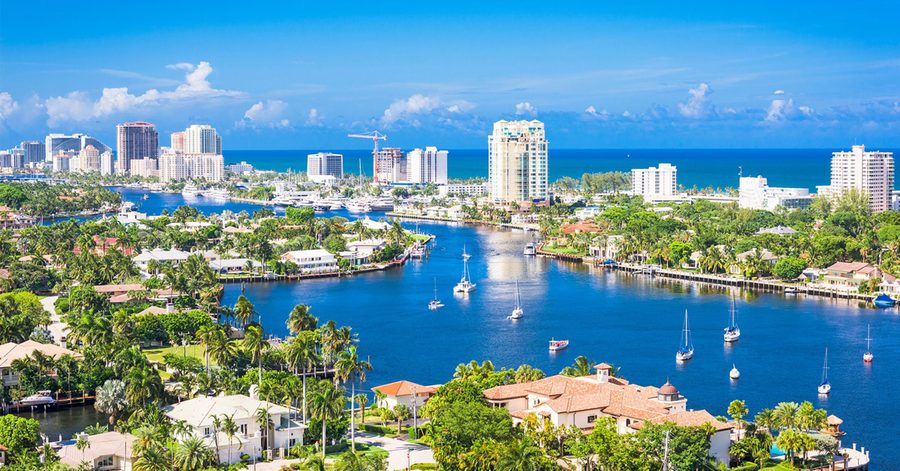
Life in Pompano Beach comes down to three things that actually happen day to day: a beach and pier you can still get to without fighting a crowd, a real boating and fishing culture built around Hillsboro Inlet, and a city that is visibly under construction in the best sense, rebuilding its downtown, its skyline, and its identity at the same time. This is not the polished, finished version of Fort Lauderdale. It is the version still being built, which is exactly why it is worth understanding before you decide where to live in coastal Broward.
This guide covers what a normal day looks like here, what the restaurant and boating scene is really like, what the city is becoming as new capital moves in, and who actually lives here now versus who is moving in. If you are deciding between Pompano Beach and its neighbors, read this alongside our Pompano Beach, Florida: The Complete Relocation Guide for 2026 for the full picture.
The Beach and the Pier: What a Day Actually Looks Like
Pompano Beach’s biggest advantage over Fort Lauderdale and Hollywood is simple: the beach is wider, the parking is easier, and it is not overrun. You can park at Pompano Beach Municipal Beach, walk onto sand that has not been carved down by decades of overuse, and still find a spot on a Saturday in season without circling for 30 minutes. Compare that to Fort Lauderdale Beach on a February weekend, where the municipal lots fill by 10 a.m. and street parking turns into a scavenger hunt. In Pompano Beach, that same Saturday morning still has open spots along Pompano Beach Boulevard and in the metered lots near the pier.
The pier is the anchor of the whole experience. The Pompano Beach Fishing Pier extends far enough into the Atlantic that regulars fish it daily for snook, pompano, mackerel, and the occasional tarpon, and it has been renovated as part of the broader beachfront redevelopment, not left to age quietly like a lot of old Florida piers. Around it sits Beach Park, the promenade, and a beachfront entertainment complex, The Sound at Coconut Point, an amphitheater and event space that gives the beach a reason to stay busy after the sun goes down, not just during the day. On a typical weekend night, you will find a concert or community event at The Sound pulling people down to the beach who otherwise would have called it a day after dinner.
What this means practically: a resident who lives even a mile or two inland can treat the beach as a weekday habit, not a special-occasion trip. Sunrise walks before work, a fishing rod off the pier on a Sunday morning, dinner at a beachfront table watching the water go from blue to orange. That rhythm is the actual product Pompano Beach is selling, more than any single restaurant or amenity. Ask a resident who has lived here five years what they actually do on a Tuesday evening and the answer is usually some version of a walk along the promenade, not a drive to a destination.
Less Crowded Than Fort Lauderdale, On Purpose
Fort Lauderdale Beach has been built out and marketed for decades. Pompano Beach has spent the last five to ten years catching up, which sounds like a disadvantage until you realize it means shorter lines, easier parking, and a beach that does not feel like a tourist attraction seven days a week. That is a lifestyle decision as much as a real estate one. Fort Lauderdale Beach draws cruise passengers, spring breakers in season, and a steady stream of tourism traffic along A1A. Pompano Beach’s version of A1A, running along Ocean Boulevard, carries a fraction of that traffic, which means the restaurants along the strip are filled mostly with residents and repeat visitors rather than one-time tourists. That changes the character of the whole corridor, from the pace of service to the prices on the menu.
The Restaurant and Boating Culture Along the Coast
Pompano Beach carries a fishing town identity that predates the condos and the redevelopment, and it still shows up in daily life. Hillsboro Inlet Marina, just north of the city along the inlet that separates Pompano Beach from Hillsboro Beach, hosts one of the largest charter fishing fleets in South Florida. Sailfish season brings serious offshore anglers, and the marina culture around it, captains, mates, weigh-ins, is not manufactured for tourists. It is the real thing, and it has been since Pompano Beach earned its old reputation as a fishing capital. On a winter weekend during sailfish season, the docks at Hillsboro Inlet Marina fill before sunrise with boats loading bait and ice, and the afternoon weigh-ins draw a crowd of regulars who know exactly which captains had a good morning.
That culture bleeds into the food scene. The restaurant corridor along Atlantic Boulevard and up Federal Highway mixes casual seafood shacks with sit-down dining rooms, and the beachfront strip near the pier leans into oceanfront tables and fresh catch menus. Pompano Beach is also where Bru’s Room Sports Grill got its start, a locally rooted sports bar concept that grew into a regional chain, which tells you something about the kind of unpretentious, neighborhood-first food culture that still defines a lot of the city outside the newer high-rise corridor. You will also find longtime local spots tucked into strip plazas off Copans and Sample Road that have been serving the same regulars for twenty years, which is a different kind of restaurant scene than the reservation-only dining rooms popping up closer to the beach.
The split is worth understanding if food is part of your decision. Near the pier and the newer development, expect higher price points and a more polished experience aimed at the residents moving into the new towers. Inland, along Atlantic and up toward Copans, the prices are lower and the crowd is older and more local. Both exist in the same city limits, which is part of what makes Pompano Beach hard to summarize in one sentence.
Boating Without the Fort Lauderdale Price Tag
Boating in Pompano Beach means direct or near-direct access to the Intracoastal and, through Hillsboro Inlet, the Atlantic, without the bridge congestion that slows down parts of Fort Lauderdale’s canal system. Waterfront and canal-front homes here sit at a meaningfully lower price point than comparable dockage in Las Olas or Rio Vista, which is why boat owners who do not need a Fort Lauderdale address are increasingly looking at Pompano Beach instead. A buyer who wants a 40-foot boat in the backyard without the seven-figure entry price of Rio Vista can find that setup in Pompano Beach’s canal neighborhoods for meaningfully less, and still be a short run to the inlet. If waterfront access is the priority, Pompano Beach Waterfront Homes: More Access, Lower Price Than Fort Lauderdale breaks down where that inventory actually sits.
Downtown and the Innovation District: What the City Is Becoming
The most honest way to describe Pompano Beach right now is a city in the middle of rewriting itself. The Community Redevelopment Agency has spent years pushing investment into the old downtown corridor along Dixie Highway and Atlantic Boulevard, and it shows in specific, visible ways rather than vague promises.
Bailey Contemporary Arts Center and Ali Cultural Arts anchor a small but real arts and culture footprint in the historic downtown, giving the city something Fort Lauderdale and Hollywood already have and Pompano Beach has had to build intentionally. The old Dixie Highway corridor is being rebranded and redeveloped as an innovation and arts district, mixing warehouse-style creative space with new residential infill. Old industrial buildings that sat empty for years are being converted into studio space and small business storefronts, and new mid-rise residential is filling in the gaps between them. None of this is finished. That is the point. Pompano Beach is a city where you can watch the transformation happen in real time rather than move into something already complete. Drive Dixie Highway today and you will see a mix of freshly renovated storefronts next to buildings still waiting their turn, which is the clearest visual evidence of a city mid-build rather than one that arrived already polished.
The Waldorf Astoria Effect: Pompano Beach’s New Skyline
The clearest signal of where Pompano Beach is headed sits right on the beach: Waldorf Astoria Residences Pompano Beach, the brand’s first standalone residences project, without an attached hotel. A globally recognized luxury hospitality brand choosing Pompano Beach for that kind of flagship project is not a small data point. It reflects a broader pattern across Broward County, where developers are shifting focus toward high-rise and boutique multi-family condominiums and high-net-worth buyers are chasing amenitized residences with real ocean access, rather than settling for whatever inventory happens to be available in already-built-out Miami-Dade submarkets.
Broward is narrowing the historical luxury gap with Miami-Dade, and Pompano Beach is one of the clearest examples of that shift. It offers lower density than Miami, a competitive entry price relative to Fort Lauderdale beachfront, and direct maritime infrastructure that high-net-worth buyers specifically want. That is not marketing language, it is the actual capital flow, and it is changing what gets built along the beach and just inland from it. The same pattern shows up elsewhere in Broward, with brands like St. Regis at Bahia Mar in Fort Lauderdale and Rosewood Residences in Hillsboro Beach making similar bets on deep-water dockage and bridge-free ocean access as the drivers that hold value regardless of broader market swings. Pompano Beach landing its own flagship in the Waldorf Astoria puts it in that same conversation, not as an afterthought to Fort Lauderdale but as its own destination. If you want the specifics on what is actually under construction and what it costs, read New Construction in Pompano Beach: What Is Being Built and What It Costs.
What This Means for Long-Term Value
A flagship luxury brand anchoring the beachfront tends to pull the rest of the market up with it over time, the way it has in other coastal Florida submarkets. It does not mean every Pompano Beach property is now a luxury asset. It means the ceiling on the city’s identity has moved, and buyers who get in before that repricing fully plays out are making a different bet than buyers who wait until it is obvious. The pattern usually plays out the same way: prices near the anchor project move first, then the surrounding blocks catch up over a few years as more buyers notice, then the neighborhoods further inland see the spillover last. Where you buy in that sequence changes the math significantly. For anyone specifically evaluating this as a numbers decision rather than a lifestyle one, Pompano Beach Investment Property: Why Investors Are Paying Attention in 2026 walks through the actual math.
Who Actually Lives Here: The Real Pompano Beach Resident
Pompano Beach’s population is not one type of buyer, and that is worth being honest about. You have longtime locals who remember the city before any of this redevelopment, many tied to the fishing and boating trades that built the place. You have a large, steady population of seasonal and retired snowbirds drawn by the beach, the lower cost of living relative to Fort Lauderdale, and the 55-plus and golf communities inland. And increasingly, you have younger families and first-time buyers who got priced out of Fort Lauderdale, Wilton Manors, and Lighthouse Point and found a coastal Broward option they can actually afford.
That last group is the fastest-growing piece of the picture, and it is not an accident. Pompano Beach genuinely offers a lower entry price for coastal or near-coastal living than almost anywhere else in Broward County east of I-95. Think about a couple in their early thirties who spent two years renting in Wilton Manors, watched entry-level single-family homes there push well past what they could comfortably carry, and started looking north. Pompano Beach puts them within a fifteen-minute drive of the same beach lifestyle at a price point that still works with a normal two-income budget. That scenario is playing out consistently enough to be the actual demographic story of the city right now, not the exception. If that describes your situation, First-Time Buyer in Pompano Beach: The Coastal Broward Option at a Better Price lays out exactly where that value exists and where it does not.
Families weighing the move should also look at the school picture before committing to a specific neighborhood, since school assignment varies block by block in parts of the city. Pompano Beach Schools: What Families Need to Know (2026 Guide) covers that in detail.
How Pompano Beach Compares to Its Neighbors
It helps to put Pompano Beach next to the cities on either side of it, because a lot of buyers cross-shop all three without fully separating what each one actually offers. Lighthouse Point, immediately to the south and west of the inlet, is smaller, almost entirely residential, built around finger canals, and priced accordingly, it is a quieter, more established alternative with less of the redevelopment energy but also less of the ground-floor opportunity. Deerfield Beach, just north, shares a similar beach and pier setup and a similar price relationship to Fort Lauderdale, but it has not seen the same scale of flagship investment that Pompano Beach is getting with the Waldorf Astoria project, so its beachfront identity has stayed more consistent and less in flux.
Pompano Beach sits in between those two in almost every sense: bigger and more varied than Lighthouse Point, more actively being reshaped than Deerfield Beach. That in-between status is exactly why it rewards buyers willing to do the neighborhood-level homework instead of assuming the whole city moves as one market. A block near the pier and a block a mile inland along Copans Road are, for practical purposes, two different real estate markets wearing the same zip code.
Getting Around: Corridors, Commute, and the Airpark
Daily life in Pompano Beach runs on a handful of corridors. Federal Highway (US-1) runs the length of the city along the coast and connects south into Fort Lauderdale and north into Deerfield Beach. Atlantic Boulevard is the main east-west spine, running from I-95 straight to the beach and the pier. Sample Road and Copans Road handle the middle of the city and connect out to the Turnpike and I-95, which makes the daily commute into downtown Fort Lauderdale roughly 20 to 30 minutes outside of peak traffic, longer during it, which is standard for coastal Broward. Commuters heading further south into Miami-Dade should plan on an hour or more each way during peak hours, which is worth factoring in for anyone whose job is not based in Broward or Palm Beach County.
Pompano Beach Airpark, tucked west of Federal Highway near the beach, is a working general aviation field and the home base for the Goodyear Blimp (Wingfoot). It is a small but real piece of the city’s identity, and residents in the surrounding neighborhoods get used to the blimp overhead as a fairly regular sight, not a novelty. The airpark also means a steady, low background hum of small aircraft traffic in that immediate area, which is a minor but real consideration for buyers looking at homes directly under the flight pattern.
Outside the immediate pier and downtown pockets, Pompano Beach is a drive-everywhere city, same as the rest of coastal Broward. The walkability that exists is concentrated, not citywide, and buyers who prioritize a true walk-everywhere lifestyle should treat that as a real limitation rather than something marketing copy glosses over. A resident living within a few blocks of the pier can genuinely walk to dinner, the beach, and a weekend event. A resident a mile west of Federal Highway is, in practice, no different from someone living in Coral Springs when it comes to needing a car for daily errands.
The Honest Trade-offs: What Pompano Beach Isn’t (Yet)
Pompano Beach is not finished, and pretending otherwise does buyers no favors. Parts of the city west of Federal Highway and away from the CRA-targeted corridors have not seen the same investment as the beachfront and downtown, and that unevenness is part of the deal right now, not a hidden flaw. It is also part of why entry prices remain lower than Fort Lauderdale, and that gap will not stay this wide forever given the pace of redevelopment already underway.
Carry costs are the other honest conversation. Homeowners insurance premiums in Broward County have climbed somewhere between 30 percent and 80 percent since the early 2020s, and that has pushed a real share of buyers toward new construction, which is built to stricter wind mitigation and hurricane impact codes and qualifies for meaningful insurance discounts compared to older legacy inventory. If you are comparing an older canal-front home to a newer build in Pompano Beach, run the insurance numbers before you run the price per square foot, because they can flip the comparison. A 1970s canal-front home with an aging roof and single-pane windows can carry an insurance bill high enough to erase most of its price advantage over a comparable new build a few blocks away, and buyers who skip that comparison find out the hard way at closing.
Some newer communities also carry HOA dues or, in larger master-planned developments elsewhere in Broward, CDD assessments that add to the monthly number beyond the mortgage, so read the fine print on any community before assuming the listing price is the full cost. CDD assessments in particular function as a long-term debt obligation tied to the property, financing the roads, utilities, and shared infrastructure that make a large new development possible in the first place, and they do not disappear just because you paid off your mortgage early. It is a fair trade in a lot of cases, curated infrastructure and amenities in exchange for a real monthly line item, but it needs to be understood going in, not discovered after the fact.
None of this makes Pompano Beach a bad decision. It makes it a decision that requires the same due diligence any coastal Broward purchase does, without the shortcut of assuming a rising tide lifts every property the same amount.
Where to Live If You Want This Lifestyle
The version of Pompano Beach described in this guide, walk to the pier, boat from your backyard, watch a beachfront skyline rise, is not evenly distributed across the city. It concentrates in specific pockets: the immediate beachfront and pier area, the canal-front and Intracoastal-adjacent neighborhoods, and the newer high-rise and boutique condo corridor drawing in capital that used to default to Fort Lauderdale or Miami.
Pompano Beach Neighborhoods: Beach, Waterfront, and Where to Avoid (2026 Guide) breaks the city down block by block, including which pockets deliver on the lifestyle described here and which ones are still waiting their turn in the redevelopment timeline. Pair that with current pricing context in Pompano Beach Real Estate Market Update: Prices and Opportunity in 2026 before you start touring, so you know whether a listing is priced to the city’s old reputation or its new one.
The Bottom Line
Life in Pompano Beach, the beach, the pier, the restaurants, and what the city is becoming, adds up to a coastal Broward option that still has room to grow into its own value. You get a wider, less crowded beach than Fort Lauderdale, a genuine fishing and boating culture centered on Hillsboro Inlet, a downtown actively being rebuilt rather than one already finished, and a beachfront skyline now anchored by a flagship luxury brand in Waldorf Astoria Residences. What you give up, for now, is some of the polish and consistency that comes with a fully built-out market.
For buyers who want to get positioned ahead of that build-out rather than after it, that trade-off is the entire opportunity. The reality is Pompano Beach in 2026 rewards people who do the homework now, not the ones who wait until every corridor looks like the pier already does.

Watch: learn more
Go deeper with my South Florida Insider videos.

The Best Flex-Space Townhome in West Palm Beach: Pulte's Nautical Plan

Inside Everton's Latitude II Model: $458k New Homes In Palm Beach
The Best Flex-Space Townhome in West Palm Beach: Pulte's Nautical Plan
More articles you might like
Pompano Beach Waterfront Homes: More Access, Lower Price Than Fort Lauderdale
13 min readPompano Beach, Florida: The Complete Relocation Guide for 2026
20 min readFirst-Time Buyer in Pompano Beach: The Coastal Broward Option at a Better Price
18 min readPompano Beach Schools: What Families Need to Know (2026 Guide)
17 min readNew Construction in Pompano Beach: What Is Being Built and What It Costs (2026)
14 min read