Is Ocean Ridge a Good Place to Live? Honest 2026 Review
Ocean Ridge is a good place to live if what you actually want is quiet: a low-density barrier island with real beach access, no CDD fees, and a five-minute drive to two different downtowns without living in either one. It is a poor fit if you want a walkable town center, new construction, or a zoned public school your kids can walk to. That’s the honest, unfiltered version of is Ocean Ridge a good place to live, honest 2026 review, and everything below explains why, with real numbers and real tradeoffs.
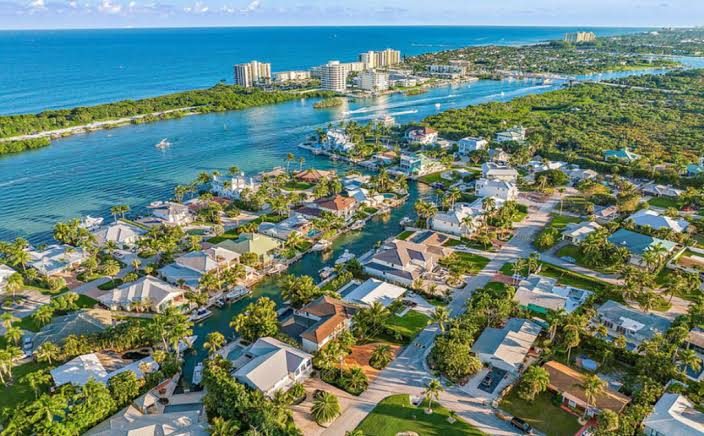
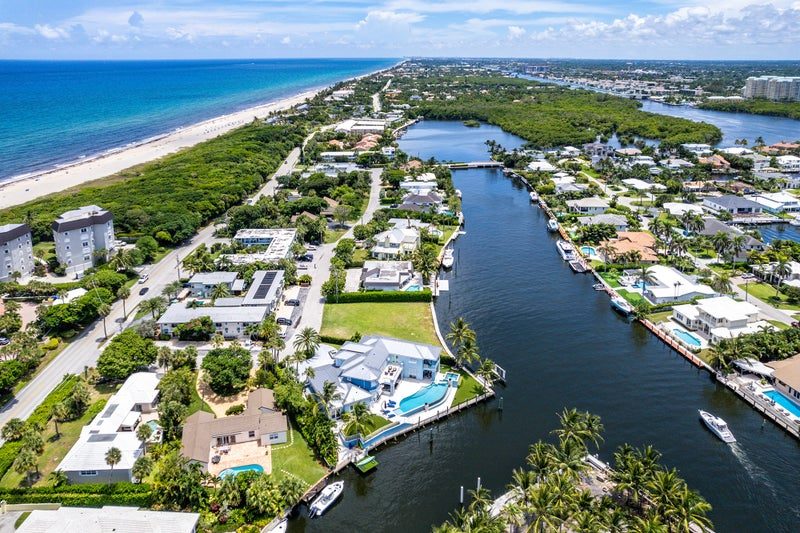
Ocean Ridge sits on the barrier island directly east of Boynton Beach, wedged between the South Lake Worth Inlet (Boynton Inlet) to the north and the tiny town of Gulf Stream to the south. It’s about 1,900 residents, roughly 3 square miles, and almost entirely residential. There is no Publix in Ocean Ridge. There is no main street. If you’ve driven A1A between Boynton Beach and Delray Beach and blinked past a stretch of hedges, low walls, and old Florida ranch homes with almost no signage, you’ve driven through it.
That’s not a criticism. It’s the whole point of the town. But it means Ocean Ridge is not for everyone, and I’d rather tell you that now than have you find out after closing.
Is Ocean Ridge a Good Place to Live? Honest 2026 Review
Here’s the real answer, broken into what matters:
Good for: people who want privacy, a slower pace, direct or near-direct beach access, boat access to the Intracoastal, and proximity to Delray Beach and Boynton Beach without paying Delray or Manalapan oceanfront prices for everything. Also good for people planning a teardown/rebuild, since a large share of the housing stock is 1950s-1970s construction sitting on land that’s worth more than the house.
Not good for: people who want to walk to dinner, families who need a strong zoned public elementary school within the town, buyers who want new construction with a builder warranty, or anyone allergic to older wiring, older plumbing, and flood zone insurance premiums.
If you’re cross-shopping the broader county, our breakdown of the best Palm Beach County suburbs for families relocating in 2026 is a useful side-by-side, because Ocean Ridge trades family convenience for privacy and water. It’s not the first stop for most relocating families with school-age kids. It is often the right stop for a second home, a retirement home, or a rebuild project for buyers who already know the area.
I get some version of the same question from three different kinds of buyers every month: “is this actually livable day to day, or is it just a pretty drive-through town.” The honest answer is both, depending on what you’re optimizing for. Ocean Ridge is genuinely livable if your daily routine already includes a car. It is not livable in the way Delray’s beach area or downtown Lake Worth Beach is livable, where you can leave your keys on the counter for a whole weekend. Know which version of “livable” you’re shopping for before you write an offer.
Who Ocean Ridge Is Actually Right For
Three buyer profiles consistently make sense here, and I’ve seen all three come through Palm Beach County over the past couple of years.
1. The downsizer or retiree who wants water without the crowd. Ocean Ridge has none of the density of Delray’s beach area or the tourist churn of Lantana. If you want to walk your dog at sunrise on a nearly empty beach and then drive four minutes to Boynton Beach’s Ocean Avenue for coffee, this works. This is usually the buyer selling a bigger house further west, in a community like Hunters Run or one of the golf communities off Congress Avenue, and trading square footage for location. They’re not looking for a clubhouse or a calendar of activities. They want the beach, a smaller footprint, and fewer neighbors.
2. The rebuild buyer. A meaningful share of Ocean Ridge sales right now are land-value purchases. Buyers close on a dated 1960s block home, tear it down or gut-renovate, and build a modern coastal home. If that’s your plan, budget real money for permitting and flood elevation requirements, and expect the process to take longer than a typical renovation because the town’s building department reviews barrier island construction closely. I tell these buyers to plan on 12 to 18 months from closing to certificate of occupancy once you factor in permitting, elevation requirements, and the general slowdown that comes with building on a narrow barrier island lot where setbacks and drainage get real scrutiny.
3. The boater. Homes on the Intracoastal side of Ocean Ridge often come with dock potential and no fixed bridges limiting sailboat height between the home and the inlet. That’s a real advantage over towns further from an inlet, where a boat has to clear multiple fixed bridges to reach open water. For a serious boater, that single fact, direct or near-direct inlet access, can be worth a real premium over a comparable canal home ten minutes further from open water.
Who it’s wrong for: a family that needs their kids zoned into a highly rated elementary school walking distance from home, or a buyer whose budget caps out around $500,000 to $600,000. Ocean Ridge doesn’t really have an entry tier at that price point anymore. It also isn’t right for a buyer who wants a strong sense of instant community, a active homeowners association running social events, or a town that markets itself. Ocean Ridge doesn’t market itself. It barely has a website beyond municipal basics. That quiet is a feature for the right buyer and a red flag for the wrong one.
What Living in Ocean Ridge Actually Costs in 2026
This is where I want to be specific instead of vague, because “expensive” doesn’t help you plan.
- Interior, non-waterfront homes (west of A1A, off the water): generally $900,000 to $1.5 million for an updated 3-bed, 2-bath. Original, unrenovated homes on the same streets can list lower, but they’re priced as land and buyers should plan for a full renovation or rebuild.
- Intracoastal and canal-front homes: typically $2 million to $5 million depending on dock frontage, water depth, and whether the home has been updated or is a teardown candidate.
- Oceanfront estates on North or South Ocean Boulevard: $5 million to well over $15 million for larger lots and new or recently rebuilt homes.
- Older low-rise condo and co-op buildings, mostly on the Intracoastal side, offer the only real sub-$700,000 entry point left in town, and inventory is thin.
There are no CDD fees in Ocean Ridge, because this isn’t a new construction community, it’s an established town. What replaces that cost is flood insurance and windstorm coverage, both of which run meaningfully higher here than 10 miles inland. Ask any listing agent for the current insurance quote before you fall in love with a specific address; on the barrier island, insurance cost varies more by flood elevation and roof age than almost anywhere else in the county.
To put real numbers on that: a well-elevated, newer-roof home on an interior lot can carry a combined flood and windstorm premium in the range of $4,000 to $7,000 a year. A lower-elevation older home with an original roof can run double that, sometimes more, and a handful of carriers will decline to write new policies on homes with roofs past 15 to 20 years old regardless of condition. That’s not a scare tactic, it’s a budgeting reality, and it’s the single biggest line item buyers underestimate when they’re comparing a $1.2 million Ocean Ridge home to a $1.2 million home ten minutes inland in a neighborhood like Golfview Harbour or Leisureville.
Property taxes follow the standard Palm Beach County millage rate for the town, and since Ocean Ridge is its own municipality, homeowners pay a town-level tax on top of the county and school district portions. It’s not dramatically higher than neighboring Boynton Beach, but it’s worth pulling the actual TRIM notice on any specific address rather than assuming, since assessed value on a recent rebuild can be very different from an original 1962 block home two doors down.
For the full pricing breakdown, trend data, and what’s actually moving in Ocean Ridge right now, read our companion piece: Ocean Ridge, FL Real Estate Market 2026: Prices, Trends & What Buyers Should Expect.
The Tradeoffs Nobody Tells You About
Every South Florida town has a sales pitch. Here’s what the sales pitch leaves out about Ocean Ridge.
No commercial district, at all
There’s no grocery store, no real restaurant row, no coffee shop you can walk to. You will drive into Boynton Beach (Ocean Avenue, roughly 5-10 minutes) or Delray Beach (Atlantic Avenue, roughly 10-15 minutes) for daily life. If you’re picturing a walkable beach town like Delray or Lake Worth Beach, Ocean Ridge is the opposite of that. Even a gallon of milk means getting in the car, which sounds minor until you’ve lived it for a few months. I’ve had clients who loved the idea of Ocean Ridge on paper and reconsidered after a week of house-sitting for a friend there, simply because they realized how much of their daily rhythm depended on walking somewhere.
Beach access is limited and resident-oriented
Ocean Ridge has public beach access points, including Oceanfront Park just north in Boynton Beach and a handful of small town access points, but on-street parking is limited and closely monitored. This isn’t a town built for beach day visitors. It’s built for people who live two minutes from the sand. If you’re picturing bringing extended family down for a beach weekend and parking near the house, plan on Oceanfront Park instead, since street parking at the smaller town access points fills fast and is enforced.
The housing stock is old, and that’s mostly the point
A large percentage of homes date to the 1950s through 1970s. That means original electrical panels, cast iron or old copper plumbing, and roofs that are past or near the end of their insurable life in many cases. Buyers who want move-in-ready and modern should expect to pay a premium for the handful of homes that have already been rebuilt, or budget six figures for renovation on the rest. A full gut renovation on a 1960s block home here, updated electrical, new plumbing, new roof, hurricane windows, elevated mechanical systems, commonly runs $250,000 to $400,000 depending on square footage and finish level, on top of the purchase price. That math matters when you’re comparing a “cheap” Ocean Ridge listing against a turnkey home somewhere else.
The police department is genuinely active
Ocean Ridge PD is known countywide for consistent traffic enforcement, partly because the town is small and the tax base leans on it. Locals mostly see this as a feature (low crime, slow traffic, no cut-through speeding), but it surprises new residents and visitors who aren’t used to it. I tell every out-of-town buyer the same thing: drive the speed limit on A1A through Ocean Ridge, every time, no exceptions.
Schools are not the draw
Ocean Ridge is zoned into Boynton Beach area public schools, which are fine but not the reason families choose this town. Families prioritizing school ratings above all else typically look further inland or in a different suburb entirely. If schools are your top filter, cross-reference our guide to the best Palm Beach County suburbs for families relocating in 2026 before you commit to the barrier island.
Housing Stock: Oceanfront, Intracoastal, and the Interior Streets
Ocean Ridge breaks into three distinct pockets, and they don’t behave like one market.
Oceanfront (east side, A1A / Old Ocean Boulevard): the most expensive, lowest-turnover segment. Height restrictions in Ocean Ridge keep buildings low, so you won’t find high-rise condo towers here the way you do in parts of Boynton Beach or Boca Raton. That’s part of why the town feels so different from its neighbors, and part of why oceanfront lots hold value. These properties trade infrequently, and when they do, they’re often bought and sold through word of mouth before they ever hit the open MLS in a meaningful way.
Intracoastal (west side, canal and waterway lots): strong demand from boaters, generally more renovation and new-build activity than the oceanfront side, and the most active segment for teardown-rebuild purchases. This is also where you’ll find the widest range of dock configurations, from a simple fixed dock suited to a center console to deep-water frontage that can handle a real cruiser, so if boating is the whole reason you’re looking here, get a marine surveyor’s read on depth and dock condition before you assume a listing photo tells the whole story.
Interior streets (between A1A and the Intracoastal): the most attainable entry point into the town, still walking distance to the beach in most cases, and where you’ll find the bulk of the original 1950s-70s block homes still on original footprints. This is also the segment where you’ll see the widest spread between an original, dated home and its already-renovated neighbor two doors down, sometimes several hundred thousand dollars apart on similar lots.
If you’re comparing this kind of low-density, no-CDD, established coastal living against a fully new construction option, it’s worth reading how a purpose-built new community reviews by comparison. Our honest review of Westlake is a useful contrast piece precisely because it’s the opposite kind of town: master-planned, CDD-funded, brand new. Same honest-review format, completely different tradeoffs. Buyers who want new construction with builder warranties and modern floor plans, without the barrier island premium, often end up looking at communities like Agave Boca in Boca Raton instead.
Schools, Commute, and Daily Life
Commute-wise, Ocean Ridge is genuinely convenient despite its quiet feel. I-95 access is roughly 10-15 minutes via Woolbright Road or Gulf Stream Boulevard through Boynton Beach, and both Boynton Beach’s and Delray Beach’s downtowns are close enough for regular weeknight dinners. Palm Beach International Airport is about a 25-30 minute drive depending on traffic and time of day. For anyone commuting to downtown West Palm Beach for work, figure 25 to 35 minutes depending on the time of day and whether you’re taking I-95 or Federal Highway.
Daily life here means:
- Grocery runs into Boynton Beach or Delray Beach, not within town.
- Beach access from home in most interior and Intracoastal properties, a short walk or bike ride rather than a drive.
- Dining and nightlife concentrated on Atlantic Avenue in Delray or Ocean Avenue in Boynton, both a quick drive away.
- Kids’ schools and activities mostly requiring a short drive, since there’s no in-town school.
For families relocating and weighing Ocean Ridge against inland alternatives with more built-in infrastructure, it helps to see how nearby suburbs stack up. Our comparisons of West Palm Beach vs. Palm Beach Gardens and Jupiter vs. Palm Beach Gardens cover the more family-infrastructure-heavy side of the county, which is a different lifestyle bet than Ocean Ridge’s quiet-barrier-island bet.
Ocean Ridge vs. Nearby Towns
It helps to see where Ocean Ridge actually sits relative to its neighbors, because from the outside they can blur together.
Ocean Ridge vs. Manalapan (north): Manalapan is even lower density and higher priced, essentially all oceanfront estate territory with almost no attainable entry point. Ocean Ridge has more variety, including interior streets that are more reachable. If your budget realistically caps around $2 million and you still want barrier island living, Ocean Ridge gives you options Manalapan simply doesn’t have.
Ocean Ridge vs. Gulf Stream (south): Gulf Stream is similarly quiet and low-density, with its own strict architectural controls and a strong horse-country, old-Florida feel inland. The two towns attract a similar buyer, and it often comes down to specific lot availability rather than town preference. Gulf Stream’s architectural review process is generally stricter than Ocean Ridge’s, which matters if you’re planning a rebuild and want more design flexibility.
Ocean Ridge vs. Delray Beach: Delray offers the walkable downtown, restaurant scene, and cultural energy Ocean Ridge doesn’t have, but at a density and price point that trades away privacy. Buyers who want both sometimes end up choosing Delray’s beach area over Ocean Ridge specifically for the walkability. If you’re on the fence between the two, the honest test is simple: spend a Saturday in each without a car and see which one you actually enjoy.
Ocean Ridge vs. Boynton Beach: Boynton is the practical mainland counterpart, with more affordable housing, more commercial development, and a rapidly changing downtown, but you give up the barrier island setting entirely. Boynton’s downtown along Ocean Avenue has seen real investment over the past few years, which makes it a legitimate option for buyers who want to be near Ocean Ridge’s beaches without paying barrier island prices.
Buying in Ocean Ridge: What to Know Before You Make an Offer
A few things I tell every buyer before they write an offer on a home in Ocean Ridge:
- Get a flood elevation certificate early. It directly drives your insurance cost, and the range between a well-elevated home and a low one can be thousands of dollars a year.
- Assume older homes need a full inspection, not a standard one. Ask specifically about electrical panel age, plumbing material, and roof age. Many homes on the market are past the point where insurers want to write a policy without upgrades.
- Confirm setback and height rules before you buy for a rebuild. Ocean Ridge’s building department enforces barrier island construction standards closely, and timelines for permitting can run longer than buyers expect coming from inland municipalities.
- Don’t assume walkability. If a listing says “steps to the beach,” verify it. Some interior lots are a genuine short walk; others require a drive or a longer walk than the listing implies.
- Compare insurance quotes across two or three carriers before you’re under contract, not after, since coastal quotes can vary widely and change your real monthly payment significantly.
- Ask about seawall condition on any waterfront lot. A failing or aging seawall is one of the most common surprise repair items on Intracoastal properties, and replacement can run well into six figures depending on frontage length.
- Talk to a local lender about barrier island financing before you shop. Some lenders treat flood zone properties differently on reserves and insurance escrow requirements, and you don’t want to find that out during underwriting.
For a deeper walk-through of the purchase process itself, from financing considerations to what to expect at inspection, read our full Buyer’s Guide to Ocean Ridge, FL.
The Bottom Line
Ocean Ridge earns its reputation as one of Palm Beach County’s quietest, most private coastal towns. There’s no CDD fee, no dense development, and genuine beach and water access without the crowds of Delray or the price ceiling of Manalapan. What you give up is walkability, a zoned school your family will rave about, and move-in-ready housing at an accessible price point.
If that tradeoff matches what you’re actually looking for, and namely privacy, water access, and room to build or rebuild, Ocean Ridge is one of the better honest answers in the county. If you’re relocating a family that wants a town center and a strong neighborhood school walk, look at the surrounding suburbs first.
Want the real numbers for a specific street or a specific rebuild scenario in Ocean Ridge? Send me the address or the general area and I’ll pull what’s actually happened there recently, not just the county average.




More articles you might like
Ocean Ridge, FL Real Estate Market 2026: Prices, Trends & What Buyers Should Expect
17 min readBuyer's Guide to Ocean Ridge, FL: What to Know Before You Purchase
15 min read
Is Westlake a Good Place to Live? Honest 2026 Review
13 min read
Is West Palm Beach a Good Place to Live? An Honest 2026 Review
18 min read
Is Wellington, Florida a Good Place to Live? Honest 2026 Review
18 min read