Ocean Ridge, FL Real Estate Market 2026: Prices, Trends & What Buyers Should Expect
Ocean Ridge FL Real Estate Market 2026: Prices, Trends & What Buyers Should Expect
Ocean Ridge, Florida is a 2.5-square-mile barrier island town in Palm Beach County where a non-waterfront home typically sells in the $900,000 to $1.8 million range, a canal or Intracoastal property runs $2 million to $4 million, and a direct oceanfront estate starts near $4 million and can climb past $10 million. That is the honest, current answer to the question everyone asks first. The rest of this guide explains why the market behaves this way, what actually trades hands here, and what a buyer relocating to this stretch of Palm Beach County should expect walking in.
If you are researching the Ocean Ridge FL real estate market 2026 prices trends and what buyers should expect because you are comparing it to nearby towns, keep reading. Ocean Ridge does not behave like a typical South Florida suburb, and understanding why will save you time, and probably save you from writing a lowball offer that never gets a response.
Why Ocean Ridge Doesn’t Trade Like Other Palm Beach County Towns
Ocean Ridge sits between Boynton Beach to the north and Gulf Stream to the south, connected by Old Ocean Boulevard and A1A. It has no traffic lights, no strip malls, and almost no commercial zoning. The town hall, a small police department, and a beach club are about as close as it gets to civic infrastructure. That is intentional. Ocean Ridge has held tight building height restrictions for decades, which is why you will not find condo towers or new mixed-use development here the way you do a few miles south in Delray Beach or a few miles north in Boynton Beach’s marina district.
That scarcity by design is the single biggest driver of pricing. There is no pipeline of new construction adding supply, so every sale is essentially a resale of an existing home, most built between the 1950s and 1990s, some rebuilt or majorly renovated since. When a well-located property comes up, especially anything with water frontage, it does not sit long.
Total housing stock in Ocean Ridge is small enough that it functions more like a private club than a public market. We’re talking roughly 1,700 to 1,800 parcels total across the whole town, and in a given month you might see fewer than a dozen active listings across every price tier combined. Compare that to a town like Boynton Beach, where hundreds of listings can be active at once, and you start to understand why a single new listing in Ocean Ridge can move the town’s median price simply because the sample size is so thin. This is not a place where you pull comps the way you would in a subdivision with 400 nearly identical homes. Every property here has to be evaluated on its own.
The Geography That Sets Pricing Tiers
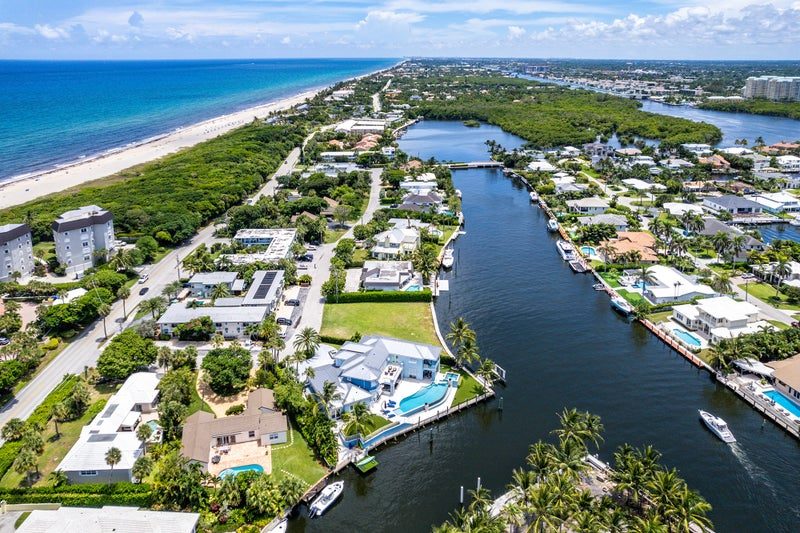
Ocean Ridge splits into three pricing tiers based on location relative to water, and this matters more here than in almost any other Palm Beach County suburb:
- Interior, non-waterfront streets (roughly between A1A and the Intracoastal, on the mainland-facing side of some subdivisions, or set back from direct water access) command the lowest price per square foot, though “lowest” in Ocean Ridge still means well into seven figures for most updated homes. A 1,800 to 2,400 square foot renovated ranch on an interior street will typically land in the $500 to $700 per square foot range.
- Canal-front and Intracoastal-front homes, many with private docks, sit in the middle tier and are in strong demand from boating buyers who want deep water access without paying oceanfront prices. These often push $800 to $1,100 per square foot once you factor in dock value, and the gap between a home with 60 feet of protected dockage and one with 40 feet of shallow, unusable water can be a few hundred thousand dollars on paper-similar properties.
- Direct oceanfront, either on A1A itself or on short private lanes off it, commands the top tier, with lot value alone often exceeding $2 million before you factor in the structure. It is not unusual to see oceanfront teardowns priced at $4 to $5 million where the buyer’s real intent is to demolish and rebuild, treating the existing home as a placeholder rather than the asset being purchased.
A practical way to think about it: if a buyer tells me their budget is $1.2 million and they want a dock, I tell them straight, that is an interior-street budget in Ocean Ridge, not a canal-front budget. Better to know that before you tour ten homes you can’t actually afford.
Ocean Ridge FL Real Estate Market 2026: Prices, Trends & What Buyers Should Expect
Zooming out to the county level gives useful context. Palm Beach County single-family homes are sitting at roughly 4.2 months of supply as of mid-2026, which is a seller-leaning market. Ocean Ridge, as a micro-market inside that county, runs even tighter than the county average because total inventory is so small to begin with. In a town with only a few thousand parcels total, even a handful of listings coming on or off market can swing the numbers noticeably month to month.
What that means practically for 2026 buyers:
- Lowballing is not a strategy here. Sellers in Ocean Ridge are rarely distressed. Many have owned for decades, have no mortgage, and are not in a hurry. If your offer is meaningfully under list on a well-priced home, expect it to be ignored rather than countered.
- Cash and strong pre-approval matter more than in a typical suburban deal. With inventory this thin, sellers can be selective about who they go under contract with, especially on waterfront listings where multiple offers are common. A seller choosing between two similar offers will often take the cleaner financing over the higher price if the higher offer looks shaky.
- Renovation condition swings price dramatically. Because so much of the housing stock is 30 to 70 years old, you will see two homes on the same street with a $400,000 to $600,000 gap purely based on whether the kitchen, roof, impact windows, and electrical have been updated. I’ve seen buyers walk into two open houses on the same block the same weekend and assume the pricing gap was a mistake. It wasn’t. One had a new roof and impact glass, the other had a 1998 kitchen and single-pane sliders facing the ocean.
- Land value often exceeds structure value on older oceanfront and Intracoastal parcels. Some buyers are functionally buying the lot and either gutting or tearing down the existing house, which keeps a floor under pricing even on dated properties.
What’s Actually Different About 2026 vs. Prior Years
The biggest shift buyers should know about heading into 2026 is not unique to Ocean Ridge, it is a statewide condo story that indirectly affects this town too. Post-Surfside structural reserve requirements have made condo ownership costlier and slower to transact almost everywhere in Florida, and that has pushed some buyers who previously considered a beach condo toward small-footprint single-family towns like Ocean Ridge instead, even at a higher entry price.
The contrast is easier to see with real numbers. Condo inventory in Broward County is running near 10.5 months of supply right now, and Miami-Dade condos are over 11 months, both clearly buyer’s markets with real room to negotiate. Single-family homes are the opposite story, tight almost everywhere along the coast. Ocean Ridge has very limited condo inventory anyway (a few low-rise buildings along A1A, generally $500,000 to $1.2 million per unit), so this statewide condo softness doesn’t show up much locally. What it does is add incremental demand to the already-tight single-family side, as buyers who got spooked by rising condo assessments and special reserve requirements decide they’d rather own dirt and a roof outright than a unit inside a building facing a multi-million dollar reserve study.
The other change worth naming plainly is insurance. Wind and named-storm premiums along this stretch of coast have climbed enough in the last few renewal cycles that some sellers are now pricing that reality into their expectations, and buyers who skip getting a real quote during due diligence are the ones who show up to closing surprised.
Neighborhoods and Streets to Know
Ocean Ridge does not have named subdivisions the way a planned community does. Instead, it is best understood street by street and by proximity to water:
Old Ocean Boulevard and A1A Corridor
This is the spine of the town and where you find the highest concentration of oceanfront and near-oceanfront estates. Homes here trend toward larger lots (a quarter acre to over half an acre is common, unusually generous for coastal Palm Beach County) and command the top of the market. Buyers touring this corridor should expect long private driveways, mature landscaping used as a privacy buffer instead of walls, and, on many lots, direct beach access via a private walkover rather than a shared public entrance.
The Interior Streets (Spanish River Drive area, Hypoluxo Island approach roads)
These offer the most attainable entry point into Ocean Ridge, still walkable or a short bike ride to the beach, without the direct oceanfront premium. This is where most relocating families end up starting their search, because it is the segment of the market where a $1 million to $1.4 million budget can still land a legitimately updated three or four bedroom home rather than a project.
Canal Communities Near the Boynton Inlet
Properties near the north end of town, closer to the Boynton Inlet, appeal heavily to boaters because of quicker ocean access. Dock depth and bridge clearance vary block by block, so any buyer prioritizing a boat should get the specifics verified before writing an offer, not after. I always tell boating buyers to bring their captain or a marine surveyor to the showing, not just their agent. A dock that looks fine at high tide can be a different story at low tide, and fixed bridge clearance on the way out to the inlet matters if you’re running anything with real air draft.
Flood Zones, Insurance, and Seawalls: The Part Buyers Underestimate
This is where an honest guide has to slow down, because it is where out-of-state buyers get surprised. Nearly all of Ocean Ridge sits in FEMA flood zones given its barrier island location, and:
- Flood insurance is not optional for anyone with a mortgage, and even cash buyers should budget for it as a real annual cost, not an afterthought. Depending on elevation and construction year, annual flood premiums on Ocean Ridge homes commonly run anywhere from $2,000 on a well-elevated newer build to $8,000 or more on an older home sitting closer to grade.
- Older homes built before modern base flood elevation standards can carry meaningfully higher premiums than a home rebuilt or elevated to current code. Ask for the elevation certificate before you fall in love with a listing. If the seller doesn’t have one, get one during your inspection period, it typically costs a few hundred dollars and saves you from an unpleasant surprise at underwriting.
- Seawall condition on canal and Intracoastal-front lots is a real inspection item. Repair or replacement can run into six figures depending on length and material, roughly $150 to $400 per linear foot depending on whether it’s a straightforward cap repair or a full rebuild, and it is a negotiating point sellers do not always volunteer. On a typical 80 to 100 foot waterfront lot, that’s a real number to have in hand before you finalize your offer.
- Wind and named-storm insurance in coastal Palm Beach County has climbed substantially in recent years. Get a real quote during your due diligence period, not a rough estimate, before you’re locked into a contract with a tight financing contingency. I’ve seen deals get renegotiated at the eleventh hour because a buyer assumed a $4,000 annual wind premium and the actual quote came back closer to $11,000.
None of this makes Ocean Ridge a bad buy. It makes it a buy where the total cost of ownership needs to be underwritten carefully, the same way it should be on any barrier island property from Jupiter Island down to Key Biscayne. The buyers who do well here are the ones who treat insurance and seawall condition as part of the purchase price conversation, not a closing-week afterthought.
Schools and Commute
Ocean Ridge is unincorporated in the sense that it has no schools of its own, homes here are zoned within the Palm Beach County School District, generally feeding toward Citrus Cove Elementary, Congress Community Middle School, and either Atlantic Community High School in Delray Beach or Boynton Beach Community High School depending on the specific address. Families relocating for schools should always verify current zoning directly with the district before purchasing, since boundary lines shift, and the difference of a single street can put you in a different assigned school.
Commute-wise, Ocean Ridge is genuinely convenient despite feeling remote:
- Downtown Delray Beach (Atlantic Avenue) is roughly a 10 to 15 minute drive south.
- Downtown Boynton Beach and the Boynton Harbor Marina are a few minutes north.
- I-95 access runs through Woolbright Road or Gulf Stream Boulevard, both a straightforward 10-minute drive from most of the town.
- Palm Beach International Airport is about 20 to 25 minutes north depending on traffic.
For a family relocating from out of state, this combination is a big part of the appeal. You get the quiet, low-density feel of a barrier island, but you are not actually isolated from work, schools, or an airport run. It is a very different daily reality than, say, living on a more remote stretch of the Treasure Coast, where that same quiet comes with a much longer commute.
How Ocean Ridge Compares to Its Neighbors
Buyers relocating to this stretch of Palm Beach County are almost always cross-shopping Ocean Ridge against a short list of similar towns, and the differences matter:
- Gulf Stream, directly south, is even smaller and even more exclusive, with an even thinner resale market and higher price floor. If Ocean Ridge feels tight, Gulf Stream is tighter still, often with entry points north of $3 million even for interior homes.
- Manalapan, further north past Boynton Inlet, skews toward larger estate compounds and an even higher price ceiling, generally out of reach for most buyers who’d consider Ocean Ridge, with oceanfront estates regularly trading well above $15 million.
- Delray Beach, just south, offers walkable downtown living, restaurants, and more inventory, including condos and new builds, at a lower barrier-island premium but without the small-town quiet. A buyer who wants nightlife and restaurants within walking distance is usually happier in Delray than in Ocean Ridge, no matter how nice the Ocean Ridge listing is.
- Boynton Beach, just north, has far more inventory and price variety, including active new construction near the marina, but without Ocean Ridge’s uninterrupted beach access and low density. This is where a buyer priced out of Ocean Ridge’s water-adjacent tiers often lands, trading a shorter walk to sand for meaningfully more house per dollar.
If Ocean Ridge’s price floor or its lack of new construction rules it out for you, it is worth comparing against Best Palm Beach County Suburbs for Families Relocating in 2026 to see where else in the county might fit your budget and lifestyle better. Buyers specifically wanting new construction in this part of the county, since Ocean Ridge simply does not offer any, often end up looking west toward projects like Agave Boca in Boca Raton instead.
What Buyers Should Actually Expect Walking Into 2026
Set expectations correctly before you start touring:
- Inventory will be thin, and it will stay thin. Do not expect a wide selection to choose from at any given moment. Plan to move decisively when the right listing appears, because the next comparable one might not surface for months.
- You are buying an existing structure, not a new build. Budget mentally, and financially, for renovation, especially on anything not updated in the last 10 years. Get a contractor’s rough estimate during your inspection period if the home needs work, not after closing.
- Waterfront access is not guaranteed by proximity. A home two streets back from the Intracoastal is a completely different product than one with a private dock. Confirm exactly what you’re getting, and don’t assume “near the water” means “on the water.”
- Insurance and flood costs need to be quoted early, not estimated. They materially change the real monthly cost of ownership, and they can affect your financing approval if the numbers come back higher than your lender expected.
- This is not a negotiation-heavy market. Come in prepared, with financing in order, and treat a fair list price as a fair list price. Save your negotiating leverage for repair items that surface during inspection, not for the sale price itself.
For a deeper walkthrough of the actual purchase process here, from financing quirks to what inspections tend to turn up on older coastal homes, see the Buyer’s Guide to Ocean Ridge, FL. And if you’re still deciding whether this town fits your life at all versus just your budget, the honest 2026 review of Ocean Ridge covers the day-to-day reality, not just the real estate math.
Is Now a Good Time to Buy in Ocean Ridge?
The reality is that “good time to buy” depends entirely on what you’re solving for. If you’re chasing a deal, Ocean Ridge in 2026 is not that market, supply is too tight and sellers too unmotivated for real leverage to swing toward buyers. If you’re solving for a specific lifestyle, low-density barrier island living, direct beach access, no high-rises blocking your view, and you have the capital to absorb both the purchase price and the real cost of coastal insurance, then timing matters less than finding the right property when it hits the market.
What most people don’t tell you is that the towns with the least inventory are usually the towns where waiting for a “better time” costs you more than acting does. Ocean Ridge has not seen meaningful new supply added in years and is not going to start now given its zoning. If the fit is right, the better strategy is getting pre-approved, getting clear on your must-haves between interior, canal, and oceanfront, and being ready to move when the right listing comes up rather than waiting for the market to soften.
Bottom Line
Ocean Ridge is a small, tightly held barrier island town where price is driven almost entirely by proximity to water and where new construction essentially does not exist. Expect $900,000 to $1.8 million for interior non-waterfront homes, $2 million to $4 million for canal and Intracoastal properties, and $4 million and up for direct oceanfront. Budget realistically for flood insurance, wind coverage, and, on older homes, renovation and possible seawall repair. Move decisively when the right listing appears, because in a town this small, it will not wait for you to decide.
If you’re relocating to this part of Palm Beach County and want a straight answer on whether Ocean Ridge, one of its neighbors, or a different suburb entirely fits your situation, DM me and I’ll walk you through what’s realistic for your budget and timeline.

More articles you might like
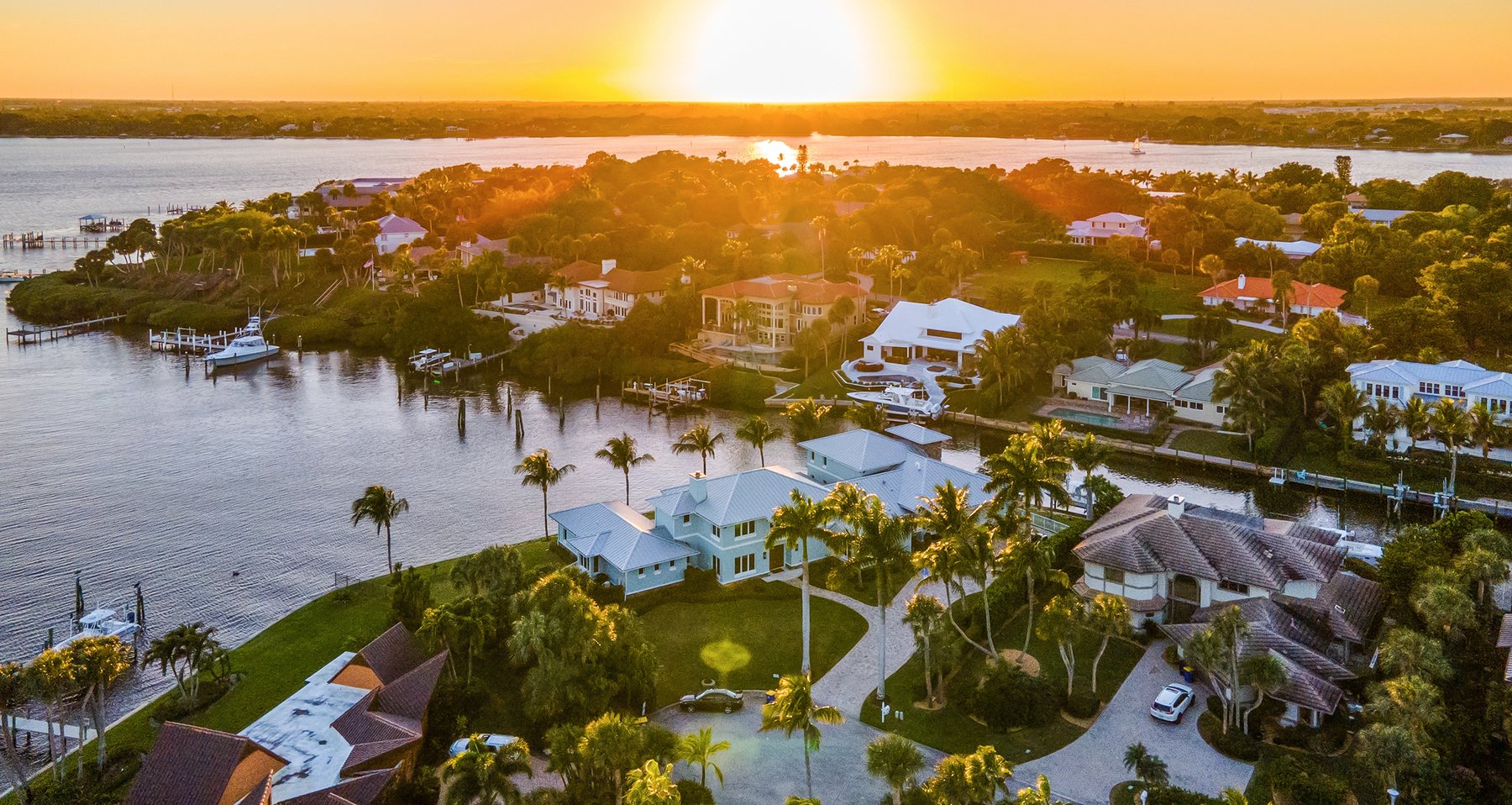
Buyer's Guide to Ocean Ridge, FL: What to Know Before You Purchase
15 min readIs Ocean Ridge a Good Place to Live? Honest 2026 Review
17 min read
Coconut Creek Real Estate Market (2026): Prices, Trends, and What It Means for Buyers
18 min read
Weston Real Estate Market Update: Prices and Conditions in Mid-2026
13 min read
Westlake, FL Real Estate Market 2026: Prices, Trends & What Buyers Should Expect
13 min read