West Palm Beach Real Estate Market 2026: Prices, Trends & What Buyers Need to Know
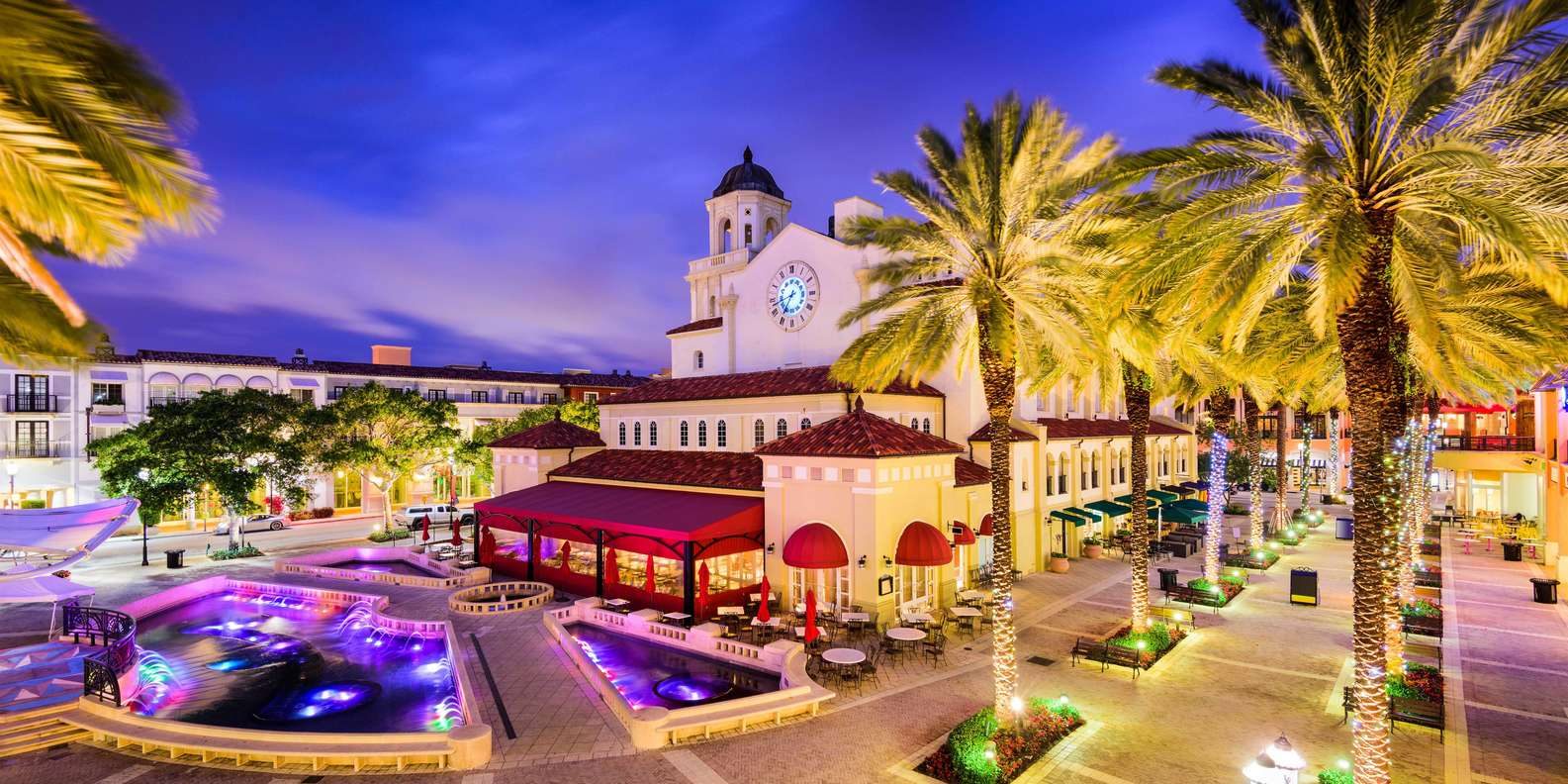
West Palm Beach’s real estate market in 2026 isn’t one market, it’s at least three. If you’re trying to make sense of headlines about “prices cooling” or “inventory surging,” the honest answer is that it depends entirely on which West Palm Beach you’re talking about. The historic eastside neighborhoods are still tight and still climbing. The downtown condo market is working through a glut of new towers. And the western suburbs, out past I-95 toward Okeechobee Boulevard and Haverhill Road, are where most of the new supply and the most negotiating room actually is. Understanding West Palm Beach real estate market 2026 prices trends and what buyers need to know starts with accepting that there’s no single number that describes this city.
I work this market daily, not from a spreadsheet in another state, and what follows is the breakdown I give clients before they write an offer. No hype, no “prices always go up” nonsense. Just what’s actually happening, street by street.
Where West Palm Beach Prices Stand in 2026
Single-family home prices in West Palm Beach vary more by zip code than almost anywhere else in Palm Beach County, because the city itself spans everything from 1920s Mediterranean Revival bungalows on brick streets to 1970s block homes on the west side to brand-new townhomes going up near the turnpike.
Broad strokes for 2026:
- Historic district homes (El Cid, Flamingo Park, Old Northwood, SoSo/South of Southern): $700,000 to well over $2,000,000, with waterfront El Cid and Prospect Park lots regularly clearing seven figures.
- Non-historic homes west of Dixie Highway, east of I-95: roughly $450,000 to $650,000, depending on lot size and whether the home has been renovated.
- Downtown and Flagler Drive condos: from the mid $300,000s for older, smaller units up to $2,000,000+ for newer waterfront towers. At the very top of that range, ultra-luxury boutique buildings like the 19-story tower on South Flagler Drive from Perko Development and Kolter Urban are presale-listing 39 residences starting at $5,700,000, with a 10,000-square-foot penthouse, a private movie theater, and a dog spa. That’s not the market most buyers are shopping in, but it sets the ceiling and tells you where capital is flowing.
- Western suburban corridor (near Okeechobee Boulevard and Haverhill Road): this is where the real growth and the real value is right now. New townhome product from national builders like D.R. Horton is quietly entering the pipeline here, with the Edgestone community expected to open presale in the high $400,000s.
If you’re comparing West Palm Beach to its neighbors, it’s worth reading how it stacks up against Palm Beach Gardens and Boca Raton, because the price gap between those markets has widened, not narrowed, over the past two years.
Why the Spread Between Neighborhoods Keeps Widening
A decade ago you could talk about “West Palm Beach prices” as a single number and not be too far off. That’s not true anymore, and the reason matters. The historic districts are landlocked. There’s no more land in El Cid or Flamingo Park. Every renovated bungalow that sells sets a new ceiling for the next one, because supply simply cannot expand to meet demand. Meanwhile the western corridor has the opposite problem in the best way for buyers: it has room to build, so builders keep adding supply, and pricing stays more disciplined because a competitor’s community is always a mile away undercutting on price or incentives. When people ask me why a 1,600 square foot bungalow in SoSo costs more per square foot than a brand-new townhome with a warranty near Haverhill Road, this is the answer. One market is fixed in size. The other is still being built.
Neighborhood-by-Neighborhood Price Breakdown
El Cid and SoSo (South of Southern)
These two neighborhoods anchor the top of the non-waterfront-mansion market. El Cid’s Intracoastal-adjacent lots with historic Mediterranean homes command a premium for architecture as much as location. SoSo has become the neighborhood locals point to when they say “it’s not what it used to be,” in a good way for sellers, meaning renovated bungalows that traded for $400,000 a decade ago are now routinely $750,000 to $950,000.
What’s driving SoSo specifically is proximity without the price tag of El Cid’s water frontage. Buyers who get outbid in El Cid two or three times often land in SoSo instead, and that spillover demand has pushed the neighborhood’s median up faster than almost anywhere else in the city over the past three years. If you’re watching this neighborhood as an investor rather than an owner-occupant, pay attention to which blocks still have unrenovated 1930s and 1940s homes on them. Those are the last entry points before the neighborhood fully turns over.
Flamingo Park and Old Northwood
Flamingo Park is the most walkable of the historic districts, close to Antique Row and downtown, and it draws buyers who want a real neighborhood feel with sidewalks, mature oak canopies, and a strong civic association. Old Northwood, north of downtown, has similar bones with slightly more value remaining, though that gap has been closing fast as buyers priced out of Flamingo Park move a few blocks north.
Old Northwood in particular is worth watching if you’re trying to time an entry into a historic district before it fully catches up in price. The housing stock, mostly Mediterranean Revival and Frame Vernacular homes from the 1920s, is architecturally comparable to Flamingo Park, but the neighborhood spent longer as a mostly-overlooked pocket north of downtown. That gap is why buyers who couldn’t afford Flamingo Park five years ago are now the ones driving Old Northwood’s price growth today. It’s a pattern worth remembering: in West Palm Beach, the neighborhood one ring out from the hot one is usually where the next run happens.
Downtown and Flagler Drive
The condo stock downtown ranges from older 1970s-80s buildings with lower HOA fees and dated finishes, to newer towers with resort-style amenities and HOA dues that can run $800 to $1,500+ a month. Buyers need to underwrite the HOA fee as seriously as the mortgage payment here. A $500,000 condo with a $1,200 monthly assessment is a very different monthly obligation than the sale price alone suggests.
There’s also a structural issue specific to Florida condos right now that buyers from out of state consistently underestimate: post-Surfside milestone inspection and structural integrity reserve study requirements. Older downtown buildings that haven’t fully funded their reserves are facing large special assessments as they come into compliance, on top of the monthly HOA fee. Before you write an offer on any condo built before the mid-2000s, ask for the building’s most recent reserve study and milestone inspection report. That document tells you more about your real monthly cost than the listing sheet does. This is exactly why the newer presale towers, like the Perko and Kolter Urban project on South Flagler Drive, are pricing at a premium; buyers are paying for the certainty of a building with no deferred maintenance and no surprise assessment waiting three years down the road.
The Western Suburban Corridor
This is the growth story. Near Okeechobee Boulevard and Haverhill Road, builders are filling in the last developable parcels with townhome product aimed at first-time buyers and downsizers priced out of the historic districts. Edgestone, from D.R. Horton, is expected to open in the high $400,000s once pricing is released. This corridor won’t have the character of El Cid, but it’s where a buyer with a $500,000 budget and no interest in a fixer-upper actually has options today.
This corridor is also worth understanding in the context of Palm Beach County’s broader new construction pipeline, not just West Palm Beach in isolation. The same forces reshaping communities like Avenir and the City of Westlake, master-planned developments built specifically to compete on total monthly cost, are showing up in miniature along Okeechobee and Haverhill. It’s a smaller scale, closer to the urban core, but the same logic applies: builders here are competing on price, warranty, and predictable carrying costs, not on brick streets and mature landscaping.
For a full neighborhood-by-neighborhood comparison, see best neighborhoods in West Palm Beach.
What’s Actually Selling Right Now
Two things are true at once in 2026: days on market have stretched out compared to the frantic pace of 2021-2022, and well-priced homes in the historic districts are still going under contract in under two weeks.
What’s moving fast:
- Renovated homes under $700,000 in Flamingo Park, SoSo, and Old Northwood
- Move-in-ready homes with updated electrical, roof, and impact windows (buyers are done taking on deferred maintenance at 2026 insurance rates)
- New construction townhomes in the western corridor priced under $550,000
What’s sitting:
- Older condos downtown with high HOA fees and no recent capital improvements
- Homes needing a new roof or full rewire, priced as if they don’t
- Overpriced listings in transitional pockets west of Dixie Highway where sellers are still anchored to 2022 comps
The gap between those two categories is the biggest story in this market. Sellers who price realistically and disclose condition upfront are getting multiple offers. Sellers who don’t are sitting for 90+ days and eventually cutting price anyway.
I had a client in early 2026 comparing two homes in Flamingo Park listed within two weeks of each other, both around $780,000, both roughly the same square footage. One had a new roof, a repiped house, and an upgraded panel, all disclosed upfront with receipts. It went under contract in nine days with two backup offers waiting. The other had an original 1994 roof and a listing agent who wouldn’t answer direct questions about the electrical panel’s age. It sat 74 days before a price cut, and even then the eventual buyer negotiated a credit for the roof at closing. Same neighborhood, same price bracket, completely different outcomes, because one seller did the work of making the home financeable and insurable and the other didn’t.
New Construction vs Resale: The Insurance Math Nobody Explains
This is the part of the West Palm Beach market conversation that most agents skip, and it’s often the single biggest factor in what a buyer can actually afford.
Homes built to current Florida Building Code, which means continuous poured-concrete tie beams, impact-rated glazing throughout, foam-insulated masonry, and wind-engineered roofing, qualify for windstorm insurance discounts of up to 50% compared to a resale home built before 2002. On a coastal Palm Beach County property, that’s not a rounding error. That’s potentially $2,000 to $4,000 a year in premium difference, which changes what mortgage payment a buyer can actually qualify for.
So when you’re comparing a $600,000 historic-district resale to a $520,000 new townhome in the western corridor, don’t just compare the sale price. Pull an insurance quote on both. The “cheaper” resale can end up costing more per month once windstorm coverage is factored in, especially on homes with an older roof or original electrical panel.
Run the actual numbers side by side and it gets clearer. Say the $600,000 resale in Flamingo Park has a 1998 roof and an original panel. A realistic windstorm and homeowners package on that home could land in the $6,500 to $8,500 a year range depending on the carrier and your deductible choice. The $520,000 new construction townhome near Haverhill, built to current code with impact glazing throughout, might quote closer to $3,500 to $4,500 a year for comparable coverage. That’s a $3,000 to $4,000 annual swing, or roughly $250 to $350 a month, on top of the difference in principal and interest from the lower sale price. Stack those together and the “more expensive” historic home can end up costing $500 or more a month more than the new construction option once you account for the full carrying cost, not just the mortgage payment. That doesn’t mean the resale is a bad buy, character and location have real value, but it means you need to make that decision with real numbers, not just the listing price.
HOA and CDD Costs to Watch
Most of West Palm Beach’s historic eastside neighborhoods have light or no HOA at all, just a voluntary civic association with modest annual dues. That changes the further west and further into newer development you go. Community Development District (CDD) assessments, which fund roads, drainage, and amenity centers in newer master-planned communities, are common in western Palm Beach County and show up as a non-ad valorem line item on the tax bill, separate from and in addition to any HOA fee. Ask specifically whether a new construction community carries CDD debt before you fall in love with the model home. Some builders and municipalities are structuring newer projects with lower or no CDD burden specifically to compete on total monthly cost, so it’s worth asking rather than assuming.
This isn’t a hypothetical distinction. Look at the difference between a community like Avenir, which relies on CDD bonds to fund its recreation centers and infrastructure, and the City of Westlake, which was structured from the start to operate without CDD debt and instead carries a minor HOA assessment. Two buyers can put down roots in comparable new construction homes ten minutes apart in western Palm Beach County and end up with meaningfully different monthly obligations purely based on how each community financed its infrastructure. Ask your builder’s sales rep for the specific CDD or HOA disclosure in writing before you go under contract, not after. It’s a public record, and there’s no reason to guess when you can just ask.
If you’re weighing new construction against an established neighborhood more broadly, our new construction guide for West Palm Beach breaks down which builders are actually delivering on schedule.
Who’s Buying in West Palm Beach in 2026
The buyer pool has shifted noticeably over the past two years. Fewer straight cash-out-of-state buyers paying whatever it takes, more relocation buyers doing real due diligence, comparing school zones, commute times, and insurance quotes before writing an offer.
The three buyer types I see most often right now:
- Relocators from the Northeast and Midwest who want walkability and character and are targeting the historic districts specifically, often coming from cities where a $700,000 budget buys a fraction of what it buys here.
- Local move-up buyers trading a starter condo or western-suburb home for a historic district property, now that renovation costs have made buying already-updated more attractive than buying-to-renovate.
- First-time buyers priced out of the eastside entirely, landing in the western corridor near Okeechobee and Haverhill where new construction townhomes are the realistic entry point.
There’s a fourth group I’d add for 2026 that gets less attention: downsizers who already own in West Palm Beach and are trading a larger historic-district home for a lower-maintenance condo or townhome, either downtown or in the western corridor. This group tends to be less price-sensitive than first-time buyers but far more sensitive to HOA structure, building age, and reserve funding, for the reasons covered above. If you’re in this group, the milestone inspection and reserve study conversation matters even more, because you’re likely planning to stay put for a decade or more and don’t want a special assessment showing up in year three.
If you’re new to the area and trying to figure out what daily life actually looks like here before you commit to a neighborhood, read what it’s actually like to live in West Palm Beach and our honest 2026 review of whether West Palm Beach is a good place to live.
What Buyers Need to Know Before Making an Offer
1. Get pre-approved with a lender who actually understands South Florida insurance. A generic national lender who doesn’t factor in windstorm and flood premiums will give you a pre-approval number that falls apart once you’re under contract on a specific address.
2. Order an insurance quote before you get emotionally attached to a listing. This is the single most common reason deals fall apart in West Palm Beach right now. A home can be perfect and still be unaffordable once the windstorm quote comes back.
3. Know your school zone before you fall in love with a street. West Palm Beach’s school assignments vary block to block in some areas. If schools matter to your decision, check zoning before you write an offer, not after. Our West Palm Beach schools guide walks through what families need to know.
4. Budget for the roof and electrical panel, not just the sale price. Homes built before the mid-1990s in the historic districts are gorgeous, but a 25-year-old roof or an original panel will show up in your insurance quote and your inspection. Factor that into your offer, not as a surprise afterward.
5. If you’re a first-time buyer, get the fundamentals right before you shop. The West Palm Beach market moves fast enough in the price ranges first-time buyers compete in that being unprepared costs you the house. Start with our first-time buyer’s guide to West Palm Beach.
6. For condos, request the milestone inspection and reserve study before you write an offer, not during the option period. Under Florida’s post-Surfside reserve laws, associations are required to fund reserves for major structural components. A building that’s behind on that funding is one special assessment away from a very different monthly cost than what the HOA fee suggests today. This single document has killed more condo deals I’ve been part of in the last two years than any home inspection.
7. Compare total monthly cost, not sale price, when weighing new construction against resale. As covered above, the lower sale price isn’t always the lower monthly payment once insurance, HOA, and CDD assessments are factored in. Run the real numbers on both options before you decide which one is actually the better value for your budget.
Where the Growth Is Actually Happening
If you want to see where West Palm Beach is headed, don’t look at El Cid, that neighborhood has been fully discovered for years. Look west. The corridor along Okeechobee Boulevard and Haverhill Road is absorbing the bulk of new residential permitting activity in the city right now, as national builders quietly fill in the last available parcels with townhome product. It’s not glamorous, but it’s the release valve for a city that’s largely built out on its historic east side. Expect that corridor to see the fastest price appreciation over the next few years simply because it’s the only place left with meaningful new supply.
This matters for a second reason beyond price appreciation: rental demand. As more employers bring workers into West Palm Beach and Palm Beach County broadly, and as the historic districts remain effectively capped on supply, the western corridor is also becoming the default answer for renters who work downtown but can’t compete for eastside inventory. If you’re buying as an investor rather than an owner-occupant, that rental demand curve is worth watching alongside the appreciation story. A new construction townhome with a lower insurance bill and a builder warranty is often a cleaner hold for a landlord than an older home with unknown mechanical systems, even before you factor in the price difference.
For anyone weighing a move to the city broadly, our moving to West Palm Beach 2026 guide covers the practical side of relocating, from timing your move to what to expect from the permitting and closing process here.
The Bottom Line
West Palm Beach in 2026 rewards buyers who do their homework and punishes sellers who don’t adjust to it. If you want character, walkability, and are willing to pay for a rewired panel and a new roof eventually, the historic districts are still worth every dollar and still moving fast when priced right. If you want a lower price point, a builder warranty, and better insurance math, the western corridor near Okeechobee and Haverhill is where the actual opportunity is right now.
The mistake I see buyers make most often is treating “West Palm Beach” as one market and applying one strategy to all of it. It isn’t, and you shouldn’t. Figure out which West Palm Beach fits your budget and your life first, then let that decision drive your search, not the other way around.
If you want a specific read on a specific neighborhood or a specific address, that’s a five-minute conversation, not a guessing game. Reach out and we’ll walk through the actual numbers for where you’re looking.
Watch: learn more
Go deeper with my South Florida Insider videos.
Solterra: Everything You Need to Know Before You Visit

The Best Flex-Space Townhome in West Palm Beach: Pulte's Nautical Plan
Inside Everton's Latitude II Model: $458k New Homes In Palm Beach
More articles you might like
West Palm Beach vs Palm Beach Gardens: City Energy or Suburban Comfort?
17 min readWest Palm Beach FAQ: 20 Questions Buyers Ask Before Moving (2026 Guide)
13 min readWhat It's Actually Like to Live in West Palm Beach: Lifestyle, Culture and Daily Life
18 min readIs West Palm Beach a Good Place to Live? An Honest 2026 Review
18 min readBest Neighborhoods in West Palm Beach: An Honest 2026 Breakdown
13 min read