West Palm Beach vs Palm Beach Gardens: City Energy or Suburban Comfort?
West Palm Beach vs Palm Beach Gardens: City Energy or Suburban Comfort?
If you’re cross-shopping Palm Beach County right now, the west palm beach vs palm beach gardens city energy or suburban comfort question comes down to one honest trade-off: West Palm Beach gives you a walkable downtown, waterfront energy, and a faster pulse, while Palm Beach Gardens gives you newer construction, gated-community comfort, and some of the county’s most consistent schools. Neither city is “better.” They’re built for different daily lives, and picking wrong means fighting your own commute and lifestyle for years. Here’s what actually separates them, block by block and dollar by dollar.
Both cities sit inside the same county and share the same I-95 and Florida’s Turnpike corridors, the same PBIA airport access, and a lot of the same employers. But once you get off the highway, they feel like different states. West Palm Beach is the county seat, a real urban core with a skyline, a downtown grid, and neighborhoods that predate 1950. Palm Beach Gardens is newer, more suburban, and built almost entirely around planned communities and PGA Boulevard’s retail spine. If you’ve read our breakdown of what it’s actually like to live in West Palm Beach, you already know WPB rewards people who want to be near things. Palm Beach Gardens rewards people who want space, structure, and a gate between them and the street.
This isn’t a small decision, and it isn’t one you can undo cheaply. Buyers who guess wrong on this comparison usually find out about six months in, when the West Palm Beach transplant realizes they’re driving fifteen minutes for every errand inside a Palm Beach Gardens HOA, or the Palm Beach Gardens transplant realizes they miss having a golf cart and quiet cul-de-sac after a year of downtown noise and parking headaches. The good news is you don’t have to guess. The differences are measurable: price per square foot, HOA and CDD math, school zone data, and commute times. Let’s go through them one at a time.
West Palm Beach vs Palm Beach Gardens: City Energy or Suburban Comfort?
Think of it this way. West Palm Beach is the city you pick when you want to walk to dinner, bike to a farmers market, or sit on the Flagler waterfront on a Tuesday night without planning ahead. Palm Beach Gardens is the city you pick when you want a guard at the entrance, a golf course view, and a school your kids can walk to inside the neighborhood.
Neither city is short on money or new development. West Palm Beach’s downtown waterfront corridor is in the middle of a genuine luxury building boom, with towers like South Flagler House from Related Ross (105 residences across two 28-story towers, priced from $5.9 million into the $20 million-plus range) and Alba Palm Beach, a boutique 22-story tower from BGI Companies and Blue Road with 55 residences plus four custom townhomes, priced from $2.5 million to $10.66 million. Palm Beach Gardens, meanwhile, is quietly the single biggest new-construction market in the county. Of the active and under-development communities tracked across Palm Beach County, Palm Beach Gardens accounts for roughly 22.7 percent of them, the largest share of any municipality, anchored by large master-planned projects like Avenir on the western edge of the city.
That’s the real difference in one sentence: West Palm Beach is building up and out along the water, Palm Beach Gardens is building out and around golf courses and preserve land. One is a vertical growth story. The other is a horizontal one. That distinction alone should tell you a lot about which city fits the life you’re picturing five years from now, not just the one you have today.
Price Comparison: What Your Money Actually Buys
West Palm Beach Pricing
West Palm Beach is not a cheap city anymore, but it’s a city of contrasts. You can still find smaller single-family homes in Northwood or Grandview Heights well under $500,000, while three blocks away in El Cid or Flamingo Park, a renovated 1920s Mediterranean-style home can run $1.2 million to $2 million-plus. New waterfront condo product downtown starts around $2.5 million and climbs past $20 million for the ultra-luxury towers. If you want the full pricing and trend picture, our West Palm Beach Real Estate Market 2026 guide breaks it down by segment.
The takeaway: West Palm Beach has more price spread, top to bottom, than Palm Beach Gardens. You can genuinely find a starter home and a $20 million penthouse in the same zip code. That spread matters if you’re trying to buy into a city and grow into it over time, upgrading from a Northwood bungalow to a Flagler waterfront tower without ever having to leave the school zones or the neighborhood you already know.
Palm Beach Gardens Pricing
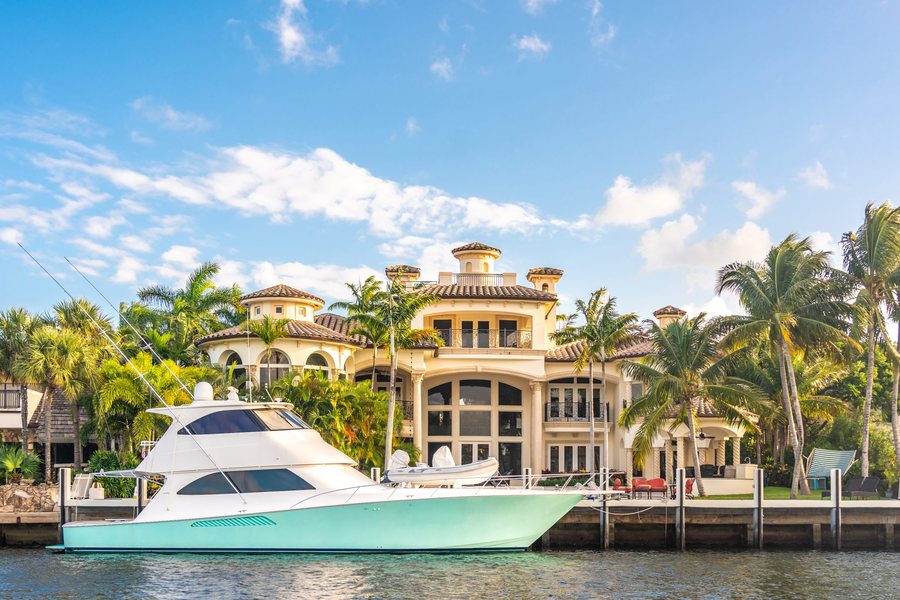
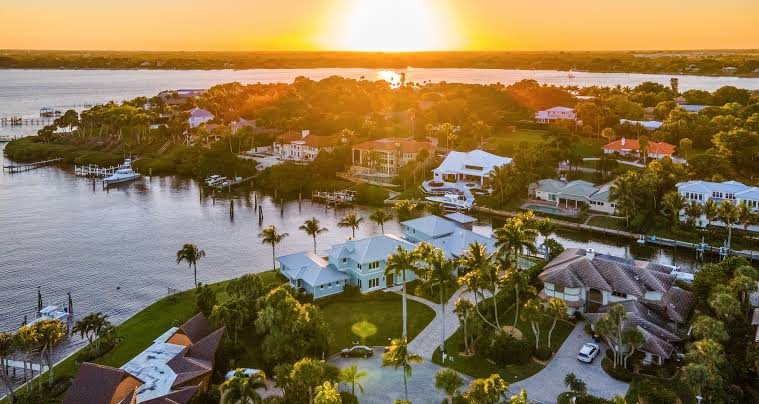
Palm Beach Gardens is more consistently upper-mid to luxury across the board because so much of its inventory sits inside HOA-governed communities built in the last 25 to 35 years. Starter single-family homes in older sections closer to Northlake Boulevard can be found in the $450,000 to $600,000 range, but the bulk of the city, communities like BallenIsles, Mirasol, Evergrene, and PGA National, runs from the high $600,000s into the multiple millions. Old Palm, the ultra-exclusive golf community off PGA Boulevard, regularly sees homes trade well above $3 million. Newer product at Avenir starts more accessibly but still carries CDD debt on top of the purchase price, which brings us to the next big difference buyers underestimate.
Unlike West Palm Beach, you won’t find much true entry-level product inside Palm Beach Gardens city limits. The floor is simply higher, and it stays high because the inventory is newer, the lots are larger, and almost everything comes wrapped in an HOA that maintains landscaping, gates, and amenities. You’re not just paying for square footage in Palm Beach Gardens, you’re paying for a managed environment.
HOA and CDD Reality Check
This is where a lot of buyers get surprised after closing. West Palm Beach’s older neighborhoods (Flamingo Park, El Cid, SoSo, Northwood) mostly have no HOA at all, or a light, optional neighborhood association with dues under $200 a year. Downtown condo buildings are the exception, where HOA fees can run $1,000 to $3,000-plus a month depending on amenities and building age.
Palm Beach Gardens is the opposite. Nearly every desirable community is HOA-governed, and many of the newer master-planned developments, including sections of Avenir, layer a CDD (Community Development District) assessment on top of the HOA fee to pay off the infrastructure bonds that built the roads, utilities, and amenities. That CDD payment shows up on your property tax bill and doesn’t disappear when the mortgage is paid off. Budget for both the HOA and the CDD line item before you fall in love with a floor plan in Palm Beach Gardens.
Here’s what that actually looks like in practice. A buyer touring a $700,000 Avenir single-family home might see an HOA fee in the $300 to $400 a month range plus a CDD assessment that adds another $200 to $400 a month depending on the phase and the size of the bond. That’s real money, $500 to $800 a month before you’ve touched a mortgage payment, and it’s the single most common thing relocating buyers forget to ask about until it’s already on their closing disclosure. In West Palm Beach’s older neighborhoods, that same $500 to $800 a month simply doesn’t exist as a line item, though you trade it for less predictability in what your neighbors do with their yards and less in the way of shared amenities.
Lifestyle and Daily Life
A Day in West Palm Beach
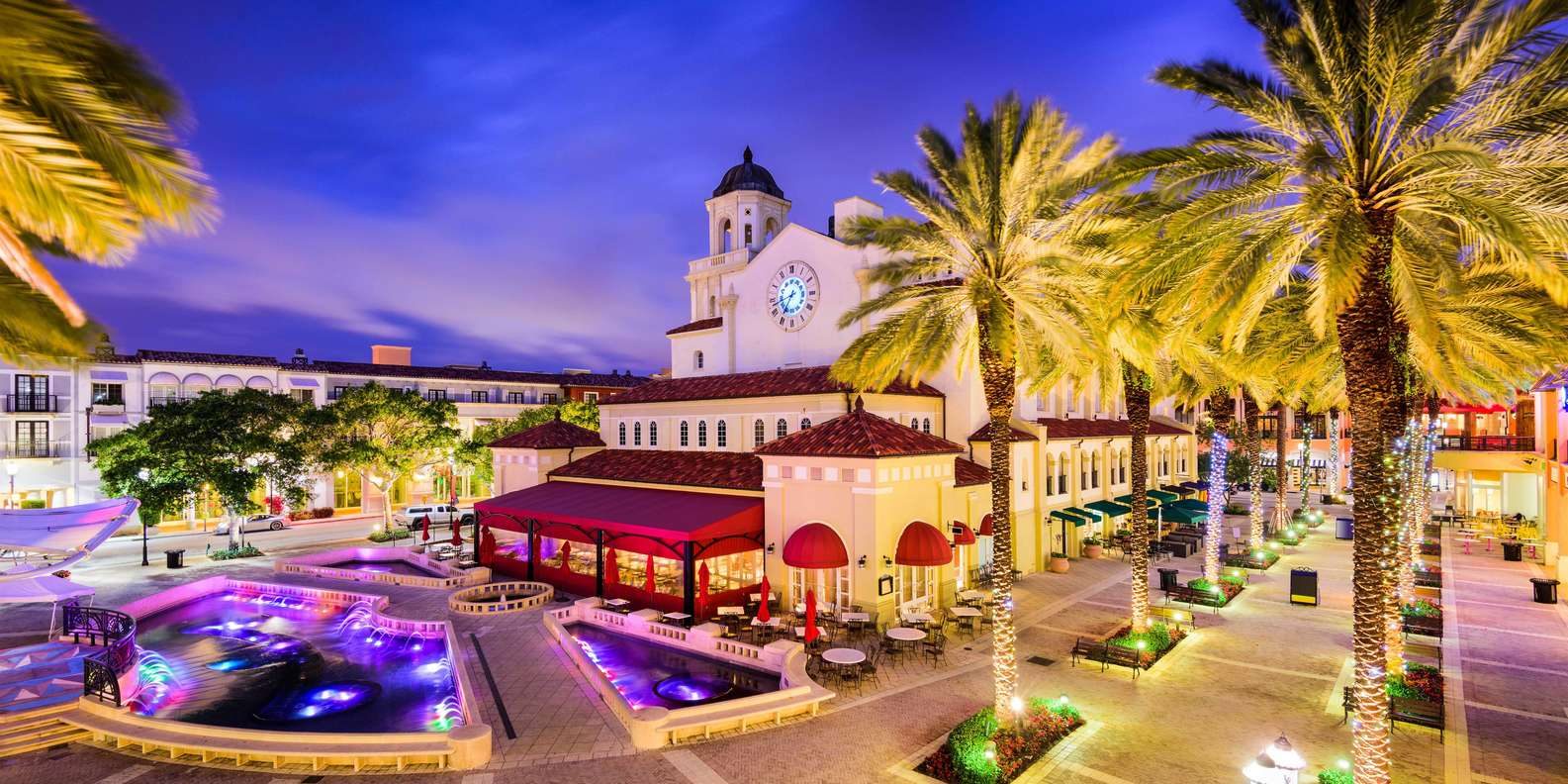
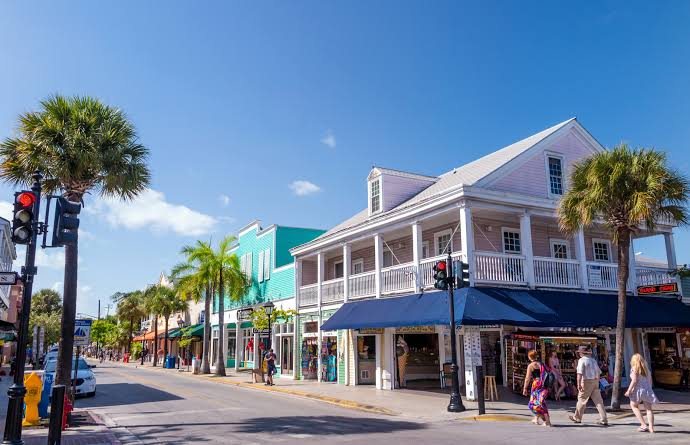
Mornings in West Palm Beach can start with a walk along the Flagler Drive waterfront, coffee on Clematis Street, or a farmers market at the Meyer Amphitheatre on Saturdays. Rosemary Square (the redeveloped CityPlace) gives you outdoor shopping, restaurants, and a movie theater within a five-minute walk of downtown condo towers. The Norton Museum of Art, Kravis Center for the Performing Arts, and the Palm Beach County Convention Center all sit inside or near downtown. Evenings mean rooftop bars, waterfront dining, and an actual bar and restaurant scene that doesn’t require a 20-minute drive. For a deeper look at what daily life feels like block by block, read what it’s actually like to live in West Palm Beach and our honest take on whether West Palm Beach is a good place to live.
There’s also a social texture to West Palm Beach that’s hard to replicate in a gated suburb. Clematis by Night, the free weekly outdoor concert and vendor event downtown, pulls a genuine cross-section of the city, young professionals, retirees, families with strollers. That kind of shared public space simply doesn’t exist inside a guard-gated community, where daily life happens on private streets and inside private clubs.
A Day in Palm Beach Gardens
Mornings in Palm Beach Gardens more often start on a golf cart or in a car. PGA National, BallenIsles, and Old Palm are built around championship golf courses, and daily life for a lot of residents genuinely revolves around club life: tee times, tennis, the resort spa at PGA National. Retail and dining concentrate along PGA Boulevard, anchored by The Gardens Mall and Downtown at the Gardens, an open-air lifestyle center with restaurants and shops. It’s polished, clean, and quiet, but it’s not a place you stroll to on a whim. You drive, you park, you go home. That trade is exactly what a lot of families and retirees are looking for: predictability and separation from street-level noise.
For families specifically, that predictability extends to the amenity package. A lot of Palm Beach Gardens communities include a resort-style pool, a fitness center, tennis or pickleball courts, and sometimes a clubhouse restaurant, all included in the HOA fee. If you’re the type of buyer who wants to swim, work out, and eat dinner without ever leaving the neighborhood, that’s a real lifestyle advantage West Palm Beach’s older, non-HOA neighborhoods simply can’t match on their own.
Walkability and Commute
Downtown West Palm Beach is one of the few genuinely walkable urban grids in Palm Beach County. Streets are laid out in a traditional block pattern, sidewalks are consistent, and you can live in a condo and go days without needing your car for groceries, dinner, or the Brightline station downtown, which puts Miami and Fort Lauderdale within a roughly 30 to 40-minute train ride. That Brightline access alone is a major draw for buyers who commute south for work but want to live north.
Palm Beach Gardens has sidewalks and trails inside individual communities, and Downtown at the Gardens has some walkable retail, but the city as a whole is not designed for a car-free lifestyle. PGA Boulevard is the main commercial spine, and most daily errands mean getting in the car. Commute-wise, Palm Beach Gardens sits closer to I-95’s northern stretch and is a shorter drive to Jupiter and the northern Palm Beach County job centers, while West Palm Beach sits closer to the county’s government offices, downtown employers, and the Brightline corridor south.
Worth noting for anyone commuting to Miami or Fort Lauderdale for work: the Brightline advantage is genuinely West Palm Beach’s alone. There is no equivalent rail option in Palm Beach Gardens, so that commute defaults to I-95 or the Turnpike, both of which back up predictably during the morning and evening windows. If your job is south of the county line and you want to avoid that drive most days, that alone can decide the comparison for you.
Schools
School quality is one of the most common reasons families choose Palm Beach Gardens over West Palm Beach. Palm Beach Gardens is served by a tight, well-regarded run of schools including Timber Trace Elementary, Watson B. Duncan Middle School, and William T. Dwyer High School, all of which post consistently strong ratings and draw families specifically for that reason. Suncoast Community High School, a magnet program with a strong academic reputation, sits just north of the city and pulls students from the Gardens area too.
West Palm Beach’s school picture is more neighborhood-dependent. Some zoned schools perform well, others don’t, and a lot of West Palm Beach families lean on magnet programs like Bak Middle School of the Arts or private options rather than assuming their zoned school is the right fit. If schools are your top priority, don’t assume, verify the exact zoned school for the specific address you’re considering before you write an offer. For a fuller breakdown of how this plays out by neighborhood, see our West Palm Beach schools guide.
This is the one area where the two cities genuinely aren’t close, and it’s worth being direct about it. A relocating family choosing between a home in Flamingo Park and a similarly priced home in Evergrene needs to know that the Evergrene address almost certainly lands in a stronger, more consistent zoned school, while the Flamingo Park address is a coin flip depending on the exact block. That’s not a knock on West Palm Beach, it’s just the reality of an older city with a patchwork of zoned schools versus a newer suburb built with school capacity planned in from day one.
Neighborhood-by-Neighborhood Breakdown
West Palm Beach Neighborhoods Worth Knowing
- El Cid: Historic, waterfront-adjacent, Mediterranean Revival architecture, walking distance to downtown. Premium pricing.
- Flamingo Park: Bungalow-heavy historic district, strong owner-occupant pride, walkable, popular with buyers who want charm over new construction.
- SoSo (South of Southern): Up-and-coming, more affordable entry point than El Cid or Flamingo Park, close to downtown.
- Northwood: Historic, gentrifying, home to the Northwood Village arts and antiques district, more affordable than the waterfront core.
- Downtown / Flagler waterfront: High-rise condo living, walkable to Rosemary Square, the Brightline station, and the Intracoastal.
Our full Best Neighborhoods in West Palm Beach breakdown goes deeper on pricing and who each neighborhood actually fits.
Palm Beach Gardens Neighborhoods Worth Knowing
- BallenIsles: Established, guard-gated, golf and country club, strong resale demand.
- Old Palm: Ultra-luxury, low-density, some of the highest price points in the city.
- PGA National: Golf-centric, home to five courses including the Champion course, resort amenities available to residents.
- Mirasol and Evergrene: Family-friendly gated communities with strong amenity packages, popular with relocating families.
- Avenir: The newest master-planned community in the city, still building out, with a mix of product types and HOA/CDD obligations that vary by builder and phase.
Each of these Palm Beach Gardens communities has its own personality even though they share a zip code. BallenIsles skews toward established, older-money buyers who want a finished, mature community with no construction noise. Avenir skews toward buyers who want the newest product available and are willing to trade a few years of nearby construction traffic for a brand-new home under warranty. Mirasol and Evergrene sit in the middle, mature enough to feel settled but young enough that most of the housing stock is under 20 years old.
New Construction: Where Each City Is Actually Building
West Palm Beach’s new construction is concentrated downtown and along the waterfront, almost entirely high-rise and luxury-focused: South Flagler House, Alba Reserve, Alba Palm Beach, and Maison d’Or are all under construction or pre-construction waterfront condo towers priced from the mid-$2 millions into the tens of millions. On the single-family side, GL Homes’ Estates at NOMAR is bringing an ultra-luxury boutique enclave priced from $1.8 million to $3 million, and D.R. Horton’s Edgestone is adding suburban townhomes on the city’s edges. If you want the full rundown of what’s actually being delivered, read our New Construction in West Palm Beach guide.
Palm Beach Gardens is the volume leader. With roughly 15 active or under-development communities and the largest share of any city in the county, it’s where most of the county’s horizontal (single-family and townhome) new construction is actually happening, led by large-scale master-planned development at Avenir. If you want new construction with a yard, Palm Beach Gardens has far more options right now than West Palm Beach does.
That volume difference matters for a very practical reason: negotiating leverage and builder incentives. When a city has 15 active communities competing for the same pool of buyers, builders are more likely to offer closing cost credits, rate buydowns, or design center allowances to keep sales moving. West Palm Beach’s downtown towers, by contrast, are lower in count and higher in price point, so builders there have less pressure to negotiate on a handful of ultra-luxury units.
Which One Fits You
If you’re a young professional or a couple who wants to walk to dinner, take the train to Miami for a weekend, and live somewhere with actual street life, West Palm Beach is the obvious answer. It’s also the stronger fit if you want the widest range of price points in one city, from a starter bungalow to a penthouse. Our first-time buyer’s guide to West Palm Beach is worth reading before you start touring.
If you’re relocating with school-age kids, want a guard-gated community, prioritize golf or club amenities, and don’t mind driving to get where you’re going, Palm Beach Gardens is the stronger fit. The schools are more consistently strong, the communities are newer, and the HOA structure, while it costs more, buys you predictability: maintained common areas, enforced standards, and amenities you don’t have to build yourself.
There’s also a third profile worth naming directly: the empty nester or retiree downsizing from a bigger, older home who wants low-maintenance living without giving up square footage or amenities. That buyer usually lands in Palm Beach Gardens for the golf and club infrastructure, but if they want walkability and culture instead of a golf cart, a downtown West Palm Beach condo with a strong HOA-managed building can deliver the same low-maintenance trade without the CDD assessment.
And if you’re still weighing a third option entirely, our comparison of West Palm Beach vs Boca Raton is worth a read too, since Boca pulls a similar buyer profile to Palm Beach Gardens but with its own price and lifestyle trade-offs.
The Bottom Line
West Palm Beach and Palm Beach Gardens sit fifteen minutes apart on I-95, but they’re built for different lives. West Palm Beach is a real city: walkable, waterfront, culturally active, with a wide range of prices and property types packed into a compact downtown. Palm Beach Gardens is a suburban powerhouse: newer construction, stronger and more consistent schools, and a gated-community lifestyle organized around golf and PGA Boulevard retail.
The reality is, most buyers already know which one they are the moment they read the two descriptions above. If you’re still torn, or you want to walk both markets with someone who knows the actual HOA docs, CDD schedules, and school zone lines block by block, that’s exactly the kind of decision worth talking through before you write an offer. For more on what to expect before you move, our West Palm Beach FAQ answers the twenty questions buyers ask most.
Watch: learn more
Go deeper with my South Florida Insider videos.

The Best Flex-Space Townhome in West Palm Beach: Pulte's Nautical Plan
Inside Everton's Latitude II Model: $458k New Homes In Palm Beach
The Best Flex-Space Townhome in West Palm Beach: Pulte's Nautical Plan
More articles you might like
West Palm Beach vs Boca Raton: Which Is Right for You?
17 min readWest Palm Beach FAQ: 20 Questions Buyers Ask Before Moving (2026 Guide)
13 min readWhat It's Actually Like to Live in West Palm Beach: Lifestyle, Culture and Daily Life
18 min readIs West Palm Beach a Good Place to Live? An Honest 2026 Review
18 min readBest Neighborhoods in West Palm Beach: An Honest 2026 Breakdown
13 min read