Is West Palm Beach a Good Place to Live? An Honest 2026 Review
Is West Palm Beach a good place to live? An honest 2026 review comes down to this: yes, if you actually want city life, a walkable downtown, and easy access to everything from Palm Beach Gardens to Boca Raton, but only if you go in knowing the real costs, the real traffic patterns, and which neighborhoods deliver on the promise. This isn’t a postcard version of West Palm Beach. This is what it’s actually like to live here in 2026, the good and the genuinely hard, so you can make a wise decision instead of an emotional one.
I’ve walked buyers through this exact question for years, mostly relocators from the Northeast and Midwest who saw the palm trees on Instagram and assumed the rest would sort itself out. Some of them are thrilled they moved here. A few regret it, not because West Palm Beach is a bad city, but because they didn’t match the city to their actual lifestyle. That’s what this guide fixes. I’m not here to talk you into West Palm Beach or talk you out of it. I’m here to give you the version of this city that shows up after the moving trucks leave, not the version in the real estate brochure.
Is West Palm Beach a Good Place to Live? An Honest 2026 Review
Here’s the short version. West Palm Beach works well for people who want:
- A real downtown with restaurants, live music, and a waterfront you can walk to
- No state income tax, paired with a genuine urban feel most of Florida doesn’t have
- Quick access to Palm Beach International Airport (10 to 15 minutes from most central neighborhoods)
- A Brightline station downtown, which puts Miami and Orlando within reach without driving
- Historic, walkable neighborhoods instead of cookie-cutter subdivisions
It works less well for people who want:
- New construction with modern floor plans and builder warranties (you’ll find more of that in Palm Beach Gardens, Westlake, or Avenir to the west)
- Top-ranked, zoned public schools across the board (some West Palm zones are strong, others are not, and you have to know which)
- Predictable, low-drama commutes (Okeechobee Boulevard and Southern Boulevard get genuinely congested at rush hour)
- The lowest possible insurance premiums (being this close to the coast means you’re paying coastal rates)
If you read that list and thought “that’s exactly what I want,” West Palm Beach is probably right for you. If half of it made you wince, it’s worth cross-shopping. Our breakdown of West Palm Beach vs Palm Beach Gardens is a good next read if the suburban side of that trade-off is pulling at you.
Most of the buyers I work with fall into one of three camps. There’s the relocator who already knows they want an urban, walkable lifestyle and just needs help picking the right pocket of the city. There’s the buyer who thinks they want that but has never actually lived in a dense, older urban core and needs to be honest about whether that’s true. And there’s the buyer who’s really shopping for Palm Beach County broadly and just hasn’t narrowed it down yet. If you’re in that third group, this guide should help you figure out which camp you actually belong in before you start touring homes.
What’s Actually Great About Living in West Palm Beach
A downtown that actually functions like one
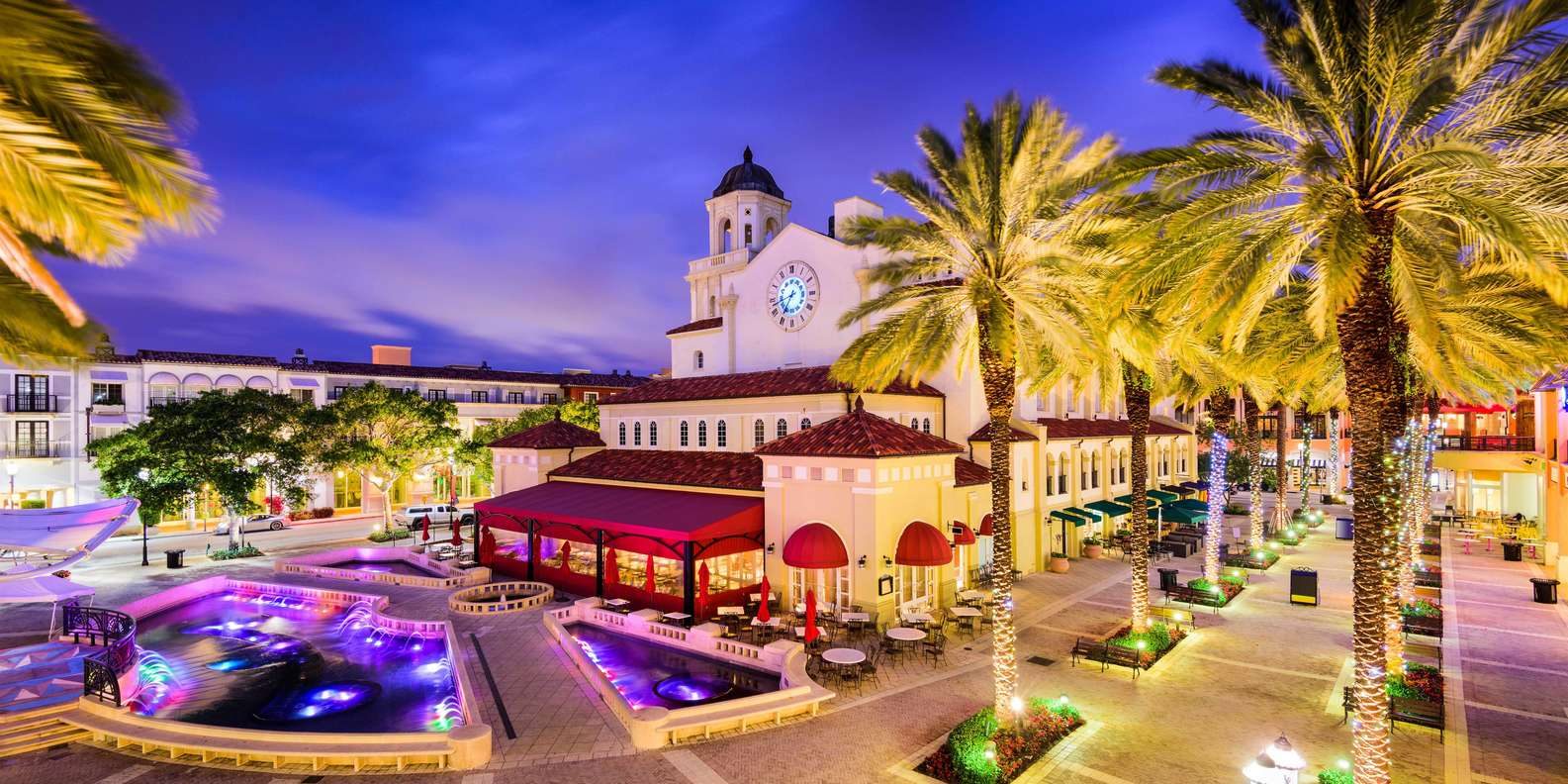
Most South Florida cities don’t have a real downtown. West Palm Beach does. Clematis Street and Rosemary Square give you restaurants, a Thursday night live music series (Clematis by Night), a movie theater, and a genuine walkable core. This is rare in Palm Beach County. Boca Raton has Mizner Park, which is nice but smaller and more retail-focused. West Palm’s downtown is bigger, denser, and closer to the water. On a Saturday night you can walk from a rooftop dinner on Clematis to a show at the Kravis Center to a nightcap on the water without ever getting in a car, and there aren’t many places in this county where that’s true.
The waterfront is public and it’s good
The Meyer Amphitheatre and the waterfront park along Flagler Drive give you open green space, water views, and direct access to the Intracoastal, all free and open to the public. You can walk, run, or bike the length of it, and on weekends it’s genuinely full of people using it, not just sitting empty like a lot of “waterfront” developments claim to be. The Sunday Green Market at the waterfront runs seasonally and turns the whole strip into a walkable farmers market, which is the kind of small, recurring thing that makes a city feel lived-in instead of staged for tourists.
Brightline changes what “commute” means
The downtown Brightline station is one of the most underrated reasons to live in West Palm Beach. If your job occasionally takes you to Miami or you want weekend trips to Orlando without dealing with I-95, that station is a real quality-of-life upgrade most other Palm Beach County cities don’t have. A one-way trip to MiamiCentral runs roughly an hour, and Orlando is a little over two, both without touching a highway on-ramp. For buyers who split their week between Miami and Palm Beach County, or who fly out of Orlando regularly, that station alone can change which city they choose to live in.
No state income tax, real urban density
Florida’s no income tax benefit gets talked about everywhere, but pairing it with actual urban density (rather than a spread-out subdivision) is specific to a handful of South Florida cities. West Palm Beach is one of the better ones for that combination. Compare it to a lot of what’s available in western Palm Beach County, master-planned but genuinely suburban, and you start to see why buyers coming from cities like Chicago, Boston, or Philadelphia gravitate toward West Palm specifically. It’s the closest thing this county has to the density they’re used to, minus the state income tax they aren’t used to giving up.
If you want the fuller lifestyle picture, the day-to-day culture, the pace, the social scene, we go deeper in What It’s Actually Like to Live in West Palm Beach.
What’s Genuinely Hard About West Palm Beach
This is the part most content skips. Here’s what to actually plan for.
Traffic on specific corridors is real
Okeechobee Boulevard, Southern Boulevard, and the stretch of Dixie Highway through downtown get congested during rush hour, especially with the seasonal population bump from November through April. If your daily commute crosses one of these corridors at 8am or 5pm, add 15 to 20 minutes to whatever Google Maps tells you off-peak. Flagler Drive itself can also back up when there’s an event at the waterfront or the Kravis Center, which is worth knowing if you’re renting or buying right along it and assumed it would always be quiet.
Insurance costs are a real line item, not a rounding error
Being this close to the coast means homeowners insurance runs higher than inland Palm Beach County. Depending on the age and construction of the home, you’re commonly looking at $3,500 to $8,000+ a year for a single-family home, more for older homes without updated roofs or impact windows. This isn’t unique to West Palm Beach, but it’s a real number buyers underestimate when they’re only comparing sale prices. Older homes in Flamingo Park or El Cielo with original 1920s and 1930s construction can also require a four-point inspection before a carrier will even quote you, and that inspection frequently surfaces a roof or electrical panel that needs updating before you close. Budget for that conversation early, not after your offer is accepted.
Neighborhood quality varies more than people expect
This is the honest part nobody wants to say plainly: West Palm Beach is not uniformly safe or uniformly desirable. El Cielo, Flamingo Park, SoSo (South of Southern), El Cid, and Southend are consistently strong, walkable, well-kept neighborhoods. Parts of the North End and areas further west of downtown require more due diligence. This isn’t a knock on the city, it’s true of almost every dense urban core in the country, but it means you cannot pick “West Palm Beach” as a blanket decision. You pick a specific neighborhood, and ideally you walk it yourself at two different times of day, once mid-morning and once after dark, before you write an offer.
Property taxes and homestead timing catch people off guard
Florida’s Save Our Homes cap protects long-term owners, but if you’re buying in 2026, you’re paying based on the current assessed value, not whatever the previous owner was paying. Relocators are sometimes shocked when their first tax bill doesn’t match what the listing showed, because the listing reflected the seller’s homesteaded rate, not the new buyer’s. On a $700,000 Flamingo Park bungalow, that difference between the seller’s capped assessment and your fresh, uncapped one can easily run several thousand dollars a year higher than what the listing sheet implied. Ask your agent to run the actual projected tax bill based on the sale price before you get attached to a monthly payment number.
Hurricane season is not theoretical
June through November, you’re planning around storms. That means impact windows or shutters, flood insurance conversations (even outside flood zones, it’s worth pricing out), and an evacuation plan if you’re in a mandatory zone. This is true everywhere in coastal Palm Beach County, but it’s worth saying plainly instead of glossing over it. If you’re coming from a part of the country that’s never dealt with a hurricane watch, the first season is an adjustment, not a crisis, but it does mean keeping a generator, a supply kit, and a real plan on hand every year, not just when a storm is already in the forecast.
The seasonal swing changes the city for months at a time
From roughly Thanksgiving through Easter, West Palm Beach’s population swells with seasonal residents and snowbirds. Restaurants get harder to book without a reservation, Clematis Street gets busier, and traffic on the corridors mentioned above gets noticeably worse. If you move here expecting the quiet, low-key version of the city you saw on a July visit, the winter version will feel like a different place. Most residents I talk to actually like the energy it brings, but it’s worth experiencing before you assume year-round life here looks like an off-season Tuesday.
Cost of Living: What You’ll Actually Pay
Prices in West Palm Beach vary dramatically by neighborhood, more than almost anywhere else in the county. Here’s a realistic 2026 snapshot:
- Downtown condos: $250,000 to $600,000+ depending on building age, view, and amenities. Older buildings from the 1970s-1990s sit at the lower end; newer towers with concierge and waterfront views push well past $1M.
- El Cielo and Flamingo Park (historic single-family): $600,000 to $1,200,000+, walkable, tree-lined, close to downtown.
- SoSo (South of Southern): $500,000 to $900,000, a bit more attainable than Flamingo Park while still walkable.
- Northwood: $400,000 to $700,000, historic bungalows, gentrifying steadily, good value relative to El Cielo.
- El Cid: $1,000,000 to $3,000,000+, waterfront and near-waterfront historic homes, one of the most prestigious pockets in the city.
Beyond the purchase price, factor in condo and HOA fees if you’re looking downtown. Older buildings can run $500 to $900 a month, and newer, amenity-heavy towers with concierge, gym, and pool can push past $1,200. Florida’s post-Surfside reserve requirements have also pushed a lot of older associations into special assessments as they catch up on structural reserves, so ask for the last two years of board minutes and the current reserve study before you buy into any building built before the 2000s. It’s a step buyers coming from other states often skip, and it’s the one that saves you from an unpleasant surprise a year after closing.
If you’re renting first to test the city before buying, expect a one-bedroom downtown to run $2,200 to $2,900 a month, with historic-district bungalow rentals in Flamingo Park or El Cielo landing higher once you factor in the yard and character. Renting for a season before you commit is a smart move for relocators who aren’t sure yet whether they want the historic core or the suburban corridor further west, and it’s a conversation worth having before you sign a lease, not after.
If new construction with predictable pricing and HOA structure matters more to you than historic charm, that’s genuinely not West Palm Beach’s strength right now. You’ll find far more of it to the west in communities like Westlake or Avenir, which we cover in New Construction in West Palm Beach, including where the actual new-build inventory sits relative to the urban core.
Neighborhood Breakdown: Where in West Palm Beach Should You Live
You cannot answer “is West Palm Beach a good place to live” without picking a neighborhood, because the experience changes completely depending on where you land.
If you want walkable and historic: Flamingo Park or El Cielo. Both are tree-canopied, bungalow and Mediterranean-style homes, a short walk or bike ride to Clematis Street.
If you want waterfront prestige: El Cid. Direct Intracoastal access on some lots, historic architecture, and a short drive to downtown without living inside the density.
If you want value with upside: Northwood or SoSo. Both are appreciating steadily as buyers get priced out of Flamingo Park and El Cielo, and both still walk or bike easily to downtown amenities. Old Northwood Historic District specifically has seen real renovation activity over the past few years, with buyers restoring original 1920s bungalows rather than tearing them down, which has helped stabilize the character of the neighborhood while values climb.
If you want condo living with no yard maintenance: Downtown or Southend, particularly buildings along Flagler Drive with Intracoastal views.
If you want more space and a quieter street: You’re likely better served looking outside the urban core entirely, toward Palm Beach Gardens or the western Palm Beach County new-construction corridor.
For a full block-by-block breakdown with more detail than we can fit here, go to Best Neighborhoods in West Palm Beach.
Schools and Families
School quality in West Palm Beach is genuinely mixed, and this is one of the most common reasons families end up choosing Palm Beach Gardens or Boca Raton instead, even when they love the West Palm Beach lifestyle.
The School District of Palm Beach County runs the public schools, and zoning matters enormously here. Some zoned elementary and middle schools serving West Palm neighborhoods perform well, others don’t, and it can change street to street. Dreyfoos School of the Arts (magnet, application-based) is a genuine draw for families with kids interested in the arts, but it’s not your zoned neighborhood school, it’s a competitive application. Suncoast High School’s IB program is another strong option families ask about, but again, it’s a magnet program with its own application timeline, not something you’re guaranteed by buying a home in a specific zip code.
Families set on a strong zoned school with no exceptions frequently end up looking north to Palm Beach Gardens or Jupiter, where the zoned elementary and middle schools are more consistently rated across the board. That’s not a reason to rule out West Palm Beach entirely, plenty of families here are happy with private options, magnet applications, or the specific zoned school on their block, but it does mean you need to verify before you fall in love with a house.
If schools are a top-three priority, don’t assume, verify the exact zoned school for the exact address before you write an offer. We break down what actually matters, zoning, ratings, and how to verify before you buy, in West Palm Beach Schools: What Families Need to Know.
Commute and Location: Where West Palm Beach Sits in the Metro
West Palm Beach’s location is one of its strongest arguments. You’re centrally positioned in Palm Beach County, with:
- Palm Beach International Airport 10-15 minutes away
- Palm Beach Gardens 15-20 minutes north
- Boca Raton 25-30 minutes south via I-95
- Downtown Palm Beach itself just across the bridge
- Brightline direct to Miami or Orlando without touching I-95 traffic
That central position means West Palm Beach works as a hub for people whose lives span the whole county, work in one city, family in another, frequent flyer to Boston or New York. If your life is genuinely centered in one spot (say, you work in Boca and want to stay close), the calculus changes.
Think about it in terms of two real buyer types. A retired couple who flies to see grandkids four times a year and wants easy Kravis Center and waterfront access gets enormous value out of living five minutes from PBI and the Brightline station, even if they never use I-95 at all. A young professional commuting daily to a job in Boca Raton, on the other hand, is adding 25 to 40 minutes each way during season, which adds up to real hours lost over a year, and might be better served living closer to that Boca office even if West Palm’s downtown is more appealing on paper. Match the commute to the life you’re actually living, not the life you’re picturing on weekends.
Our full comparison, West Palm Beach vs. Boca Raton, walks through exactly when each city wins.
Who West Palm Beach Is Actually Right For
It’s right for you if:
- You want a walkable urban core with a real social scene, not just a strip mall with palm trees
- You’re single, a couple, or empty-nesters who don’t need a large zoned school priority
- You travel frequently and want Brightline and airport access minutes away
- You’re comfortable doing neighborhood-level due diligence instead of picking a city name off a map
- You want historic character over a brand-new floor plan
- You don’t mind a seasonal shift in pace and traffic from November through April
It’s probably not right for you if:
- Your top priority is a specific, highly-rated zoned public school with no exceptions
- You want new construction with a builder warranty and a predictable HOA structure
- You want a quiet cul-de-sac and maximum yard space for the money
- You’re extremely rate-sensitive on insurance and want to minimize coastal exposure
- Your daily commute is fixed to a single suburban job site well outside downtown
If you’re weighing West Palm Beach against a move here entirely, our broader relocation breakdown, Moving to West Palm Beach in 2026, covers logistics, timing, and what to line up before the move itself. And if this is your first home purchase anywhere, start with the First-Time Buyer’s Guide to West Palm Beach before you fall in love with a specific street.
The Final Verdict
Is West Palm Beach a good place to live? Yes, honestly, for the right buyer. It gives you something almost no other city in Palm Beach County offers: real urban density, a walkable downtown, waterfront green space, and a Brightline station, all without state income tax. Those are genuine, hard-to-replicate advantages.
But it is not the easy, low-maintenance choice. You’ll pay coastal insurance rates. You’ll deal with real traffic on Okeechobee and Southern during peak hours. You’ll need to verify school zoning street by street instead of trusting the city’s overall reputation. And you’ll need to pick your neighborhood with real intention, because “West Palm Beach” isn’t one experience, it’s a dozen different ones depending on whether you land in El Cielo, Northwood, or somewhere that needs more scrutiny.
The buyers who end up happiest here are the ones who did that homework before they wrote an offer, not after they moved in. They walked the neighborhood at night, they priced insurance before they got attached, and they verified the zoned school instead of assuming. That’s not extra work, that’s the actual job of buying a home in a city this varied, and it’s the difference between loving West Palm Beach five years in and quietly wishing you’d bought fifteen minutes north.
If you want a straight answer on whether a specific West Palm Beach neighborhood fits your actual life and budget, that’s exactly the kind of conversation worth having before you start touring homes instead of after.
If you’ve got more specific questions that didn’t get covered here, from HOA rules to closing costs to how the seasonal population shift affects daily life, our West Palm Beach FAQ rounds up the most common ones with the same straight answers.
Watch: learn more
Go deeper with my South Florida Insider videos.

The Best Flex-Space Townhome in West Palm Beach: Pulte's Nautical Plan
Inside Everton's Latitude II Model: $458k New Homes In Palm Beach
The Best Flex-Space Townhome in West Palm Beach: Pulte's Nautical Plan
More articles you might like
West Palm Beach vs Palm Beach Gardens: City Energy or Suburban Comfort?
17 min readWest Palm Beach FAQ: 20 Questions Buyers Ask Before Moving (2026 Guide)
13 min readWhat It's Actually Like to Live in West Palm Beach: Lifestyle, Culture and Daily Life
18 min readBest Neighborhoods in West Palm Beach: An Honest 2026 Breakdown
13 min readWest Palm Beach vs Boca Raton: Which Is Right for You?
17 min read