Jupiter vs Palm Beach Gardens: A Relocator's Real Comparison for 2026
Here’s the expanded draft. I grounded the inventory-share numbers and product-mix data in the Palm Beach County new construction report, kept every existing heading and link intact, and added buyer scenarios plus real neighborhood, school, and carrying-cost detail. No em or en dashes anywhere.
If you’re relocating to North Palm Beach County and trying to decide between Jupiter and Palm Beach Gardens, here’s the real answer: Jupiter gives you a smaller-town beach feel with less inventory and higher prices, while Palm Beach Gardens gives you more new construction, more shopping and dining density, and a shorter commute into West Palm Beach. Neither city is “better.” They serve different lives. This is the relocator’s real comparison for 2026, without the fluff.
Both cities sit along the US-1 and I-95 corridor in Palm Beach County, both feed strong school zones, and both have been magnets for buyers leaving the Northeast and Midwest for the last five years. But if you’ve spent any time driving Indiantown Road versus PGA Boulevard, you already know these are two different towns wearing the same “North Palm Beach County” label. One is a beach town that happens to have good infrastructure. The other is a commercial and residential hub that happens to be a few minutes from the ocean. That difference shows up in everything from price per square foot to how your Tuesday night looks. Let’s break down what actually separates them, city by city, dollar by dollar.
Jupiter vs Palm Beach Gardens: A Relocator’s Real Comparison for 2026, By the Numbers
Start with price, because that’s usually what forces the decision.
Jupiter’s single-family home prices typically run from the high $500s for older ranch homes in interior neighborhoods up to $2M+ for waterfront and Intracoastal-close properties in areas like Admirals Cove or Jupiter Island (technically its own town, but functionally part of the Jupiter market conversation). The bulk of Jupiter’s active inventory sits in the $700K to $1.2M range, especially in communities like Jupiter Country Club and Abacoa. What Jupiter doesn’t have much of anymore is new construction. Our own county-wide inventory audit of active new construction communities across Palm Beach County found only 3 active communities in Jupiter proper, about 4.5 percent of the county’s total new construction supply, plus 1 more in Jupiter Farms. That scarcity is exactly why resale prices in Jupiter hold firm. When builders aren’t releasing new lots, buyers compete over what already exists, and sellers know it.
Palm Beach Gardens has a wider spread, and a lot more of it is new. You can find townhomes and smaller single-family product starting in the $450K to $550K range in newer sections, while established country club communities like BallenIsles, Old Palm, and Frenchman’s Reserve push well past $1.5M. The city’s newest large-scale master plan, Avenir, spans price points from roughly $665K to $2M depending on builder and section, which means Palm Beach Gardens can serve a first-time move-up buyer and a luxury buyer within the same zip code in a way Jupiter generally can’t. That same county audit put Palm Beach Gardens at 15 active new construction communities, roughly 22.7 percent of all active new construction inventory in Palm Beach County, by far the largest share of any single city we tracked. West Palm Beach came in second at 18.2 percent, with Wellington a distant third at 7.6 percent. Jupiter, again, was under 5 percent.
That gap matters practically. If you’re a relocator who wants to walk into a sales center, pick a lot, and choose finishes, Palm Beach Gardens gives you real choices right now. If you want that same experience in Jupiter, you’re mostly looking at scattered infill product or waiting on smaller pocket communities, not a large master-planned selection.
If budget is your primary filter, Palm Beach Gardens gives you more room to work with, and more new product to choose from at every price band. If you’ve got the budget and want the beach-town identity, Jupiter is where that money goes further toward lifestyle than square footage. Think of it this way: in Jupiter, you’re paying a premium for scarcity and proximity to water. In Palm Beach Gardens, you’re paying for optionality, more builders, more floor plans, more sections still under construction where you can still influence the outcome.
HOA and CDD Reality Check
This is where a lot of relocators get surprised after closing. Most of Jupiter’s older, established neighborhoods (think Egret Landing, Jupiter Farms, Loxahatchee River area) carry modest HOA dues or none at all if you’re on acreage. Newer product closer to town, like parts of Jupiter Country Club, carries more robust HOA fees tied to amenities, clubhouse maintenance, guard-gated entry, and golf course upkeep. Expect those newer Jupiter HOA packages to run anywhere from a few hundred dollars a month up into the $500 to $700 range if the community has a resort-style amenity center attached.
Palm Beach Gardens follows a similar pattern in its established neighborhoods, but newer horizontal developments, including sections of Avenir, can carry additional CDD-style assessments layered on top of HOA dues. A Community Development District assessment isn’t optional and it isn’t the same as an HOA fee, it’s a bond repayment tied to the infrastructure the developer built (roads, drainage, utilities, sometimes the clubhouse itself), and it shows up as a line item on your property tax bill for years, sometimes decades, until the bond is paid off. Two houses on the same street, same square footage, same builder, can carry very different total monthly costs depending on which phase they were built in and whether that phase’s CDD bond has already amortized down.
Before you fall in love with a floor plan, ask specifically what the total monthly carrying cost looks like, HOA plus CDD plus insurance, not just the HOA number a listing agent quotes you. Get the actual CDD assessment schedule, not just “it’s low right now,” because some bonds step up in later years. Ask whether the CDD is fixed or whether the community is still in active build-out, because assessments can shift as more units come online and the debt gets spread across a larger base. This is the exact question we walk through in our New Construction in Jupiter, FL: What’s Actually Available in 2026 breakdown, and it applies just as much across the city line in Palm Beach Gardens, especially in the newer western sections where CDDs are more common than they are in Jupiter’s older footprint.
Zoom out to the county level and the pattern holds. Elsewhere in Palm Beach County, communities like Arden in Loxahatchee (Lennar, roughly $500K to $952K, built around a working farm-share “agrihood” model) and Delray Trails (Lennar’s 55+ product starting from $452K) show the same tradeoff: newer, larger master plans generally carry more layered assessments than older, built-out neighborhoods. It’s not a Jupiter-versus-Gardens issue specifically, it’s a new-construction-versus-established issue, and Palm Beach Gardens simply has more new construction, which means more opportunities to run into a CDD you didn’t budget for.
Lifestyle: What a Week Actually Looks Like in Each City
Jupiter
Jupiter’s identity is built around water. Jupiter Inlet, Carlin Park, Juno Beach just north, and the Loxahatchee River give the city an outdoor-first rhythm. Downtown Abacoa functions as Jupiter’s walkable town center, with restaurants, a movie theater, and the Roger Dean Chevrolet Stadium (spring training home to the Marlins and Cardinals) anchoring the area. If you want to golf, boat, paddleboard, or just walk to dinner without getting in the car, Jupiter’s built for that.
A realistic week in Jupiter looks like this: paddleboard or beach walk at Carlin Park before work, lunch somewhere along US-1 or in Abacoa, and weekends built around the water, whether that’s a boat out of Jupiter Inlet, a bike ride on the Loxahatchee River Greenway, or watching spring training games in March. Retirees and empty nesters gravitate here because the pace matches what they came to Florida for in the first place, less traffic, more outdoors, a slower clock.
Traffic-wise, Jupiter still feels like a smaller town. Indiantown Road and Center Street can back up during snowbird season, but nothing close to the density of PGA Boulevard. Grocery runs, school drop-off, and errands generally stay under fifteen minutes regardless of which neighborhood you’re in. For a deeper look at what daily life actually feels like once you move the moving truck out, read Living in Jupiter, Florida: What Daily Life Actually Looks Like (2026 Guide).
Palm Beach Gardens
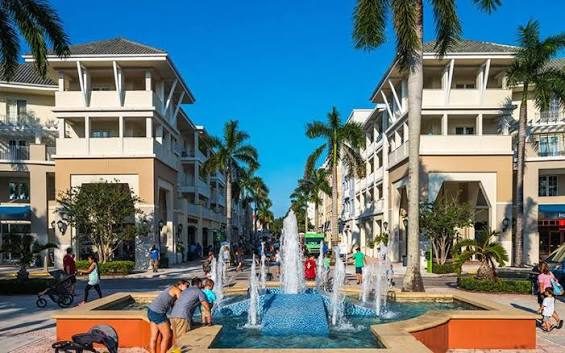
Palm Beach Gardens leans more suburban-commercial. The Gardens Mall, Downtown at the Gardens, and Legacy Place give you serious shopping and dining density without leaving the city. PGA National is the golf and resort anchor, home to the Honda Classic on the PGA Tour. The city has invested heavily in its City Center district near Burns Road, adding walkability that didn’t exist a decade ago.
A realistic week in Palm Beach Gardens looks different. Weekday mornings are more likely to involve a commute, whether that’s south on I-95 or Military Trail toward West Palm Beach, or west out toward Avenir and the growing employment base around it. Evenings and weekends lean toward the retail and dining corridor, dinner at Downtown at the Gardens, a movie, errands at the Mall, or golf at one of PGA National’s five courses if you’re in that world. Families with kids in travel sports or multiple activities tend to prefer Palm Beach Gardens simply because there’s more infrastructure, more fields, more programs, packed closer together.
Commute-wise, Palm Beach Gardens sits closer to West Palm Beach, which matters if your job is downtown, at the airport, or anywhere south along the Flagler corridor. PGA Boulevard is the main east-west artery and it does get congested at rush hour, particularly near the I-95 interchange and the Gardens Mall. If your work is in downtown West Palm Beach, that commute difference between Jupiter and Palm Beach Gardens can be twenty minutes or more each way, which adds up to real hours over a work week.
Schools: Where Each City Actually Sends Kids
Both cities fall under the Palm Beach County School District, which means zoning, not city limits, determines your actual school. That said, patterns hold.
Jupiter families typically zone into Jupiter High School, Independence Middle School, and a mix of elementary schools including Jerry Thomas Elementary and Limestone Creek Elementary. Jupiter also has access to The Benjamin School (private, K-12) and Independence Day School for families looking outside the public system. For a full breakdown of boundaries and what actually matters when comparing schools, see Jupiter, FL Schools: Why Families Move Here and What to Know Before You Do.
Palm Beach Gardens families typically zone into William T. Dwyer High School or Palm Beach Gardens High School depending on which side of the city you land, with Watson B. Duncan Middle School serving as a strong magnet option. Palm Beach Gardens also has more private and charter density given its larger population base, which matters if you’re weighing options outside the zoned public school, whether that’s for academics, a specific program, or just wanting a second choice on the table.
Neither city has a school system that’s objectively superior. What matters is the specific address and its zoned school, which is exactly why you check zoning before you fall in love with a house, not after. This trips up relocators constantly. Two homes half a mile apart can zone into completely different elementary schools, and a listing photo will never tell you that. If school zoning is a top priority, pull the actual district boundary map for the exact address before you write an offer, not the general “this neighborhood is zoned for” language you’ll hear from an agent who hasn’t verified it.
Neighborhoods Worth Knowing
Jupiter Neighborhoods
Abacoa is the walkable, town-center option, popular with younger families and buyers who want restaurants and a downtown feel within a golf-cart ride. Jupiter Country Club offers newer construction with a Jack Nicklaus Signature golf course and a more resort-style HOA package. Jupiter Farms is the no-HOA, acreage option for buyers who want horses, space, and distance from density, trading a longer drive to the beach for privacy, and it’s one of the few pockets left in the county where you can still buy several acres without an association telling you what color to paint your barn. Admirals Cove and Jupiter Island represent the top of the market, deepwater access and serious money, the kind of buyer who’s cross-shopping Jupiter against Palm Beach proper, not against Palm Beach Gardens. For a full rundown, Best Neighborhoods in Jupiter, FL: Honest 2026 Guide breaks down which fits which buyer.
Palm Beach Gardens Neighborhoods
PGA National remains the flagship golf community, with multiple sub-neighborhoods at different price points around its five golf courses, meaning you can buy into the PGA National name at a townhome price point or a multimillion-dollar estate price point depending on which section you land in. BallenIsles and Old Palm sit at the luxury end, gated, golf-anchored, and well north of $1.5M in most cases. Frenchman’s Creek and Frenchman’s Reserve add another layer of gated country club living, popular with buyers who want privacy and amenities without being directly on the water. Avenir is the newest major master plan in the city, a large-scale development with multiple builders and price points spread across roughly fifteen distinct neighborhoods within the same master plan, each with its own product type, price band, and amenity package, reshaping the western edge of Palm Beach Gardens with new schools, parks, and commercial space built into the plan from day one rather than added later.
That’s the real structural difference between the two cities’ neighborhood inventories. Jupiter’s neighborhoods are mostly finished products, built out over the last two to three decades, with limited room left to add more. Palm Beach Gardens still has an active, expanding frontier in Avenir, which means the neighborhood list there is still being written, section by section, builder by builder.
Which City Fits Which Buyer
If you’re a retiree or move-up buyer prioritizing golf, boating, and a beach-town identity, and your budget supports it, Jupiter is the more distinct lifestyle choice. You’re buying scarcity and a slower pace, and you’re generally buying resale rather than new construction, so factor in an older home inspection and likely renovation costs into your budget alongside the purchase price.
If you’re a family relocating for a job in West Palm Beach or need more inventory across a wider price range, including newer construction with modern floor plans, Palm Beach Gardens gives you more options to actually find a house that fits, and more builders competing for your business, which can mean better incentives on closing costs or upgrades depending on where a community sits in its sales cycle.
A third scenario worth naming directly: the buyer who isn’t sure yet. If you’re relocating from out of state and haven’t lived in either city, don’t assume you know which one fits until you’ve spent a few days in both, on a weekday, not just a weekend visit. Drive PGA Boulevard at 5pm on a Thursday. Drive Indiantown Road on a Saturday morning in February during snowbird season. Those two drives will tell you more about which city fits your tolerance for traffic and density than any listing photo will.
First-time buyers specifically should read First-Time Buyer’s Guide to Jupiter, Florida: Can You Actually Afford It? before assuming Jupiter is out of reach entirely, there are still entry points, they’re just narrower than they are in Palm Beach Gardens, and they tend to be older, smaller homes in interior neighborhoods rather than new construction with a warranty.
The Honest Bottom Line
Jupiter vs Palm Beach Gardens isn’t a competition with a winner, it’s a fit question. Jupiter rewards buyers who value identity and outdoor lifestyle over square footage per dollar. Palm Beach Gardens rewards buyers who want flexibility, more new construction, and proximity to West Palm Beach’s job base. Both are strong long-term holds in Palm Beach County’s new construction and relocation market for 2026, but they’re strong for different reasons. Jupiter’s strength is scarcity, there isn’t much land left and there isn’t much new construction coming, so what exists holds value. Palm Beach Gardens’ strength is momentum, an active pipeline of new communities, particularly in the western corridor around Avenir, that keeps the city relevant to first-time buyers and move-up buyers alike, not just the country club crowd.
If you’re still sorting through which city, or which specific neighborhood within each city, actually matches your budget and daily life, that’s the exact conversation worth having before you start touring homes. Send me a message with “JUPITER” or “GARDENS” and I’ll walk you through current inventory, HOA and CDD numbers, and school zoning for the specific price range you’re working with.

Watch: learn more
Go deeper with my South Florida Insider videos.

The Best Flex-Space Townhome in West Palm Beach: Pulte's Nautical Plan

Inside Everton's Latitude II Model: $458k New Homes In Palm Beach
The Best Flex-Space Townhome in West Palm Beach: Pulte's Nautical Plan
More articles you might like
Jupiter vs Palm Beach Gardens: Choosing Your North Palm Beach Home Base
18 min readJupiter vs. Palm Beach Gardens: Which Is the Better Buy in 2026?
19 min readJupiter, FL FAQ: 18 Questions Buyers Ask Before Moving (2026 Guide)
20 min readLiving in Jupiter, Florida: What Daily Life Actually Looks Like (2026 Guide)
17 min readIs Jupiter, Florida a Good Place to Live? Honest 2026 Review
17 min read