Best Neighborhoods in Jupiter, FL: Honest 2026 Guide
Best Neighborhoods in Jupiter FL Honest 2026 Guide
If someone tells you Jupiter only has one kind of neighborhood, they haven’t spent much time here. This town runs from half-acre horse lots with no HOA to gated marina estates where the dock costs more than most people’s houses. This best neighborhoods in Jupiter FL honest 2026 guide breaks it down the way I break it down for clients: by price point, by lifestyle, and by what you’re actually trading off when you pick one over another.
I’m not going to tell you every neighborhood in Jupiter is great for everyone, because that’s not true and it wastes your time. Some of these communities have mandatory country club dues that run six figures to join. Others have zero HOA and you’re on well water. You need to know which is which before you fall in love with a house.
This isn’t a top 10 list ranked by curb appeal. It’s a working map of Jupiter for people who are actually about to spend real money here, whether you’re relocating from up north, moving over from Palm Beach Gardens, or you’ve lived in Jupiter for years and you’re ready to trade up or scale down. I’ve sat across the table with buyers in almost every neighborhood on this list, and the questions that actually matter (mandatory club or not, well or municipal water, which sub-HOA you’re really buying into) rarely show up on the listing sheet. So let’s fix that.
Best Neighborhoods in Jupiter FL Honest 2026 Guide: Start With the Trade-Off, Not the House
Every buyer I work with in Jupiter is really choosing between four things: walkability, water access, acreage, or price. You can get two of those in most neighborhoods. You almost never get all four. Abacoa gives you walkability and a reasonable price, but no water and small lots. Admirals Cove gives you water and prestige, but you’re paying for it and joining a club whether you golf or not. Jupiter Farms gives you acreage and no HOA, but you’re driving everywhere and you’re on septic.
Once you know which two matter most to you, the neighborhood list gets short fast. I usually ask three questions before I show a single house: What does your Saturday actually look like? Do you own a boat, or want to? And how do you feel about paying an HOA or club for amenities you might use twice a year? The answers eliminate half of Jupiter before we even get in the car.
Here’s a shortcut I give clients: if you circled “walkability” and “price,” you’re looking at Abacoa or the Riverwalk corridor. If you circled “water” and don’t care about price, you’re at Admirals Cove or Jonathan’s Landing. If you circled “acreage” and “price” over “walkability,” Jupiter Farms or South Fork. There’s no wrong answer here, just an honest one, and the honest one saves you from touring twelve houses that were never going to work.
If you want the full county-level comparison before narrowing to Jupiter specifically, read Jupiter vs Palm Beach Gardens: A Relocator’s Real Comparison for 2026 first. If you’re still deciding whether Jupiter itself is the right town, Is Jupiter, Florida a Good Place to Live? Honest 2026 Review covers that groundwork.
Ultra-Luxury Waterfront and Golf: Admirals Cove, Jonathan’s Landing, and Loxahatchee Club
Admirals Cove
Admirals Cove is the name most people mean when they say “Jupiter money.” It’s a private, guard-gated community built around a 500-acre deep-water yacht basin with direct, no-bridge ocean access, plus two Robert Von Hagge/Bruce Devlin-designed golf courses. Homes here range from mid-$2 million dry lots to $10 million-plus waterfront estates with private dockage. Membership is mandatory, not optional, so budget the initiation and dues on top of the mortgage. This is the community for someone who owns a boat, wants to run it out the inlet without a bridge, and wants the club lifestyle (tennis, fitness, multiple dining rooms) to go with it.
I’ve had buyers walk into Admirals Cove assuming they could opt out of the club because they don’t golf. That’s not how it works here. The membership is baked into ownership, and the dues fund the marina, the courses, and the clubhouse whether you use them weekly or never. If that structure bothers you, this isn’t your neighborhood, and that’s fine. Plenty of buyers want exactly that all-in package: a single check that covers the boat slip, the tee time, and the dinner reservation without ever leaving the gate.
Jonathan’s Landing
Jonathan’s Landing sits just south, also gated, also built around water and golf, but generally a notch below Admirals Cove on price with a similar structure: three golf courses, a marina district for boaters, and several distinct sub-neighborhoods (single-family, villas, condos) inside the gates. Prices span roughly $1.2 million to $5 million depending on which section and whether you’re on deep water. It’s a good landing spot for buyers who want the country club package without the very top-tier price tag.
The detail buyers miss at Jonathan’s Landing is that not every section has the same water access. Some of the villa and condo clusters are a golf cart ride from the marina, not steps from it. If deep water dockage at your own house is the point, tell your agent that up front, because “Jonathan’s Landing” alone doesn’t guarantee it. Ask which specific pod you’re touring before you assume the boat is parking in your backyard.
Loxahatchee Club
West of downtown, Loxahatchee Club is a Jack Nicklaus Signature golf community that trades marina access for a quieter, more golf-and-privacy focused setting. Homes typically run $1.5 million to $4 million. If deep water isn’t the priority but a private, manicured, low-drama gated address is, this is worth a look.
Loxahatchee Club also tends to draw a different buyer than the marina communities. It’s less boat culture, more golf-and-tennis-club culture, with a membership base that skews toward people who wanted the country club lifestyle without the saltwater maintenance headaches that come with owning a dock. If you’ve priced out what it actually costs to maintain a seawall and a lift at Admirals Cove, you understand why some buyers happily trade the water view for a fairway view here.
Walkable and Family-Built: Abacoa
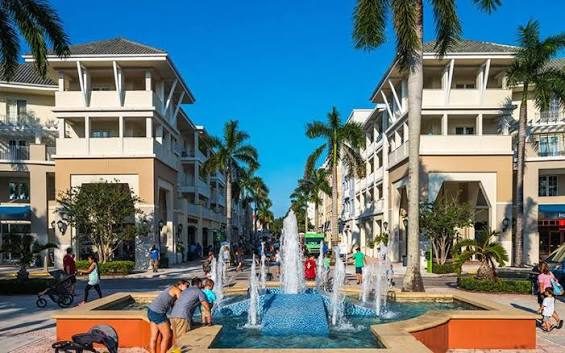
Abacoa is the neighborhood most first-time relocators ask about by name, and for good reason. It’s a New Urbanist master plan, meaning it was built to be walked, not just driven through: a town center with restaurants and shops, sidewalks that actually connect to somewhere, Roger Dean Chevrolet Stadium (spring training home to the Marlins and Cardinals), and Florida Atlantic University’s Jupiter campus all inside the same footprint.
Abacoa isn’t one neighborhood, it’s a collection of them: Mallory Creek, Alton Ridge, Windsor Park, Portico, and others, each with its own HOA fee and price band. Townhomes start in the mid-$400,000s to $600,000s, single-family homes run roughly $700,000 to $1.3 million depending on age and section. HOA fees vary widely by sub-neighborhood, so get the exact number before you fall for a specific street.
I tell buyers to treat Abacoa’s sub-neighborhoods almost like separate towns. Mallory Creek tends to run newer and family-heavy with more community pool amenities baked into the HOA. Windsor Park skews a bit older in build stock, which can mean lower HOA dues but more near-term maintenance on the house itself. Portico sits closer to the town center, which is great if you actually want to walk to dinner three nights a week, and less great if you want distance from foot traffic and event noise on Roger Dean game nights. None of that shows up on a generic “Abacoa” search, only on a street-by-street comparison.
This is the pick for buyers who want to walk to dinner, don’t want to maintain a half-acre, and want their kids to have sidewalks and other kids nearby. It’s also the pick for empty nesters coming from up north who miss having a downtown to walk to but don’t want a full-blown urban condo tower. For a ground-level look at what a week actually feels like living in this part of town, read Living in Jupiter, Florida: What Daily Life Actually Looks Like.
Gated New Construction Golf: Jupiter Country Club
Jupiter Country Club, built by Toll Brothers, is the community I point buyers to when they want new(er) construction, a gated feel, and golf without going full Admirals Cove pricing. It’s built around a Greg Norman-designed course, with a clubhouse, resort-style pool, and fitness center. Homes range roughly $900,000 to $2.5 million, with a mix of single-family and larger estate lots. Club membership here is more flexible than the marina clubs, which matters if you want the amenities without the mandatory buy-in of a place like Admirals Cove.
This is also the community I steer buyers toward when they want modern floor plans, the kind with open kitchens, impact windows as standard rather than an upgrade, and larger primary suites, without wanting to build custom from scratch out in Jupiter Farms. Because Toll Brothers built it in phases, you’ll find real differences in finishes and lot size depending on which section a house sits in, so a 2015-built home here can feel meaningfully different from a 2020-built one two streets over.
If you’re specifically shopping new construction rather than resale, check current inventory in New Construction in Jupiter, FL: What’s Actually Available in 2026 before assuming Jupiter Country Club is the only new build in town, because it isn’t.
No-HOA and Acreage: Jupiter Farms and Rustic Lakes
Jupiter Farms
If you want land and you don’t want an HOA telling you what color to paint your fence, Jupiter Farms is the honest answer, and it’s really the only one inside Jupiter’s boundaries. It’s an unincorporated, roughly 15-square-mile agricultural residential zone with continuous custom infill: cleared, non-HOA parcels typically running 1.25 to over 2.5 acres. Pricing spans a wide range, roughly $950,000 to $4.6 million-plus depending on lot size and how custom the build is, since most homes here are built to spec rather than bought off a plan.
Utilities are private well and septic, not municipal, so factor that into your due diligence and your maintenance budget. Zoning allows equestrian stabling, arenas, and storage for boats and RVs, which is the whole draw for a lot of buyers. This is not the neighborhood for someone who wants to walk to coffee. It’s the neighborhood for someone who wants their own gate, their own barn, and total build flexibility.
Buyers moving from up north sometimes underestimate what well and septic actually means day to day. It means budgeting for well pump maintenance, water softener systems because Florida groundwater runs hard, and septic pump outs every few years depending on household size. None of that is a dealbreaker, people out here live well and the systems are reliable when maintained, but it’s a different rhythm than flushing and forgetting like you would on municipal sewer in Abacoa. Get a full well and septic inspection as a condition of your contract, not an afterthought, because replacing a septic drain field is not a cheap surprise to discover after closing.
The other thing to know about Jupiter Farms: because so much of it is built to spec, timelines vary wildly. Some parcels have a house ready to close on. Others are raw land where you’re hiring a builder and waiting twelve to eighteen months. If you need to move by a certain date, that distinction matters more here than almost anywhere else on this list.
Rustic Lakes
Closer to town and smaller in scale, Rustic Lakes offers a similar mini-farm feel on generally smaller lots (often around an acre), with homes typically in the $700,000 to $1.5 million range depending on age and updates. It’s a reasonable middle ground for buyers who want some of the Jupiter Farms lifestyle without the drive time.
Rustic Lakes tends to work well for buyers who grew up around some acreage but don’t actually want the full working-farm setup. You still get room for a pool, a workshop, maybe a couple of horses on the larger lots, but you’re closer to Central Boulevard and the drive to Publix or the kids’ school doesn’t eat twenty minutes of your day the way it can from the far end of Jupiter Farms.
Mid-Range and Established: Egret Landing, Cypress Cove, Maplewood, Old Trail, Riverwalk
Not every Jupiter buyer needs a marina or three acres. This tier is where most working families and move-up buyers actually land, and honestly it’s where I close the most transactions in Jupiter overall. These aren’t flashy names that show up in magazine features, but they’re the backbone of who actually lives here.
Egret Landing and Cypress Cove are established, family-oriented, sidewalk-and-community-pool neighborhoods generally in the $650,000 to $950,000 range for single-family homes. Reasonable HOA fees, good proximity to A-rated schools, and none of the mandatory club dues. These tend to move fast when they list, because they hit the sweet spot for dual-income families who want a normal neighborhood, not a resort.
Maplewood and Old Trail sit further west along the Indiantown Road corridor, generally newer construction than Egret Landing, with prices in a similar $650,000 to $1 million band, and slightly larger lots as you move further from downtown. If you want a newer roof and a newer AC system without paying gated-community premiums, this corridor is where I’d start looking.
Riverwalk and Islands at Jupiter run more affordable, roughly $500,000 to $800,000, and are a common landing spot for buyers who want to be in Jupiter’s school zones and general area without paying for gates or golf. I put a lot of first-time Jupiter buyers here, especially teachers, firefighters, and other essential workers who want to live in the town they serve without stretching into the million-dollar tier. If schools are your top filter regardless of neighborhood name, Jupiter, FL Schools: Why Families Move Here and What to Know Before You Do breaks down zoning and ratings directly.
Value and Up-and-Coming: Limestone Creek and South Fork
Limestone Creek is Jupiter’s historically Black neighborhood, one of the oldest residential areas in town, and it’s genuinely in transition right now. Older homes are being renovated or replaced, prices are still meaningfully lower than the rest of Jupiter (roughly $400,000 to $650,000 depending on lot and condition), and it’s a five-minute drive to the same beaches and downtown everyone else is paying a premium for. This is the neighborhood I tell first-time buyers to actually go look at, not just skip past, because the value gap versus Abacoa or Egret Landing is real. Go in expecting a mix of renovated and unrenovated stock on the same block, and budget for updates if you’re buying older.
I’ve watched Limestone Creek shift over the past couple of years as buyers priced out of Abacoa start looking five minutes further inland. That means more renovation activity, more investors picking up older lots, and prices that have moved but haven’t caught up to the rest of Jupiter yet. If you’re comfortable buying a home that needs kitchen and bath updates in exchange for a location that’s genuinely walkable to the same beaches and shops as the pricier neighborhoods, this is worth serious consideration, not a backup plan.
South Fork, south of Indiantown Road, is a similarly overlooked, mostly 1980s-1990s built pocket with prices generally in the $450,000 to $700,000 range. It won’t show up on most out-of-state buyers’ radar, which is exactly why it’s worth a look if budget is the binding constraint. Lot sizes here tend to run a bit larger than what you’ll find in Abacoa at a similar price point, which matters if a fenced yard for the dog or the kids is non-negotiable.
How Schools and Commute Actually Split the Decision
Nearly all of the neighborhoods above feed into Jupiter’s A-rated public school zones (Jupiter Elementary, Jupiter Middle, Jupiter High, or the equivalent zoned schools depending on exact address), so for most buyers, school quality doesn’t actually eliminate any of these options. What does change block to block is commute. Abacoa, Jupiter Country Club, and the mid-range communities off Indiantown Road put you closest to I-95 and the Turnpike. Admirals Cove, Jonathan’s Landing, and the beachside pockets add 10 to 20 minutes to any inland commute, which matters if you’re driving to Palm Beach Gardens or West Palm Beach for work daily.
I ask every relocating client where their office actually is before we tour a single house, because Jupiter is deceptively spread out. A house that’s twelve minutes from the beach might be thirty-five minutes from a downtown West Palm Beach office once you account for the drawbridge and morning traffic on US-1. If you’re working from home most days, that trade-off barely matters. If you’re commuting five days a week, it’s often the single biggest quality-of-life factor, bigger than the house itself.
If you’re cross-shopping Jupiter against the town next door before locking in a neighborhood, Jupiter vs. Palm Beach Gardens: Which Is the Better Buy in 2026? and Jupiter vs. Palm Beach Gardens: Choosing Your North Palm Beach Home Base both walk through that comparison directly, since a fair number of buyers who think they want Jupiter end up better served in PBG on price alone.
What Most People Get Wrong Picking a Jupiter Neighborhood
The most common mistake I see is buyers falling for a golf course view without asking whether membership is mandatory. In communities like Admirals Cove, it is, and the dues are not small. Ask before you write an offer, not after. I’ve had clients get most of the way through a deal before realizing the club initiation fee alone was six figures on top of the purchase price.
The second mistake is underestimating HOA and CDD variance inside a single “neighborhood” name. Abacoa is really eight or nine sub-communities with different fees and rules. Don’t assume the HOA number from one listing applies to the house three streets over. I’ve seen buyers compare two Abacoa listings assuming they’re apples to apples on carrying costs, when one sub-HOA covers roof and exterior maintenance and the other doesn’t.
The third is ignoring utilities. Jupiter Farms and parts of Rustic Lakes are on well and septic. That’s not a downside if you know it going in and budget for well/septic maintenance, but it’s a real problem if you find out at closing.
A fourth mistake, one I see less talked about, is buyers picking a neighborhood based purely on a single Saturday visit. Jupiter feels different depending on the season, the day of the week, and whether it’s spring training. A quiet street in June can be a different scene entirely during February snowbird season or during a Roger Dean Stadium home game. If you can, drive the neighborhood at a few different times before you commit, not just during the one open house you attended.
If affordability is the real question underneath all of this, First-Time Buyer’s Guide to Jupiter, Florida: Can You Actually Afford It? walks through what income and down payment actually get you across these price tiers, and Jupiter, FL Real Estate Market 2026: What Buyers Need to Know covers where prices are trending this year across the board.
Three Quick Buyer Scenarios to See Where You Land
It helps to see this play out with real profiles, because most buyers recognize themselves in one of these.
A retired couple relocating from the Northeast with a paid-off boat and a budget north of $3 million is almost always looking at Admirals Cove or Jonathan’s Landing. They want the marina, the club dining rooms, and the low-maintenance lifestyle that comes with a mandatory HOA and club handling the grounds and amenities.
A dual-income family with two kids under 12, relocating for work, budget around $800,000 to $1 million, usually ends up comparing Abacoa, Jupiter Country Club, and Egret Landing side by side. The decision often comes down to whether they want to walk to the town center on weekends (Abacoa) or want a quieter gated street with a community pool and less foot traffic (Egret Landing or Jupiter Country Club).
A buyer who grew up with land, wants horses or at minimum room for a workshop and a boat, and has a budget in the $1 million to $2 million range without needing brand-new construction, lands in Jupiter Farms almost every time. The trade-off they accept going in is the commute and the well and septic learning curve, in exchange for privacy and acreage they simply cannot get anywhere else inside Jupiter’s boundaries.
Making a Wise Decision, Not a Fast One
The reality is, there isn’t a single “best neighborhood in Jupiter.” There’s a best neighborhood for your budget, your commute, and how much land or water you actually need versus how much you think you want. Walk Abacoa on a Saturday night and walk Jupiter Farms on a Tuesday morning. They’ll tell you more in twenty minutes than any listing sheet will.
If you want a second opinion on a specific street or sub-community before you write an offer, tell me the neighborhood and price range and I’ll give you the honest read: what the HOA actually covers, whether the club is mandatory, and what the house next door sold for.

More articles you might like
Jupiter vs Palm Beach Gardens: A Relocator's Real Comparison for 2026
15 min readJupiter vs Palm Beach Gardens: Choosing Your North Palm Beach Home Base
18 min readJupiter, FL FAQ: 18 Questions Buyers Ask Before Moving (2026 Guide)
20 min readLiving in Jupiter, Florida: What Daily Life Actually Looks Like (2026 Guide)
17 min readIs Jupiter, Florida a Good Place to Live? Honest 2026 Review
17 min read