Jupiter, FL Real Estate Market 2026: What Buyers Need to Know
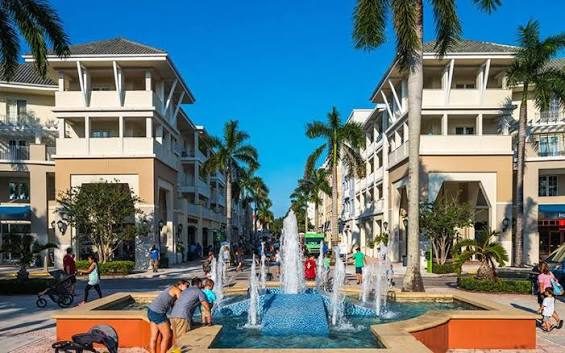
If you’re trying to figure out the jupiter fl real estate market 2026 what buyers need to know, here’s the honest version: Jupiter is not a cheap beach town anymore, but it’s also not priced uniformly high across the board. You can still find a $475,000 townhome a few miles from downtown Abacoa, and in the same zip code you can find a $15 million estate on Jupiter Island. The spread is the story. Understanding where you fall in that spread, and what you actually get at each price point, is the difference between buying smart and overpaying for a zip code.
This guide breaks down what’s really for sale in Jupiter right now, what things cost, where the new construction is (and isn’t), and what buyers consistently get wrong before they make an offer. It’s written for the buyer who wants real numbers and real tradeoffs, not a highlight reel of the nicest listing on the market.
Jupiter FL Real Estate Market 2026: What Buyers Need to Know, By The Numbers
Jupiter sits in northern Palm Beach County, bordered by Palm Beach Gardens to the south, Tequesta and Martin County to the north, and the Atlantic to the east. It’s one of the most geographically diverse markets in South Florida, which is exactly why the price range is so wide.
Here’s the rough breakdown by product type in 2026:
- Townhomes and villas: $475,000 to $700,000. This is the entry point into Jupiter ownership, and it’s shrinking as older townhome inventory gets absorbed.
- Single-family homes, non-waterfront: $700,000 to $1.3 million. This is the bulk of the market. Think Jupiter Country Club, Egret Landing, parts of Abacoa, and Jupiter Farms on the low-density end.
- New construction waterfront townhomes: $1.1 million to $1.35 million and up. Water Pointe by LC Construction is the current example, a 35-unit waterfront townhome-style condo community actively selling in that range.
- Luxury single-family and estate homes: $2 million to $6 million in communities like Admirals Cove, Trump National Jupiter (formerly Ritz-Carlton Golf Club), and select Intracoastal-adjacent streets.
- Jupiter Island and true waterfront estates: $5 million to $15 million-plus. This is a different market entirely, driven by lot value, direct ocean or Intracoastal frontage, and privacy, not square footage per dollar.
If you’re shopping under $700,000, you’re almost certainly looking at attached product or homes further from the water. If you’re shopping $2 million-plus, you’re buying into golf, marina, or beach access, and the HOA or club dues reflect that.
It helps to think of Jupiter less as one market and more as five overlapping markets that happen to share a mailing address. A townhome buyer in Abacoa and an estate buyer on Jupiter Island are not competing for the same inventory, are not working with the same lenders, and frankly are not touring the same open houses. When people ask “what’s the market doing in Jupiter,” the honest answer is “which Jupiter.” A single-family home under $900,000 can still get multiple offers in a good week, while a $4 million golf-course listing might sit for four to six months waiting for the right buyer to walk through the door. Both of those things are true in the same town, at the same time, which is why generic market chatter from national news sites is close to useless here.
What’s Actually Driving Prices in Jupiter Right Now
Three things are shaping the Jupiter market heading into 2026, and none of them are hype.
Land Scarcity
Jupiter is functionally built out. Unlike western Palm Beach County communities such as Westlake or Arden that are still releasing hundreds of new homesites, Jupiter has very little raw land left to develop. That’s why new construction here looks like Water Pointe (35 townhomes) and Reserve at Jupiter (a boutique gated subdivision), not 1,000-home master plans. Scarcity supports resale values, but it also means buyers waiting for a flood of new inventory to bring prices down will be waiting a long time.
What this actually looks like on the ground: a builder who wants to put up 40 townhomes in Jupiter has to find and assemble a parcel, often an infill site or a redevelopment of something older, rather than pulling down a few hundred acres of pasture the way builders do out west in Loxahatchee or around Westlake. That process takes longer, costs more per unit, and caps how many homes can hit the market in any given year. If you’re used to shopping markets where a new phase releases every few months, Jupiter will feel slow. That’s not a flaw in the market, it’s the structural reality of a town that ran out of open land a decade ago.
Interest Rate Sensitivity
Jupiter buyers skew toward move-up and relocation buyers, many paying cash or putting down 30% or more, especially in the $1 million-plus tiers. That insulates the upper market from rate swings somewhat. But the $700,000 to $1 million range, where more buyers are financing 70 to 80%, is more rate-sensitive, and that’s where you see the most negotiating room right now.
If you’re a buyer in that $700,000 to $1 million band, this is where rate movement actually changes your monthly payment enough to matter, and it’s where sellers are more willing to talk about rate buydowns or closing cost credits to get a deal done. Above $1.5 million, you’ll rarely see a seller offering a buydown, because most of those buyers aren’t financing enough of the purchase for it to move the needle. Know which category you’re in before you walk into negotiations expecting concessions that only exist in one slice of the market.
Migration From the Northeast and Midwest
Jupiter continues to pull relocators from New York, New Jersey, Connecticut, and increasingly Illinois and Ohio, many drawn by no state income tax and a slower pace than Miami or Fort Lauderdale. This steady, less speculative buyer base is part of why Jupiter didn’t see the same volatility during rate hikes that hit more investor-heavy markets. For a side-by-side on how Jupiter compares to its closest rival for these relocators, see Jupiter vs Palm Beach Gardens: A Relocator’s Real Comparison for 2026.
These aren’t investors flipping condos or landlords chasing short-term rental yield. They’re households in their 40s, 50s, and 60s selling a paid-off or nearly paid-off home up north, moving cash into a Florida purchase, and planning to stay for a decade or more. That buyer profile behaves differently than a speculative one. They negotiate hard on inspection items because they plan to live with the house, they care more about school zones and HOA rules than resale flip potential, and they’re less likely to walk away from a deal over a small rate move because they’re often not financing much of the purchase to begin with. Understanding that psychology matters as much as understanding the price data, because it explains why well-priced Jupiter listings in good school zones still move quickly even when national headlines say the market has cooled.
New Construction in Jupiter: What’s Actually Available in 2026
This is the section most buyers get wrong. They assume Jupiter has the same new construction pipeline as Palm Beach Gardens or the western corridor. It doesn’t. Here’s what’s real right now:
Water Pointe (LC Construction Florida, Inc.) is a waterfront townhome-style condominium community, 35 units total, actively selling from $1,119,900 to $1,350,000-plus. This is the closest thing to true new-build waterfront product in Jupiter right now, and it’s priced accordingly.
Reserve at Jupiter (D.R. Horton) is a gated community offering both townhomes and single-family homes. It’s in presale status, meaning pricing hasn’t been publicly released yet, and the builder is treating it as a boutique subdivision rather than a large horizontal release.
That’s essentially it for ground-up new construction inside Jupiter proper. Compare that to Palm Beach Gardens, which has more than a dozen active communities right now, and you can see why Jupiter buyers who want brand-new product sometimes end up looking a few miles south. For the full rundown of what’s building and what’s sold out, read New Construction in Jupiter, FL: What’s Actually Available in 2026.
If you’re set on new construction with more selection, it’s worth understanding the tradeoffs between staying in Jupiter and shopping the Gardens instead. That comparison is laid out in Jupiter vs. Palm Beach Gardens: Which Is the Better Buy in 2026?
For buyers who still want brand-new construction but aren’t married to the Jupiter address, the honest advice is this: decide whether “new” or “Jupiter” is the actual priority, because in 2026 you often can’t have both without waiting. A buyer who wants a warranty-backed home, current hurricane-code construction, and builder incentives on closing costs will find far more choice in Palm Beach Gardens or further west. A buyer who wants Jupiter specifically, for the schools, the beaches, or the established feel of the town, needs to accept that resale is the realistic path for the vast majority of price points under $1.1 million.
Jupiter’s Resale Market: Where Most Buyers Actually End Up
Because new construction is limited, most Jupiter buyers in 2026 are shopping resale. Here’s how that breaks down by area:
Abacoa
Jupiter’s walkable, town-center community built around a downtown core, Roger Dean Stadium, and Florida Atlantic University’s Jupiter campus. Homes here range from townhomes in the low $500,000s to single-family homes pushing $1 million in neighborhoods like Mallory Creek and Newhaven. Abacoa carries a CDD (Community Development District) assessment on top of HOA dues, which buyers need to factor into monthly costs, not just the sale price. It’s the neighborhood we point relocators toward most often when they say they want to walk to dinner, coffee, and a farmers market without giving up single-family square footage entirely.
Jupiter Country Club
A gated golf community with homes generally in the $800,000 to $1.5 million range, mandatory golf membership economics baked into HOA structure, and consistent demand from buyers who want resort-style amenities without leaving Jupiter’s core. Buyers coming from up north sometimes underestimate what “mandatory membership” means here. It’s not optional, and it’s not the same as a country club you can join and quit on your own schedule. Budget for it as a fixed monthly cost, not a lifestyle add-on you’ll decide about later.
Egret Landing and Central Jupiter Neighborhoods
More traditional single-family subdivisions, generally $650,000 to $950,000, no golf membership requirement, lower HOA dues than the country club communities. This is where a lot of first-time Jupiter buyers land. It’s also a strong fit for move-up buyers coming from a starter townhome who want a yard and more square footage but aren’t ready to take on club dues or a formal HOA amenity package.
Jupiter Farms
Jupiter’s answer to acreage living. One-acre-plus lots, well and septic in many cases, no HOA in most pockets, and a completely different lifestyle than the coastal side of town. Prices vary enormously based on lot size and whether a home has been renovated, but this is where buyers go when they want space, horses, or simply distance from neighbors. Financing here works differently too. Well and septic systems, and sometimes older electrical or roofing, mean appraisals and inspections take longer and lenders ask more questions than they would on a standard subdivision home. Budget extra time in your contract for this, not just extra due diligence.
Admirals Cove, Trump National Jupiter, and the Golf/Marina Communities
This is the $2 million-plus tier. Deeded golf and marina access, significant club initiation fees on top of home price, and buyers who are purchasing a lifestyle as much as a house. Initiation fees at this level can run into six figures on their own, separate from the home price and separate from monthly dues, so the “true cost” of buying into one of these communities is meaningfully higher than the listing price suggests. Ask for the full club fee schedule before you fall in love with the house.
Jupiter Island
Its own market entirely. Ocean-to-Intracoastal lots, minimal density, extreme privacy, and price tags from $5 million into the $20 million-plus range for direct oceanfront. This isn’t a market most buyers cross-shop against the rest of Jupiter; it’s a category of one.
For a deeper walk through these areas and which ones fit different buyer profiles, see Best Neighborhoods in Jupiter, FL: Honest 2026 Guide.
Three Real Buyer Scenarios in the 2026 Jupiter Market
Numbers are easier to understand with a face on them. Here’s how three different buyers actually navigate Jupiter right now.
The relocating couple with a $750,000 budget. They’re selling a home in New Jersey, moving with roughly 30% down, and want to be close enough to walk somewhere for dinner. Abacoa or Egret Landing is the realistic search, not Jupiter Country Club and not Jupiter Island. They need to run the CDD and HOA math before they compare two listings that look similar on price but carry very different monthly totals.
The move-up family with $1.2 million and school zones as the top priority. They already know which schools they want and are willing to pay for it. This buyer is usually choosing between a larger single-family home in Jupiter Country Club or central Jupiter, and a brand-new Water Pointe townhome if waterfront matters more than a yard. The decision usually comes down to whether they want land or water, because at this price point in Jupiter, it’s genuinely one or the other.
The retiree or semi-retiree with $3 million and no mortgage. This buyer is largely rate-indifferent and is shopping Admirals Cove, Trump National, or an Intracoastal-adjacent street. Their real negotiation isn’t over price, it’s over club initiation costs and understanding exactly what membership tier they’re required to carry. This is also the buyer most likely to get a real concession on price, because at this level, days on market matter more to sellers than in the entry-level tiers where multiple offers are still common.
What HOA and CDD Fees Actually Look Like in Jupiter
This is the part sellers’ listings gloss over and buyers regret not asking about. In Jupiter:
- Non-gated, non-amenity communities (parts of central Jupiter, some of Jupiter Farms) may have minimal to no HOA at all.
- Standard gated single-family communities typically run $250 to $500 a month in HOA dues.
- Golf and country club communities (Jupiter Country Club, Admirals Cove) carry both HOA dues and separate club dues or membership minimums, which can add $1,000 or more per month depending on membership tier.
- Abacoa and other CDD communities layer a Community Development District assessment onto the property tax bill, which funds infrastructure like roads and drainage. This shows up as a line item on your tax bill, not your HOA statement, and it’s often missed by out-of-state buyers comparing “total cost” between two homes.
- New waterfront townhome product like Water Pointe will carry condo-style association dues that cover exterior maintenance, insurance on shared structures, and dock or waterfront common area upkeep.
Always ask for the actual HOA/CDD budget and reserve study before writing an offer, not just the monthly number quoted in the listing.
Here’s a simple way to see why this matters. Say you’re comparing two $800,000 homes. Home A has $150 a month in HOA dues and no CDD. Home B is priced the same but sits in a CDD community with a $2,400 annual assessment plus $200 a month in HOA dues. Over a 7-year hold, Home B costs roughly $22,000 more in carrying costs, even though the sale price on paper looked identical. That’s before you factor in whether the reserve study shows an underfunded roof or paving reserve that could mean a special assessment down the line. A five-minute conversation with your agent about the HOA docs can save you tens of thousands of dollars over the life of ownership. Skipping it is the single most common regret we hear from Jupiter buyers a year or two after closing.
Schools and Lifestyle: Why Buyers Choose Jupiter Over Cheaper Alternatives
Jupiter isn’t the least expensive option in Palm Beach County, and buyers who choose it anyway are usually optimizing for something specific: school zones, beach proximity, or a slower pace than Miami-Dade or Broward offers. Jupiter feeds into some of the district’s stronger-performing schools, and that reputation is a real driver of demand, not just a talking point. For the specifics on which schools serve which neighborhoods and how that plays into home values, see Jupiter, FL Schools: Why Families Move Here and What to Know Before You Do.
Day-to-day, Jupiter runs on a few key corridors: US-1 and Alternate A1A along the coast, Indiantown Road as the main east-west connector, and Center Street feeding into Abacoa. Traffic is real during season (roughly November through April) but nothing close to what you’d deal with in Fort Lauderdale or Miami. For a realistic picture of what daily life actually looks like, including commute patterns and where people actually spend their time, read Living in Jupiter, Florida: What Daily Life Actually Looks Like.
Families relocating from up north also tend to underestimate how much school zone boundaries can shift a home’s list price within the same neighborhood, sometimes by six figures for what looks like a comparable house two streets over. This is a place where “location, location, location” is not a cliche, it’s a literal boundary line on a district map, and it’s worth confirming the exact zoned school for any specific address before you get attached to a listing, not after.
Common Buyer Mistakes in the 2026 Jupiter Market
Assuming “Jupiter” means one price tier. It doesn’t. A $475,000 townhome and a $15 million estate share a zip code. Get specific about which Jupiter you’re actually shopping before you start comparing listings.
Skipping the HOA/CDD math. A home that’s $50,000 cheaper but carries $300 more a month in combined HOA and CDD costs is not the better deal over a 7-year hold. Run the real numbers.
Underestimating flood zone and insurance costs on waterfront and coastal properties. Anything near the Intracoastal or ocean should come with a current insurance quote before you get emotionally attached, not after. Insurance premiums on older waterfront homes have moved enough in the last few years that a house you could have comfortably afforded two years ago might carry a materially different monthly payment today.
Not asking why new construction inventory is so thin. Buyers coming from markets with dozens of active builders assume Jupiter works the same way. It doesn’t. If brand-new is a priority, decide early whether you’re willing to wait for Reserve at Jupiter’s pricing to release or whether you’d rather buy resale now.
Comparing Jupiter to Palm Beach Gardens without understanding the actual differences. They’re adjacent, but the lifestyle, price-per-square-foot, and new construction pipeline differ meaningfully. Do that comparison with real numbers, not assumptions, in Jupiter vs Palm Beach Gardens: A Relocator’s Real Comparison for 2026.
Treating the club fee schedule as an afterthought. In golf and marina communities, the initiation fee, monthly minimums, and food and beverage minimums can add tens of thousands of dollars in year-one costs that never show up on the MLS sheet. Get the full fee schedule in writing before you write an offer, not after you’re already emotionally committed to the house.
Is Jupiter Worth Buying Into in 2026?
That depends entirely on what you’re optimizing for. If you want the lowest possible entry price into Palm Beach County, Jupiter isn’t it, Lake Worth and Loxahatchee have more affordable single-family and townhome inventory. If you want brand-new construction with lots of builder choice, Jupiter’s pipeline is thin compared to Palm Beach Gardens or the western corridor.
But if you want an established, largely built-out coastal town with strong schools, real beach and marina access, a walkable downtown in Abacoa, and a buyer pool that skews toward people staying long-term rather than flipping, Jupiter remains one of the more stable markets in South Florida. The lack of new supply that frustrates buyers looking for new construction is the same scarcity that protects resale values for people who already own here.
Put another way: Jupiter is not the market for a buyer chasing the cheapest possible entry point or the widest builder selection. It’s the market for a buyer who has already decided this is where they want to be for the next decade and is willing to pay a premium for stability, schools, and an established sense of place. If that’s not your priority, there are less expensive, faster-growing markets thirty minutes west. If it is your priority, Jupiter has consistently rewarded the buyers who stayed.
For a broader gut-check on whether Jupiter fits your life beyond the spreadsheet, read Is Jupiter, Florida a Good Place to Live? Honest 2026 Review. And if you’re newer to the area and still working through the basics, Jupiter, FL FAQ: 18 Questions Buyers Ask Before Moving (2026 Guide) covers the questions that come up most in initial buyer conversations.
What To Do Next If You’re Serious About Buying in Jupiter
Start by getting specific about your number, not a range. “Under $1 million” tells an agent almost nothing useful in a market with this much spread. Know whether you’re a $475,000 townhome buyer, a $800,000 single-family buyer, or a $2 million golf-community buyer, because those are three entirely different searches with different inventory, different HOA structures, and different timelines.
If you’re financing, get pre-approved before you start touring, especially in the $700,000 to $1 million range where competition is still real for well-priced listings. If you’re a first-time buyer trying to figure out whether Jupiter is even realistic on your budget, First-Time Buyer’s Guide to Jupiter, Florida: Can You Actually Afford It? walks through the real numbers, not the optimistic version.
Once you know your price tier, build a short list of the two or three neighborhoods that actually fit your priorities, not the five or six you liked from a scroll through listing photos. Then pull the HOA docs, the CDD assessment schedule if applicable, and a current insurance quote before you get attached to any single address. That’s the order that keeps buyers from falling in love with a house they can’t actually afford once the full monthly picture is on paper.
The reality is Jupiter rewards buyers who do the homework on HOA structures, flood zones, and actual comparable sales, not just the ones who fall in love with a listing photo. Make the wise decision here: know your price tier, know your must-haves, and know what you’re actually buying into before you write the offer.
Watch: learn more
Go deeper with my South Florida Insider videos.
Solterra: Everything You Need to Know Before You Visit
Solterra: Everything You Need to Know Before You Visit
More articles you might like
Jupiter vs Palm Beach Gardens: A Relocator's Real Comparison for 2026
15 min readJupiter vs Palm Beach Gardens: Choosing Your North Palm Beach Home Base
18 min readJupiter, FL FAQ: 18 Questions Buyers Ask Before Moving (2026 Guide)
20 min readLiving in Jupiter, Florida: What Daily Life Actually Looks Like (2026 Guide)
17 min readIs Jupiter, Florida a Good Place to Live? Honest 2026 Review
17 min read