First-Time Buyer's Guide to Jupiter, Florida: Can You Actually Afford It?
Jupiter is affordable for first-time buyers in 2026, but the answer comes with a condition most agents won’t say out loud: it depends entirely on what kind of home you’re willing to buy, not just what budget you’re bringing. If you’re picturing a new single-family house with a pool east of US-1, the honest answer is no, not under $700,000. If you’re open to a resale townhome, an older single-family home inland, or acreage in Jupiter Farms, the answer changes to a real yes. Take a couple earning a combined $150,000 a year, no kids yet, wanting a low-maintenance place with equity potential. They can absolutely close on a home in Jupiter this year. A young family that assumes “Jupiter” means a four-bedroom new build near the beach on that same income is going to spend six weekends touring homes that were never in range. This guide breaks down exactly what that $700,000 (or less) actually buys you in Jupiter right now, neighborhood by neighborhood, so you’re not wasting weekends touring homes that were never in your range to begin with.
The Real Answer: Is Jupiter Affordable for First-Time Buyers in 2026?
Jupiter has a split personality when it comes to price. On the eastern side, along the Intracoastal, on Jupiter Island, and in gated communities like Admirals Cove, you’re looking at multi-million dollar territory that has nothing to do with a first-time buyer’s reality. But Jupiter also has a deep bench of townhomes, patio homes, and older single-family neighborhoods built in the 1980s through early 2000s that never got the “Jupiter” price memo everyone assumes applies to the whole town.
The honest first-time buyer’s guide to Jupiter, Florida, can you actually afford it, comes down to this: you’re not buying “Jupiter” as a single price point. You’re buying a specific product type in a specific pocket of Jupiter, and those pockets range from $350,000 condos to $2 million-plus waterfront estates within a ten-minute drive of each other. A townhome in Abacoa and a new single-family lot in Jupiter Country Club can sit three miles apart and differ in price by over a million dollars. Your job is to know which pocket matches your budget before you start looking, not after you’ve already picked a favorite listing that turns out to be $400,000 over what you qualify for.
For a broader read on where Jupiter sits in the Palm Beach County market right now, see Jupiter, FL Real Estate Market 2026: What Buyers Need to Know.
What “Affordable” Actually Means in Jupiter Right Now
Median single-family home prices in Jupiter have been sitting well above the Palm Beach County average, and pricing has only gotten tighter as new construction in town has shifted toward luxury waterfront townhomes and estate lots rather than entry-level product. Look at Water Pointe, LC Construction’s waterfront townhome-style condo community in Jupiter, priced from $1,119,900 to $1,350,000 and up for 35 units. That’s the new-construction reality in Jupiter proper right now: builders are chasing the move-up and luxury buyer, not the first-time buyer.
Zoom out to the county level and the pattern holds. Of the active new-construction pipeline tracked across Palm Beach County right now, Palm Beach Gardens accounts for roughly 22.7% of communities and West Palm Beach another 18.2%, while Jupiter’s own new-build inventory skews almost entirely toward the waterfront and luxury townhome segment. That’s not an accident. Builders go where land costs pencil out for higher price points, and land near Jupiter’s coastline and Intracoastal frontage is some of the most expensive in the county. If you’re a first-time buyer hoping a new builder will hand you an entry-level product in Jupiter proper, the current pipeline says otherwise.
That doesn’t mean Jupiter is closed off. It means the affordable path runs through the resale market, not new construction. Condos and townhomes built in the 1980s, 90s, and early 2000s make up the bulk of what’s actually available under $700,000, and single-family resales inland (west of Central Boulevard, away from the water) round out the rest.
If price is the deciding factor and you want to see how Jupiter stacks up against its closest neighbor, read Jupiter vs Palm Beach Gardens: A Relocator’s Real Comparison for 2026. Palm Beach Gardens generally offers more new-construction inventory at comparable or slightly lower price points, which matters if you specifically want something newly built.
What You Can Actually Buy Under $700K in Jupiter
Townhomes in Abacoa
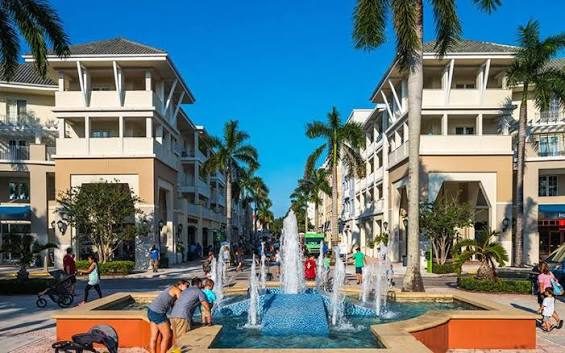
Abacoa is the most realistic entry point for a first-time buyer who wants walkability, a real town center, and a mix of housing types. Built out in phases starting in the late 1990s, Abacoa’s townhome product (in neighborhoods like Village Walk, Mallory Creek, and the areas around Main Street and Abacoa Town Center) runs roughly $450,000 to $650,000 depending on size, age of the unit, and proximity to the Roger Dean Chevrolet Stadium and Florida Atlantic University’s Jupiter campus. HOA fees in Abacoa townhome communities typically run $300 to $500 a month and often include exterior maintenance, roof, and common area landscaping, which matters for a first-time buyer budgeting a full monthly payment, not just principal and interest. Some Abacoa neighborhoods also carry a CDD (Community Development District) assessment baked into the property tax bill, so always ask for the actual tax bill, not just the county’s estimate, before you fall in love with a listing.
A typical first-time buyer scenario here: a two-bedroom, two-and-a-half-bath townhome in Mallory Creek listed around $525,000, built in 2001, with a $375 monthly HOA and an active CDD assessment. On paper it looks like a straightforward starter home. In practice, the buyer needs the actual tax bill pulled before writing an offer, because the CDD line item alone can add $150 to $300 a month that a generic online mortgage calculator won’t show you.
Single-Family Resales in Egret’s Landing, Trailwood, and Maplewood
These inland, non-gated or lightly-gated neighborhoods are where a first-time buyer’s budget stretches the furthest for an actual house with a yard. Homes here were mostly built in the 1980s and 90s, three and four bedrooms, on quarter-acre-ish lots, and they trade in the $550,000 to $700,000 range depending on updates. You’re not getting a renovated kitchen at that price in most cases, you’re getting a solid, well-located house that needs some cosmetic work. Factor $20,000 to $40,000 into your planning for a kitchen and bath refresh if the home hasn’t been touched since the original build.
Egret’s Landing in particular tends to move fast when a well-priced three-bedroom hits the market, because it’s zoned for strong elementary and middle schools and sits close enough to Central Boulevard and I-95 to make the commute workable for buyers who work in Palm Beach Gardens or West Palm Beach. Trailwood and Maplewood run slightly less expensive on average, in part because lot sizes are a touch smaller and the homes are a few years older, but the tradeoff is minor if you’re focused purely on getting into a single-family house under $650,000.
Condos Along the US-1 and Intracoastal Corridor
Older condo buildings along US-1, some with partial water views and boat docks available for lease or purchase separately, are the cheapest way into Jupiter proper. Expect $350,000 to $500,000 for a two-bedroom unit in a building from the 1980s or 90s. The catch here is Florida’s post-Surfside condo reserve and structural inspection requirements, which have pushed HOA fees and special assessments up significantly in older buildings statewide. Before you write an offer on any Jupiter condo built before 2000, ask for the most recent structural integrity reserve study and find out whether a special assessment is pending. This single question has saved buyers from six-figure surprises.
Here’s what that looks like in practice: a buyer finds a $395,000 two-bedroom unit in a 1985-built building with a listed HOA of $650 a month, which already feels high but manageable. What doesn’t show up on the listing is a structural integrity reserve study completed six months earlier that flagged the need for roof and balcony repairs, funded through a special assessment of $18,000 per unit, payable over 24 months. That’s an extra $750 a month on top of the HOA, for two years. Buyers who skip the reserve study document find this out after closing. Buyers who ask for it upfront either negotiate the price down to account for it or walk away entirely.
Jupiter Farms: Land, No HOA, but Real Tradeoffs
West of the Florida Turnpike, Jupiter Farms is a different animal entirely: one-acre-plus lots, no HOA, well and septic instead of city water and sewer, and a rural feel that draws buyers who want horses, privacy, or just room to spread out. Per square foot of house, it’s often the best value in Jupiter. But total price isn’t automatically lower, because land carries real cost and older homes on septic systems can come with their own maintenance surprises. Expect $600,000 to $900,000-plus for a livable home on acreage, more if you’re building or doing a major renovation. No HOA also means no shared amenities and no one enforcing property upkeep on your neighbor’s lot, which is a tradeoff some buyers love and others regret.
A buyer moving from a condo in Abacoa to a Jupiter Farms property should budget for a well and septic inspection as a non-negotiable part of due diligence, since replacing a septic drain field can run $8,000 to $15,000 and a failing well pump adds another few thousand. It’s not a reason to avoid Jupiter Farms, it’s a reason to inspect thoroughly and negotiate repairs before closing instead of discovering them in year two.
A Realistic First-Time Buyer Scenario
To make this concrete, picture a couple with $650,000 to spend and 10% down saved up. They start by touring new construction because that’s what shows up first in an online search for “Jupiter homes.” They quickly find that anything new in Jupiter proper starts near $1.1 million, well outside their range. They pivot to Abacoa, tour four townhomes in the $500,000s, and put an offer in on a Mallory Creek unit after confirming the CDD is nearly paid off and the HOA covers roof and exterior maintenance. Total time from first tour to accepted offer: about three weeks, mostly because they started in the wrong price bracket before a local agent redirected them to the right one. That redirection, done on day one instead of week three, is the entire value of knowing Jupiter’s pockets before you tour.
What’s Priced Out (So You Don’t Waste Time)
Being direct here saves you time: anything new construction east of Central Boulevard, anything on the Intracoastal or ocean, and gated luxury communities like Admirals Cove, Jupiter Island, and most of Jupiter Country Club’s newer phases are not first-time buyer territory in 2026. That also includes Trump National Golf Club adjacent product and most of the newer gated enclaves marketed around golf and equestrian amenities, where entry prices routinely start above $1.5 million regardless of buyer type. Reserve at Jupiter, D.R. Horton’s gated townhome and single-family presale community, hasn’t released pricing publicly yet, but presale product from a national builder in Jupiter should be expected to land well above entry-level once pricing drops, based on where every other new build in town has landed. If a listing agent tells you new construction in Jupiter is “affordable,” ask them to define the number, because in this market, that word is doing a lot of work.
For a full rundown of what’s actually being built right now and at what price, see New Construction in Jupiter, FL: What’s Actually Available in 2026.
HOA, CDD, and Insurance: The Hidden Math
A first-time buyer’s guide to Jupiter, Florida, can you actually afford it isn’t complete without the numbers that don’t show up in the listing price. Three costs routinely blow up a first-time buyer’s budget in this market:
HOA fees. Townhome and condo communities in Jupiter run anywhere from $250 to $700-plus a month. That’s real money on top of your mortgage payment, and it’s underwritten as debt by most lenders, which affects how much house you actually qualify for.
CDD assessments. Community Development Districts fund infrastructure like roads, drainage, and landscaping in newer planned communities, and they show up as a line item on your property tax bill, separate from and in addition to HOA dues. Abacoa and some newer Jupiter developments carry CDD debt. Always ask whether the CDD is paid off or still being assessed, since an unpaid CDD balance can sometimes be paid off at closing or rolled into your annual taxes for years. As a rough example, a remaining CDD balance of $15,000 on a property, if not paid off at closing, might add roughly $1,200 to $1,800 a year to the tax bill until it’s satisfied, depending on the payoff schedule and interest rate attached to the bond.
Homeowners insurance. Florida insurance costs have climbed sharply, and Jupiter’s coastal exposure doesn’t help. Get a real insurance quote before you go under contract, not after. A house that looks affordable at the list price can become unaffordable once a $6,000 to $9,000 annual premium (or more for older roofs or homes closer to the water) gets added to your monthly payment. On an older condo near US-1, don’t forget you’re also paying into the building’s master insurance policy through your HOA dues, on top of your own individual condo (HO-6) policy, so ask what the master policy covers before assuming your personal policy needs to cover the whole structure.
Which Jupiter Neighborhoods to Target as a First-Time Buyer
If your budget is $500,000 to $700,000 and you want the best shot at a home that doesn’t need major work, prioritize in this order: Abacoa townhomes first, for walkability and lower maintenance responsibility. Egret’s Landing and Maplewood second, for single-family value inland. Jupiter Farms third, if you specifically want land and don’t mind trading city utilities and HOA structure for space and privacy. Skip anything advertised as “new construction under $700K” in Jupiter proper until you’ve confirmed the actual base price and lot premiums, because the advertised starting price rarely matches what’s left available. If none of these three options fit your timeline or budget, that’s the signal to widen your search rather than compromise on a home you can’t actually sustain financially.
For a deeper, neighborhood-by-neighborhood breakdown beyond affordability, read Best Neighborhoods in Jupiter, FL: Honest 2026 Guide, and if schools are part of your decision, Jupiter, FL Schools: Why Families Move Here and What to Know Before You Do breaks down which neighborhoods feed into which schools, since school zoning in Jupiter doesn’t always follow the lines you’d assume.
The Financing Reality: What It Takes to Qualify
Here’s the math a lot of first-time buyers skip until they’re already emotionally attached to a house. On a $650,000 home with 10% down, a 30-year mortgage at current rates, plus HOA dues of $400 a month and property taxes and insurance, you’re realistically looking at a total monthly payment in the $4,800 to $5,500 range. Most lenders want your total housing payment (principal, interest, taxes, insurance, and HOA) to stay under roughly 36 to 43% of your gross monthly income, so that payment level generally requires household income in the $140,000 to $170,000 range to qualify comfortably, depending on your other debts and down payment size.
Run the same math with a lower down payment and the picture shifts. An FHA loan at 3.5% down on that same $650,000 home lowers your upfront cash need substantially, from $65,000 down to roughly $22,750, but it also raises your monthly payment because you’re financing a larger loan amount and paying mortgage insurance premiums that don’t disappear the way conventional PMI eventually does. For a buyer with strong income but limited savings, that tradeoff can make sense. For a buyer with savings but tighter monthly cash flow, putting down more and avoiding FHA’s mortgage insurance may be the smarter play. There’s no universal right answer, it depends on which constraint (cash today or payment each month) is actually the tighter one for your household.
First-time buyer programs can help close the gap. FHA loans allow down payments as low as 3.5%, and Florida Housing offers down payment assistance programs for eligible first-time buyers, though income and purchase price caps apply and can shift year to year, so verify current limits with a local lender before you assume you qualify. The bigger lever for most buyers isn’t the loan program, it’s the product type: a $500,000 condo with a $400 HOA fee qualifies very differently than a $700,000 house with property taxes reassessed at purchase price.
If Jupiter Doesn’t Pencil Out: Nearby Alternatives
If the math doesn’t work even with the resale and inland options above, it’s worth being honest about that rather than stretching into a house you’ll resent the payment on. Palm Beach Gardens, just south, generally offers a wider range of newer townhome product at comparable or slightly better price points, and it’s still a short drive to everything Jupiter offers day to day. Two current examples make the point directly: Regency at Avenir, Toll Brothers’ 55+ community in Palm Beach Gardens, prices single-story homes from roughly $664,995 to $954,995, and Avondale at Avenir, built by DiVosta, prices single-family homes from about $739,990 to $1.1 million and up on 390 planned homesites. Neither is cheap, but both put new construction within reach at prices that don’t exist in Jupiter proper right now.
For buyers willing to go further west or south, the gap widens more. Everton, Pulte’s gated townhome community in Lantana, prices from $464,990 to $586,110, which is genuinely competitive with Abacoa resale pricing but in brand-new product with a builder warranty. Whitmore Estates in Lake Worth runs from the mid $600,000s to $1.2 million for single-family homes. And Arden, Lennar’s agrihood community in Loxahatchee built around a working farm and community gardens, prices twin homes and single-family product from $497,990 to $952,000 across a planned 1,200-acre, 1,000-plus home master plan. None of these are Jupiter, and that’s the point: if new construction and a lower monthly payment matter more to you than the Jupiter zip code specifically, these communities deliver both.
See Jupiter vs. Palm Beach Gardens: Which Is the Better Buy in 2026? for a direct price and lifestyle comparison. Some buyers also look further west toward Royal Palm Beach or Loxahatchee for lower entry prices, trading proximity to the beach for more house.
Step-by-Step: How to Actually Buy Your First Home in Jupiter
- Get pre-approved before you look, and ask your lender specifically how HOA and CDD fees factor into your qualifying ratio, not just the base mortgage payment. Lenders calculate this differently, so get the number in writing rather than relying on a general rule of thumb.
- Set your target neighborhoods based on product type, not just price, using the breakdown above as your starting filter. Decide upfront whether a maintained townhome or a yard with more responsibility matters more to your lifestyle, because that decision narrows your search faster than any price filter.
- Pull the HOA and CDD documents before writing an offer, not after, so you know what you’re actually committing to monthly and annually. Ask specifically for the most recent budget, reserve study, and minutes from the last board meeting.
- Get a real insurance quote during your inspection period, and make sure your contract’s inspection contingency gives you enough time to receive it. Roof age and wind mitigation features can swing your premium by thousands of dollars a year.
- Budget for the first-year cash reality, not just the down payment: closing costs, moving costs, and the first round of repairs or updates a resale home usually needs.
- Work with someone who knows Jupiter’s specific pockets, because a generalist agent working the whole county won’t necessarily know which Abacoa phase carries CDD debt or which Egret’s Landing streets flood in a heavy rain season.
If you still have questions about the day-to-day realities of living here before you commit to a purchase, Jupiter, FL FAQ: 18 Questions Buyers Ask Before Moving (2026 Guide) covers the questions that come up most often once buyers are actually under contract.
Bottom Line
Jupiter is affordable for a first-time buyer in 2026, but only if you’re realistic about what “affordable” buys here. Under $700,000, you’re looking at resale townhomes in Abacoa, older single-family homes inland in Egret’s Landing, Trailwood, or Maplewood, condos along the US-1 corridor, or acreage in Jupiter Farms. New construction, waterfront property, and most of Jupiter’s gated luxury communities are out of range for a starter budget, full stop. Know which product type you’re targeting before you start touring, run the full monthly payment including HOA, CDD, and insurance before you fall for a house, and if Jupiter’s numbers genuinely don’t work for your budget, communities like Everton in Lantana or Arden in Loxahatchee are worth a serious look before you compromise on a home you can’t sustain. Jupiter’s first-time buyer market is smaller than the town’s reputation suggests, but it’s real, and it’s there if you know where to look.

More articles you might like
Jupiter vs Palm Beach Gardens: A Relocator's Real Comparison for 2026
15 min readJupiter vs Palm Beach Gardens: Choosing Your North Palm Beach Home Base
18 min readJupiter, FL FAQ: 18 Questions Buyers Ask Before Moving (2026 Guide)
20 min readLiving in Jupiter, Florida: What Daily Life Actually Looks Like (2026 Guide)
17 min readIs Jupiter, Florida a Good Place to Live? Honest 2026 Review
17 min read