Is Wellington, Florida a Good Place to Live? Honest 2026 Review
I don’t need bash for this. Let me just verify manually and deliver the final markdown directly as my response.No cleanup needed since nothing was written (the earlier Write call errored out before creating anything). Here’s the revised, expanded post:
Wellington, Florida is a good place to live if you value space, strong public schools, and a genuine community identity built around horses, family, and long-term homeownership, but it’s not the right fit if you want walkable urban density, quick highway access, or a bargain price point. That’s the honest, unvarnished answer. Everything below explains why, with the specifics you actually need before you sign a contract or put your house on the market back home.
Wellington gets recommended constantly to relocating families, and for good reason. But most “best place to live” content skips the parts that actually frustrate residents once they’ve unpacked the moving truck. This is the version that doesn’t skip those parts.
Is Wellington, Florida a Good Place to Live? The Honest 2026 Verdict
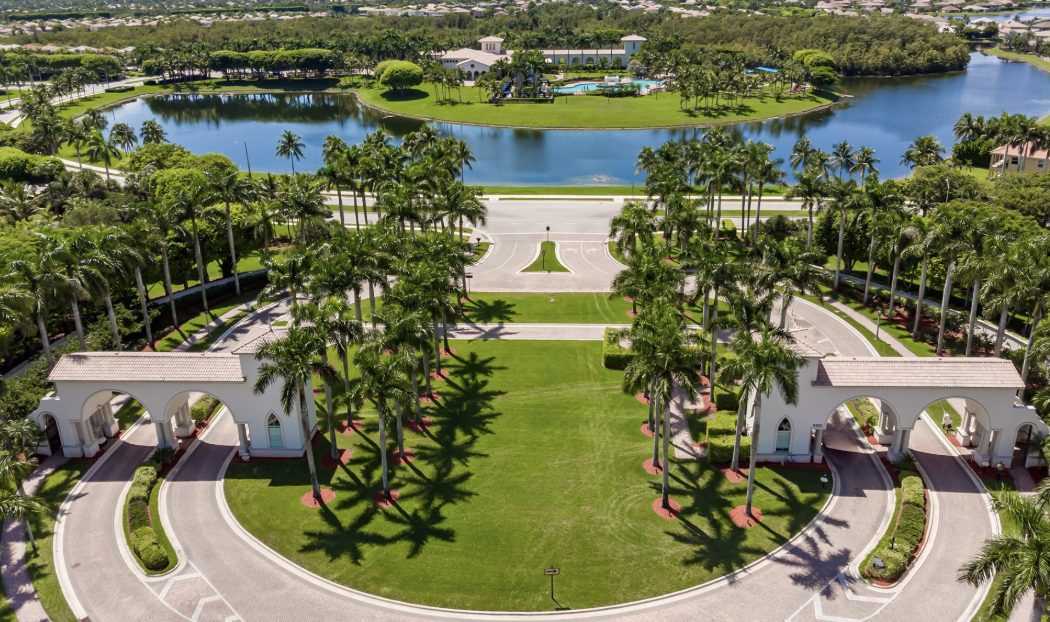
Wellington works best for people who want a suburban, family-first lifestyle with room to breathe. It’s a village of roughly 60,000 residents in central Palm Beach County, incorporated in 1996, with its own government, its own police contract through Palm Beach County Sheriff’s Office, and one of the most deliberate land-use plans in the region. The village has protected its Equestrian Preserve Area for decades, which is the single biggest reason Wellington doesn’t feel like a generic South Florida subdivision grid.
That protection is also why Wellington isn’t for everyone. Large lots, mandatory setbacks, and horse-friendly zoning in the Preserve mean density is capped in a way it isn’t in places like Boynton Beach or western Boca. If you’re chasing a walkable downtown or a five-minute commute to I-95, Wellington will frustrate you. If you’re chasing a quiet cul-de-sac, a good school zone, and a community where your kids can do 4-H or ride horses two miles from home, Wellington delivers on that promise better than almost anywhere else in the county.
It also helps to understand how the village actually governs itself, because that shapes everything from your HOA experience to your commute. Wellington operates under a council-manager form of government, with an elected council that has consistently voted to keep the Equestrian Preserve Area protected from the kind of dense rezoning that’s reshaped other western Palm Beach County corridors over the last decade. That’s not an accident. It’s a deliberate policy choice, and it’s the reason home values in the Preserve and the neighborhoods around it have stayed relatively insulated from overbuilding. If you’re the kind of buyer who researches zoning maps before you research school ratings, Wellington rewards that kind of diligence.
What Makes Wellington Exceptional
The equestrian culture is real, not a marketing label
Wellington is home to Wellington International (formerly the Palm Beach International Equestrian Center), which hosts the Winter Equestrian Festival (WEF) every January through April. This isn’t a small local event. WEF draws Olympic-level riders, international buyers, and tens of thousands of visitors annually, and it has quietly made Wellington one of the wealthiest per-capita zip codes in Florida during season. A few miles away, the International Polo Club Palm Beach on Pierson Road adds another layer to the same culture, drawing its own circuit of high-net-worth buyers and seasonal residents who treat Wellington the way other families treat a ski town.
Communities like Grand Prix Village, Palm Beach Point, and Southfields Wellington Country sit adjacent to the showgrounds, with private stabling, paddocks, and direct bridle path access built into the neighborhood infrastructure. Even if you never own a horse, that culture shapes the town: wide equestrian-friendly roads, miles of bridle trails, and a village government that actively protects the industry because it understands the economic engine it represents. Local economists have estimated WEF’s annual economic impact on Palm Beach County in the hundreds of millions of dollars, and a meaningful share of that lands directly in Wellington through hospitality, retail, and real estate activity that simply doesn’t happen the rest of the year at the same intensity.
For buyers who aren’t in the horse world at all, this matters in a practical way too. It means Wellington has a built-in, recurring seasonal economy that keeps restaurants, tack shops, farriers, veterinarians, and trainers in business year-round, not just during the winter months. That’s part of why Wellington’s commercial corridor feels more stable than some newer master-planned communities that are still waiting for their retail base to catch up to their rooftops.
Schools are consistently strong
Wellington falls within the School District of Palm Beach County, and its zoned schools (elementary through Wellington High School and Palm Beach Central High School) post consistently solid performance grades compared to the county average. Elementary options like Elbridge Gale, Panther Run, and New Horizons regularly show up on parent shortlists, and Emerald Cove and Wellington Landings Middle feed into the two zoned high schools depending on exactly where a street falls. For families relocating specifically for education, this matters more than almost any other factor, and it’s worth reading the full breakdown in our Wellington, Florida Schools guide before choosing a neighborhood, because school boundaries can split streets that otherwise look identical on a map. We’ve seen buyers fall in love with a home only to find out the house across the street feeds a different high school. Always confirm the zoned school with the district’s own boundary tool before you write an offer, not after.
Parks, recreation, and genuine green space
The Village of Wellington operates an unusually large parks and recreation budget for a town its size, including Village Park, the Wellington Community Center, and the National Croquet Club, which is recognized as one of the largest dedicated croquet facilities in the world. Village Park alone includes multiple sports fields, an amphitheater, a skate park, and one of the more active aquatics complexes in the county. Add in Wellington Green Mall and the retail corridor around it for everyday shopping, along with a growing cluster of restaurants along State Road 7/441, and residents rarely need to leave town for daily errands. This is a real point of difference from newer master-planned suburbs further west that still feel unfinished, where the anchor grocery store or the first sit-down restaurant hasn’t opened yet even though homes have been closing for two years.
Safety and long-term stability
Wellington consistently ranks as one of the safer municipalities in Palm Beach County. Part of that comes from the low-density zoning, part from an active, well-funded Sheriff’s Office contract, and part from a resident base that skews toward long-term homeowners rather than transient renters. That stability shows up in home values too, which have held or appreciated steadily rather than swinging with speculative flipping activity. It also shows up in something buyers don’t always think to ask about: resale predictability. Because so much of Wellington’s inventory turns over slowly, comparable sales data tends to be cleaner and more reliable than in newer communities where half the recent closings were builder incentives, not arm’s length resales.
What Frustrates Wellington Residents (the Honest Part)
Traffic and limited road access
This is the number one complaint from residents, full stop. Wellington has no direct Florida Turnpike or I-95 entrance within its borders. Forest Hill Blvd and Southern Blvd are the two primary arteries connecting Wellington to the rest of Palm Beach County, and both get genuinely congested during weekday rush hours and even worse during WEF season when show traffic adds thousands of extra daily trips. State Road 7/441 running north-south along Wellington’s eastern edge helps some, but it’s a surface road with signals, not a bypass.
If your job is in downtown West Palm Beach or Boca Raton, budget 30 to 45 minutes each way during peak times, not the 20 minutes Google Maps promises at 11pm. A commute to Fort Lauderdale can stretch to 50 or 60 minutes each way depending on your exact starting point in Wellington and how far south your office sits. Realistically, Wellington works best for people who either work locally, work remotely, or have a job in central or northern Palm Beach County where the drive stays under 30 minutes. We talk to buyers regularly who assumed a 20-minute commute based on mileage alone and didn’t account for the two-artery bottleneck. Test the actual drive at 7:45am on a weekday before you commit, not on a Sunday afternoon when the roads are empty.
HOA and CDD costs vary wildly by neighborhood
Older, established Wellington neighborhoods often carry modest HOA fees, sometimes a few hundred dollars a year for basic common area maintenance. Newer construction changes that math considerably. Communities like Lotis Wellington (The Estates at Lotis Wellington, built by Lennar) price single-family homes and townhomes from $648,976 up to $1,274,990, and buyers need to check both HOA dues and any CDD (Community Development District) debt attached to the land before assuming the listing price is the full monthly picture.
A CDD is essentially a special taxing district that fronts the cost of infrastructure (roads, drainage, amenities) and then bills it back to homeowners as a line item on the property tax bill, often for 20 to 30 years. It’s not inherently bad, but it’s an extra few hundred dollars a month that a lot of relocating buyers from states without this structure simply don’t budget for. This is one of the most common surprises we see with relocating buyers, and it’s covered in more depth in our Wellington, FL FAQ. Always ask your agent for the CDD payoff balance and the current annual assessment before you fall in love with a floor plan, because it changes your true monthly payment by a meaningful amount.
Seasonal population swings
From January through April, Wellington’s population effectively balloons as WEF and the polo season bring in seasonal residents, grooms, trainers, and visiting families who rent short-term housing near the showgrounds. Restaurants get harder to book, grocery store parking lots fill up, and road congestion worsens noticeably, particularly along Pierson Road, South Shore Blvd, and the stretch of Southern Blvd nearest the showgrounds. Residents who’ve lived here a while build their calendars around it, scheduling routine errands earlier in the day and avoiding certain roads on weekend show days entirely. New arrivals sometimes don’t realize “season” is a real, predictable annual event until they’re stuck in it the first time, wondering why a normally 10-minute drive to Publix took 25 minutes on a random Tuesday in February.
It’s not cheap, and it’s gotten less cheap
Wellington was once considered a relative value play compared to Boca Raton or Delray Beach. That gap has narrowed. Standard single-family homes in established neighborhoods now commonly range from the $500,000s to over $1 million depending on lot size and proximity to the Equestrian Preserve, and true equestrian estate properties (5 to 20+ acres with barns and paddocks) run well into the multi-millions. Insurance is part of that equation too. Even though Wellington sits inland and largely outside the highest-risk coastal flood zones, which helps on flood insurance specifically, Florida-wide homeowners insurance premiums have climbed enough in the last few years that buyers coming from lower-cost states need to get a real quote before closing, not an estimate based on what a friend pays somewhere else in the country.
If budget is the primary driver, it’s worth cross-shopping. Our Wellington vs. Boca Raton comparison walks through exactly where the value tradeoffs land for families weighing both.
Limited nightlife and urban energy
Wellington is not Fort Lauderdale or Delray Beach. There’s no walkable downtown entertainment district, no beach, and limited nightlife beyond a handful of restaurants and the seasonal social scene tied to WEF. Residents who want that energy typically drive 25 to 35 minutes east to Delray or West Palm Beach’s CityPlace/Rosemary Square area. That’s a real tradeoff, not a knock, but it needs to be said plainly. Buyers coming from cities with a strong bar and restaurant scene within walking distance of home should expect to plan those nights out in advance, not stroll into them.
Wellington’s Real Estate Market in 2026
Wellington’s housing stock breaks into a few clear tiers, and understanding them upfront saves buyers a lot of wasted showings.
Established single-family neighborhoods
Communities like Olympia, Versailles, Isles at Wellington, and Binks Forest represent the bulk of Wellington’s move-in-ready inventory. These are mature, landscaped neighborhoods with HOA fees generally in the moderate range and home prices typically from the high $400,000s to $800,000s depending on size and updates. Buyers looking for a golf course lot, mature landscaping, and a neighborhood that’s already fully built out, no construction trucks, no ongoing phases, tend to gravitate here first.
Newer construction and master-planned growth
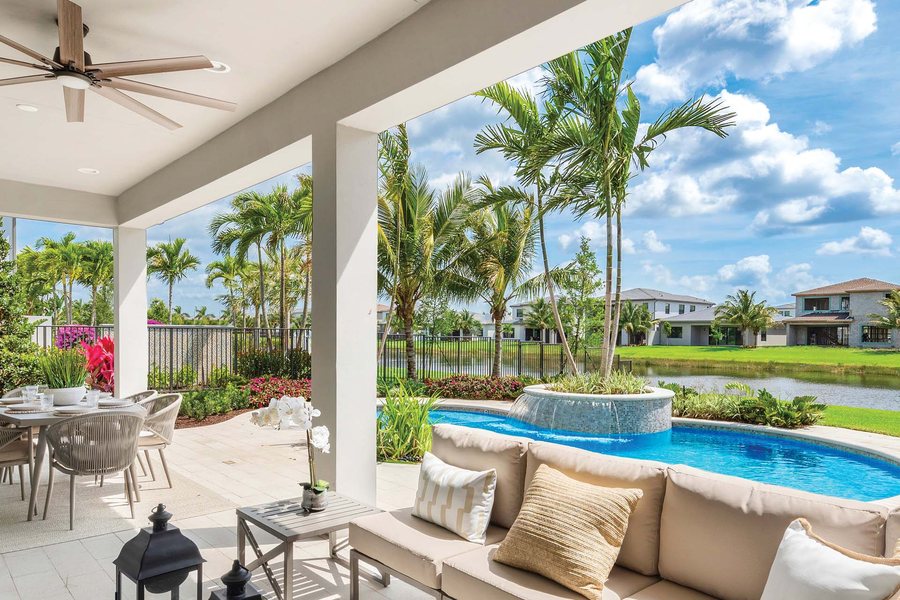
Adjacent Westlake (technically its own incorporated city but functionally part of the same corridor and school zones many Wellington families consider) is the region’s fastest-growing master-planned community, built out by Minto Communities with pricing from $350,000 to over $900,000 and notably low HOA fees, some as low as $47 a month, with no CDD debt in several neighborhoods. Active Westlake neighborhoods in 2026 include The Oaks, The Woodlands, The Orchards, The Terraces, and The Crossings, spanning townhomes through custom estate lots, all anchored by the 15-acre Westlake Adventure Park with its resort lagoon pool and water slide. GL Homes is also bringing Silver Lake to Westlake, a single-family community with its first phase of 294 homes approved and moving toward presale, worth watching if you want brand-new inventory but aren’t ready to buy this year.
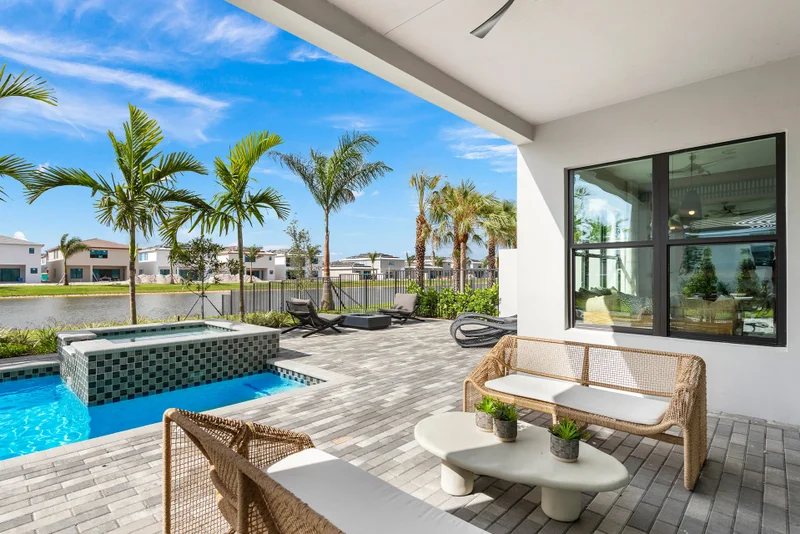
Within Wellington proper, Lotis Wellington by Lennar is the primary active new-construction product, spanning $648,976 to $1,274,990 across single-family and townhome collections. Just outside Wellington in Royal Palm Beach, D.R. Horton’s Lakeside Landing offers a more attainable entry point with 2.5-bathroom, one-car-garage floor plans, a community pool, cabana area, and playground, situated near Royal Palm Beach Commons Park and the Wellington Green shopping district many Wellington residents already shop at. It’s a smart alternative for buyers priced out of Wellington’s core zip code who still want the same daily amenities within a five or ten-minute drive.
Equestrian and estate properties
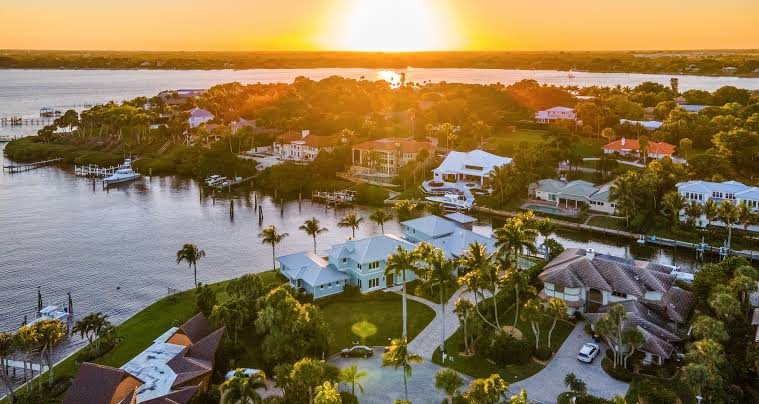
This is Wellington’s signature category and the reason buyers fly in from around the world. Properties in Grand Prix Village, Palm Beach Point, and Southfields Wellington Country range from roughly 2,500 to over 8,000 square feet on multi-acre estate lots, with private stabling, paddocks, and direct bridle path connectivity. Pricing here starts well above the general market and climbs quickly based on acreage and barn quality. Buyers in this category are usually not first-time Wellington buyers. Many rent in the Preserve for a season or two before committing, testing the commute, the WEF crowds, and the maintenance realities of estate ownership before they buy. If this category is your target, read our dedicated Wellington, FL Equestrian Properties guide before touring, because barn condition and footing quality matter as much as square footage.
55+ and active adult options
Cresswind Palm Beach at Westlake, built by Kolter Homes, offers gated, age-restricted single-family homes from $400,000 to $900,000 (base designs starting mid-$500,000s) across 800 planned homes, with a private clubhouse, pool, pickleball, and full-time lifestyle director. It’s the clearest active-adult option in the immediate Wellington corridor, and it’s worth a look for buyers who want Wellington’s overall quality of life and school-zone proximity for visiting grandkids, without needing a school-zoned home themselves.
For the full pricing and trend breakdown across the entire market, our Wellington Real Estate Market 2026 guide goes deeper than this overview can.
Two Real Buyer Scenarios
A relocating family from New Jersey with two kids, a $700,000 budget, and a hybrid work schedule (two days a week in a Boca Raton office) is a strong Wellington fit. They can target Olympia or Binks Forest, land in a strong elementary zone, and absorb the twice-weekly Boca commute without it wearing them down, since it’s not a daily grind.
Compare that to a young professional relocating for a fully in-office job in downtown Fort Lauderdale with a $450,000 budget and no kids yet. Wellington is a much harder sell for that buyer. The commute alone would eat close to two hours a day round trip, and $450,000 doesn’t stretch far in Wellington’s established neighborhoods anymore. That buyer is usually better served looking closer to Fort Lauderdale itself or a suburb with direct highway access, even if Wellington’s schools and lifestyle sound appealing on paper for someday.
Who Wellington Is Actually Right For
Wellington is genuinely right for:
- Families prioritizing school quality. If a top-tier zoned school matters more than commute time, Wellington earns its reputation.
- Equestrian buyers and riders. There’s no comparable concentration of horse infrastructure anywhere else in South Florida.
- Buyers who want space over walkability. Larger lots, quieter streets, and more separation from neighbors than you’ll find in Boca or Delray at similar price points.
- Long-term owners, not flippers. The market rewards people who plan to stay 7+ years and let equity build steadily.
- Remote or hybrid workers. If you’re not fighting Forest Hill Blvd traffic five days a week, Wellington’s downsides shrink considerably.
Who Should Look Elsewhere
Be honest with yourself about these before you commit:
- Daily commuters to downtown Miami or Fort Lauderdale. The drive is long and Wellington has no direct highway access to shorten it.
- Buyers who want walkable downtown living, beach access, or nightlife within a few minutes of home.
- Strict budget shoppers under $400,000. Wellington’s entry price point has risen enough that true bargain inventory is rare and moves fast. Royal Palm Beach or Westlake will get you more house for less money if that’s the priority.
- Anyone allergic to HOA rules. Many Wellington communities, especially newer ones, have active architectural review boards and strict landscaping/parking rules.
What Daily Life Actually Feels Like
Numbers and price ranges only tell part of the story. Grocery runs, school drop-off lines, weekend routines, and how far you actually drive for a decent dinner out shape whether a place feels livable day to day. We cover that ground in detail in Living in Wellington, Florida: What Daily Life Actually Looks Like, and it’s worth reading before you tour homes, not after.
Wellington vs. the Rest of Palm Beach County
If Wellington is on your shortlist, it’s almost never the only suburb you’re considering. Boca Raton pulls buyers who want more retail energy and closer beach access at a higher price point. Royal Palm Beach and Loxahatchee pull buyers chasing a lower entry price with more acreage but fewer amenities, and Lakeside Landing is a good example of that value trade in action. Westlake pulls buyers who want brand-new construction and lower HOA costs with a similar school zone feel, along with communities like Cresswind and the upcoming Silver Lake giving that corridor real variety across age groups and price points. We break down the most common head-to-head comparison directly in Wellington vs. Boca Raton.
The Bottom Line
Is Wellington, Florida a good place to live? For the right buyer, yes, clearly. It offers something increasingly rare in South Florida: a stable, low-density, family-oriented community with genuinely strong schools and a real cultural identity that isn’t manufactured by a developer’s marketing team. The tradeoffs are real too. Traffic on the two main arteries, rising HOA and CDD costs in newer neighborhoods, and a seasonal population swing every winter are things you need to plan around, not be surprised by after closing.
If you’re relocating and trying to figure out whether Wellington fits your specific situation, budget, and commute, the honest answer depends on details a blog post can’t fully capture. That’s what a real conversation is for. Reach out and tell me your budget, your commute tolerance, and whether schools or horses (or both) are driving the decision, and I’ll tell you straight whether Wellington is the right call or whether you should be looking at Westlake, Royal Palm Beach, or somewhere else entirely.
Related Reading
Before you make a decision, it’s worth reviewing a few companion pieces that go deeper on specific pieces of this puzzle: the Wellington, FL FAQ for the 18 most common buyer questions, the First-Time Buyer’s Guide to Wellington, FL if this is your first home purchase, and Moving to Wellington, Florida: The Honest Relocation Guide for 2026 if you’re still in the early planning stages of the move itself.
More articles you might like
Wellington, FL FAQ: 18 Questions Buyers Ask Before Moving
13 min readLiving in Wellington, Florida: What Daily Life Actually Looks Like
14 min readBest Neighborhoods in Wellington, FL: The 2026 Honest Guide
18 min readWellington vs. Boca Raton: Which Is Right for Families in 2026?
13 min readFirst-Time Buyer's Guide to Wellington, FL: What's Actually Possible
16 min read